Serialized Essays | #ijichiman's Musings: Nakameguro Edition
16th Installment: Nakameguro, A City for a Hundred Different Ways of Living
“To merely insist on the safety of the body, while ignoring the life and death of the soul and spirit, is wrong” (Yukio Mishima) — In this series, Yasutake Ijichi, a board member of Sunshine Juice, Japan’s first cold-pressed juice specialty store, delves into the diverse, human-centric content of the city, which stands in stark contrast to the ultimate healthiness of Sunshine Juice, exploring its history, transformations, customs, and culture. The 16th installment introduces Nakameguro, dramatically reborn through redevelopment in the 2000s.
Photographs and Text by IJICHI Yasutake
As the City Transforms, So Does How We Enjoy It
Nakameguro has changed significantly in the last decade. Some might argue that Shibuya, with the addition of Shibuya Stream and Scramble Square, has transformed more. However, this is not about outward appearance, but about substance. While Nakameguro’s appearance hasn’t drastically changed overall, perhaps only with the renewal of the Tokyu Toyoko Line elevated tracks, its essence—the shops and people within—possesses a different atmosphere than before. A major contributing factor often cited is the impact of the Fukutoshin Line, which opened in 2008.
Before the Fukutoshin Line opened, Nakameguro functioned as a hub station where the Tokyu Toyoko Line, terminating at Sakuragicho, and the Hibiya Line, terminating at Kitasenju, had direct services. Now, with the Fukutoshin Line directly connecting to the Toyoko Line, it offers a seamless journey from Motomachi-Chinatown in Yokohama, through Shibuya, to Wakoshi City in Saitama Prefecture, the terminus of the Fukutoshin Line, and further on to Kawagoe City and even Shinrin-koen Station on the Tobu Tojo Line. The distance from Motomachi-Chinatown to Shinrin-koen in Saitama Prefecture is 88.6 km, and from Motomachi-Chinatown to Kitasenju is 43.9 km, making it nearly double. Nakameguro has become a highly convenient location not only for those in the 43.9 km radius but also for those in the 88.6 km radius.
As if to follow suit, the area beneath the elevated tracks was also renewed and revitalized in 2016, following seismic reinforcement work. Originally, it was a place lined with atmospheric eateries, reminiscent of the area under the elevated tracks between Shimbashi and Yurakucho. From motsunabe (offal hot pot) restaurant 'Torikoya' at the very back (towards Yutenji), toホルモン焼き (hormone grilling), Jingisukan (lamb barbecue), tonteki (pork steak), teppanyaki, and a cake shop… I can’t recall the names of the other restaurants besides Torikoya, but I frequented this area quite often in the early 2000s.
Back then, when 'Ariyuki' didn't exist yet, Torikoya was the go-to for motsunabe, and Nakameguro also sparked a boom in Jingisukan. In any case, various restaurants were crammed into the narrow space under the tracks. While the cleanliness of the restrooms in every establishment was questionable, that was part of the abundant Showa-era charm. The sound of trains running on the tracks overhead served as the ultimate seasoning for the meals. Now, it’s a place filled with bookstores, cafes, stylish izakayas, and shops that look like they could be found in any other town, lacking any distinct character.
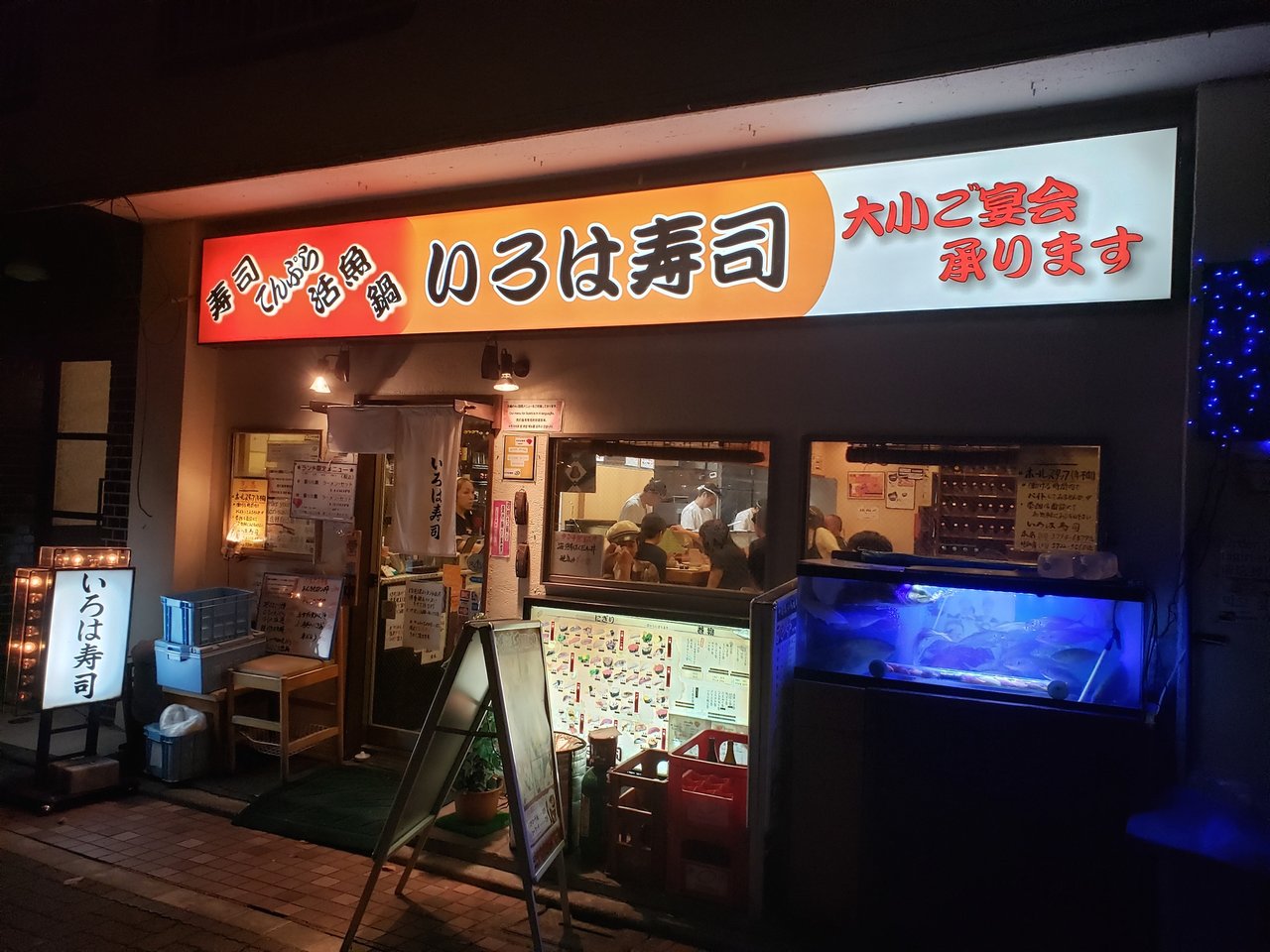
Nevertheless, of course, some establishments remain unchanged from the old days. Across the Meguro River (towards Daikanyama), the in-store background music, which used to be 80s J-POP like The Checkers, Onyanko Club, Seiko, and Akina, now features 90s J-POP from artists like Noriyuki Makihara, Judy and Mary, and Bridge. It’s clear we, the forty-something generation, are the target audience. I’m referring to 'Iroha Sushi,' known for its charming nigiri with tightly packed rice and generous toppings. It’s great for an affordable lunch, or as a late-night bite after dinner. It remains a comforting anchor, enveloping you in the same atmosphere as it always has.
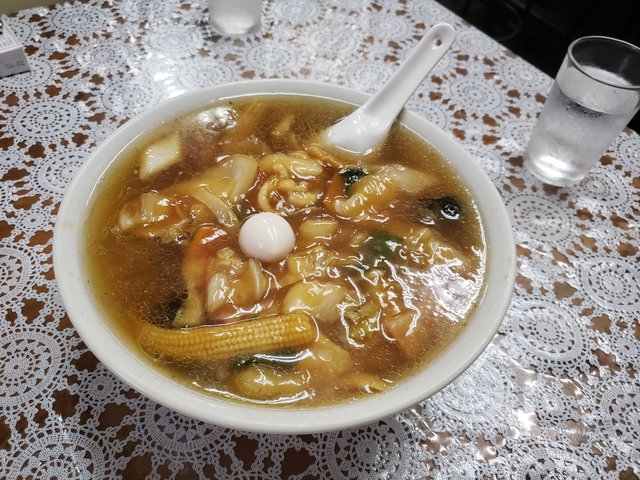
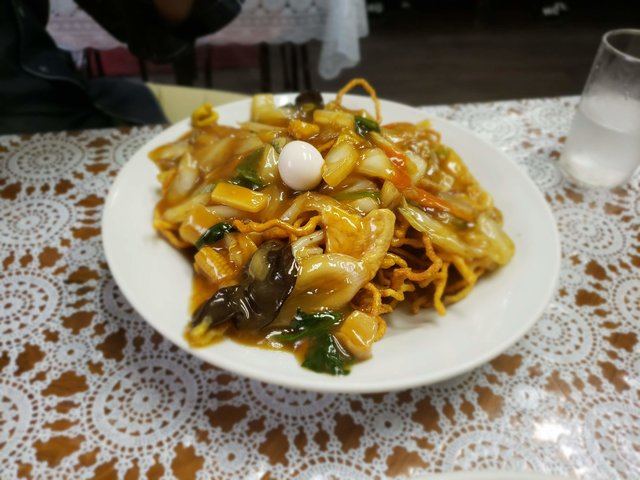
Here, the piping hot moyashi soba (bean sprout noodles) seems to be popular, but I prefer the gomoku soba or gomoku kata-yakisoba. Setting aside the cliché descriptions for its taste and texture, the simple phrase 'it’s foolproof' should suffice. Be aware that the closing time is around 10:00 PM, which is a bit early, so plan accordingly if you’re going for a second round.
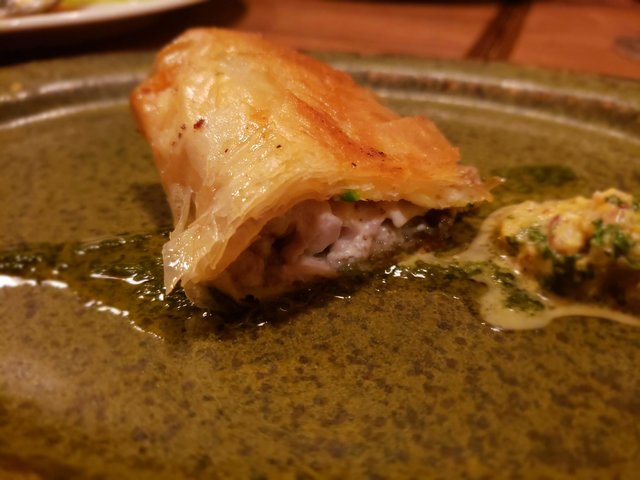
Offal dishes are apparently called 'abats' in French cuisine, and while abats dishes themselves are not uncommon, a place that offers such a diverse range of preparations is rare. It’s impossible to choose everything you want from the extensive menu listed on the large blackboard. As an unparalleled offal lover, I, of course, find it difficult to decide, but even for those who aren't, the sheer variety is enough to make one’s head spin. What I order every time is the pork cerebrum (brain). The rich, melting brain encased in crispy puff pastry is, as always, delicious. It really makes you want to drink. While smoky hormone grilling and grilled pork skewers are great, this way of enjoying offal is also wonderful.
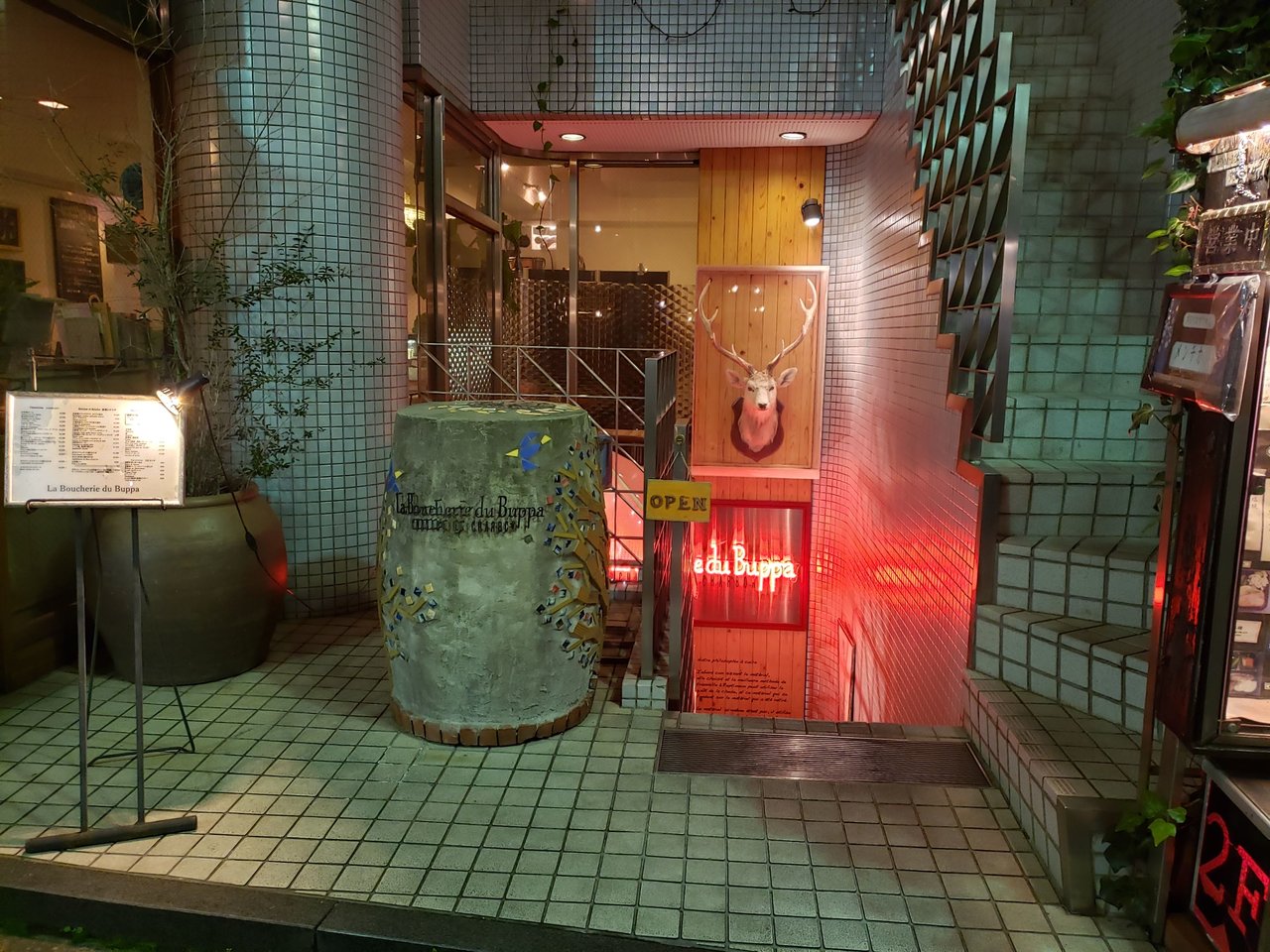
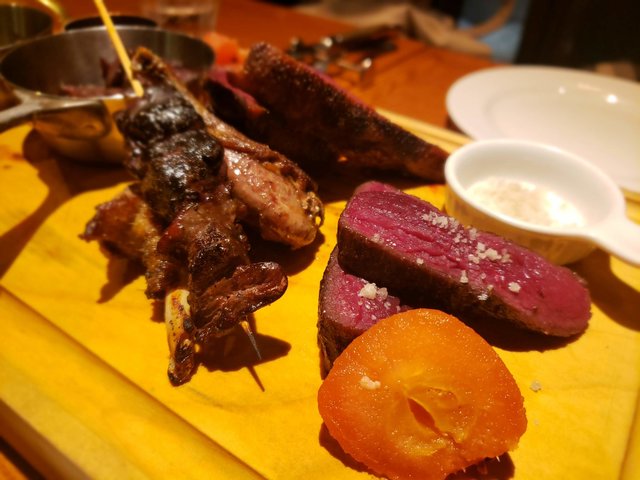
What’s truly impressive at Buppa is the aging room that occupies an entire wall. Various meats such as deer, pheasant, wild boar, and duck are dry-aged and prepared in ways that best showcase their concentrated, rich flavors, served with carefully selected wines. The charcoal-grilled dishes are particularly exquisite. Having visited recently as winter set in, the wild mallard duck I had was divine. There is life that has lived fully through the power of nature, respectfully honored and consumed in its entirety, and there is life sustained and mechanically processed within environments created by human convenience for housing and feed. We partake in the powerful bounty of nature with gratitude for all life. The umami of meat, brimming with the vitality of life nurtured by roaming vast mountains and fields, is both robust and delicate. It is the ultimate winter feast.
It is sad that the old townscape has been swept away, and with it, much of the cultural resonance is fading. However, there are those who continue to cherish the few remaining old havens, those who enjoy the evolving and advancing aspects, and those who gravitate towards places where new culture seems poised to be born. As the city transforms, so does how we enjoy it. Nakameguro is a place that offers a hundred different ways of living, a hundred different ways of engaging with it.
Iroha Sushi, Nakameguro Meguro Riverfront Branch
Address: 1-5-13 Kamimeguro, Meguro-ku, Tokyo
TEL: 03-5722-3560
Hours: 11:30 AM – 2:00 PM / 5:00 PM – 5:00 AM
Horai
Address: 1-4-18 Nakameguro, Meguro-ku, Tokyo
TEL: 03-3791-7057
Hours: Monday–Saturday 11:30 AM – 2:30 PM / 5:00 PM – 10:30 PM (Last Order 9:30 PM)
Sunday 11:30 AM – 9:00 PM
Closed Wednesdays and public holidays
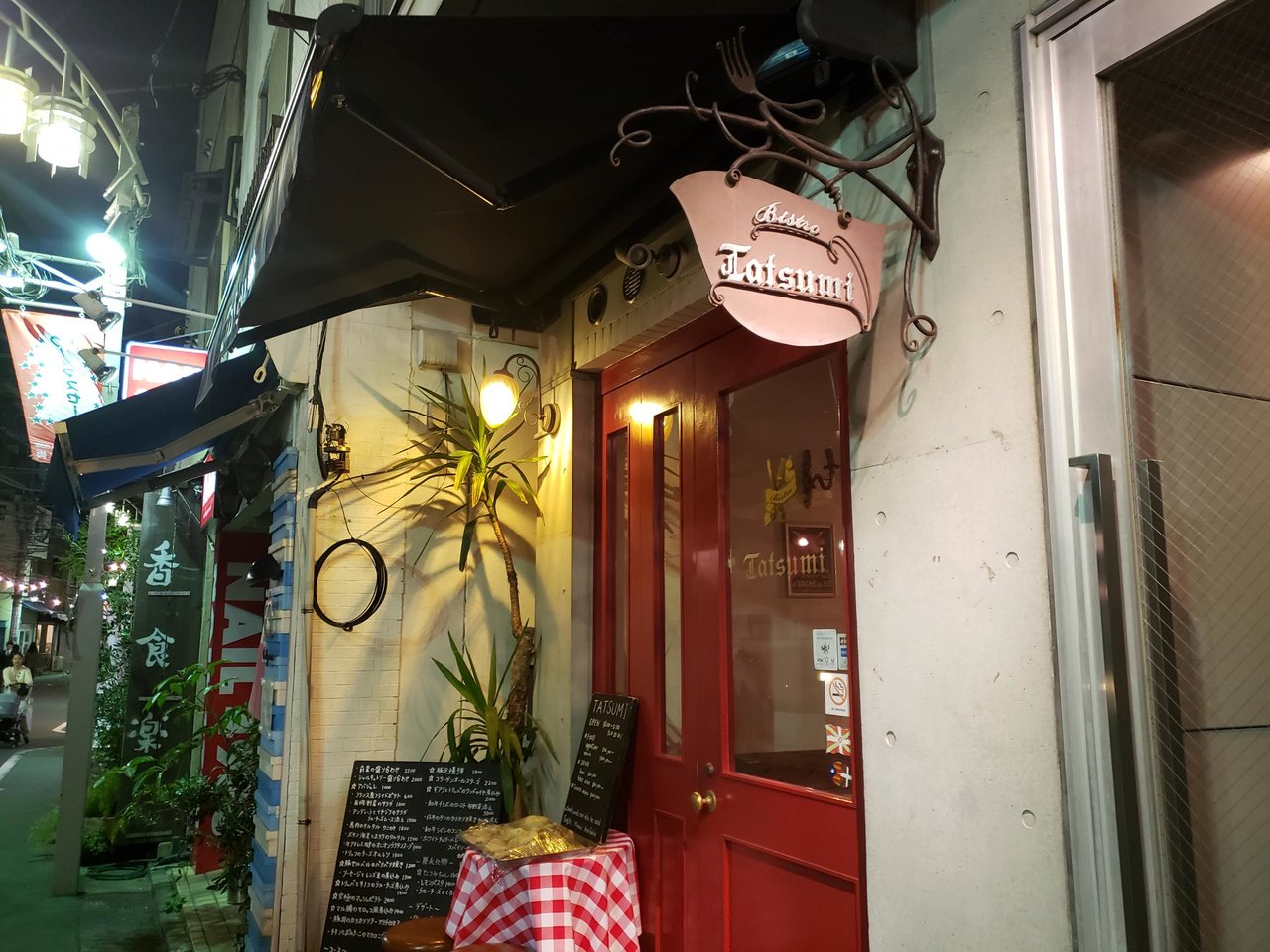
TATSUMI
Address: 1F Skyhill Nakameguro, 2-42-12 Kamimeguro, Meguro-ku, Tokyo
TEL: 050-5263-6566 (Reservations only)
Hours: Weekdays, Saturdays, Public Holidays 6:00 PM – 12:00 AM (Last Order 11:30 PM)
Closed Sundays and the third Monday of the month
La Boucherie du Buppa
Address: B1 Liberta Yutenji, 1-1-1 Yutenji, Meguro-ku, Tokyo
TEL: 03-3793-9090
Hours: Tuesday–Saturday 6:00 PM – 2:00 AM (Last Order 1:00 AM)
Sunday 6:00 PM – 12:00 AM (Last Order 11:00 PM)
Closed Mondays, with one irregular holiday per month
IJICHI YasutakeVice President, Sunshine Juice Inc. Born in Tokyo in 1982. While at Keio University, he worked for an event company, planning and producing receptions and parties for major brands. He then moved to a PR firm, where he engaged in planning and managing marketing communications and branding from a PR perspective. He resigned at age 30. Together with his representative, a friend since junior high school, he founded Sunshine Juice, Japan's first cold-pressed juice specialty store, and currently holds his position. Favorite foods include fugu (pufferfish) and suppon (soft-shelled turtle). Favorite sports are baseball and horse racing. Favorite places are traditional coffee shops and casual bars.
Instagram:
ijichiman






The cherry blossoms along the Meguro River have always been magnificent. However, in my memory, ten years ago, Ueno Park was the place for cherry blossom viewing. Meguro River was more of a hidden gem.
Ueno Park, with its symbolic scene of people reserving spots with tarps and sharing drinks over elaborate hot pots, was the epitome of cherry blossom viewing. Today, however, the Meguro River, with its pink sparkling wine with strawberries in hand and selfies being taken with smartphones, has become the successor to Ueno.