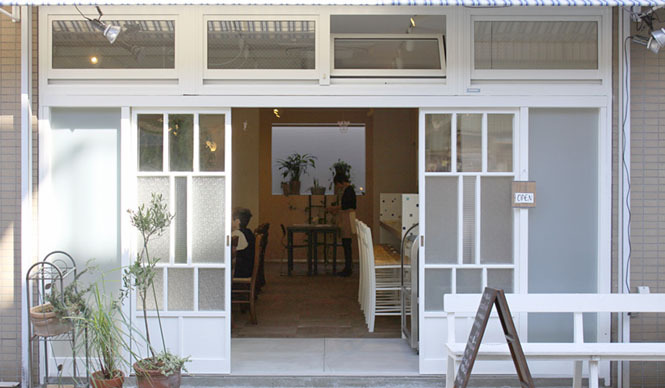
cafe & gallery | A Green Cafe Opens in Front of a Public Bath Near Yanaka
cafe&gallery
A green cafe opens in front of a public bath in Tokyo's downtown, near Yanaka.
“Furomae Café & Gallery” Opens
As the name suggests, it is located directly in front of a public bath, hence “Furomae” (before the bath). Just as public baths have served as places for people to connect and build community since the Edo period, the name carries a wish for this cafe to be a place where diverse people can interact and share their ideas.
Supporting this community aspect are the organic food, natural materials, and interior design and construction utilizing natural energy. We would like to introduce Furomae's commitment to green initiatives that heal and energize its visitors.
Text by Yayoi Minowa (Environmental Writer)Photographs byYoko Ueno Lewis (http://www.yokoueno.com/)
Relax Amidst Natural Materials
Perhaps the most relaxing moments for people are when they are in nature. Sunlight streaming in, a gentle breeze flowing, fresh air, surrounded by natural trees...—The aim was to recreate such an environment in the cafe, a place where visitors can feel at ease and find a moment of respite amidst their busy lives. "Furomae Café & Gallery" features an interior design and layout that evokes a sense of nature throughout.
The walls are finished with diatomaceous earth, known for its excellent humidity-regulating properties. Under the guidance of diatomaceous earth specialists and architects, staff and volunteers applied the material themselves in a workshop format. Many participants used a trowel for the first time, but diatomaceous earth is a safe material that even amateurs can handle with practice.
Using a material that allows for self-building also offers significant advantages for future maintenance. Above all, anyone who applies the plaster to a wall develops a sense of attachment to it. The workshops were organized by “Itonami Network,” a group led by environmental architect Tetsuhiko Kuroiwa.
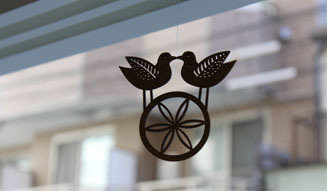
The diatomaceous earth used on the walls, called "MP Powder," excels at regulating humidity, and also possesses deodorizing capabilities and the ability to adsorb and decompose chemical substances like formaldehyde. It is an excellent material for improving air quality.
The flooring is made of solid Japanese cedar from Nishiawakura Village, Okayama Prefecture. These are "Yuka-hari Tiles," an original product from "Nishiawa," a company that develops wooden products from thinned timber cut into tile shapes. The product is convenient as damaged tiles can be replaced individually.
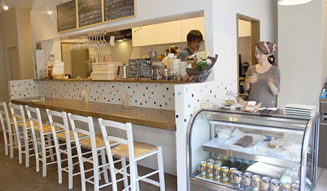
The area around the counter was designed by Norinori Maeda of GN Architectural Design Office, who drew inspiration from the image of a public bath, incorporating a generous use of tiles. The tiled counter, with its rhythmic splashes of the key color blue, exudes a sense of cleanliness and adds a playful touch.
The bay window on the gallery side is designed to capture light and invite airflow. This was a particular focus for architect Tetsuhiko Kuroiwa. In summer, a ventilation window above the bay window draws in cool air and light from the north. It also serves as a light space, intentionally positioned to be in direct view when entering the cafe.
The gallery space can be integrated with the cafe for events using movable partitions, but during exhibitions, it functions as a friendly gallery attached to the cafe.
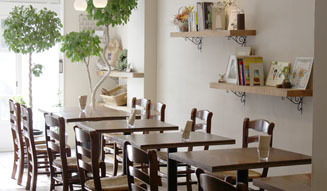
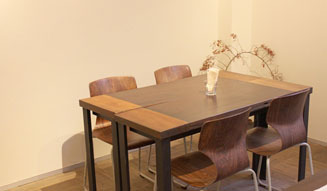
The furniture and shelves are made from reclaimed wood from Fukushima. The tables in the cafe and gallery areas were apparently once the floorboards of an old traditional Japanese house. Combined with iron legs, they have been transformed into tables, given new life.
Furthermore, the cafe utilizes a solar water heater for hot water. On sunny days, it heats water using solar energy, an efficient use of natural energy. It is perhaps unusual for a restaurant to use a solar water heater.
Energized by Organic Food
Eating is also a primary purpose of the cafe. With consideration for environmental impact, health, food safety, and taste, efforts are made to use ingredients that are as pesticide-free and organic as possible.
Vegetables and rice are sourced directly from young organic farmers in Chiba and Saitama prefectures. For coffee, freshly roasted organic beans are purchased from the nearby "Yanaka Coffee."
The rice is cultivated using the "Aigamo method," a rice-farming technique that utilizes ducks instead of pesticides. The ducks eat weeds and insects, allowing for pesticide-free rice cultivation. This not only eliminates the need for insecticides and herbicides but also provides organic fertilizer from the ducks' droppings, benefiting the rice growth. It is a highly rational farming method where humans, animals, and the environment coexist.
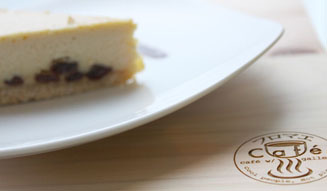
For lunch, recommended options include the "Furomae Deli Plate," featuring three side dishes made with plenty of organic vegetables, soup, and a choice of rice or bread, and the "Sri Lankan Curry," rich in spices.
The Sri Lankan Curry, in particular, uses an abundance of organic JAS and Fair Trade certified organic spices from Bio Foods, a company in Sri Lanka, the home of curry. In Sri Lanka, these spices are grown by small-scale farmers using "biodynamic agriculture," where farms are treated as a single living organism, without any pesticides or chemical fertilizers.
The curry also contains a generous amount of organic ginger, and the synergistic effect with the spices makes you feel your body warming up. Furomae's curry is truly a power food, akin to medicinal cuisine.
In the evening, you can enjoy light snacks such as caponata and hummus, along with organic wine and beer. Of course, it might be quite stylish to take a bath at the public bath across the street and then have a beer.
Looking ahead, the gallery is expected to host more events, including those related to art and the environment. Another green cafe, one that blends into the community and offers a relaxed atmosphere, has opened in Tokyo.
Furomae Café & Gallery
1F, Court Ikegami, 4-21-7 Nishi-Nippori, Arakawa-ku, Tokyo
Hours: (Tue-Fri) 11:00 AM - 9:00 PM (Last Order 8:30 PM)
(Sat, Sun, Holidays) 11:00 AM - 7:00 PM (Last Order 6:30 PM)
Closed Mondays
http://furomae.jimdo.com/
Tetsuhiko Kuroiwa, Architecta
http://architecta.jp/
GN Architectural Design Office
http://www.green-necklace.org/eachproject/architecture.html