BOOK | "Smart Japan" Declaration
BOOK | A Declaration of "Smart Japan"
Proposing a New Relationship with Electricity
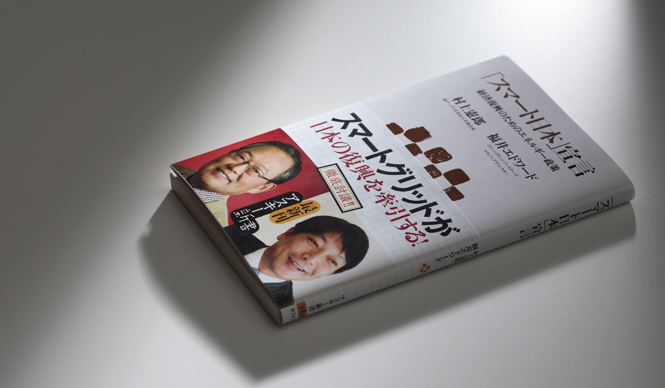
Since March 11th, a mixed bag of books on next-generation energy have been published. What makes this book, "A Declaration of 'Smart Japan'," released just this August, unique is its thorough rejection of idealistic theories, despite acknowledging the post-3.11 situation, and its presentation of future energy scenarios based strictly on objective facts.
Text by OPENERSPhoto by JAMANDFIX
"Peak Shift" and "Negawatts"
One of the authors, Norio Murakami, is the former honorary chairman of Google Japan, and has been a proponent ofsmart gridssince early on. From his position of deep understanding of IT, an essential element of smart grids, he is increasingly influential in the field of next-generation energy. The other author, Edward Fukui, is involved in investing in environmental technology businesses and has also authored "Introduction to Smart Grids."
The main topic discussed here is the issue of peak shift. Peak shift is the idea that if we avoid using electricity during the approximately one-hour peak demand in the summer daytime, the electricity crisis that has been talked about since March 11th can be resolved. The current electricity shortage is solely about the amount of electricity needed during peak times; power outages occur because the demand from us exceeds the supply capacity that power companies can generate at a certain time of day. In other words, if we can avoid the crisis during peak hours, there is enough electricity.
The concept of negawatts is then presented as effective in promoting this peak shift within a free economy. Until now, power plants have been built to supply electricity with a surplus during the brief period of high electricity consumption in the summer. To encourage peak shift, new power plant construction should be halted, and the funds saved should be returned to users who implement peak shift. That is negawatts. While the electricity savings from conserving power for just a few hours during peak times are minimal, as an additional benefit, power companies will redirect the funds they would have invested in power plant construction to users who have reduced their consumption.
Within such a mechanism based on economic rationality, which forms of energy will survive in the future? The book's stance is that this will become clear once electricity is liberalized. The book, discussed calmly and separately from anti-nuclear or de-nuclear arguments, is full of persuasive power.
"A Declaration of 'Smart Japan': Energy Policy for Economic Revival"
Authors | Norio Murakami, Edward Fukui
Publisher | ASCII Media Works
Price | 780 yen