March 17, 2015
TOKYO PREMIUM BAKERIES | Episode 6: L’atelier de Plaisir
TOKYO PREMIUM BAKERIES | Part 6: L’atelier de Plaisir
Bread Baked by a Chef Captivated by the Wonders of Natural Yeast
This sixth installment of our series introducing Tokyo's truly high-quality and delicious bakeries features L’atelier de Plaisir, located a five-minute walk from Soshigaya-Okura Station on the Odakyu Line, in a residential neighborhood. Chef Yuji Tanaka, who could be called a "natural yeast master," masterfully uses about 30 types of his own cultured natural yeasts to bake 300 varieties of bread.
Reporting and Text by Fuyuki TogawaPhotography by Mizuho Takada
How Delicious Can Bread Be with Cultured Natural Yeast?
A five-minute walk south from Soshigaya-Okura Station on the Odakyu Line, towards Seijogakuenmae Station, leads you to L’atelier de Plaisir nestled in a quiet residential area. The brown tiles of the exterior and the Austrian mill visible through the window enhance the shop's clean impression. It opened in December 2007. Chef Tanaka's family ran a bakery, but after working in restaurants and bakeries, he began with mail-order bread in 1999, and after working as a baking consultant, he opened this shop.
The bread at L’atelier de Plaisir is truly beautiful. While stylish bakeries have sprung up all over Japan amidst the current health craze, the clean, exquisite appearance of the bread displayed inside feels particularly striking.
The hallmark is the use of two to four types of cultured natural yeasts for a single loaf, which distinctly draws out the depth, umami, and sweetness of the ingredients. The cultured natural yeasts include about 30 varieties, mainly beer yeast, yogurt yeast, and fruit yeasts like grape, as well as sake yeast, hop yeast, and vegetable yeast. Around 15 types of natural yeasts are constantly nurtured and maintained by Chef Tanaka.
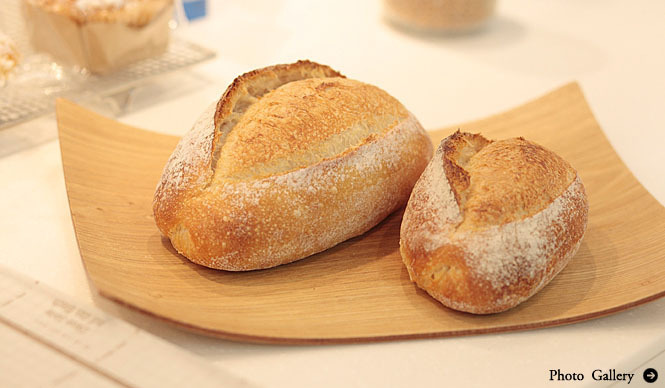
The bread named after the shop, "Plaisir," is a very easy-to-eat meal bread made with three types of cultured natural yeasts. It has a chewy texture and a distinct sweetness of wheat.
Furthermore, "Epeautre" uses natural yeast cultured from two types of spelt, combined with whole grain flour from the precious ancient grain spelt, milled on the shop's stone mill. Rich in dietary fiber, protein, amino acids, vitamin B, and minerals, its unique deep flavor and rich aroma unfold with every bite. It's perfect sliced and lightly toasted with butter or cheese.
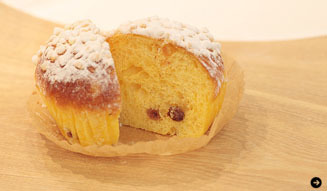
Veneziana, a traditional Italian fermented pastry. Large ¥550 / Small ¥300
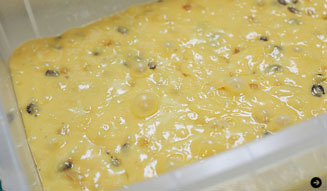
The Veneziana during its fermentation
During the interview, Chef Tanaka, who was continuously agitating large jars of yeast, explained why he uses so many types of natural yeasts, which require such careful management.
"From the perspective of fermentation science, lactic acid bacteria are the key to creating amino acids, making it easily digestible and bringing out sweetness," he explained with a smile. "To create breads with various characteristics using this, we needed this many types of natural yeasts."
Chef Tanaka pairs yeasts with less acidity for breads where he wants to highlight the sweetness of the wheat, and fruit-friendly yeasts for breads with abundant fruit. He has thoroughly researched yeast and flour combinations, even creating the traditional Italian fermented pastry "Veneziana," known for its melt-in-your-mouth texture, using natural yeast.
"With cultured natural yeasts alone, we can create breads with such diverse flavors and textures. I wonder how far we can go. Thinking about the infinitely expanding possibilities for recipes is truly enjoyable." When Chef Tanaka speaks about bread, captivated by the wonders of fermentation and yeast, his face lights up like a young boy fascinated by a science experiment long ago.
We eagerly anticipate what kind of bread he will create next, with his ideas and energy.
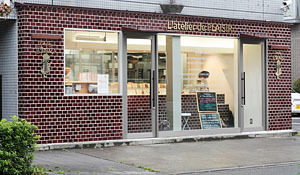
L’atelier de Plaisir
8-13-8 Kinuta, Setagaya-ku, Tokyo, Jibe Seijo 1F
Tel. 03-3416-3341
Business Hours | 12:00 PM - 8:00 PM
Closed Mondays and Thursdays
(5-minute walk from Soshigaya-Okura Station on the Odakyu Line)
http://www5a.biglobe.ne.jp/~plaisir/