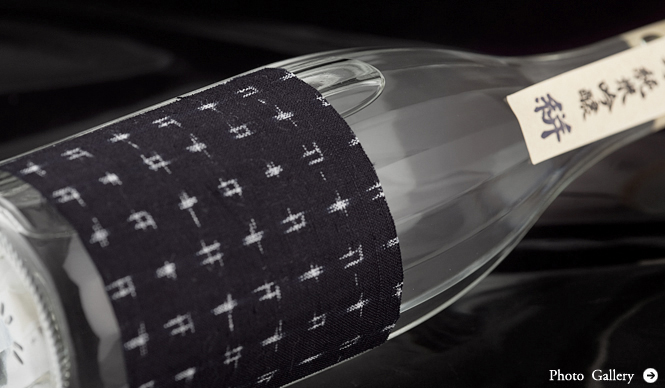
Wajō Waraku | Episode 5: The Birth of Mitsui no Kotobuki and the Beginning of its Brewing
The Newest Brewery in Japan to Receive a Sake License
Miinokotobuki: The Birth of a Brand and the Beginning of Brewing
Miinokotobuki is located in Taitō-machi, Mii-gun, in the Chikugo Plain, about 40 kilometers south of the center of Fukuoka City.
Text by Wajo WarakuPhoto by Jamandfix(TOP)
The Reason Behind the Difference Between "太刀" and "大刀"
This town, Taitō-machi, was the site of the Ōhara Battle during the Nanboku-cho period, a conflict between the Southern and Northern Courts. The river where the warrior Kikuchi Takemitsu washed his sword is called Tachiarai River, and the town's name became Taitō-machi.
Now, you may have noticed something here. A difference in the kanji!
Originally, the town's name should have been written with "太刀" (tachi, sword), but it is said that during the Meiji era, an official registering place names forgot to add a dot, resulting in the name being registered with the character "大刀" (daitō, large sword) without the dot.
Furthermore, during the Edo period, it was on the route for the Sankin-kōtai (alternate attendance) system. There were three wells with spring water, including rest stops and post stations. The name of Mii District was derived from these three wells, and this is how the brand name "Miinokotobuki" was born.
From the Edo to Meiji periods, our brewery, operating under the trade name "Izumiya," would transport rice harvested from the surrounding fields by boat on the nearby Koishibaru River to sake cellars downstream. Through frequent visits to these cellars, we learned the art of sake brewing. Leveraging our expertise in selecting sake rice, we obtained our license in Taisho 11 (1922), marking the beginning of our brewing.
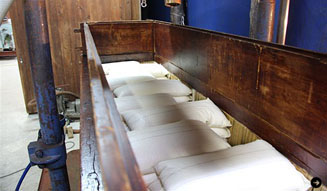
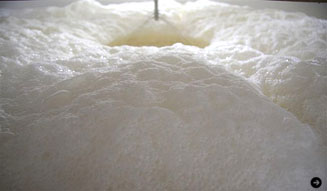
Watching Yamada Nishiki Grow from Seed to Harvest
While many breweries boast of their long history, ours is said to be the newest in Japan, being the last to receive a license for sake production.
There are breweries that originally produced shochu, soy sauce, or vinegar and obtained their licenses in the Showa era, or those that bought licenses from breweries that had ceased operations and established new ones. However, it seems we are the last to have obtained a license from a completely unrelated industry (though this is just what we've heard).
We primarily brew Ginjo, Junmai, and Kimoto styles. Located near Itoshima, one of the main production areas for Yamada Nishiki, the pinnacle of sake rice, we visit the fields every year during planting season to help with the process. We watch Yamada Nishiki grow from seedlings and welcome the autumn harvest.
We do not undertake large-scale brewing, from Ginjo to Junmai, but rather brew using methods most suitable for fermentation.
Sake brewing, which had been refined through the Edo period, reached its zenith in the Taisho and early Showa eras. We have learned the theories and techniques of sake brewing from that time, reinterpreting them anew. By leveraging the characteristics of local rice, we create a "Miinokotobuki" sake with a deep umami, a clean finish, and a profound complexity.
The sake we produce in this manner is stored after being pasteurized in bottles, then kept in cold storage or refrigerators.
Just as we are meticulous about brewing, we are equally attentive to storage, with the overarching goal of pursuing the true umami of sake.
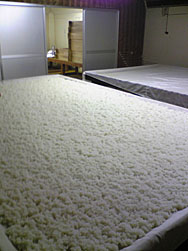
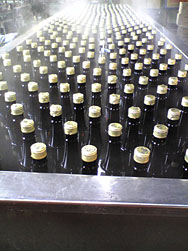
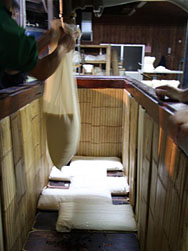
As a side note—
At our brewery, "Miinokotobuki," we haven't had a Toji (master brewer) for six years. My brother and I handle the brewing as brewery-owners. We have been consecutively awarded at the National New Sake Appraisal for seven years (5 gold medals, 2 honorable mentions).
We brew with the motto: "Sake brewing is a combination of chemistry, sense, and passion."
Miinokotobuki
http://miinokotobuki.net/
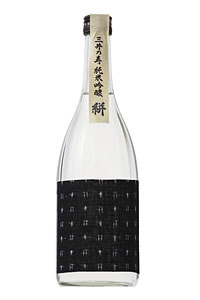
Win "Miinokotobuki" Sake
We are giving away a 720ml bottle of sake, featured in each installment of "Wajo Waraku Sake Academy" on the web magazine OPENERS, to three lucky winners.
If you wish to enter, please apply via the form below.
Winners will be contacted directly.
We also welcome your questions about sake. Those whose questions are selected will receive a popular sake from "Wajo Waraku." Please send us any terms you'd like to know about, or any simple questions you may have.
Application Period: Monday, October 5, 2009 – Friday, October 30 (12:00 PM) JST

Applications are now closed.
Thank you for your many applications.