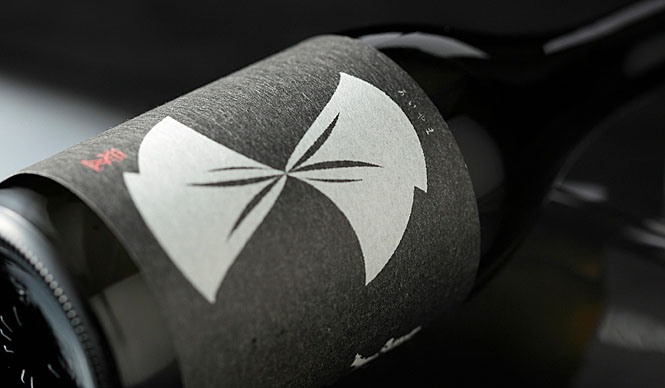
Wajō Waraku | Episode 3: "Nanbu Bijin," Sake Polished in the Northern Land of Nambu
Brewery Workers in Their Early Thirties
Nanbu Bijin: Sake Polished in the Land of Nambu
Nanbu Bijin Co., Ltd. is located in Ninohe City, Iwate Prefecture, a region blessed with magnificent nature and a long history.
Founded in 1902, the brand name "Nanbu Bijin" was established in 1951. At the time, sweet, impure sake with low polishing ratios was mainstream. The current chairman, Hideo Kuji, and the late Masaru Ito, who was then the director of the Ninohe Tax Office, wanted to create a clean and beautiful sake. Ninohe City in Iwate Prefecture has long been known as the "Land of Nambu." The name "Nanbu Bijin" was chosen to reflect this regional identity and the image of a clean, beautiful sake quality, drawing from the abundant water and fertile land that characterize this area.
Text by Wajo WarakuPhoto by Jamandfix (TOP)
The Late Kazushi Yamaguchi, a Master Brewer Who Said, "Every Year is My First Year"
The sake of Nanbu Bijin has been brewed by Kazushi Yamaguchi, a Nanbu Toji (master brewer) who was recognized as a Master Craftsman of the Year by the government in 1992 and received the Sixth Class Order of the Sacred Treasure in 1995.
Mr. Yamaguchi's exceptional skill is evident in his record of winning the Superior Prize at the Nanbu Toji Sake Brewing Competition for over 50 consecutive years. Notably, he achieved the highest honor, the Minister of Finance Award, in two consecutive years: 1979-1980 and 2001-2002.
This remarkable achievement of four top awards is unprecedented in the history of Nanbu Toji. He also boasts numerous accolades from the Tohoku and National Sake Appraisals. In recent years, he has won gold medals for two consecutive years in 2001 and 2002, and has been a recipient of the Gold Medal (Grand Gold Medal) at the Monde Selection, an international spirits competition, for six consecutive years from 1997 to the present.
However, he often remarked, "I never stop learning about sake brewing, no matter how many years I've been doing it. The most challenging part is understanding the ever-changing nature of water, which is crucial for harmonizing rice, koji, and water. That's why every year feels like my first."
Mr. Yamaguchi served as a technical advisor to Nanbu Bijin with the title of Honorary Master Brewer since 2006. Sadly, he passed away in October 2008 at the age of 88.
Currently, Junji Matsumori, who worked as the head assistant brewer under the late Mr. Yamaguchi, has taken over as the master brewer. He is now dedicated to brewing new Nanbu Bijin sake alongside Kosuke Kuji, the fifth-generation brewery owner.
We are committed to upholding the techniques and spirit of the late Mr. Yamaguchi, aiming for the ultimate sake brewing as the reborn Nanbu Bijin. Both Mr. Matsumori and Mr. Kuji have received the Iwate Prefecture's Award for Outstanding Young Skills, a rare distinction in Iwate, highlighting their high level of expertise.
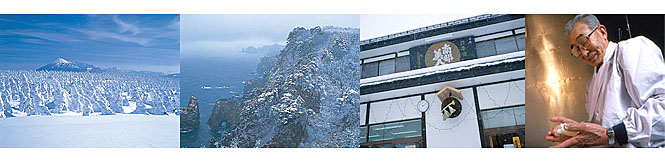
From left: Zao's rime ice, Rikuchu Coast "Kitayamazaki," the brewery, and Master Brewer Kazushi Yamaguchi (previous generation)
Young Brewers, Averaging 32 Years Old, Aim for a Fusion of Traditional Techniques and Youthful Passion
Most of the rice used for Nanbu Bijin sake is locally sourced from Iwate Prefecture. Specifically, we use sake-grade rice varieties such as "Miyamanishiki," "Ginginga" (Iwate's first sake-grade rice), its sister variety "Gin Otome," and "Toyonishiki." We also use "Kakehashi," an original Iwate variety for which we received seed propagation assistance from Ishigaki Island, Okinawa, during the severe drought year of 1993. The rice is polished to an average of 54%. The brewing water is a medium-hard伏流水 (underground water) from the Oritsume Masenkyo gorge. Our sake, brewed using the traditional Nanbu-style handcrafting techniques, is characterized by its gentle yet exquisitely balanced quality and crisp finish.
Storage methods include keeping all unpasteurized sake at sub-zero temperatures (ice-cold storage, -4°C to -10°C in refrigerators and thermal tanks). Over 80% of our premium sake, such as Daiginjo, Junmai Ginjo, and Honjozo, is stored below 5°C in refrigerators. Other regular sake is stored below 10°C. All our sake is refrigerated to ensure meticulous aging control.
Furthermore, we do not use any carbon filtration for any of our sake, as we value the original flavors of the rice and sake, as well as the nuances of aging through the changing seasons.
Currently, Master Brewer Matsumori, who has received the Iwate Prefecture's Award for Outstanding Young Skills, and Kosuke Kuji, the fifth-generation brewery owner who studied at the Department of Brewing Science at Tokyo University of Agriculture and received the same award as Mr. Matsumori, lead a team of young brewers with an average age of 32. Together, they are pursuing the ultimate sake brewing, aiming for a "fusion of traditional techniques and youthful passion and energy."
Nanbu Bijin will continue to pass down its handcrafted techniques to the next generation.
Characteristics of Nanbu Bijin Sake Brewing
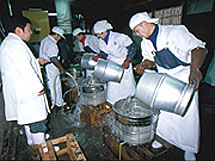
Brewing Scene
Young Sake Brewers
Led by fifth-generation brewery owner Kosuke Kuji (37), the average age of our sake brewers is in the early thirties, making us one of the youngest teams in Japan.
We have two certified Nanbu Toji (master brewers), and both Mr. Matsumori and fifth-generation owner Kosuke Kuji have been selected as Outstanding Young Skills recipients by Iwate Prefecture. In fact, Nanbu Bijin is the only brewery in Iwate with two such recipients.
The Core Technique: Hon-ire (Twice-Heated) Sake
We employ a unique method for pasteurizing our sake. For detailed explanations, please visit the following page. This specific technique is known as the "Plate Heater Rapid Cooling Method," which is rare in Japan.
http://www.nanbubijin.co.jp/s02tukuri/09hiire.html
Challenging Conventional Sake Brewing
ALL KOJI Junmai Sake
In July 2001, we developed "ALL KOJI Junmai Sake," a special sake made solely from koji, with support from the Small and Medium Enterprise Agency's "Creative Technology Research and Development Project Subsidy." We also collaborate with local organizations in Ninohe City for the "Kokusai Okoku Miletto Fair," where we offer an "Owner System Sake" program. Participants can become owners of a barrel and experience the entire process from rice cultivation to sake brewing.
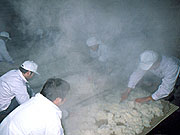
Brewing Scene
Awards from Various Competitions
Our Daiginjo sake won the first-place trophy at the 2007 International Sake Challenge, among other notable achievements in various appraisal events.
For a detailed list of our awards, please refer to the "Awards" page (http://www.nanbubijin.co.jp/s03prize/index.html).
First-Class Sake
Since 2007, our Junmai Daiginjo has been served in the first class of Japan Airlines (JAL), representing Japanese local sake to the world.
Proactive Export Initiatives
Nanbu Bijin is currently exported to 18 countries worldwide, including the United States, the United Kingdom, Hong Kong, Brazil, Dubai, Singapore, and Malaysia, where it is enjoyed by connoisseurs globally.
Development of Sugar-Free Umeshu (Plum Wine)
With the theme "No More Sugar Needed for Umeshu," we have developed and released a sugar-free umeshu made only from "Junmai Sake and Plums." It contains no added sugars, sweeteners, or amino acids. For more details, please visit the following page.
http://www.nanbubijin.co.jp/index.html
Nanbu Bijin
http://www.nanbubijin.co.jp
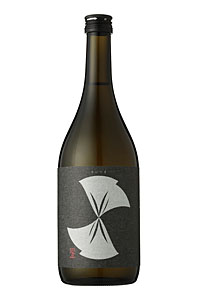
New Series Launch: "Nanbu Bijin" Giveaway
To celebrate the launch of the new series "Wajo Waraku SAKE Academy" on OPENERS web magazine, we are giving away a 720ml bottle of the featured Japanese sake to three lucky winners each time.
If you wish to enter, please apply through the form below.
Winners will be contacted directly.
We also welcome your questions about Japanese sake. Those whose questions are featured will receive a popular sake from "Wajo Waraku." Please feel free to send in any terms you'd like to know about or any simple questions you may have.
Application Period: Monday, September 7, 2009 – Wednesday, September 30, 2009 (until 12:00 PM)

Applications are now closed.
Thank you for your many applications.