May 1, 2015
NEW CREATOR’S FILE Vol.10 Osami Yabuta | Photographer
 |  |  |  |  |
 |  |  |  |  |
 |  |  |  |  |
 |  |  |  |  |
NEW CREATOR’S FILE Vol.10
OSAMI YABUTA|Photographer
What inspired you to become a photographer?
The documentary portraits of the Korean War era from "TimeLife",
and the movie "The Killing Fields" (1984).
What job made you feel like a professional?
Around 1990, I saw Herb Ritts shooting in Los Angeles and noticed the difference between the light I saw with my eyes and the light captured in the monochrome photograph.
I want to capture the essence of people today in my own style. Through "photography" that transcends genres like fashion, gravure, and portraiture.
If you were to give a title to this series of works, what would it be?
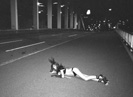
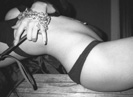
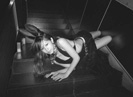
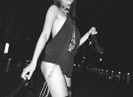
"TOKYO BUNNY GIRLS"
What aspect of this series do you want people to focus on?
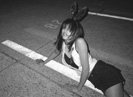
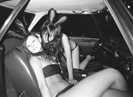
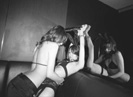
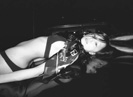
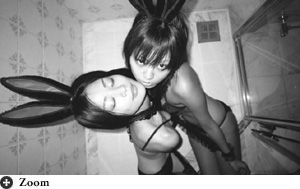
Portraits of about 70 women dressed as bunny girls.
Erotic and elegant. There's no woman who doesn't suit bunny ears.
Your rivals (not limited to photographers)
I don't have any rivals. I try not to compare myself to others too much.
What kind of work do you want to do in the future?
Rather than specific jobs, I want to take many more photos! Through taking photos, I want to meet various people.
A message to OPENERS readers who have seen your work.
Please experience "Tokyo Bunny Girls" with your intuition. These are not difficult photographs. Please look at them many times. And if you find a photo you like, I will be happy. I'm sure you will.

OSAMI YABUTA
From Saitama Prefecture
Born in Saitama in 1967
Left L.A. Harbor College in 1992
Apprenticed under Kazuo Saito in 1992
Became freelance in 1995. Moved base to NY in 1997.
Returned to Japan in 2002. Published "Tokyo Bunny Girls" in 2008.
Cameras Used
For "Tokyo Bunny Girls" this time, all were shot with
Ricoh GR-1V, GR-21
Kodak Tri-X 400
STAFF
styling by
Michiko, Keiko Hitotsuyama(Femme), Aya Kurosaki, Yuka Ogura, Aya Goto, Mai Fujimoto
hair&make by Masumi Kikuchi
models by 70 girls
special thanks by Hideya Suzuki, Keisuke Nakagawa, Yoshiteru Kataoka, Hiroki Oomine
and others
www.tokyo-bunnygirls.com
www.osamiyabuta.com
reference@myway-inc.com
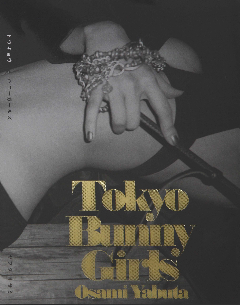
Photo Book "Tokyo Bunny Girls"
Osami Yabuta
¥3,500 (tax included)
Released April 13
MyWay
The Vibe of Present-Day Tokyo and the Fleeting Moments of Young Women
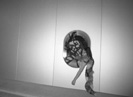
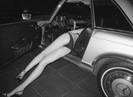
Some women gaze provocatively at the camera, while others look with a coy expression. Some women have parts of their bodies cut off by the frame, while others are strikingly intertwined in pairs. While each of the subjects exudes a youthful sensuality, for some reason, they are all wearing bunny girl ears.
"Tokyo Bunny Girls." As the title suggests, this is a photo book featuring 70 women dressed as bunny girls, captured in settings across Tokyo, such as on the side of night roads, in parks, hotel rooms, and inside cars.
Yet, as you turn the pages, you feel the inherent cuteness, strength of will, and overflowing energy of each individual. The "everyone is a bunny girl" concept serves as an easily recognizable icon, paradoxically highlighting how distinct and captivating each woman is.
Yabuta himself states, "I was photographing bunny girls, but I wanted it to be closer to portraiture." The "now" of each girl living in Tokyo can only be captured in Tokyo at this moment. Furthermore, the women depicted here are mostly teenagers and early twenties. They are still developing as individuals, and their true flavors and personalities will likely emerge a little later. However, it is precisely because of this stage that their youthful exuberance and shyness, the precariousness of these young women, becomes more apparent when presented with the uniform item of a bunny girl costume.
When Yabuta confronts these women through his camera, the atmosphere of present-day Tokyo and the unique moments of these young women are captured as if by destiny.
All photographs are in monochrome. While capturing the softness of femininity, the monochromatic world hints at a desire to preserve this moment, a poignancy for the fleeting nature of time, and an affection born from that very transience.
After the photoshoot, these 70 women, each with a different demeanor, move on. The photographs of women wearing bunny ears that remain in hand might be mere afterimages of a single night's dream.
Miho Kawaguchi (SWITCH)