Lee | The Trajectory of 125 Years of History and Innovation
Lee | A Legacy of Innovation
A Museum Manager from Lee's Kansas City Headquarters Shares Insights
Reporting on the 'Lee 125th Archive Exhibition in TOKYO' (Part 1)
The 'Lee 125th Archive Exhibition in TOKYO' recently took place at Laforet Museum in Jingu-mae, Tokyo. This event celebrated the 125th anniversary of Lee, a globally renowned denim brand. Here, we report on the exhibition, accompanied by photographs from the venue. We also had the opportunity to speak with Jean Svadlenak, who traveled from Lee Jeans' headquarters to oversee the preservation of archival materials, gaining insights from the exhibition's details to the brand's philosophy.
Interview Photographs by Keisuke AsakuraText by Morito Iwanaga (OPENERS)
A Lively Opening Party
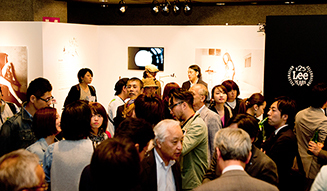
Prior to the public opening, an opening party was held for members of the press. Greeted at the entrance were 125 'Buddy Lee' figures, specially created for this exhibition. All of these were given away to visitors through a lottery during the exhibition period.
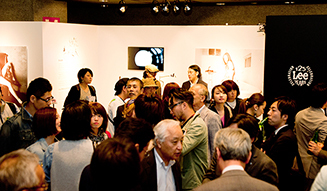
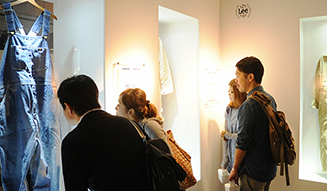
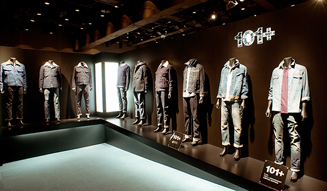
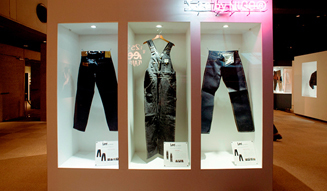
Inside the venue, archival items were displayed chronologically, eloquently narrating the brand's history. The exhibition featured the 'Asia Collection,' preserved as reference materials at Lee's headquarters in Asia, alongside items so rare that they are seldom seen today, owned by private collectors. Additionally, the latest collections and various collaborative projects developed in Japan were also showcased.
Rare Items Not Found Even in U.S. Archive Museums
For this exhibition, Jean Svadlenak visited from Lee Jeans' headquarters in Kansas City, USA. She began her career in museum management at the brand's archive museum in the U.S. in 2003, specializing in preserving and managing archives and brand history. In essence, she is an archaeologist of the 'Lee' brand.

—What kind of place is the archive museum in Kansas City?
The museum houses over 10,000 items, including clothing, photographs, and advertising materials from Lee. It was established in 1995, so it has been in operation for about 20 years.
What surprised me most about this exhibition was the presence of many items that are not in the Kansas City museum.
For example, the women's 'Union-Alls.' While Kansas City has the men's version, the women's is absent. This was exclusively part of the 'Asia Collection' and is a very precious piece.
—What is the Asia Collection?
It comprises materials acquired within Asia for the study of Lee's design, sewing, and patterns, separate from the Kansas City museum. The archives displayed at the 'Lee 125th Archive Exhibition,' held in six Asia-Pacific regions including Tokyo, are from the Asia Collection. The exhibits also include pieces personally owned by collectors. Therefore, this exhibition features very special, rare items that are not even managed in the U.S.
Lee | Lee
A Museum Manager from Lee's Kansas City Headquarters Shares Insights
Reporting on the 'Lee 125th Archive Exhibition in TOKYO' (Part 2)
Interview Photographs by Keisuke AsakuraText by Morito Iwanaga (OPENERS)
The Weight of 125 Years of Fashion Revolution
—I believe this exhibition traces the 125-year evolution of Lee. Lee has brought about numerous transformations in fashion history. What would you say are the most significant topics among them?
It's difficult for me to single out just one. If we're talking about innovative approaches to denim wear, the introduction of the zipper would be a key development.
Beyond design, Lee was also proactive in developing new materials. Among these, 'Gold Denim,' introduced in 1925, was particularly innovative. Renamed 'Jelt Denim' in 1931, it has become synonymous with vintage denim today.
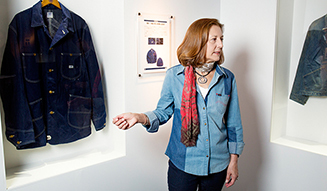
This method uses more yarn than conventional denim and employs a weaving technique that enhances durability. Compared to other denim materials, it is significantly more resistant to tearing, making it ideal for workwear. We were not satisfied with simply producing high-quality fabric; we aimed for 'the most durable fabric.' As part of this pursuit, we collaborated with a spinning mill to develop the yarn itself. This is a jacket made with Jelt Denim. This item became popular among railroad workers and was affectionately known as the 'Loco Jacket' at the time.
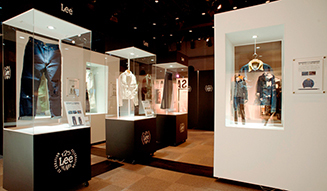
There's also the 'Eisenhower Jacket,' a shorter version of this model. It has a unique name derived from President Eisenhower's birth in Kansas, you see (laughs).
Lee is also famous for creating jeans designed to flatter the female form. Initially, they offered models for women with designs similar to men's jeans, but they received requests for something 'more feminine.' A year later, they introduced a model with a side zipper and pearl buttons on the waist snaps, which gained popularity among women.
—What was the most surprising item among the exhibits?
The children's playsuits from the 1920s and 1930s. We have three types stored in Kansas City, each with different fabrics and colors. Children's clothing is subject to even more wear and tear than workwear. It's miraculous that these have survived in such good condition.
—Lee is also strongly associated with 'overalls.'
Overalls are an iconic item that symbolizes Lee's history, evolving alongside innovation.
This is the 'Four Pocket Bib' model, an early version. Based on this model, it underwent improvements reflecting feedback from workers and laborers.
For instance, in an era when pencils were used instead of ballpoint pens, which didn't exist yet. Pencils shorten as they are sharpened, right? Some models feature stopper stitches to accommodate these shorter lengths. We can decipher the historical context from these small details.
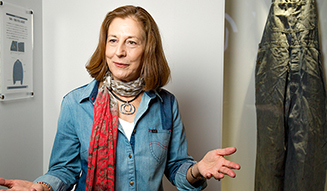
—I imagine many notable figures have worn Lee over the years. Among them, who left a particular impression?
In the 1950s, there's the image of James Dean favoring Lee. Marilyn Monroe also wore Lee denim in her 1961 film. Looking at subsequent history, we have U.S. presidents, Cameron Diaz, and Bruce Springsteen, who appeared on the cover of Rolling Stone magazine in 1984 wearing Lee, leaving a significant impact. Among this impressive lineup, the one who personally left the most lasting impression would have to be Babe Ruth.
—Jean, and Lee headquarters, how do you view this initiative?
Initiatives like this, conducted in Asia, are more dynamic than those in America, and I am very impressed. At our Kansas City headquarters, we are eagerly anticipating and observing the global impact this exhibition will have, not just in Asia and Oceania.
Lee Japan
http://www.lee-japan.jp/