Part 11: Let's Try Wearing Tabis
Illustrator Kazuo Hozumi explains the "basics" of men's kimono styling.
This is the 11th installment, focusing on tabi socks. Unlike Western socks, tabi are always visible, so it's important to choose and wear them with care.
Text and photos by Kazuo Hozumi
The Key to Coordination Lies in Your Feet
When wearing a kimono, it is customary to wear tabi socks, except when wearing a yukata in the summer.
Unless you are accustomed to wearing geta or setta year-round, going barefoot can easily cause chafing from the thong. Tabi are an essential part of Japanese attire throughout the year.
White Tabi
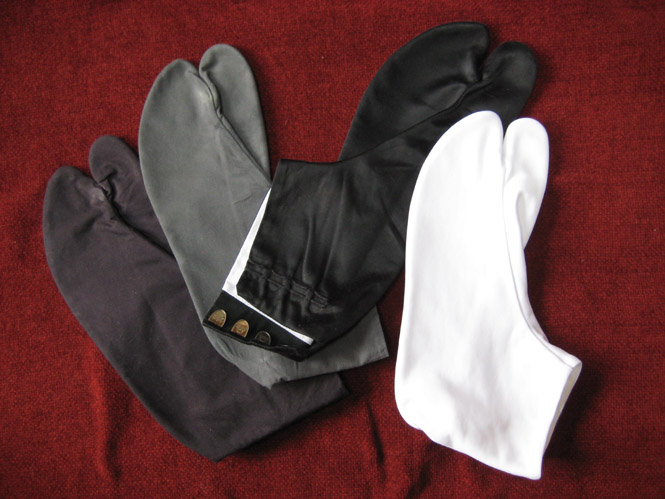
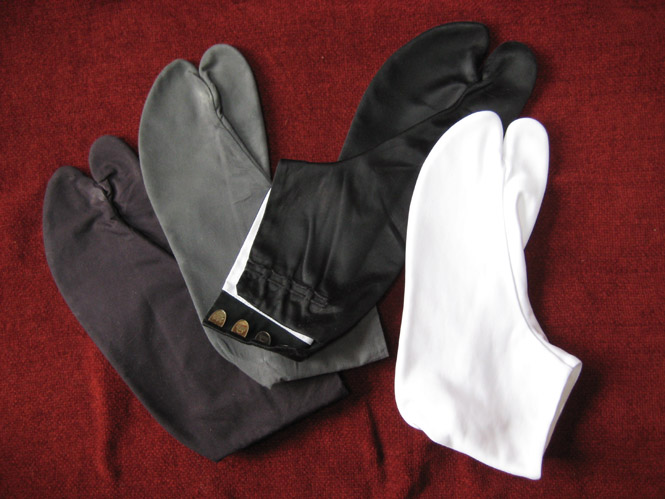
Tabi come in white and other colors. White tabi can be considered formal wear, suitable for ceremonies, funerals, and slightly more formal occasions.
On stage for traditional Japanese music or dance performances, it is standard practice to wear white tabi, even for events like "Yukata Zarai." White tabi are also worn when attending tea ceremonies. In summer, white linen tabi are ideal.
The tea ceremony is a peculiar case: even when attending a tea ceremony in Western attire, you are instructed to wear white socks, in line with kimono etiquette.
What? Wearing white sports socks with a suit? That's so uncool, like a middle schooler! But that's the rule, so there's nothing to be done.
This implies that to truly learn the tea ceremony, one must wear a kimono.
For nagauta, kouta, and other traditional music, the rules aren't quite so strict. At kouta recitals, the vast majority of performers on stage are in suits, and it seems no one wears white socks.
However, singing kouta while wearing a tie just doesn't feel right. A kimono with white tabi (removing the haori, watch, and rings), and a sharply tied kaku obi, would undoubtedly look more stylish, even if the singing isn't great.
Colored Tabi
Besides white, there are also colored tabi.
The most common are black and navy tabi. Both are made of cotton; black tabi are typically made of black satin, while navy tabi use a dark navy cotton charneuse. The lining is usually white cotton, and flannel linings are available for winter.
Navy tabi, with their downtown flair, are considered the epitome of stylishness.
Black tabi are generally considered "uncouth," and even authors like Shotaro Ikenami apparently disliked them.
"You know those shiny black satin tabi? You shouldn't wear those. They look strange. You really need navy cotton tabi; otherwise, you'll look like a country bumpkin who's struck it rich (laughs)." (From "Otokono Sahō")
While the majority of kimono enthusiasts seem to favor navy tabi, I surprisingly have a fondness for black tabi. In contrast to the chicness of navy tabi, black tabi offer a slightly unrefined, perhaps more suburban, charm.
Navy tabi pair well with stylish kimono fabrics like karamari, but the sheen of satin can complement softer silk fabrics quite nicely.
Recently, there's been a wider variety of colored tabi for men, including shades of brown, moss green, and gray. Incidentally, the character Sukeroku in Kabuki wears yellow tabi.
Choosing Tabi
Patterned tabi, resembling small prints, also seem to be popular. However, from the perspective of maintaining a clean look from the feet up, they can be difficult to coordinate with the overall kimono ensemble due to their prominence.
In this regard, the crisp purity of white tabi is their greatest asset. Dirty tabi simply look bad. Although I'm not particularly interested in colored tabi, I often wear gray ones.
Cotton became common in the Edo period; prior to that, linen and leather materials were apparently used.
Nowadays, synthetic materials are common, and knitted tabi, if they fit well, offer a snug and comfortable feel without bothersome wrinkles.
In the past, tabi were fastened with ties. Around the Genroku era, a "clasp" called a "kohaze," shaped like a claw and made from materials like deer antler, was developed. Today, they are made of brass and come in four-kohaze and five-kohaze varieties. The number is a matter of personal preference.
Comfort is paramount when it comes to tabi. Ill-fitting or wrinkled tabi not only look bad but are also uncomfortable. If they are too small, they can cause foot pain.
While the number of shops offering custom-made tabi has decreased, department stores usually have ready-made samples. Even if you know your size, it's recommended to try them on before purchasing.
In the past, sizes were measured in "mon," a unit based on the diameter of an old one-mon coin (approximately 24 mm).
Centimeters are now widely used. Since tabi tend to shrink slightly when washed, it's advisable to choose a size about 0.5 cm larger.