Part 9: Folding Your Kimono
Illustrator Kazuo Hozumi explains the "ABC" of dressing in men's kimono.
In this ninth installment, we discuss how to fold a kimono. We'll hear about the methods for tidying up after wearing one yourself, rather than leaving it to others.
Text and Illustrations by Kazuo Hozumi
Deepen Your Affection for Kimono
If you intend to wear a kimono, you must also know how to care for it afterward. Cultivate the habit of always tidying it up yourself, rather than relying on others. This will foster a deeper affection for your kimono and allow you to constantly check for stains or damage.
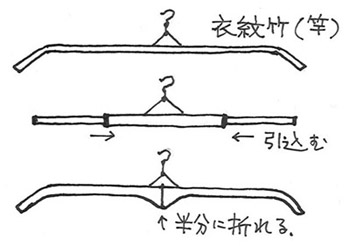
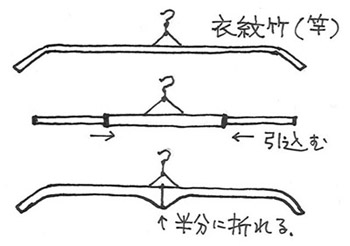
After wearing a kimono, always hang it on an erisao (also called eritake, essentially a kimono-specific hanger) overnight to dry any moisture.
A regular clothes hanger has sloped shoulders, so it doesn't fit well.
An erisao that spans the full width of the kimono's shoulders is easy to use, and it's something you'll want to have.
Some are extendable or foldable in half, which are more convenient for travel.
I personally hang my nagajuban (under-kimono), kimono (nagagi), and haori (outer jacket) layered together. Other accessories, such as the obi, datejime (sash), tabi (socks), and tenugui (towel), should be put away in the meantime.
The next day, remove them from the erisao and fold them. This task must also be done by yourself. Fold them on a tatami mat. This applies whether you are in a Japanese-style or Western-style room. I flatten a space on my bed, spread out a large hana-goza (decorative tatami mat) on it, and fold them there. Please refer to the illustrations for the folding method.

How to Fold a Kimono (Nagagi)

How to Fold a Haori
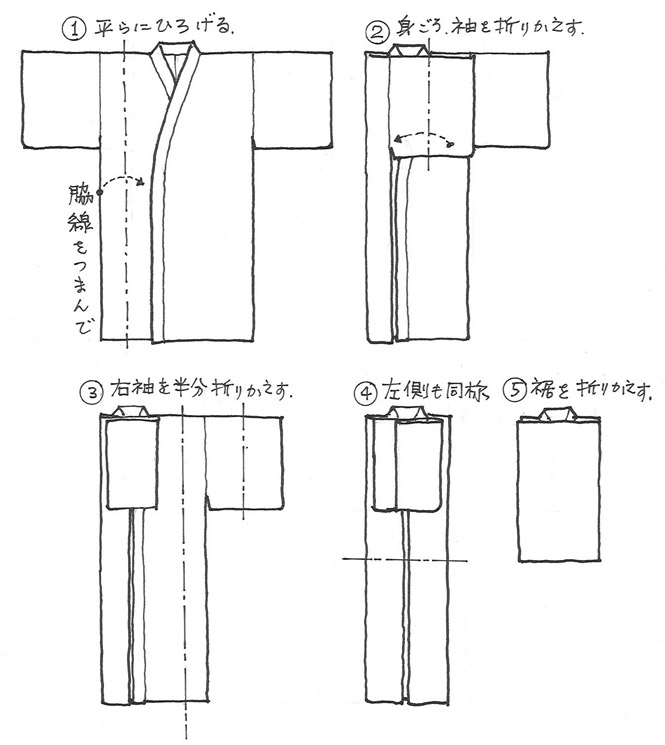
How to Fold a Nagajuban
Once folded, place each item in a tatō (paper wrapper) and store it in a chest of drawers. Some say it's better not to use tatō (made of paper), but they make storage in drawers easier.
Paulownia chests have long been considered the best for storing kimono. Some people put sachets of incense inside their chests, but I store them with insect repellent immediately. While some dislike the smell of naphthalene-based repellents, I actually quite like the scent. If the smell bothers you, you can hang the kimono on an erisao on the morning you plan to wear it to let the scent dissipate.