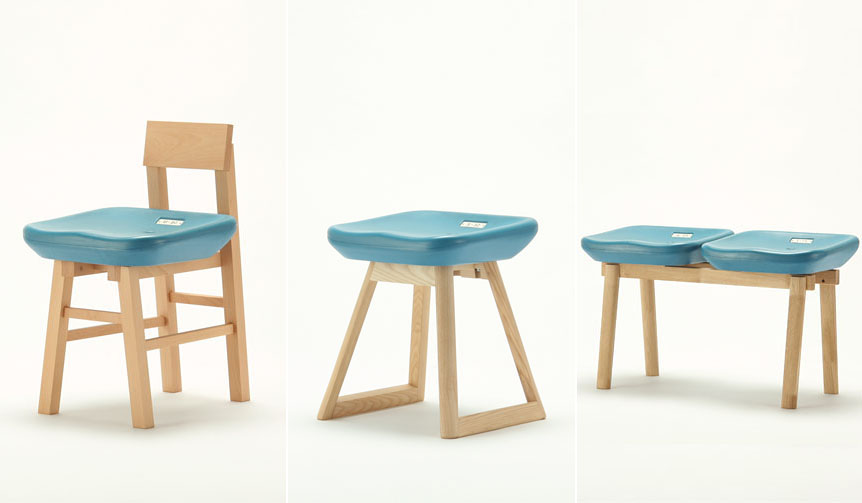
The "blue seats" from the National Stadium meet chairs by three designers for a limited edition release | KARIMOKU
KARIMOKU
The "SAYONARA National Stadium Project" Revives the Unreserved Seating of the National Stadium
Blue Seats Meet Designer Chairs in Limited Edition Release
The National Stadium, which opened in 1958 and served as the main stadium for the 1964 Tokyo Olympics, witnessed 58 years of historic moments in sports and concerts. Now, the stadium's iconic blue seats have been reborn as chairs through the ideas of three design teams—Drill Design, Hiroko Shiratori, and Motohiro Suzuki—and the craftsmanship of Karimoku Furniture. These chairs are now available in a limited quantity.
Text by Makoto Kajii (OPENERS)
A Place Etched in Many Memories
The blue seats used in this project were originally part of the unreserved seating at the National Stadium. They were removed before the stadium's demolition and carefully stored. Using these seats, which can be considered a piece of Japanese heritage, three designers have created a stool, a chair, and a two-seater bench. Karimoku Furniture was responsible for the design and manufacturing.
Each of the three types of chairs is branded with the Karimoku Furniture logo and comes with a plate certifying that the blue seat was used at the National Stadium. Sales are open until August 23, 2015, at 23:59.
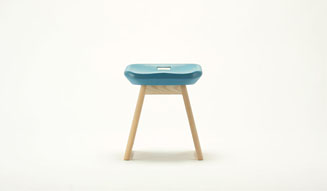
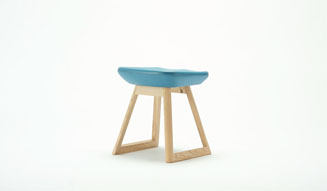
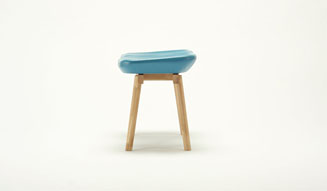
The "TOKYO Stool": Combining Lightness and Strength
Drill Design's "TOKYO Stool" is a small and lightweight stool. Its structure, composed of straight lines, appears delicate, yet it meets Karimoku's stringent quality and durability standards, ensuring it possesses the full quality and strength expected of a stool.
Yusuke Hayashi and Yoko Anzai of Drill Design commented, "We considered how the owner would use it, what they would think, and what kind of presence it would have decades from now. That's what guided our design. As for the name's origin, whether it's Tokyo Tower or a torii gate, we didn't consciously aim for either, but the linear, light form felt reminiscent of the image of TOKYO."
By integrating three elements—a simple structure, the contrast of materials like plastic and wood, and a balanced form—they created a design that is both minimalist and distinctive.
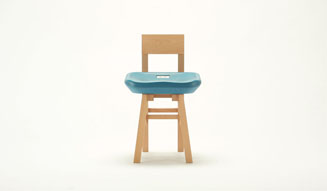
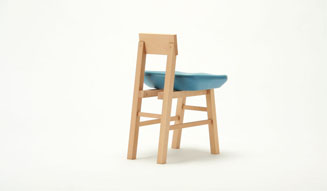
The "Pony Chair": A Bridge for People and Shared Experiences
The "pony chair," a chair with a small backrest, was designed by Hiroko Shiratori with the idea that "the National Stadium seats held memories and value for many people. Rather than discarding them because they were old, we wanted to pass on at least a part of that legacy to create new living spaces and foster future connections."
The slightly unbalanced and whimsical appearance comes from the small backrest, designed to support the lower back. Shiratori explains, "Above all, I wanted to respect the charming presence and distinctive form and color of the seat itself." This design highlights the presence of the blue seats that once adorned the National Stadium.
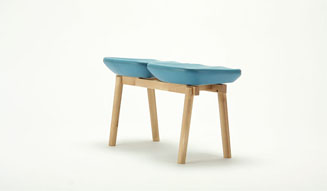
The "KOKURITSU Bench": Sharing Time and Experiences with a Neighbor
Motohiro Suzuki's "KOKURITSU Bench" features legs attached to the seats where people once sat side-by-side at the National Stadium, recreating its form as furniture. Suzuki notes, "The blue plastic seat is an icon of watching sports. The shape and color of the seat, the temperature when sitting, and the distance to the next seat all evoke peaceful memories of attending sporting events."
The width of the two seats together replicates the original seat pitch from the National Stadium. The frame, made by joining short, unused pieces of wood, is crafted from materials that, like the seats, evoke a sense of history. Over this foundation of seat and frame materials, users' own memories will accumulate, deepening their affection for the bench over time.
Suzuki adds, "I believe old townscapes are beautiful because they are imbued with vast amounts of time and memory. For the residents, they become more than just physical structures. I hope this bench can serve as a catalyst for contemplating the depth of time and memory embedded in products."
Inquiries
SAYONARA National Stadium Project
http://t.pia.jp/feature/sports/sayonaragoods/