Exploding in Popularity Overseas: What Are the Roots of Aruta Soup, Stirring Up the Art World? | MEDICOM TOY
MEDICOM TOY
BE@RBRICK by Japanese Artist Aruta Soup Arrives
Aruta Soup, influenced by London's graffiti culture, continues to create art with a background in street culture. To commemorate the release of his BE@RBRICK, which is highly acclaimed worldwide, we conducted an email interview.
Text by SHINNO Kunihiko | Edit by TOMIYAMA Eizaburo
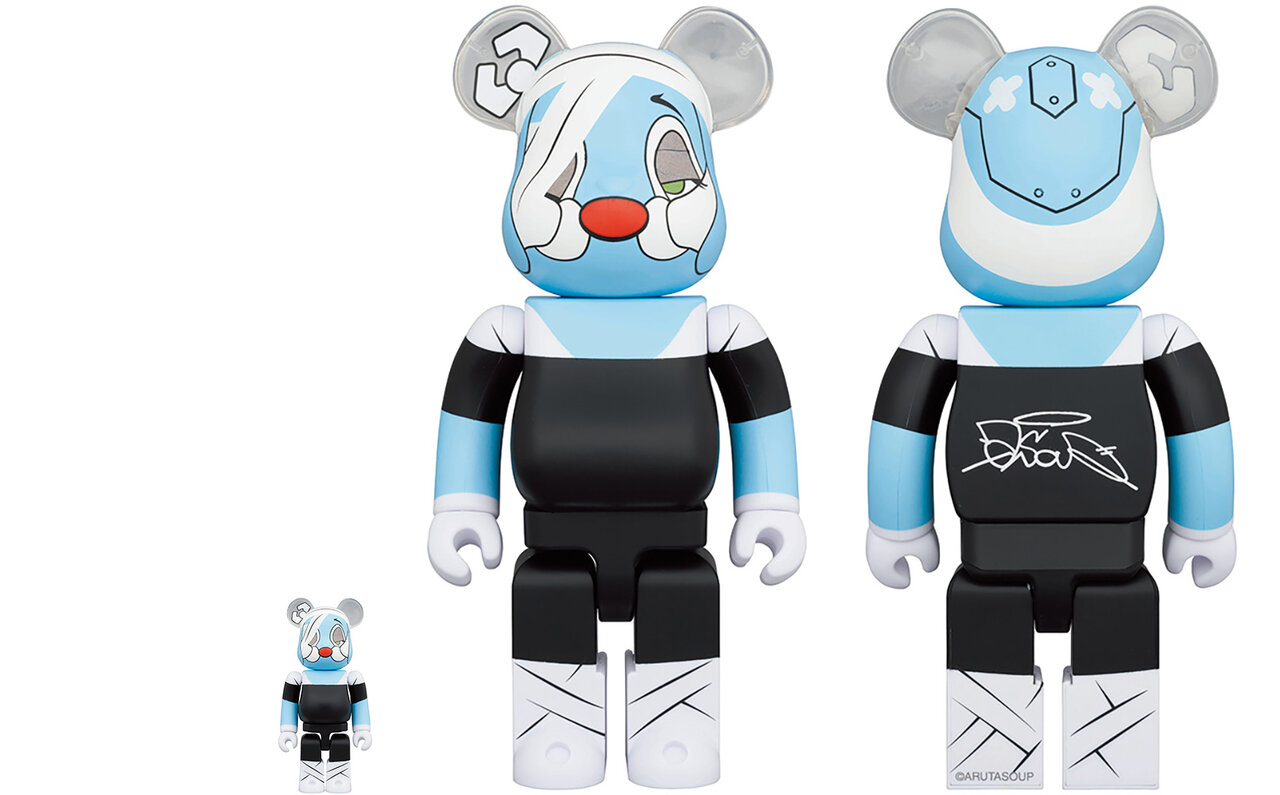
BE@RBRICK Aruta Soup 100% & 400%
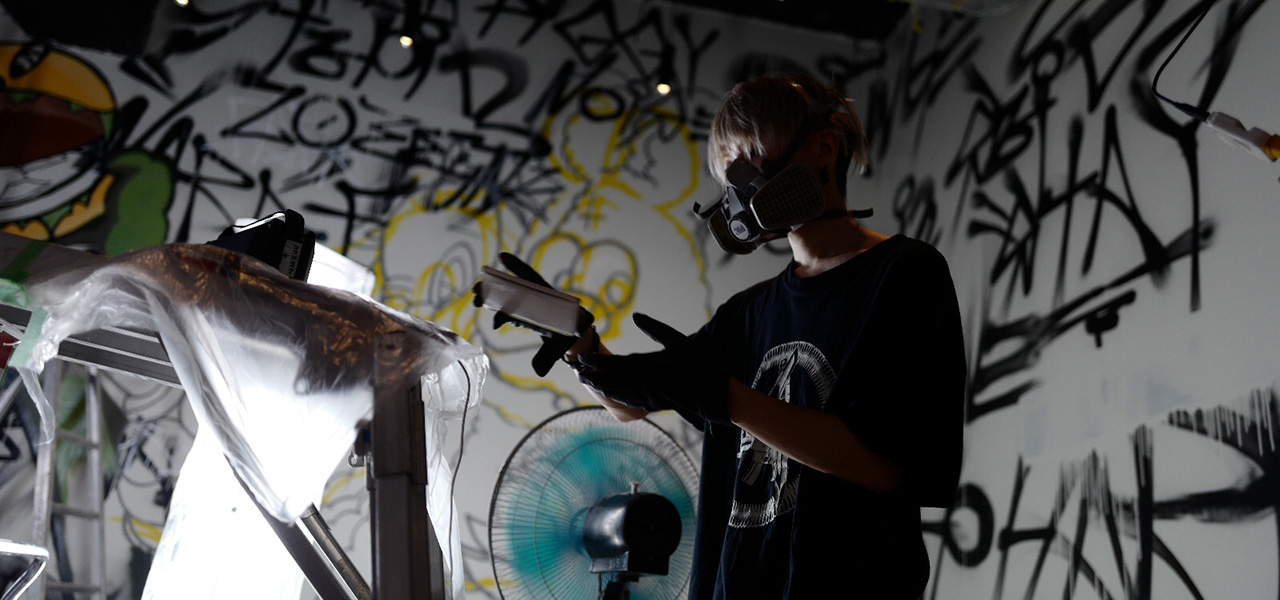
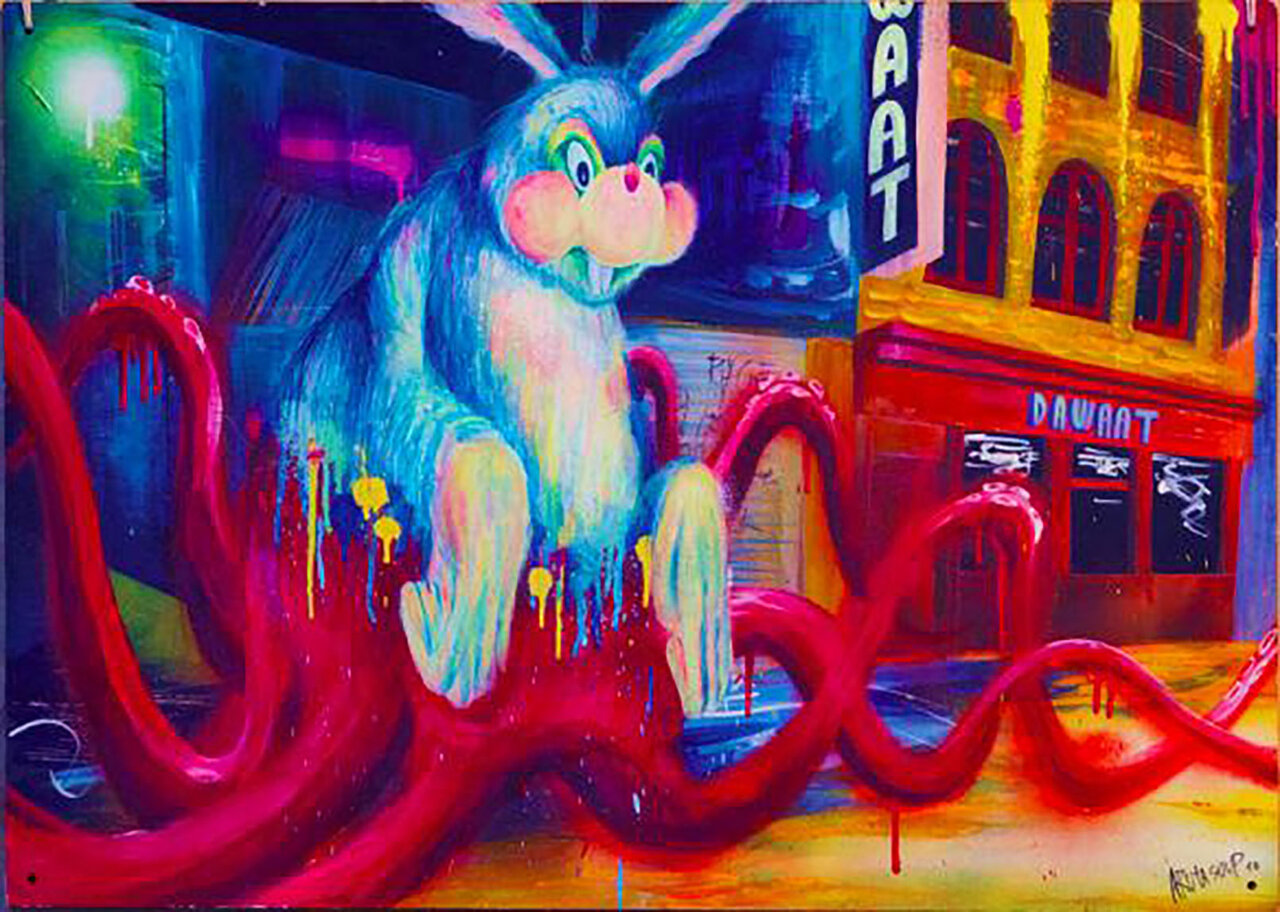
Aruta Soup is a Japanese artist who first showcased his talent for graffiti on the streets of London. After returning to Japan, he has provided numerous works for apparel brands. In recent years, his original rabbit character "ZERO" has garnered significant attention both domestically and internationally.
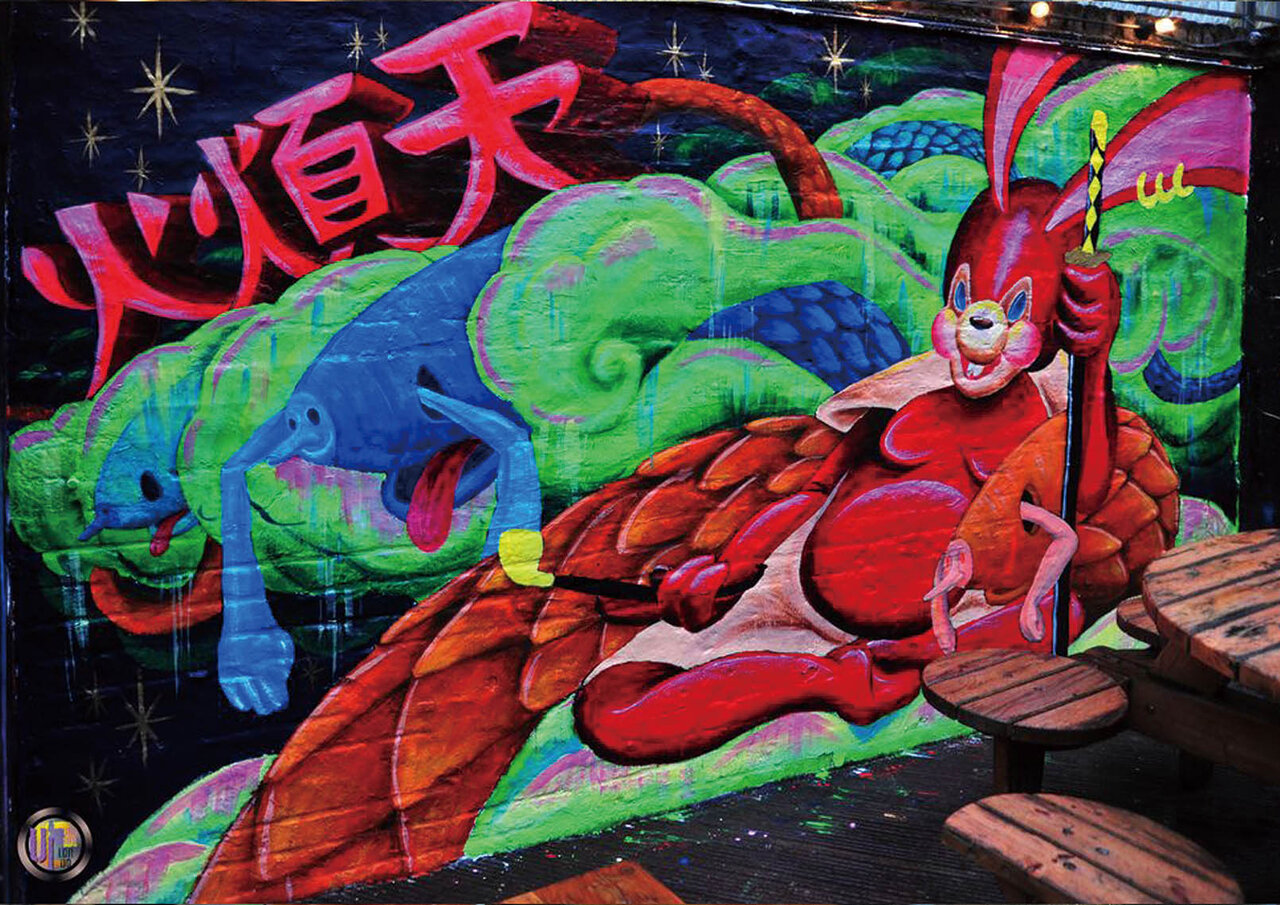
He has created many renowned art walls through murals and paintings. His distinctive turquoise color and stylized characters capture people's hearts. From January 6th to March 31st of this year, he held his largest solo exhibition to date, "MAD TEA PARTY," at Lucie Chang Fine Arts in Hong Kong. The escalating popularity in Chinese-speaking regions is noteworthy and indicative of the future art scene.
To celebrate the release of his first collaboration with MEDICOM TOY, the BE@RBRICK in 100% & 400% sizes, we delved into his journey up to this point.
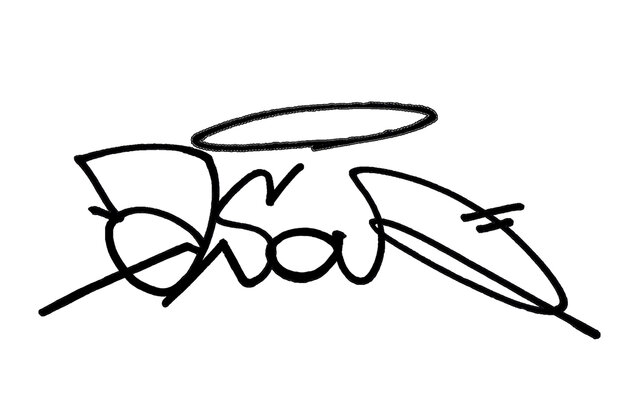
Aruta Soup
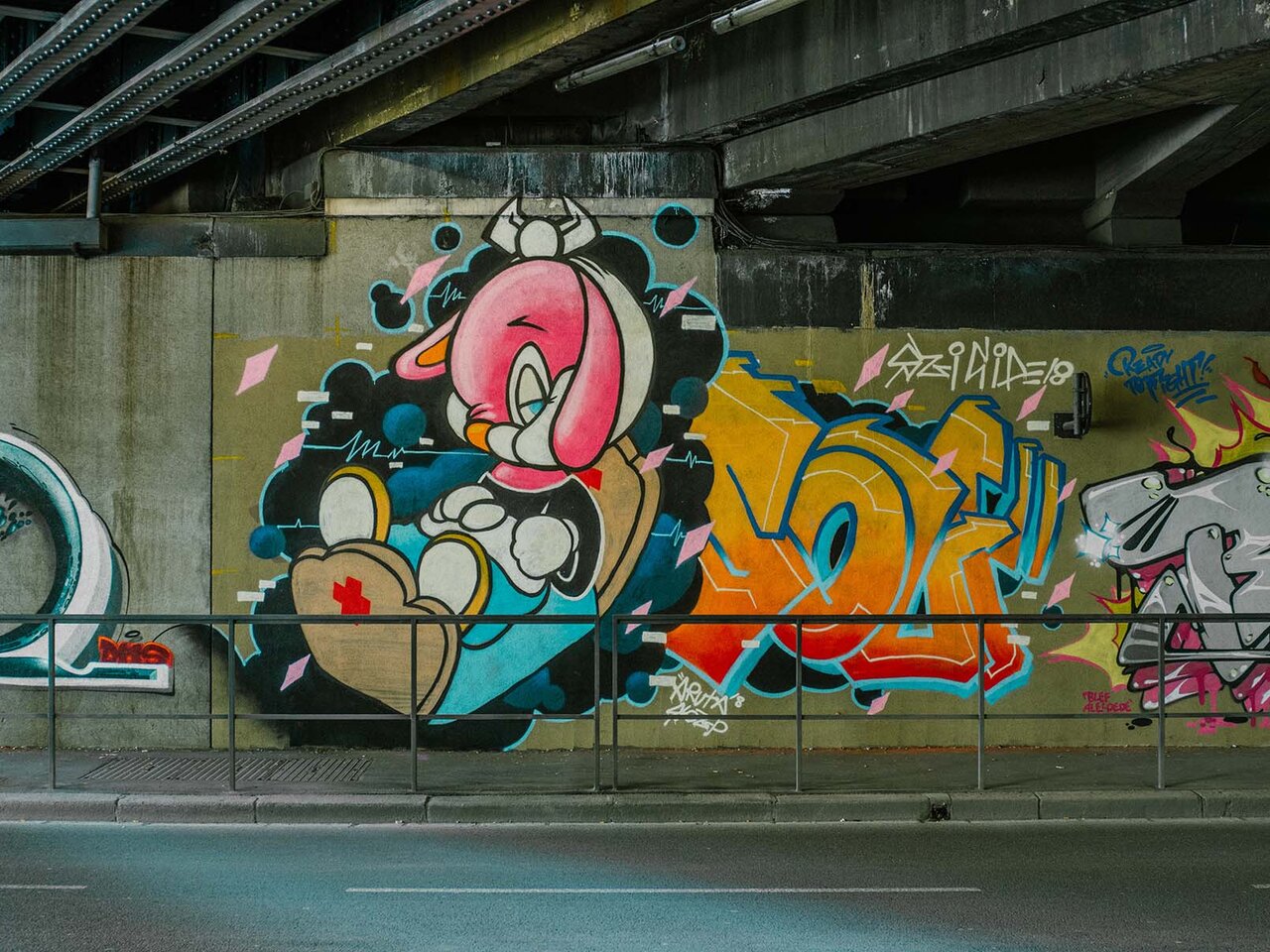
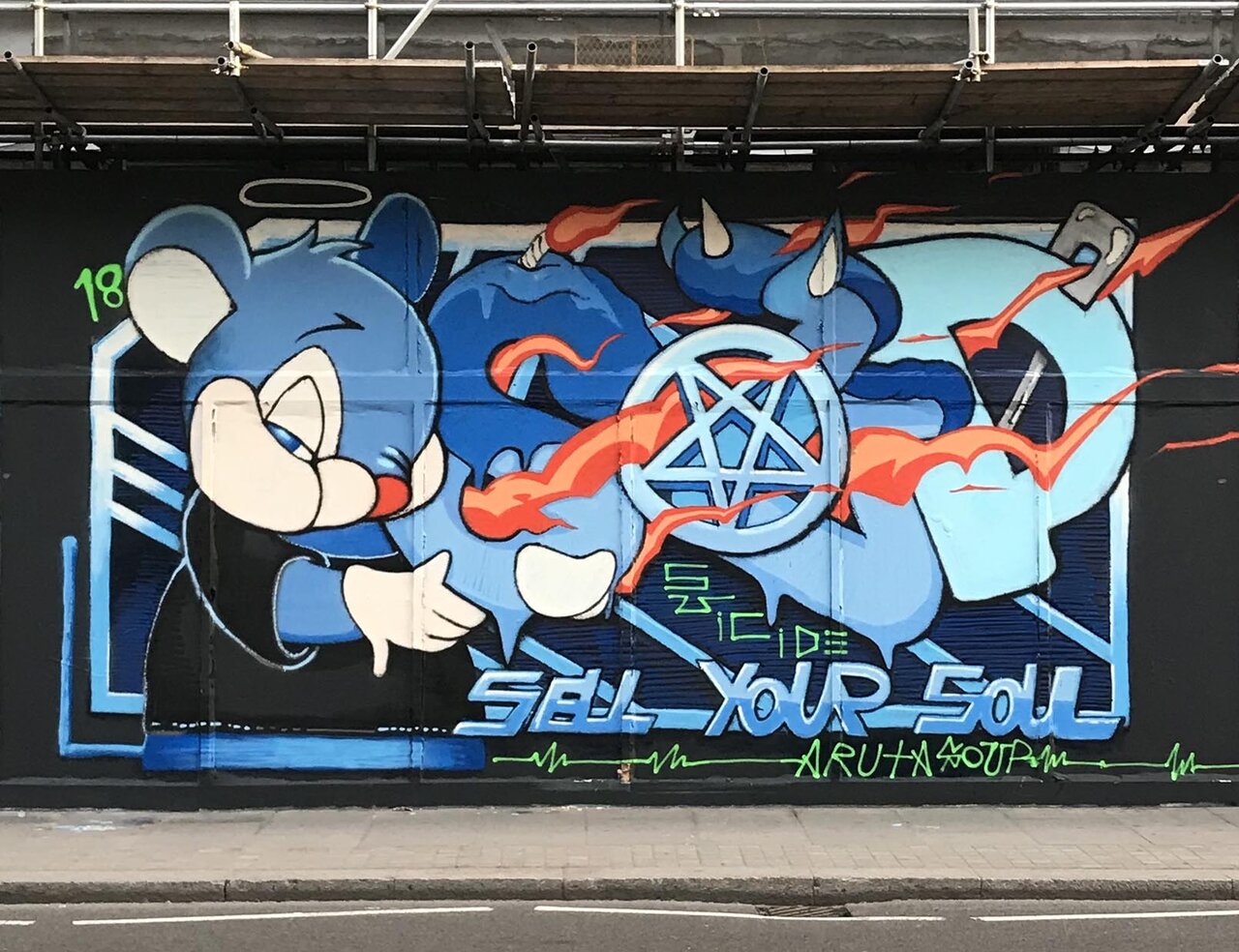
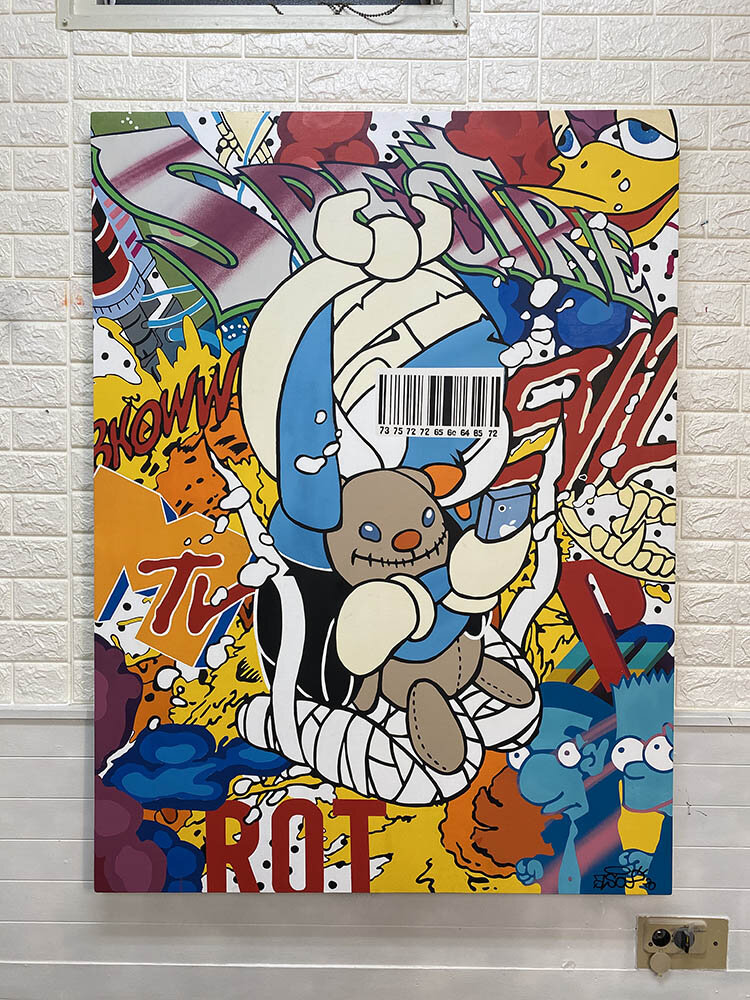
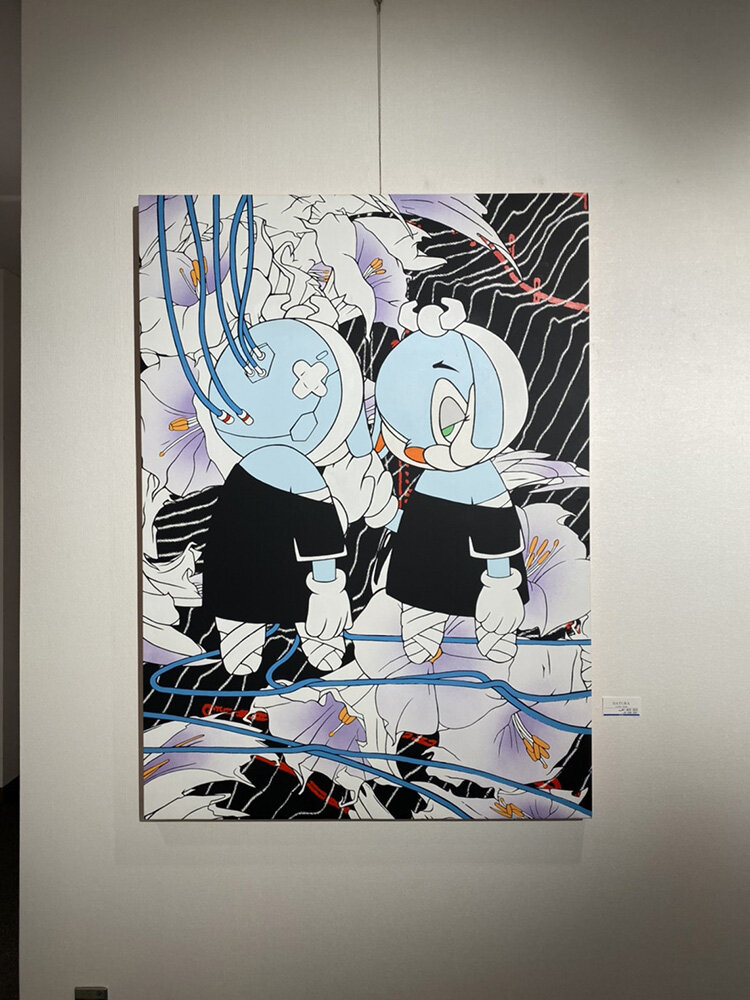
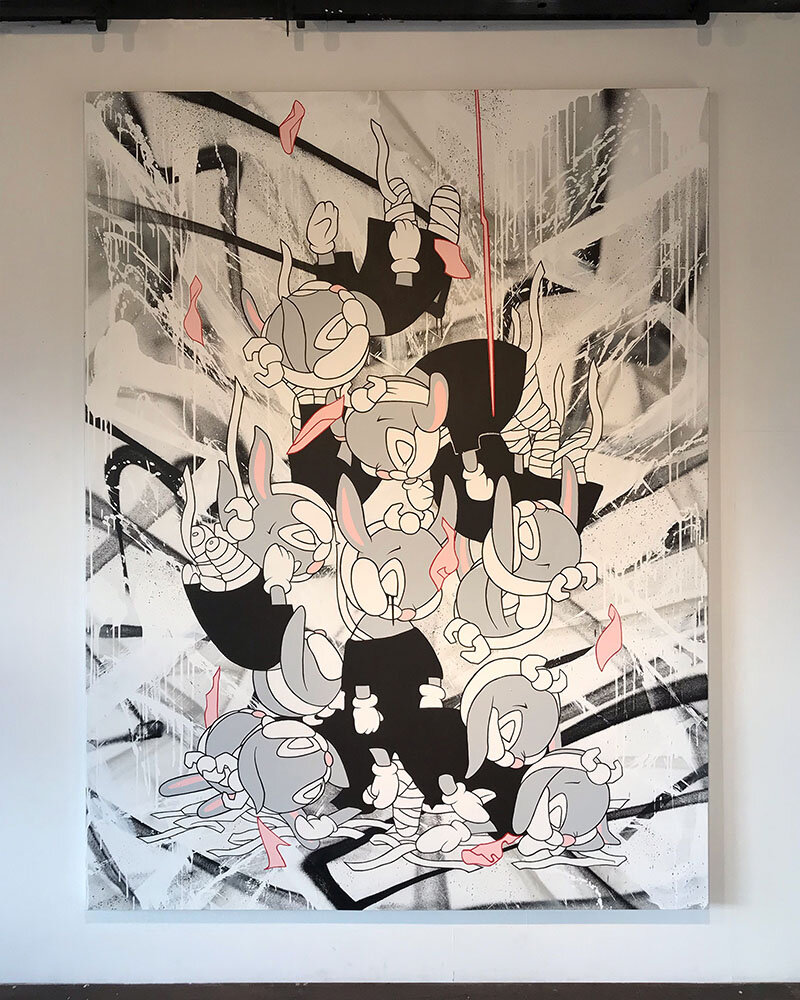
Aruta Soup is known as a street artist who blends anime culture with a uniquely British sense of dark humor. He depicts the complexities of a multifaceted society and the psychological states of its inhabitants, along with timely issues, using nervous lines as contemporary icons of modern society. The bandaged rabbit that frequently appears in his work reflects the chaotic and violent world he inhabits, while also symbolizing his soul's desire for regeneration despite its wounds.
He moved to the UK at 17, absorbing the graffiti and club culture of East London to develop his current style. After returning to Japan in 2012, he has been active in various capacities, including exhibitions at Seibu Shibuya, large-scale solo shows in Taiwan, Hong Kong, and Hangzhou, participation in numerous art fairs, and creating murals both in Japan and around the world. He is scheduled to hold a solo exhibition in Beijing, China, in August 2022.
2009 Graduated BA Illustration, Camberwell College of Arts in London
May 2018 Invited to participate in the Reims, France, Graffiti Festival
July 2018 Solo exhibition at Seibu Shibuya
June 2019 Solo exhibition at Lucie Chang Fine Arts gallery in Hong Kong
June 2020 Solo exhibition at M+ in Hong Kong
March 20, 2021 Solo exhibition at the newly established INXXMARKET in Hangzhou, China
September 2021 Launch of INXX × 萌奇 × ARUTA SOUP blind box series
January-March 2022 Held largest solo exhibition in Hong Kong
— When did you first become interested in drawing and art?
My father was an artist, so I grew up in a unique environment where drawing was a natural part of life. Because of this, I don't have a clear memory of when I started drawing myself. According to my mother, I was drawing alongside my father even before I could walk as a baby.
My father's studio was my playground as a child. Our home was filled with art, and as a child, I did all sorts of chaotic things, which was natural. I remember pasting my own cut-out pictures onto my father's work. I recall him looking happy when he saw it.
Also, musicians, poets, dancers, and people who seemed like washed-up hippies were constantly coming and going from our house. They taught me about language and ethics. Looking back, it was quite chaotic. I was completely natural-born.
— Please tell us about your vision when you moved to the UK alone in 2004 at the age of 17.
First, during high school, I went to London with a sketchbook. When I showed my sketchbook to a professor at Central Saint Martins, he offered me a scholarship and urged me to enroll. So, two days after graduating high school, I moved to the UK in earnest.
However, I only attended Central Saint Martins for about a year. The elite-oriented atmosphere didn't suit me at all, so I transferred to Camberwell College of Arts.
— Why did you choose London?
There was a guy in my neighborhood, like an older brother who played rock music, who worked at an architectural firm and was also a DJ. He traveled back and forth between London and Japan.
Whenever he returned to Japan, he would introduce me to the music that was popular there. I remember being hit in the back of the head by the music of The Prodigy, which I heard in elementary school. It was like, 'What is this?!' I was already drawn to darker things, so it resonated with me.
Also, London had this special allure as a place where new cultures were born, like with youth cultures such as SKINS and PUNK. I had always longed for it. From then on, I saved money from part-time jobs and visited London in my second year of high school. There, I encountered club culture and squad parties.
At that time, drum and bass and breakbeat were at their peak. They would set up sound systems under railway bridges or in abandoned buildings and party every night. I was completely captivated by that too. I thought, 'I have to come here!'
— Your profile mentions being influenced by graffiti in East London. Could you tell us about the graffiti scene there at the time? What were the differences compared to graffiti in Japan?
It might be hard to imagine now, but in East London back then, Banksy's graffiti was still common on kebab shop rooftops and under bridges. It was just like, 'Oh, that's cool.' That was my first encounter.
In Japan, the soil for graffiti culture is not fertile at all, and there are no legal walls. Therefore, the only way to improve one's skills is to operate illegally. So, graffiti writers active in Japan have no choice but to deny their activities, even if they are engaged in them.
Another major difference is that London has "pieces" (masterpieces using four or more colors, created over time) throughout the city, whereas in Japan, due to the aforementioned reasons, you can only see "throw-ups" (letters created with two or fewer colors) on the streets.
If you wanted to see high-quality masterpieces in Japan, you would have to paint them in abandoned buildings or in underground locations where no one would see them. London has many legal walls, providing an environment for practice.
— What kind of activities were you primarily involved in during your time in the UK?
While I was at Camberwell College of Arts, there was a bass music crew called Far East Underground Resistance, run by friends. I was constantly designing event flyers and large posters for them.
We would go out in vans at night and paste posters all over the city using wheatpaste. It was more like an extension of playing than work, and although I had no money, I had an incredibly fun time every day.
After graduation, I started working as a freelancer, getting illustration jobs for magazines and creating my own art, which I would present whenever opportunities arose.
My first solo exhibition was at a skater shop called LCB SulfStore in Brick Lane. This led to me being commissioned to paint a mural at CARGO, a world-renowned club. Next to my mural was a piece by Shepard Fairey, and on the entrance side was a piece by Banksy. I was honored to be the first Japanese artist to paint a mural in the same venue.
— What did you do to promote your work, or what plans did you have?
I had no specific plans for my activities. However, looking back, it might seem like I was just playing around. In my early twenties, I drew every single day, and that has shaped who I am today and given me confidence.
— What was the reason for returning to Japan and deciding to work there?
I had been in London for about eight years, so I was around 25 at that point. I had been a Londoner for so long that I felt a sense of loneliness from having no connection to Japan, despite being Japanese. I also gradually grew tired of the party culture. I thought I'd try working in Japan and moved my base to Tokyo.
— Which artists have influenced you so far?
The artists who have influenced me have changed over time. I was influenced by the expressions of Yoshitomo Nara's children, which are cute yet have a hint of malice. When I saw Damien Hirst's bisected shark preserved in formalin, I was shocked by how something so grotesque and in bad taste could be so beautiful.
— What kind of things do you often draw inspiration from in your creative process?
I draw inspiration from various experiences, but I try to be honest with my feelings at the moment. If I'm feeling very sad because a dear friend has passed away, or if I'm feeling irritated, I try to capture the brainwaves during meditation and depict them in the background.
I have a rather sensitive nature, and if I let my guard down, I can easily catch all sorts of information and become overwhelmed. This makes it difficult to disconnect from social media and other information sources. Tokyo, in particular, is so information-heavy that I've become good at blocking it out.
— Are there any interests you have outside of art?
Music. I listen to it constantly. I also love manga and films, which are comprehensive art forms. I generally have many indoor hobbies. I also love animals. I admire them for being true to their instincts and for their nobility.
— Please tell us the origin of the name "Aruta Soup."
I came up with "Aruta" myself a long time ago, and it just stuck. "Soup" came about because during my time in London, I often made homemade soup in a pressure cooker at home parties. I thought it was quite delicious, but a friend later told me, "Aruta Soup is really bad taste." That phrase stuck in my head and led to the name.
Also, I'm a big fan of Nekojiru, and I considered "Aruta Ziru," but the sound of it felt a bit off. "Soup" felt more fitting.
— What kind of people are your fans overseas?
For my paintings, it's the ultra-wealthy in Chinese-speaking regions, but for my products, there are many younger fans as well.
— You also collaborate with many apparel brands.
Recently, my rabbit character named "ZERO" was chosen for an artist collaboration with the Chinese high-fashion brand "INXX." Fortunately, it became popular in Chinese-speaking regions, leading to collaborations not only in apparel but also on basketball courts, sneakers, and various lifestyle goods, which were then released as toys in China. Having an original character might have been a strong factor.
— What do you find interesting about collaborations?
I find it interesting how information spreads further than I could imagine, in places I'm not even aware of.
The scale of KOLs (influencers) in China is vastly different from Japan, with follower counts in the tens of millions. It was interesting how someone like that would mention my name without ever meeting me, and how that information would reach me through others.
The finished products, as well as the feedback, often exceed my expectations, which is enjoyable. Like, 'Oh, that's what resonates with them?!'
— Please tell us about your encounter with MEDICOM TOY.
Curiously, I had a connection with Mr. Akashi's MEDICOM TOY through the film "Shoujo Tsubaki" (2016). I created the artwork that appeared in the movie, and MEDICOM TOY produced the toys for the film. This connection led to the current project.
I would be happy if we could continue to develop toys and products with MEDICOM TOY in the future. That's my personal hope.
— Were you familiar with BE@RBRICK?
Of course. It's a well-known product, so I had seen it in various places. When I was a child, I used to build entire cities with LEGO bricks, so I felt a sympathy for the form. I am honored to be able to collaborate this time.
— Please tell us about any challenges you faced during the creation of "BE@RBRICK Aruta Soup 100% & 400%."
To be honest, the design of this BE@RBRICK was handled by MEDICOM TOY, so I didn't face any difficulties myself.
This relates to the interesting aspect of collaboration I mentioned earlier. As I also have a designer's perspective, when an artist creates a product, excessive ego can emerge, making it difficult to maintain objectivity. Therefore, based on my experience collaborating with various clients, I understand that better results are achieved when external designers are involved.
— What are your thoughts now that the product is complete?
I'm feeling incredibly hyped and happy. Thank you so much!
BE@RBRICK Aruta Soup 100% & 400%Size | Approx. 70mm / 280mm each
Price | ¥13,200 (tax included)
How to Purchase | Scheduled for release at MEDICOM TOY direct stores, online stores, and select retailers. Orders will be accepted from Thursday, March 24, 2022, 00:00 to Sunday, April 10, 2022, 23:59.
MCT TOKYORelease Date | Scheduled for August 2022
Release Date | Scheduled for August 2022
*The photo shows a sample under supervision. The actual product may differ slightly.
©️ Aruta Soup
BE@RBRICK TM & ©️ 2001-2022 MEDICOM TOY CORPORATION. All rights reserved.
Inquiries
MEDICOM TOY User Support
Tel. 03-3460-7555