Sharaku's Masterpiece Revived as BE@RBRICK After 200 Years | MEDICOM TOY
MEDICOM TOY
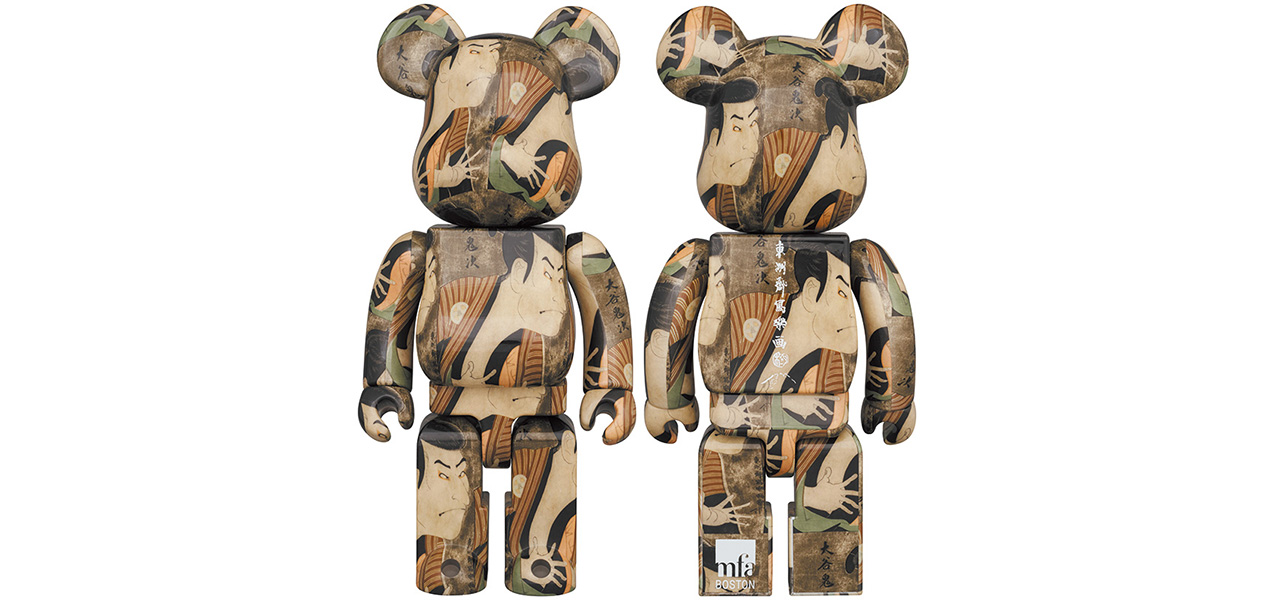
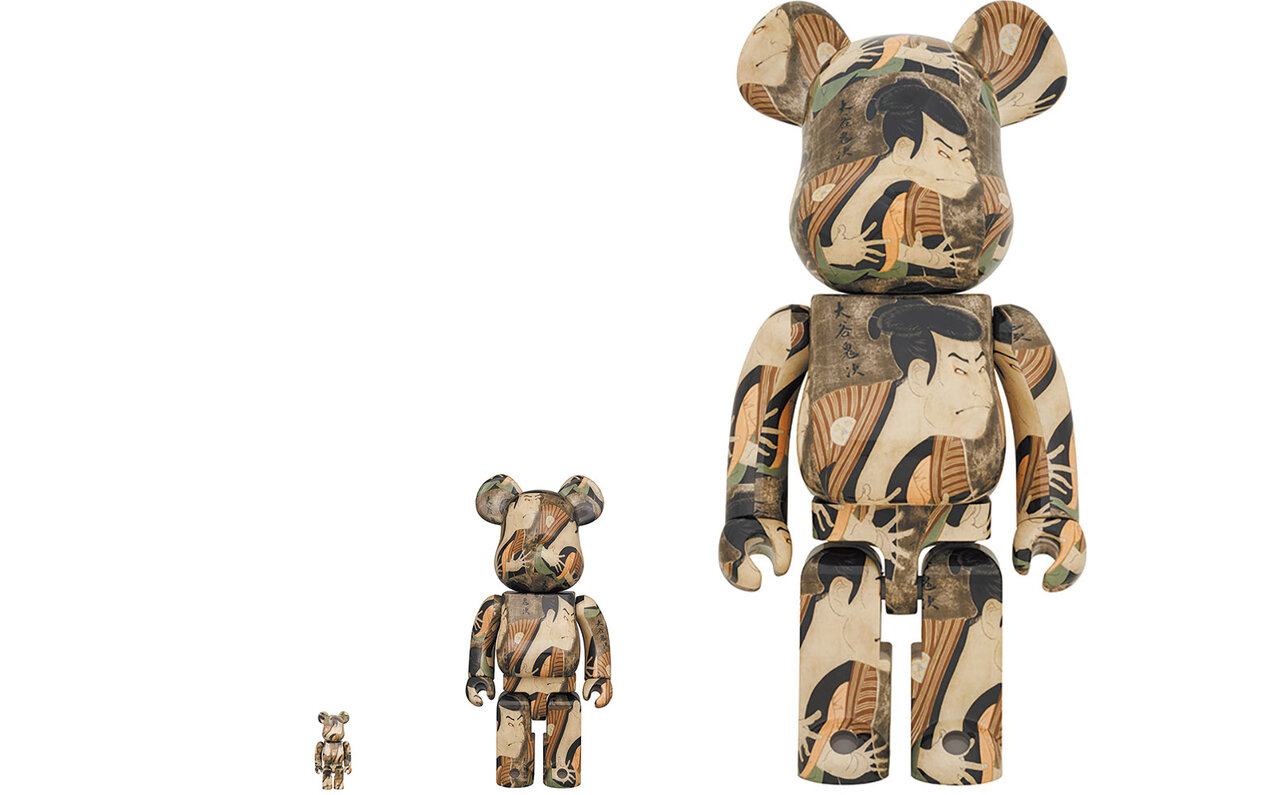
BE@RBRICK Sharaku "Ohtani Oniji III as Edohei" 100% & 400% / 1000%
In May 1794, during the Kansei era of the late Edo period, the mysterious ukiyo-e artist Toshusai Sharaku appeared like a comet and vanished just as suddenly. Sharaku, who produced over 140 works in a mere 10 months, now has his masterpiece brought to life as a BE@RBRICK, with the full cooperation of the Museum of Fine Arts, Boston.
Text by SHINNO Kunihiko | Edit by TOMIYAMA Eizaburo
The Collaboration with the Museum of Fine Arts, Boston
Despite his origins and background being entirely unknown, Sharaku made a spectacular debut under the patronage of Tsutaya Juzaburo, a key figure in Edo culture and a publisher, unveiling 28 large-headed portraits (ookubie) at once. His ookubie, which boldly exaggerated the facial features of Kabuki actors and depicted them in dynamic poses, gained worldwide popularity alongside contemporaries like Katsushika Hokusai and Kitagawa Utamaro.
Sharaku is considered the greatest mystery in the world of ukiyo-e. Theories about his true identity have included Katsushika Hokusai, Kitagawa Utamaro, the author of "Tokaidochu Hizakurige" (Tenjiku Tokubei), and Tsutaya Juzaburo. While the prevailing theory today identifies him as Saito Jurobei, a Noh actor from the Awa domain, his true identity remains unknown.
The impetus for Sharaku's masterpiece, "Ohtani Oniji III as Edohei," becoming a BE@RBRICK stems from MEDICOM TOY's ongoing project to preserve art and culture through collaborations with museums worldwide. In response to the COVID-19 pandemic, which forced 90% of museums globally to temporarily close, this initiative aims to reawaken interest in art by producing and selling BE@RBRICK figures inspired by artworks held in various museum collections.
The large nishiki-e print "Ohtani Oniji III as Edohei" is held in the collections of institutions such as the Tokyo National Museum, the Art Institute of Chicago, the Metropolitan Museum of Art, the Rijksmuseum, and the Musée Guimet, among others. For this collaboration, MEDICOM TOY chose the Museum of Fine Arts, Boston.
Founded in 1876 in Boston, one of America's oldest cities, the Museum of Fine Arts, Boston is a world-renowned institution housing over 450,000 artworks spanning from antiquity to the present day. Its Japanese art collection, in particular, is known for its exceptional quality, having been assembled by figures like Edward Morse (1838-1925), Ernest Fenollosa (1853-1908), and William S. Bigelow (1850-1926), who dedicated themselves to preserving Japan's cultural heritage during their time in the country.
One of the catalysts for this product's realization was a proposal to create a BE@RBRICK based on Paul Gauguin's "Where Do We Come From? What Are We? Where Are We Going?," a representative work of Post-Impressionism from the 19th century, which the museum holds. This proposal led to the product's development (※).
During that meeting, the Museum of Fine Arts, Boston suggested, "Since we're at it, wouldn't it be possible to develop something from our collection of Japanese ukiyo-e prints as well?"
※ "BE@RBRICK Eugéne Henri Paul Gauguin \"Where Do We Come From? What Are We? Where Are We Going?\" 100% & 400% / 1000%" is scheduled for release at "AKASHIC RECORDS 2021 Maboroshi no Parade," held from Saturday, October 23 to Sunday, October 31, 2021, at En STUDIO MIYASHITA PARK in Shibuya, Tokyo.
The museum's Japanese art collection, comprising approximately 50,000 ukiyo-e prints, about 700 original ukiyo-e paintings, and thousands of illustrated books, was assembled by figures such as Edward Morse (1838-1925), Ernest Fenollosa (1853-1908), and William S. Bigelow (1850-1926), who worked to preserve Japan's cultural heritage during their time in the country during the Meiji era. Outside of Japan, this collection is considered one of the world's foremost in both quality and quantity.
With that in mind, we requested to create a BE@RBRICK based on Sharaku's most famous work, "Ohtani Oniji III as Edohei," specifically capturing "that pose" with outstretched hands. While MEDICOM TOY has previously released BE@RBRICKs featuring Katsushika Hokusai and Utagawa Kuniyoshi, this marks the first time Sharaku's work is featured.
"Ohtani Oniji III as Edohei" is one of the portraits of Kabuki actors performing at the three theaters (Miyaza, Kiri-za, and Kawarazaki-za) in Edo during May 1794. Based on the play "Koib Nyobo Some Wake Tazuna" performed at the Kawarazaki-za, it depicts Ohtani Oniji III, who played the role of Edohei, with bold, exaggerated features. The print owned by the Museum of Fine Arts, Boston is in excellent condition, and its vibrant colors have been masterfully reproduced on the BE@RBRICK using water printing. Let's fully appreciate this masterpiece, which has captivated ukiyo-e collectors worldwide, through the BE@RBRICK.
BE@RBRICK Sharaku "Ohtani Oniji III as Edohei" 100% & 400% / 1000%Size | Approx. 70mm / 280mm / 700mm each
Price | [100% & 400%] ¥16,500 (incl. tax) / [1000%] ¥63,800 (incl. tax)
How to Purchase | Orders will be accepted from Friday, September 24, 2021, 00:00 to Sunday, October 10, 2021, 23:59 at MEDICOM TOY's directly managed stores, online stores, and other select retailers.
For details, pleasevisit the MEDICOM TOY official website.Release Date | Scheduled for March 2022 release and shipping
BE@RBRICK TM & ©︎ 2001-2021 MEDICOM TOY CORPORATION. All rights reserved.
Inquiries
MEDICOM TOY User Support
Tel. 03-3460-7555