An Interview with Legendary Sculptor Hama Hayao: The Secrets Behind His New Sofubi Figure, "K (Original Version)" | MEDICOM TOY
MEDICOM TOY
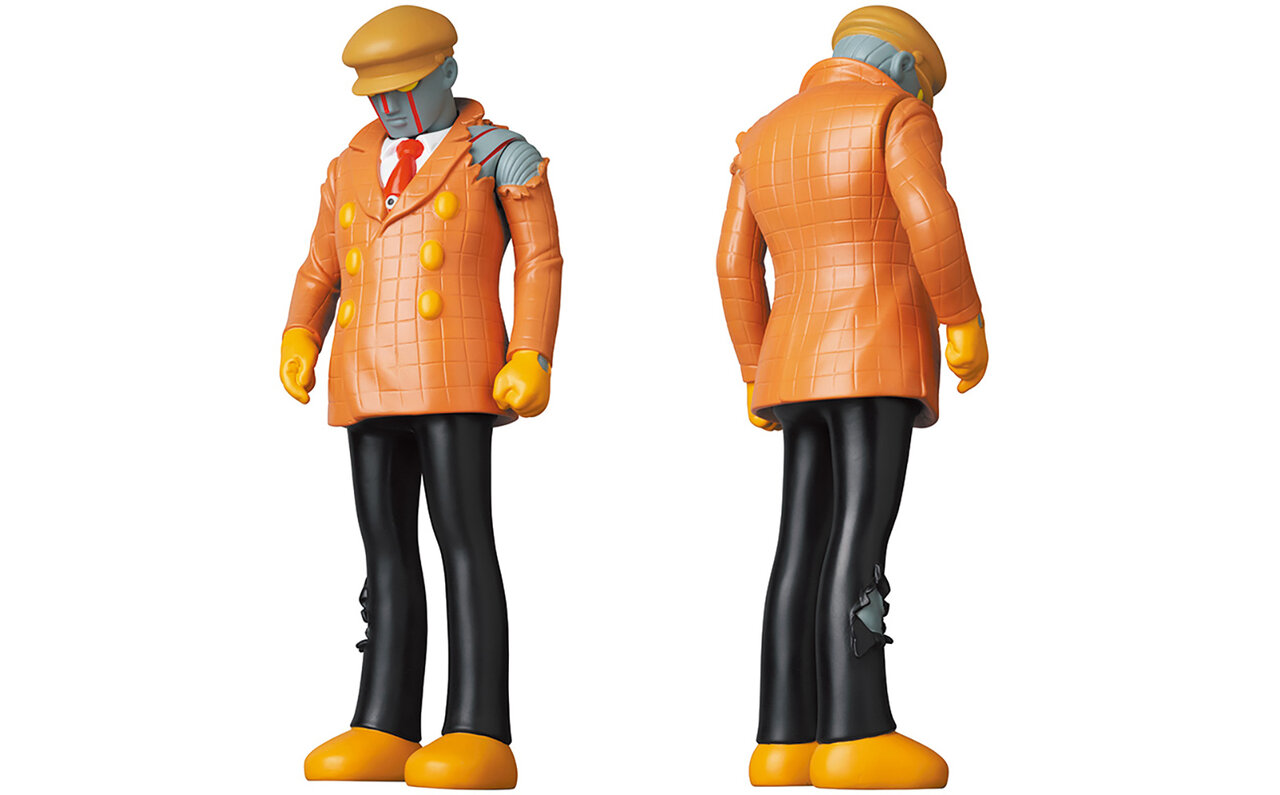
Toei Retro Sofubi Collection EX K (Original Version) Released!
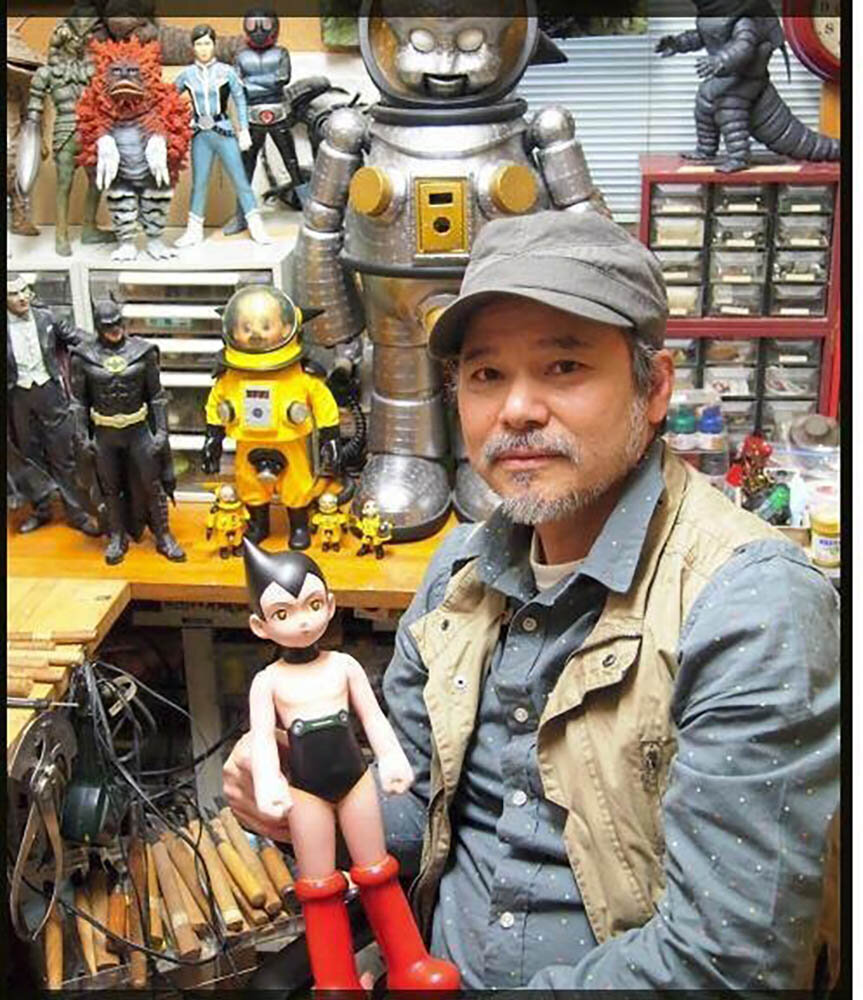
The "K (Original Version)" released from MEDICOM TOY's Toei Retro Sofubi Collection EX is sculpted by Hayao Hama, who transitioned from working at a mannequin production company to becoming a professional sculptor and has long supported the history of sofubi kits at Billiken Shokai. We interviewed Hama, who is also a leading figure in chainsaw carving, about his memories of that time and the events leading up to his work on "K (Original Version)."
Text by SHINNO Kunihiko | Edit by TOMIYAMA Eizaburo
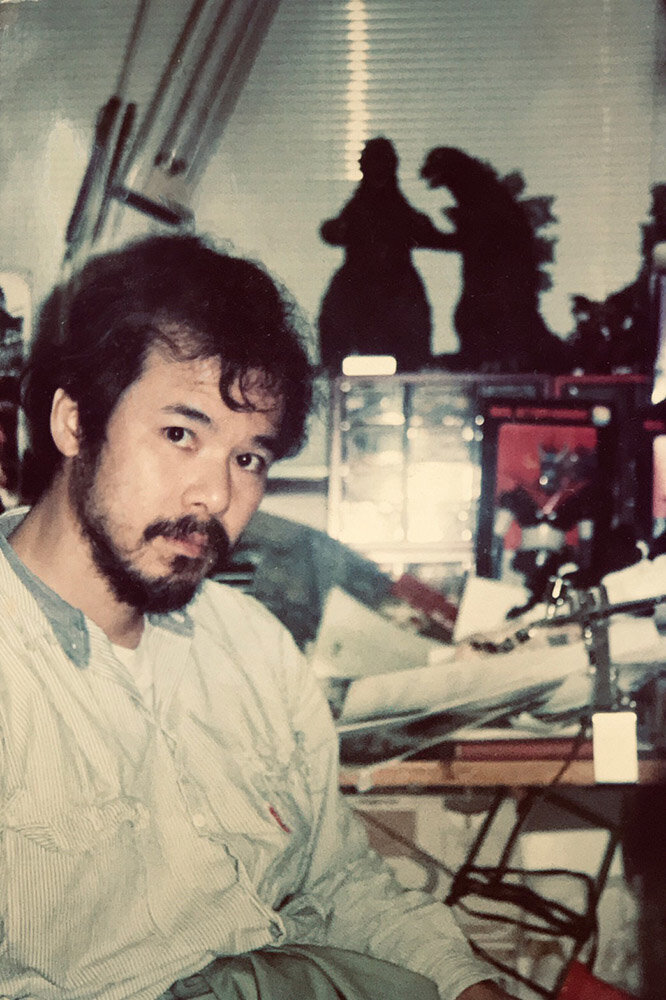
Memories from the 1980s, When You Started as a Sculptor
—Could you tell us what led you to start working with three-dimensional modeling?
Hayao HamaAt a time when tin toys and sofubi figures weren't yet valued, "Billiken Shokai" (Note 1), an antique shop specializing in tin toys, opened. I didn't have enough money to be called a collector, but I would visit occasionally, giving off a freeter vibe. One day, the owner, Mr. Mihara, who was thinking of releasing original products, asked me, "Can you sculpt monsters?" and I replied, "Yes, I can." That's how it started.
(Note 1) Opened in 1976 on Kotto-dori in Minami-Aoyama as Japan's first specialty store for antique toys. In 1983, they began manufacturing and selling original soft vinyl assembly kits, which Mr. Hama worked on.
—It's been almost 40 years since you began seriously sculpting with "Metalan Mutant" (Note 2), released by Billiken Shokai in 1983. Could you share some of your memorable experiences from the 1980s regarding the figure production environment, customer base, and the most requested works?
Hayao HamaI grew up in a rural area with no plastic model shops nearby, so I naturally never read or looked at plastic model magazines. However, when "Uchuusen" (Note 3) was published, it resonated with me, and I subscribed from the very first issue. It featured "Metalan Mutant" (Note 3), and that's when garage kits appeared in the world.
Video was not yet widespread, and I certainly didn't own a VCR. I had to go to the home of Mr. Hijiri (Note 4), an editor of "Uchuusen" and a researcher of B-grade tokusatsu films, to watch a video of the moving "Metalan Mutant."
(Note 2) A mutant from the movie "Uchu Mizubaku Sen" (1955, USA), created from insects for use by the Metalan aliens.
(Note 3) Following the hit of "Fantastic TV Collection: The Wonderful World of Tokusatsu Visuals - Ultraman, Ultra Seven, Ultra Q" released by Asahi Sonorama in 1978, it was launched as a regular publication in 1980, after its predecessor "Manga Shonen Special: The Wonderful World of Tokusatsu Visuals." It was revived as a quarterly magazine by Hobby Japan in 2008.
(Note 4) Mr. Sakaki Hijiri. He was involved in editing Asahi Sonorama's "Fantastic Collection" and "Manga Shonen Special," and was responsible for the planning and composition of "Uchuusen." He dedicated himself to unearthing forgotten masterpieces of foreign films and introducing overseas garage kits, advertisements, and toys, becoming one of the central figures who nurtured amateur sculptors, both domestic and international, into professionals.
—In the early days, you probably only had a few photographs to reference when sculpting. Compared to now, were there more difficult or challenging aspects? Also, how many days did it take to complete one figure?
Hayao HamaIn the first place, I don't think there were many realistic figure kits back then. So, I don't think I was thinking, "I must sculpt this realistically." Since there were no photos, I was free to sculpt it however I liked!
At the time, I was working in the finishing makeup department at a mannequin doll company that was on the verge of bankruptcy. I'd spend about an hour in the morning, and then I had nothing else to do, so I spent my days at the company sculpting Metalan. I think it took about a month to complete.
—Which of your works do you feel most attached to, and which received the biggest response?
Hayao HamaI felt like I was playing in a corner of the world, using retro B-grade American tokusatsu films as my subject matter. I feel like something shifted when I worked on "Ultraman" (Note 5), which is a major title in Japan. It felt like the first time I had an impact on the world...
I felt a sense of satisfaction with "Baltan Seijin." I remember sculpting it while being moved by Mr. Takayama's (Note 6) work.
(Note 5) A tokusatsu TV drama produced by TBS and Tsuburaya Productions, which aired for 39 episodes on the TBS network from July 1966 to April 1967.
(Note 6) Ryusaku Takayama (March 11, 1917 – July 27, 1982), an artist who played a central role in sculpting monsters for the early Ultraman series.
Introduced by sculptor Toru Narita, he joined Tsuburaya Productions' production for episode 14 of "Ultra Q" (the冷凍怪獣 Pegira from "Pegira ga Kita!"). He was responsible for the production of the monster suits for many kaiju and aliens designed by Mr. Narita, including Kanegon, Gomora, Red King, Baltan Seijin, and Metron Seijin.
Chainsaw Carving Offers a Sense of Exhilaration
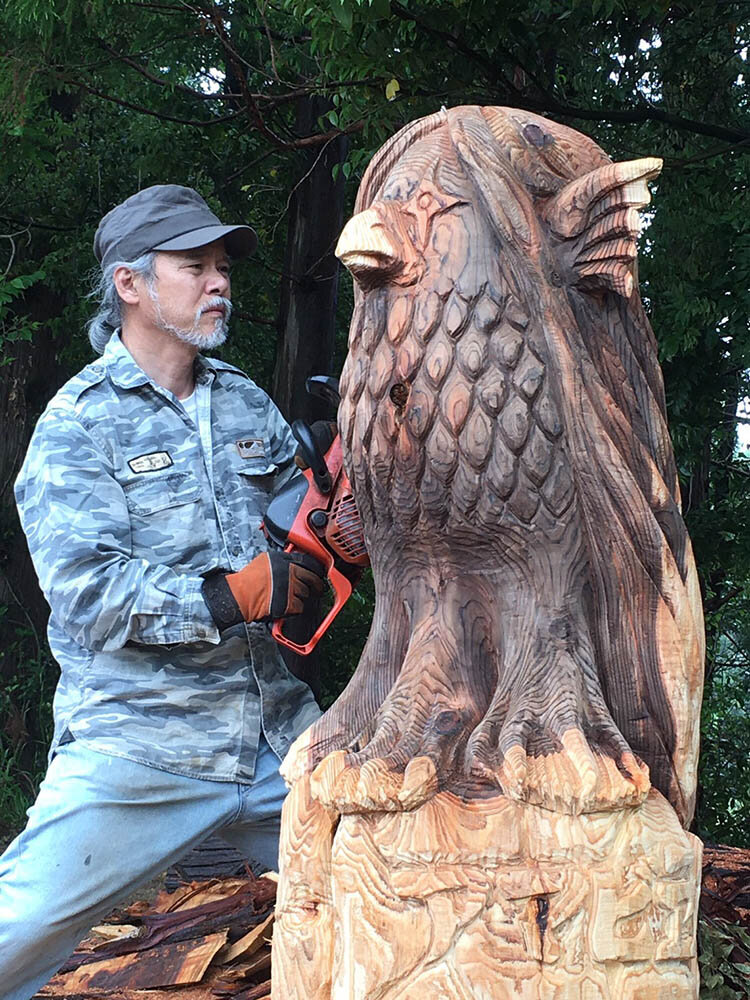
—Currently, in addition to your work sculpting figures, you are also active as a leading figure in "chainsaw carving," creating sculptures using a chainsaw. Could you tell us what inspired you to start chainsaw carving and what you find appealing about it?
Hayao HamaSculpting realistically became like an obsession, my pace slowed down considerably, and I barely moved my body with the detailed work. On the other hand, chainsaw carving can be completed in a day or even a few hours. It offers a sense of exhilaration.
—How do you balance your work sculpting figures and your chainsaw carving projects?
Hayao HamaThe realistic figures of retro monsters that I used to make are no longer selling well. Because my sculpting pace is slow, it's no longer viable as a business. Even though I try not to promote it much, I still get orders for chainsaw carving, and since it's physically demanding, I've kept many people waiting.
If you ask about the balance, I'd say it's about half and half...
—You recently sculpted "K (Original Version)" (Note 7). Could you tell us how that came about?
Hayao HamaMr. Washizawa (Note 8), who is my biggest fan in Japan and has supported me for a long time, personally asked me to sculpt "Robot Keiji."
He was pleased with the result and then approached MEDICOM TOY on my behalf.
(Note 7) A manga by Shotaro Ishinomori serialized in "Weekly Shonen Magazine" from issue 1 of 1973 to issue 41, and a tokusatsu TV program produced by Toei, which aired for 26 episodes from April to September 1973 on Fuji TV. Although the storylines differ, both depict the battle between the investigative robot K and a criminal organization.
(Note 8) Takeshi Washizawa, Representative Director of OTAKICK Co., Ltd., which operates the popular toy shop "OTAKICK" and its online stores "OTAKICK Rakuten Ichiba" and "OTAKICK YAHOO! Store" in Sapporo, Hokkaido.
—"Robot Keiji" was serialized as a manga by Shotaro Ishinomori and also adapted into a TV show by Toei in 1973. Do you have any memories from that time?
Hayao HamaUnfortunately, the tokusatsu TV shows I watched only went up to "Ultra Seven" (Note 9). I wasn't an otaku or a fanatic; I was just a normal boy at the time. As an adult, I'm someone who likes nostalgic things and just wants to keep creating.
(Note 9) A tokusatsu TV drama produced by TBS and Tsuburaya Productions, which aired for 49 episodes on the TBS network from October 1967 to September 1968.
—When sculpting "K (Original Version)," were there any particular aspects you focused on?
Hayao HamaTo capture the unique mood of Shotaro Ishinomori's manga.
—You've worked with MEDICOM TOY before, sculpting the female pilot for "S.A.F.S." (Note 10). What are your impressions of MEDICOM TOY? And if you have any future collaborations in mind, please share them.
Hayao HamaMy impression is that they are a manufacturer involved in many projects in niche areas that I'm not familiar with. As detailed, realistic work becomes increasingly difficult for me, I would be happy to take on projects that allow for my own interpretation, like the manga version, or things that can be sculpted more loosely.
(Note 10) He sculpted the female pilots for "SUPER ARMORED FIGHTING SUIT S.A.F.S.," released in 2009 as a collaboration with Toys McCoy and Billiken Shokai, and its second installment, "SUPER ARMORED FIGHTING SUIT \"SNOWMAN,\"" released in 2011.
Toei Retro Sofubi Collection EX K (Original Version)
Size | Approx. 300mm in height
Sales Method | Orders accepted from Thursday, June 24, 2021, 00:00 to Saturday, July 31, 2021, 23:59 at the 1/6計画 store and online stores operated by MEDICOM TOY.
Price | 16,500 yen (tax included)
Shipping Date | Scheduled for November 2021
©️ Ishimori Pro, Toei
Inquiries
MEDICOM TOY User Support
Tel. 03-3460-7555