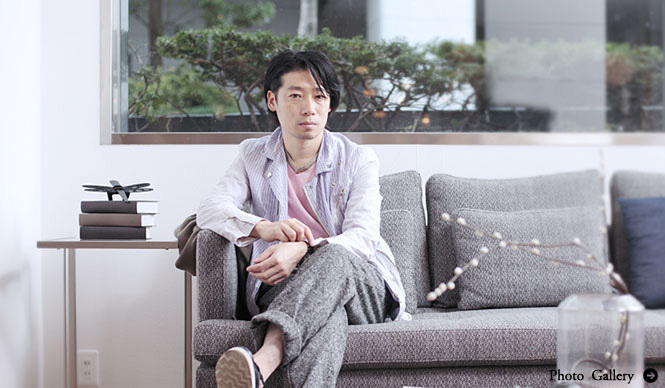
BoConcept | Makoto Tanijiri Speaks About BoConcept at BoConcept Aoyama Store
BoConcept
A person's lifestyle is always reflected in how they live.
Architect Makoto Tanijiri on BoConcept
“Have you noticed more natural and soft colors recently?”──Architect Makoto Tanijiri visited the BoConcept Aoyama store again after about a year, following a talk show with Shuya Okino of Kyoto Jazz Massive held there last September. He began to enthusiastically examine the new tables and chairs.
Text by OPENERSPhoto by JAMANDFIX
The theme is “negative space.” Designing while considering what constitutes an incomplete building…
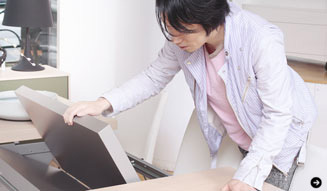
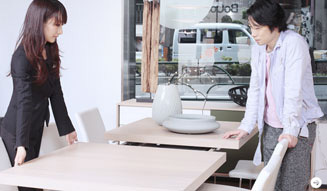
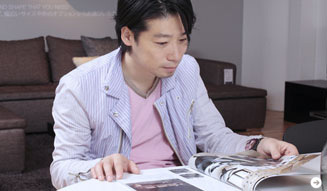
It’s been a year since the talk show on “Architecture and Music” at the BoConcept Aoyama store. Mr. Tanijiri, while receiving explanations about new items like the extendable table “Occa” and the oak-finished “LONDON” chair, carefully observed, touched, and sat on them, experiencing the new colors, materials, and designs firsthand.
──What are your impressions of the new collection?
BoConcept furniture used to be predominantly black, giving a very sharp impression, so I was a bit surprised that the new collection features primarily natural colors. I used to often choose darker browns like walnut for furniture, but since last year, I've been leaning towards and naturally incorporating natural colors.
My own designs often result in sharp, modern spaces, and placing dark furniture can enhance that sharpness. However, recently, I've felt a desire to use softer materials for furniture and fabrics, something like a “mismatched match” – creating a contrast with the space. It’s like in fashion, where a combination of ripped jeans and a nice shirt is more appealing than an entirely sharp outfit.
In recent years, my theme has been “negative space,” and I focus more on a sense of looseness rather than precise design, on not completing everything. I design while contemplating what an incomplete building might be, and I strive to create with increasing looseness.
──What is the relationship between building design and furniture?
I often advise on furniture even during the design phase. It's not limited to private residences; some clients want me to select even small items, suggest art, and handle the styling. I don't really feel that as an architectural firm, I should only focus on design; part of my job is to offer extra assistance (laughs).
In the initial presentation to a client, I propose a model with furniture and even art already placed, allowing them to glimpse the lifestyle. If I can suggest a starting point for their life there, the client's imagination will begin to run with it.
Also, before designing, I always visit the home. Observing how they live reveals if they enjoy cooking, if they are particular about their tableware, books, or music – their lifestyle is evident. I try to open doors and observe their actual lives, valuing the opportunity to understand the client's values.
BoConcept
Choosing objects that resonate with a philosophy beyond the objects themselves
Architect Makoto Tanijiri on BoConcept (Part 2)
What is “subtle newness” born from difference?
──What did you think of BoConcept's furniture?
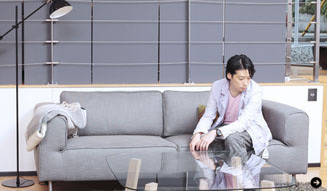
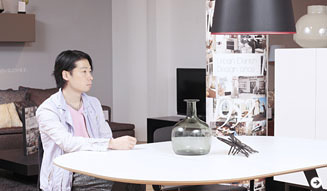
I thought it would be more expensive (laughs). This price point indicates strong branding. I had an image of sharper furniture, but the combination of light wood and silver on the dining table, for example, struck me as a blend of sharpness and softness.
Expressing newness through entirely new shapes is easily understandable as novel. However, with established forms for items like tables, sofas, and chairs, it’s surprising when newness is felt without altering the basic shape. What matters is whether one can perceive that subtle difference.
Engaging with an object is something that seems possible but is not. For instance, if you face a table and continue to contemplate it, differences will eventually emerge. What arises is not the newness of a model change, but a subtle, nuanced newness.
The world constantly exaggerates newness, but here, newness is expressed with a sense of history. It is truly a matter of subtle differences.
──What is your criterion for choosing objects, not just furniture?
I tend to buy things when I hear about a company's philosophy or a designer's thinking and find myself resonating with it. It's the same with clothing; knowing who made it makes me like it even more. Object creation has a concept, and the object emerges from it. However, the moment the object is completed is actually when its purity is most diluted. Therefore, many objects don't align with their original concept. I prefer those with little or no such discrepancy.
BoConcept
Facing architecture with an understanding of its purpose
Architect Makoto Tanijiri on BoConcept (Part 3)
Furniture is essential in the concept that “actions create space.”
──The event “THINK” held at your office in Hiroshima is very popular.
Architecture should connect with all aspects of society, including books, music, and art. Yet, I constantly question whether I can engage in socially relevant work by solely studying and building architecture. Perhaps crucial elements of architecture can be found outside of it. With this in mind, I invite leading figures from various fields to Hiroshima to create a space for communication.
──Are guests like Kenichi Aono of BEAMS, with whom you recently had a dialogue, also planned?
Indeed, what I'm doing is “translation,” as Mr. Aono mentioned. Through “THINK,” I am constantly translating how to connect with society and apply it to architecture.
“THINK” was started with the desire to realize the idea that “actions create space.” For example, if a ruin has a sofa, dining table, shower, and kitchen, it can function as a dwelling, thus being called a house. Even if the container is a ruin, it becomes a gallery if an exhibition is held, a bar if drinks are served, or a hair salon if haircuts are given.
Similarly, when commissioned to design an interior shop, I would create something that appears to be an interior shop. However, without altering the space itself, simply by adding furniture, it becomes an interior shop. We are aware of this when we create spaces. Therefore, before creating, we must consider the purpose. We must approach architecture with that understanding. That is why furniture (interiors) is so important to a space.
Through the platform of “THINK,” I realize that spaces like ruins can acquire different room names based on the actions taking place, allowing for a deeper engagement with object creation and fostering new forms of communication.
──So, what are relaxing time and space for you, Mr. Tanijiri?
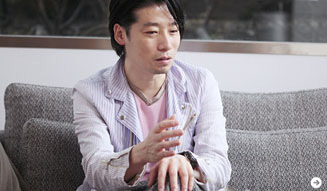
I enjoy people, so I like objects that allow me to imagine future events. For example, when I see a large dining table, I envision friends gathering, sharing drinks and food, and engaging in lively conversation. Such moments are the most relaxing for me and serve as the origin of my creative ideas.
──Thank you very much.
BoConcept Aoyama Store
2-31-8 Minamiaoyama, Minato-ku, Tokyo
Tel. 03-5770-6565
Opening Hours | 11:00–20:00
Open daily
http://www.boconcept.co.jp/
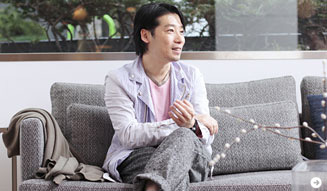
Makoto Tanijiri
Born in Hiroshima Prefecture in 1974 (Age 37)
Graduated from Anabuki Design College in 1994
1994–1999: Kenkichi Honkane Architects & Associates
1999–2000: HAL Architects
2000: Established Suppose Design Office
Currently: Part-time lecturer at Anabuki Design College
Suppose Design Office
http://www.suppose.jp/
 Facebook "TRIP Competition"here
 To the BoConcept Official Site