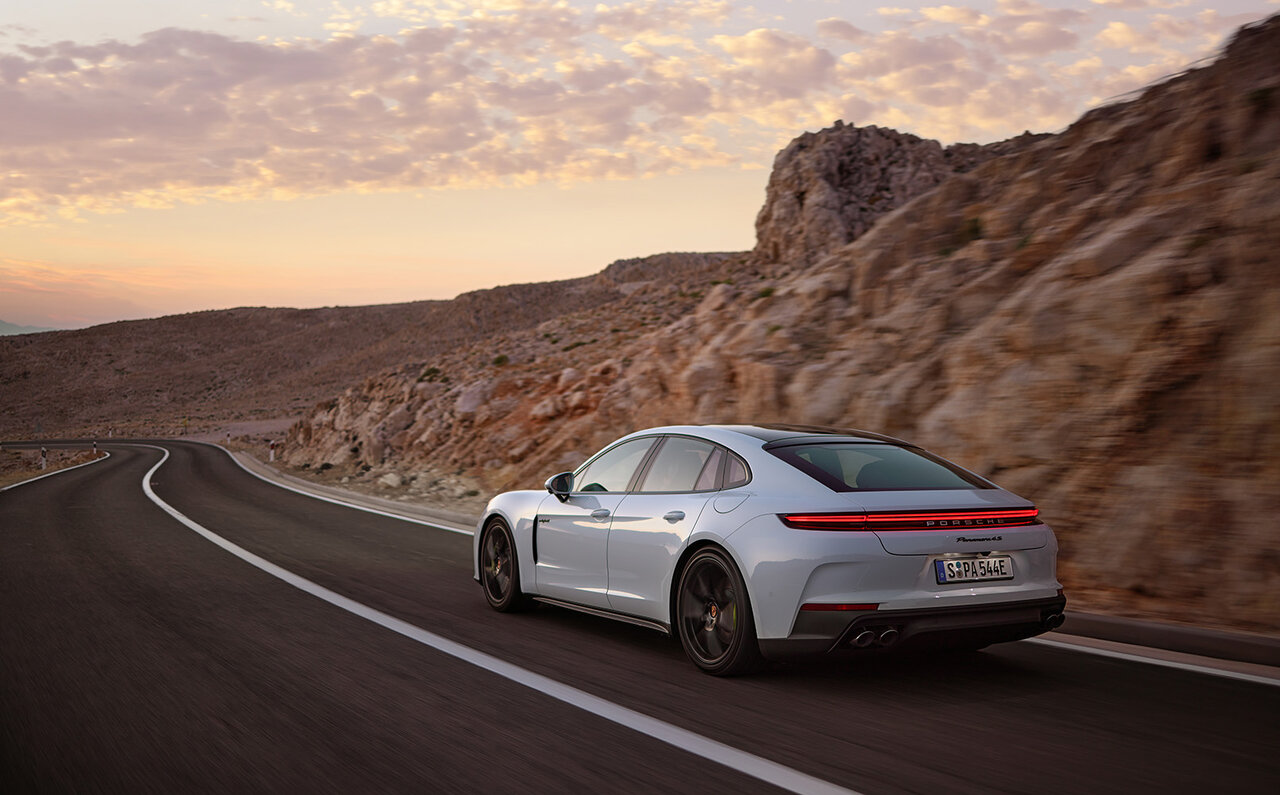
Significantly More Powerful with a New Hybrid System: Porsche Introduces PHEV Model for the New Panamera | Porsche
Porsche Panamera
Two PHEV Models Debut for the New Panamera
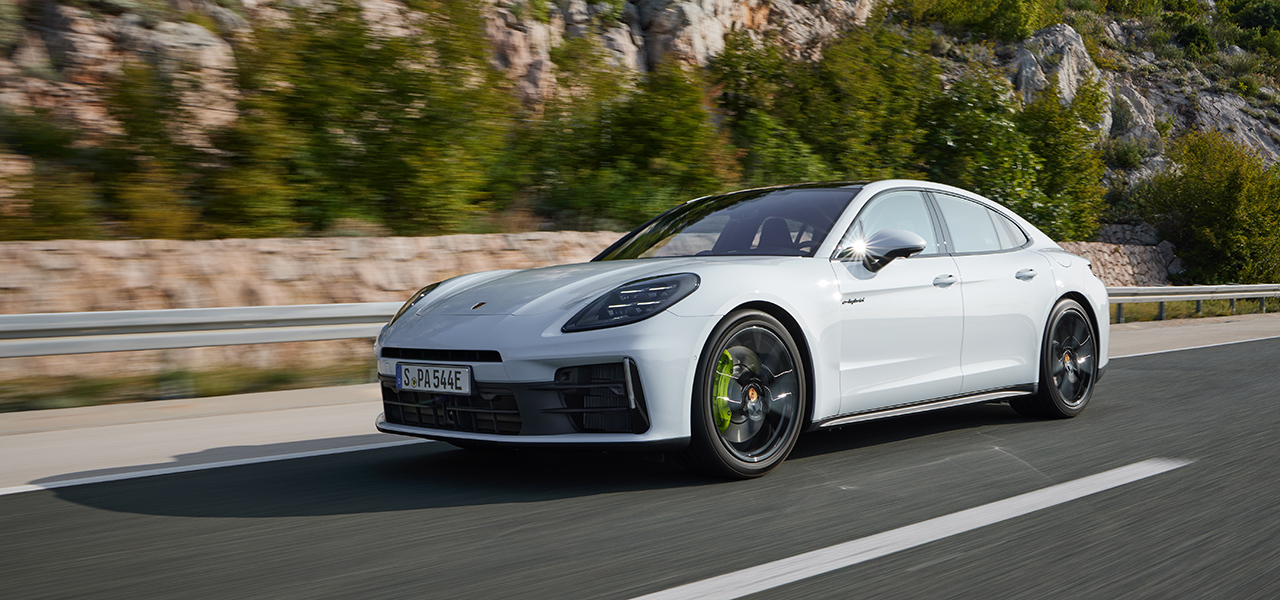
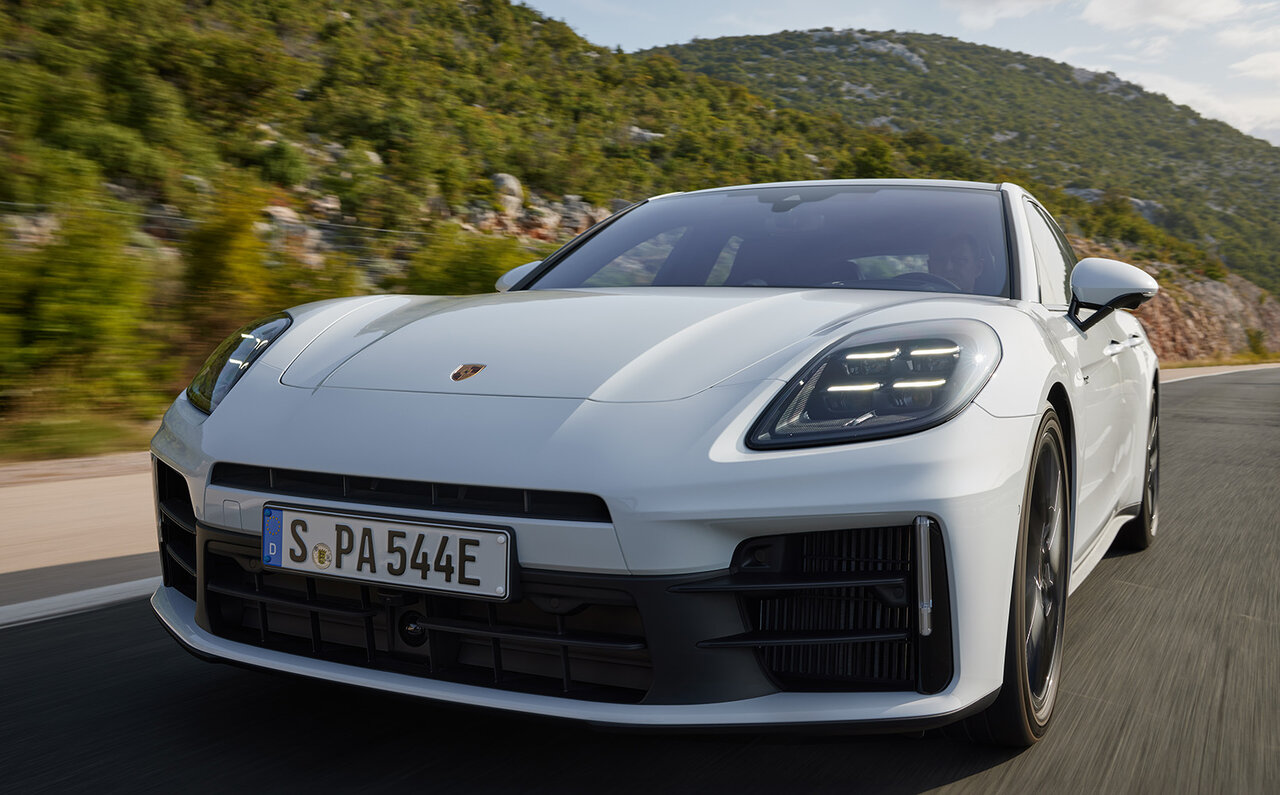
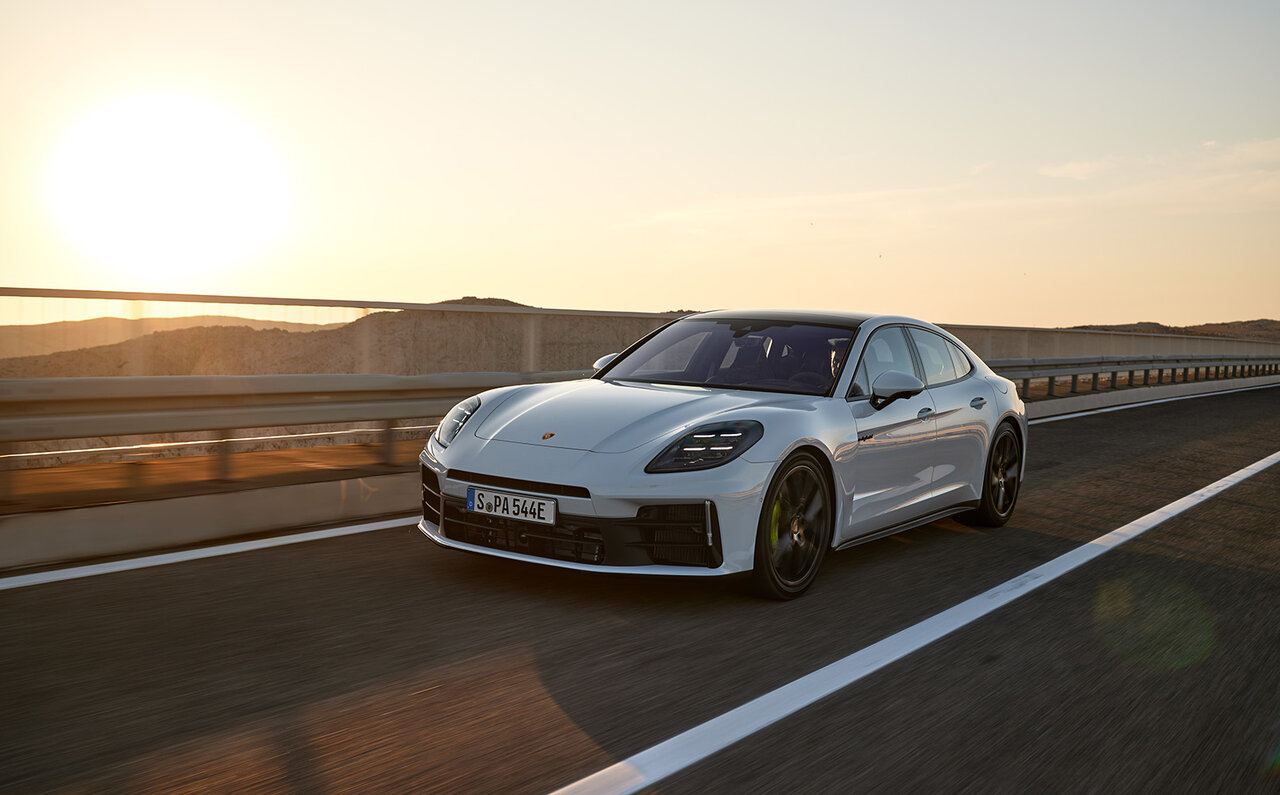
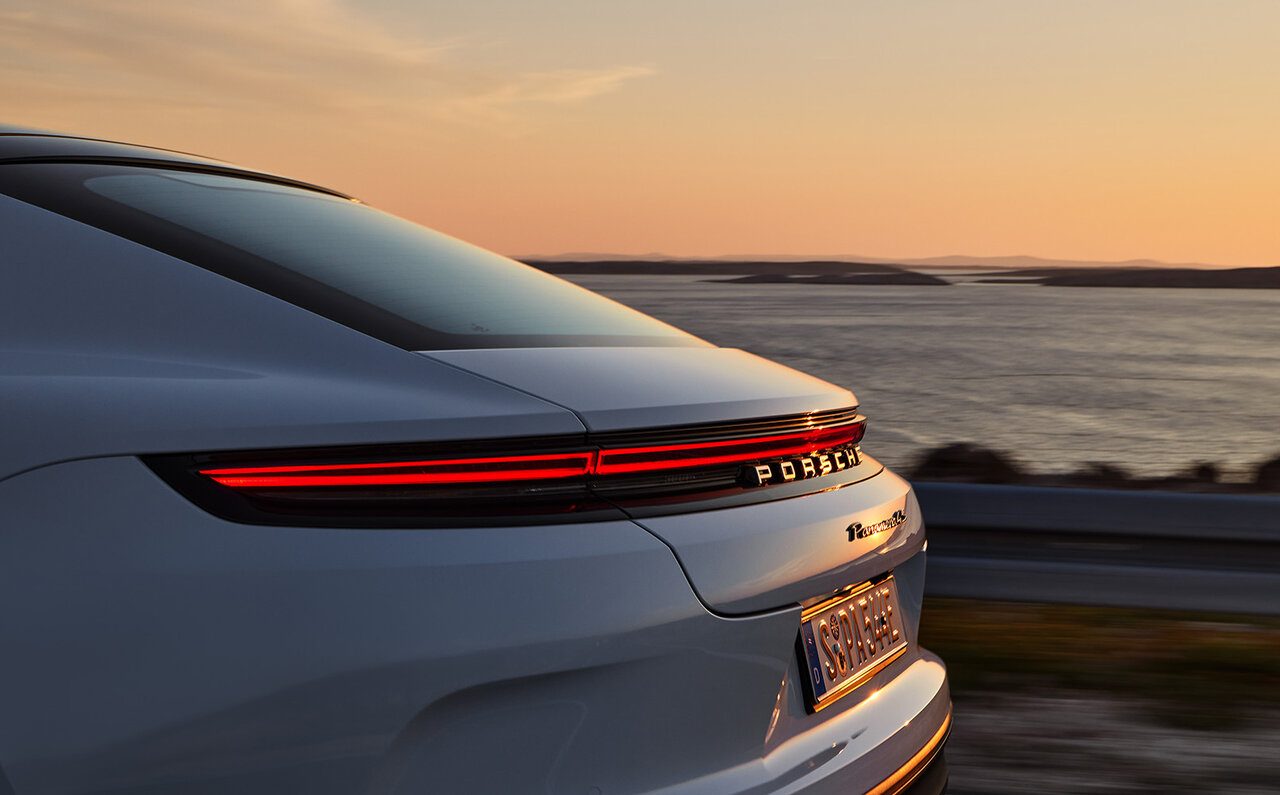
Porsche has announced the introduction of the Panamera 4 E-Hybrid and Panamera 4S E-Hybrid, plug-in hybrid (PHEV) models, for the Panamera.
Newly Developed Motor and Refined V6 Twin-Turbo Adopted
The Panamera evolved into its third generation at the end of 2023. The specifications of the two PHEV models, which had been announced for introduction, have now been revealed.
The Panamera 4 E-Hybrid is equipped with a newly developed e-Hybrid system featuring a new motor and an improved 2.9-liter V6 twin-turbo gasoline engine. The engine alone produces a maximum output of 224 kW (304 PS), while the system as a whole delivers a maximum output of 346 kW (470 PS) and a maximum torque of 650 Nm.
It achieves 0-100 km/h in 4.1 seconds and a top speed of 280 km/h. The electric range is said to be 96 km.
The Panamera 4S E-Hybrid, on the other hand, is a model that emphasizes driving dynamics and sustained power delivery at high RPMs.
While using the same 2.9-liter V6 twin-turbo engine as the Panamera 4 E-Hybrid, its maximum output has been increased to 260 kW (353 PS), with the system as a whole producing 400 kW (544 PS) and a maximum torque of 750 Nm.
This allows the Panamera 4S E-Hybrid to achieve 0-100 km/h in 3.7 seconds and a top speed of 290 km/h.
Compared to the previous model, these two models offer improved electric range and charging speed, along with enhanced throttle response. The new hybrid system plays a significant role in these advancements.
The newly developed electric motor, which produces a maximum output of 140 kW (190 PS) and a maximum torque of 450 Nm, is significantly more powerful than its predecessor. It is integrated into the housing in an efficient and weight-optimized manner, and notably, it is incorporated into the oil cooling circuit of the PDK transmission.
The design, where the rotor rotates within the stator inside the motor, reduces rotational inertia by 50% and improves throttle response. Furthermore, the electric motor, capable of regenerative braking up to 88 kW, contributes to extending the driving range.
Efficiency is also pursued in driving scenarios. Although the vehicle always starts in the fully electric E-Power mode, it automatically switches to Hybrid Auto mode when the battery charge level drops below a certain threshold, selecting the appropriate driving mode based on the current driving conditions.
Additionally, with the Active Route Guidance in Hybrid Auto mode, the system can optimize its driving strategy by understanding the upcoming route, thereby maximizing the proportion of electric driving in urban environments.
In addition, the E-Hold mode maintains the battery's charge level, while the E-Charge mode allows the engine to charge the battery up to 80% during suburban or highway driving (above 55 km/h), enabling efficient hybrid driving in urban areas.
Both models come standard with adaptive two-chamber air suspension, including Porsche Active Suspension Management (PASM) with two-valve dampers.
This system absorbs body movements caused by road imperfections and also contributes to optimized traction and cornering performance.
The start date for reservations, pricing, and specifications for the Panamera 4 E-Hybrid and Panamera 4S E-Hybrid in Japan are yet to be determined.
Porsche also plans to introduce the Panamera Turbo E-Hybrid, a PHEV equipped with a 4-liter V8 turbo engine, which will deliver a system output of 500 kW (680 PS) and a maximum torque of 930 Nm.
We await further announcements from Porsche regarding all these models.