McLaren's Fastest Hypercar Ever, the Speedtail, Makes its Japan Premiere
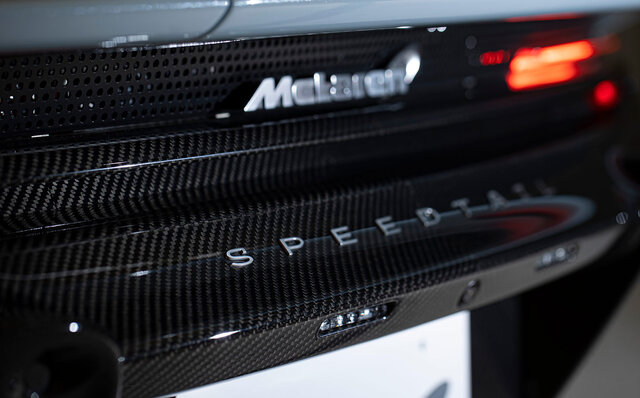
McLaren Speedtail
McLaren Unveils Speedtail Hypercar in Japan Debut
On September 14, McLaren Automotive premiered the Speedtail in Japan, a hypercar that marks a new pinnacle of speed for McLaren road cars, achieving 403 km/h.
0-300 km/h Acceleration in 13.0 Seconds, Surpassing the P1's 16.5 Seconds
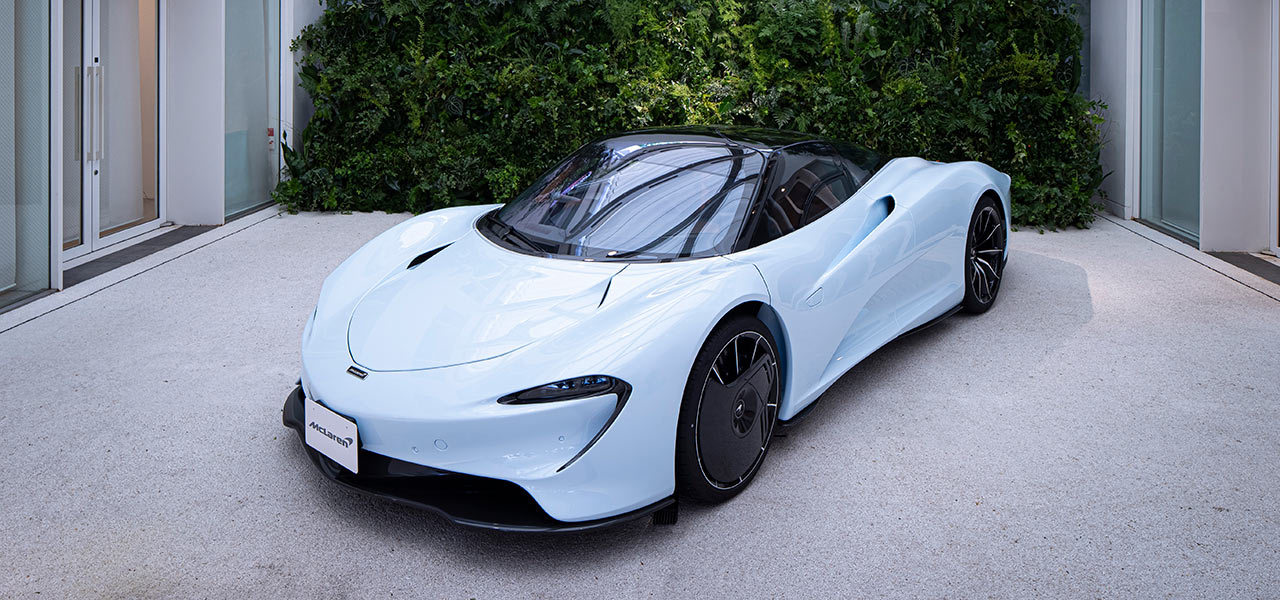
As the latest model in the Ultimate Series, every element and detail of the McLaren Speedtail has been engineered with the mission to minimize aerodynamic drag and maximize top speed.
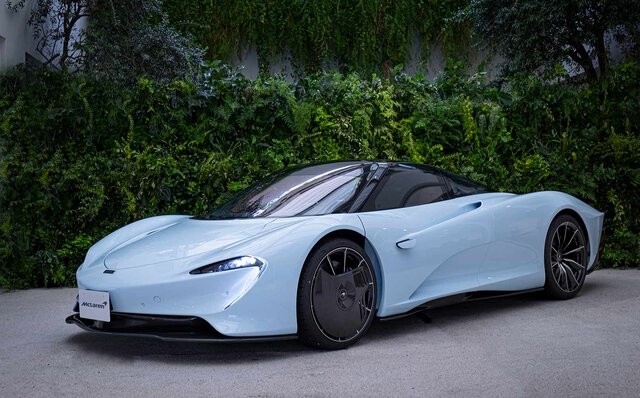
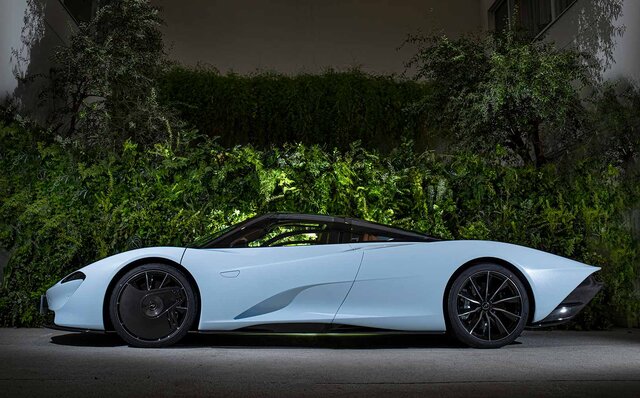
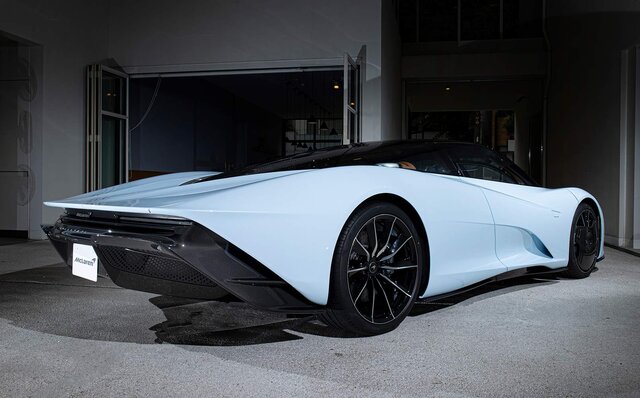
While narrower than the company's McLaren P1, the body is 5,137mm long, over 50mm longer. Viewed from above, it adopts a teardrop shape, the fastest form in nature, which ensures the smoothest and most dramatic contact with the air at the front splitter, while the long tail gradually releases air, suppressing turbulence. The glasshouse of the cockpit, located inside the body, also features a teardrop shape.
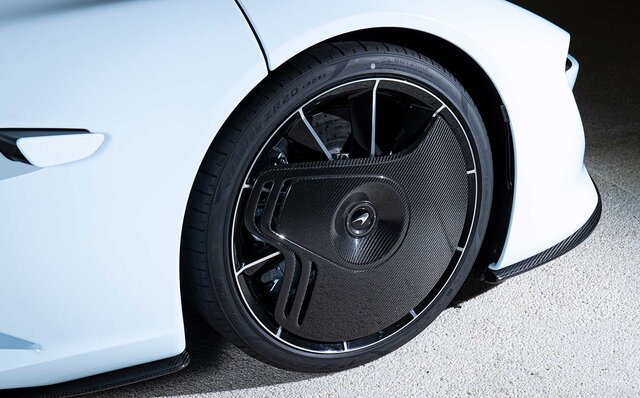
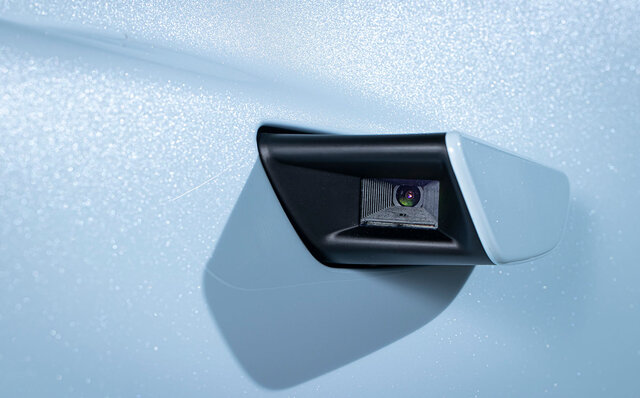
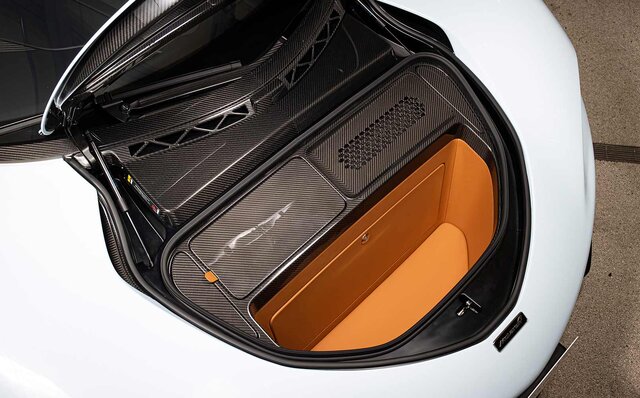
All body panels are made of carbon fiber. Small digital rearview cameras replace door mirrors, and unique static carbon fiber aero covers on the front wheels reduce turbulence around the wheel arches.
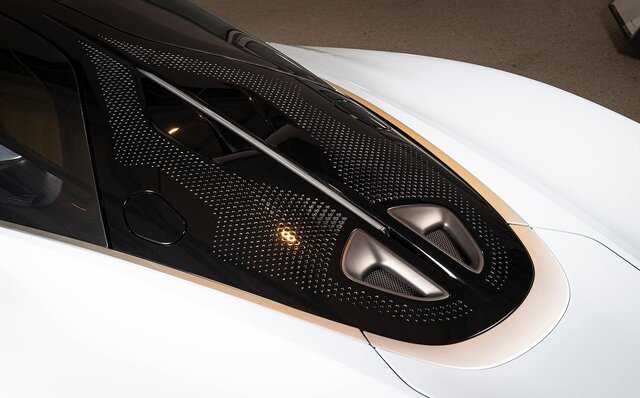
Furthermore, the patented active rear elerons maintain design consistency while minimizing aerodynamic drag and acting as air brakes during deceleration. This ensures airflow adheres closely to the body, with necessary cooling air drawn in through two intakes behind the glass canopy and supplied to the gasoline engine and electric hybrid powertrain, which together produce 1,070 ps.
These features enable a top speed of 403 km/h, the fastest ever for a McLaren, surpassing the 391 km/h of the legendary McLaren F1. Its 0-300 km/h acceleration time of 13.0 seconds also significantly outpaces the 16.5 seconds achieved by the Ultimate Series' previous hybrid model, the P1.
To achieve maximum velocity, the Velocity mode must be engaged. In this mode, the hybrid powertrain is optimized for high-speed driving, and the active rear elerons along the long tail adjust their angle. The car is fitted with specialized Pirelli P-ZERO tires developed for high-speed performance.
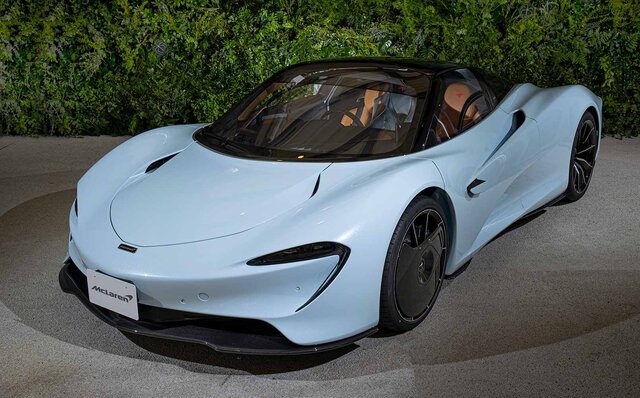
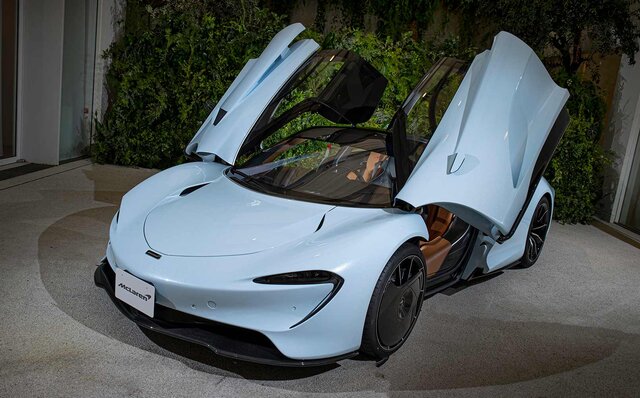
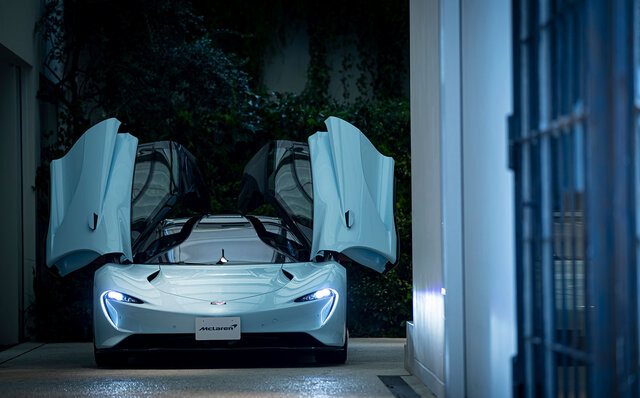
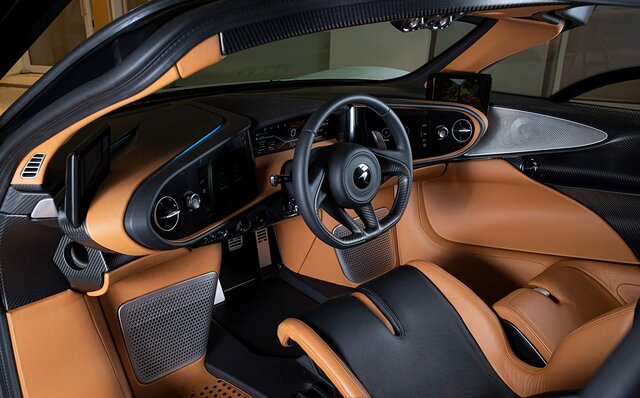
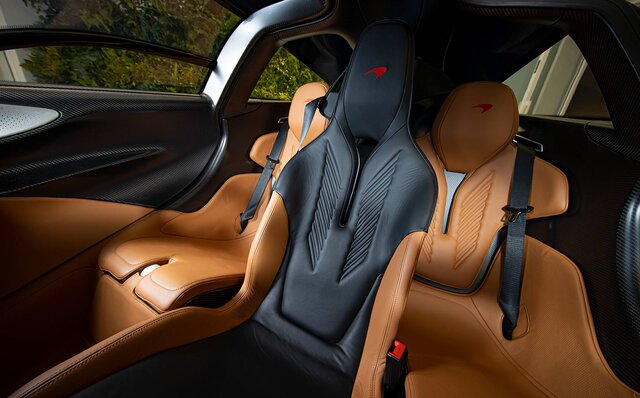
The interior features a unique three-seat configuration, with the driver's seat positioned centrally in the cockpit and two passenger seats slightly behind. The windscreen curves upwards to form part of the roof, seamlessly connecting with the glass sections above the dihedral doors and extending to the rear quarter windows.
The cockpit is flooded with light, which can be instantly rendered opaque if passengers prefer privacy. Engine start, mode selection, and window and door operations are controlled via an overhead panel, with a high-resolution display and touchscreens extending before the driver.
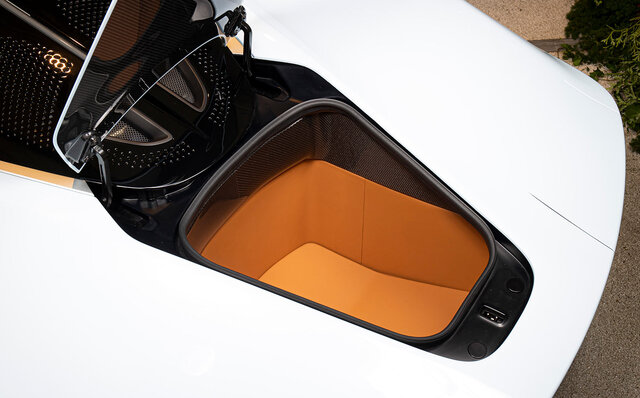
The interior is upholstered in full aniline leather sourced from Scandinavia, with customizable stitching, quilting, and embossing patterns according to the owner's preference. New bespoke customization options have also been introduced, including the use of new materials like carbon fiber with vapor-deposited titanium.
The model displayed in Japan features a pale pearl blue body with an interior combining black and light brown two-tone leather. Pricing starts at £1.75 million (approximately 240 million yen). Unfortunately, pre-orders have already been fully allocated.