Volkswagen Releases Findings: EVs Emit Less CO2 Over Lifecycle Than Diesels | Volkswagen
Volkswagen
EVs Emit Less CO2 Over Lifecycle Than Diesels, Volkswagen Reports
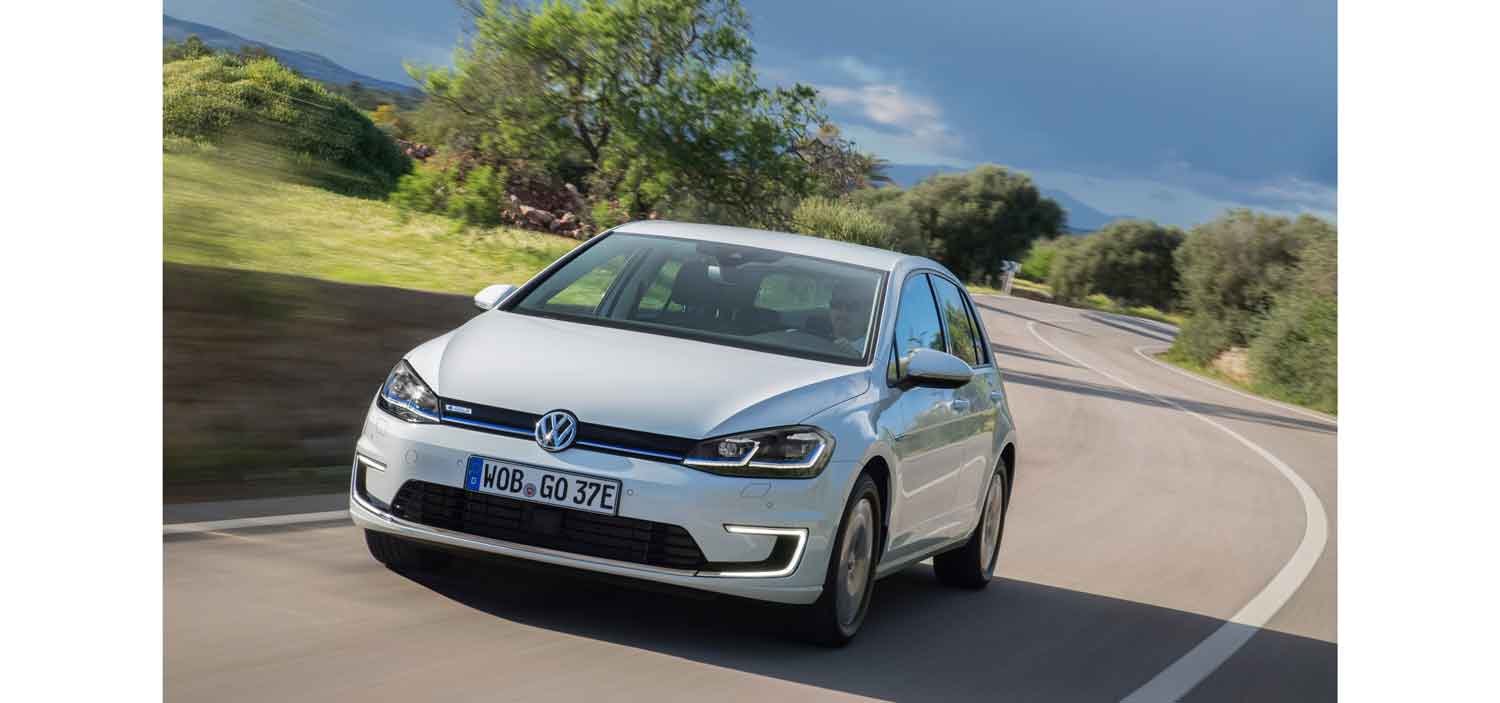
In 2019, Volkswagen published a report investigating the CO2 emissions of its diesel and EV Golf models. The results of a certified lifecycle assessment (LCA) revealed that electric vehicles produce less CO2.
Text by YANAKA Tomomi
Reducing CO2 During EV Production and Utilizing Renewable Energy Are Key for the Future
Volkswagen conducted a lifecycle assessment (LCA) using the seventh-generation Golf. The company aims to reduce emissions by leveraging the research findings from this study.
The assessment results indicate that the seventh-generation Golf TDI diesel model has an average lifecycle emission of 140g CO2/km, while the "e-Golf" emits 119g CO2/km.
For internal combustion engine vehicles, the majority of CO2 emissions occur during the usage phase, stemming from the fossil fuel supply chain and combustion. For diesel cars, this figure reaches 111g CO2/km. In contrast, for comparable EVs, emissions during the usage phase are significantly lower at 62g CO2/km.
Conversely to internal combustion engine vehicles, the majority of an EV's CO2 emissions are generated during production. According to the LCA, diesel cars produce 29g CO2/km during production, while EVs generate 57g CO2/km. This is primarily due to battery manufacturing and the complex extraction processes for raw materials, which account for nearly half of the total lifecycle CO2 emissions.
Furthermore, CO2 emissions during the usage phase vary depending on the energy source. As the use of renewable energy increases, CO2 emissions during the usage phase will decrease accordingly.
Moreover, advancements in lithium-ion battery technology and supply chain optimization have led to a reduction of over 25% in carbon footprint per kWh of battery capacity for the "ID." series, launched in 2019, compared to the batteries in the "e-Golf." When renewable energy is utilized, the potential reduction can reach approximately 50%.
The energy source during the usage phase is the most significant factor influencing CO2 emission reduction. Using the standard EU electricity mix, emissions are calculated at 62g CO2/km, but this can be reduced to a mere 2g CO2/km when using renewable energy sources.
Volkswagen's CO2 equivalent emissions per vehicle, expressed in tons, were 43.6 tons in 2015. However, the company has set a goal to reduce this by 30% by 2025.
Inquiries
Volkswagen Customer Center
Tel. 0120-993-199
https://www.volkswagen.co.jp/ja.html