The SF90 Stradale, Ferrari's most powerful model ever, arrives in Japan to commemorate Scuderia Ferrari's 90th anniversary | Ferrari
Ferrari SF90 Stradale | FERRARI SF90 Stradale
Ferrari's First Production PHEV, the SF90 Stradale, Debuts in Japan
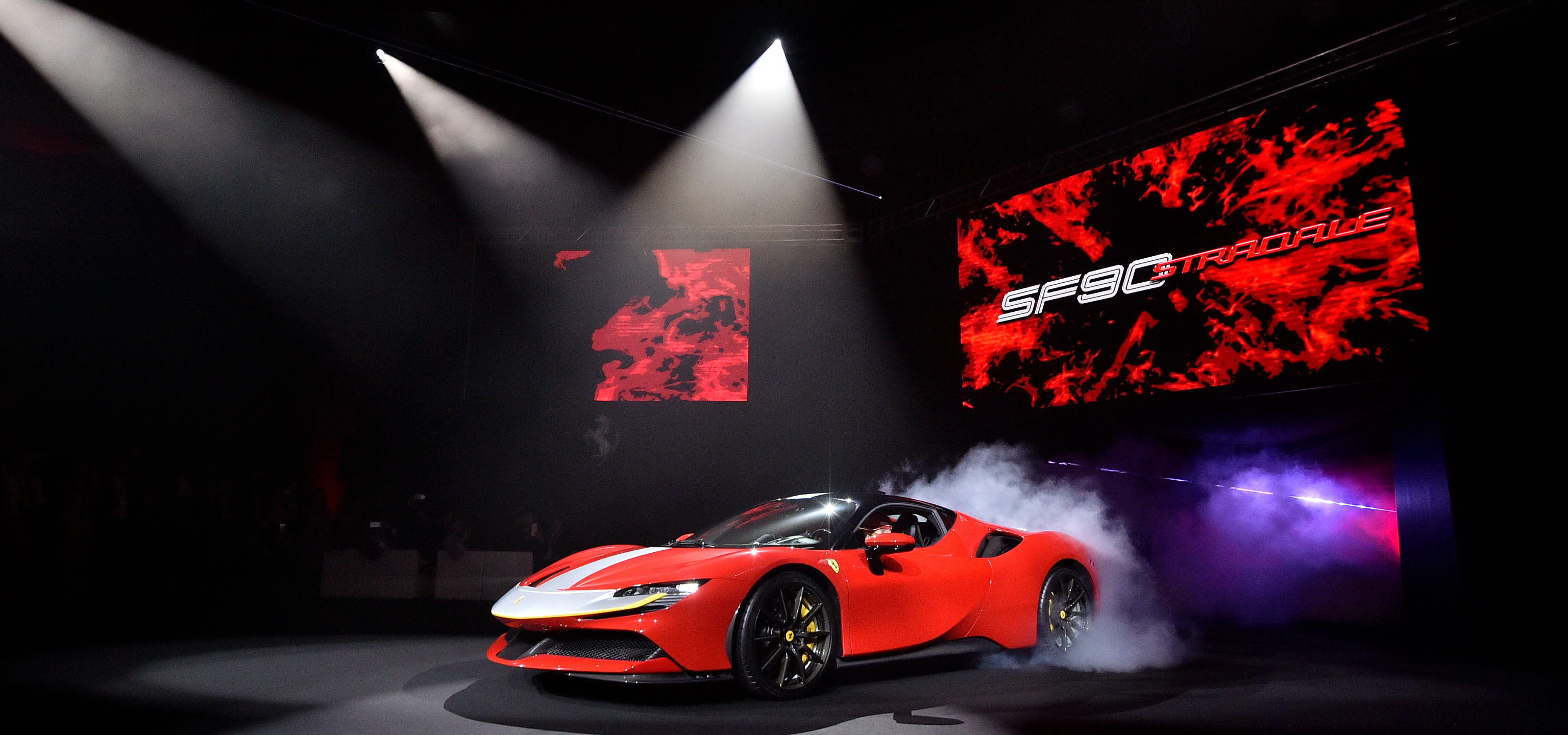
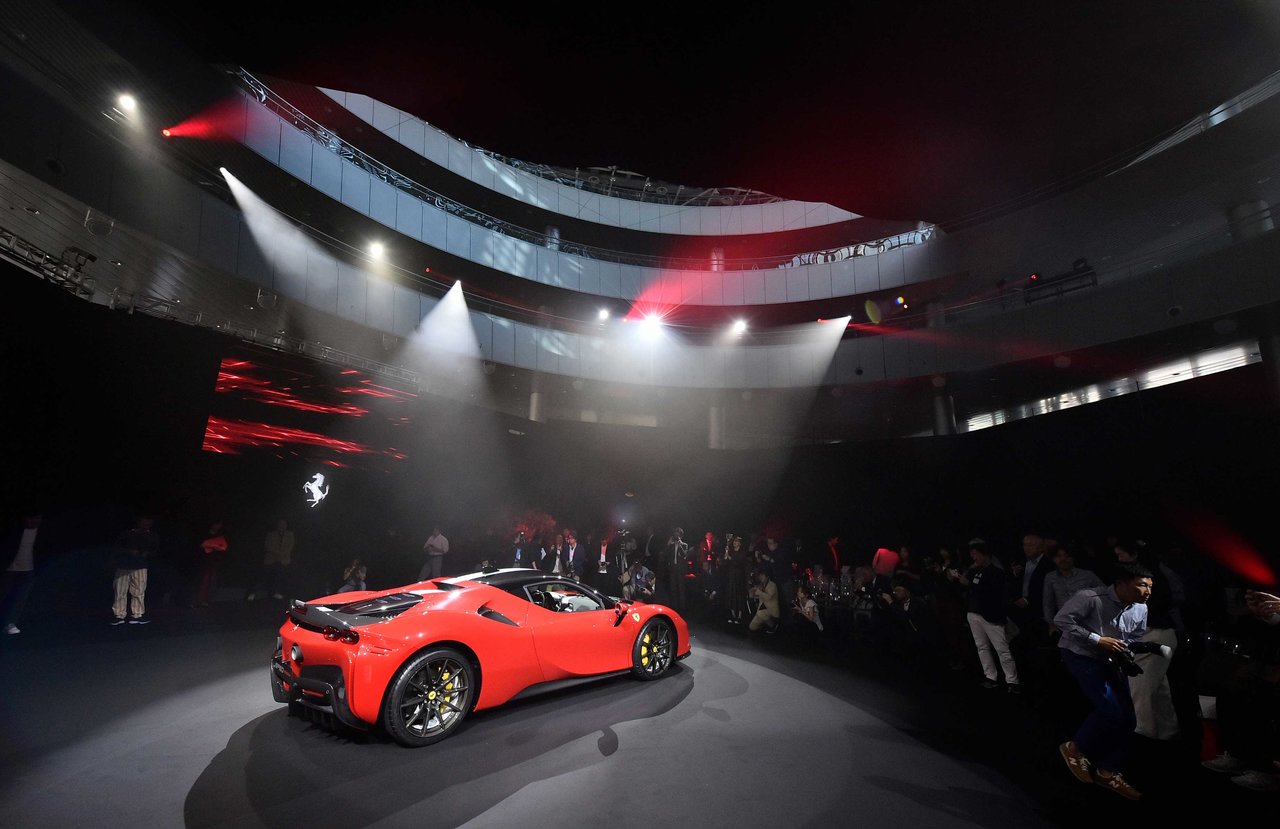
On October 9, Ferrari Japan unveiled the SF90 Stradale, the company's first production PHEV (Plug-in Hybrid), for the first time in Tokyo.
0-100 km/h in 2.5 Seconds, Top Speed of 340 km/h
The model name SF commemorates the 90th anniversary of Scuderia Ferrari, the company's racing team, and emphasizes the strong bond between the company's racing cars and road cars.
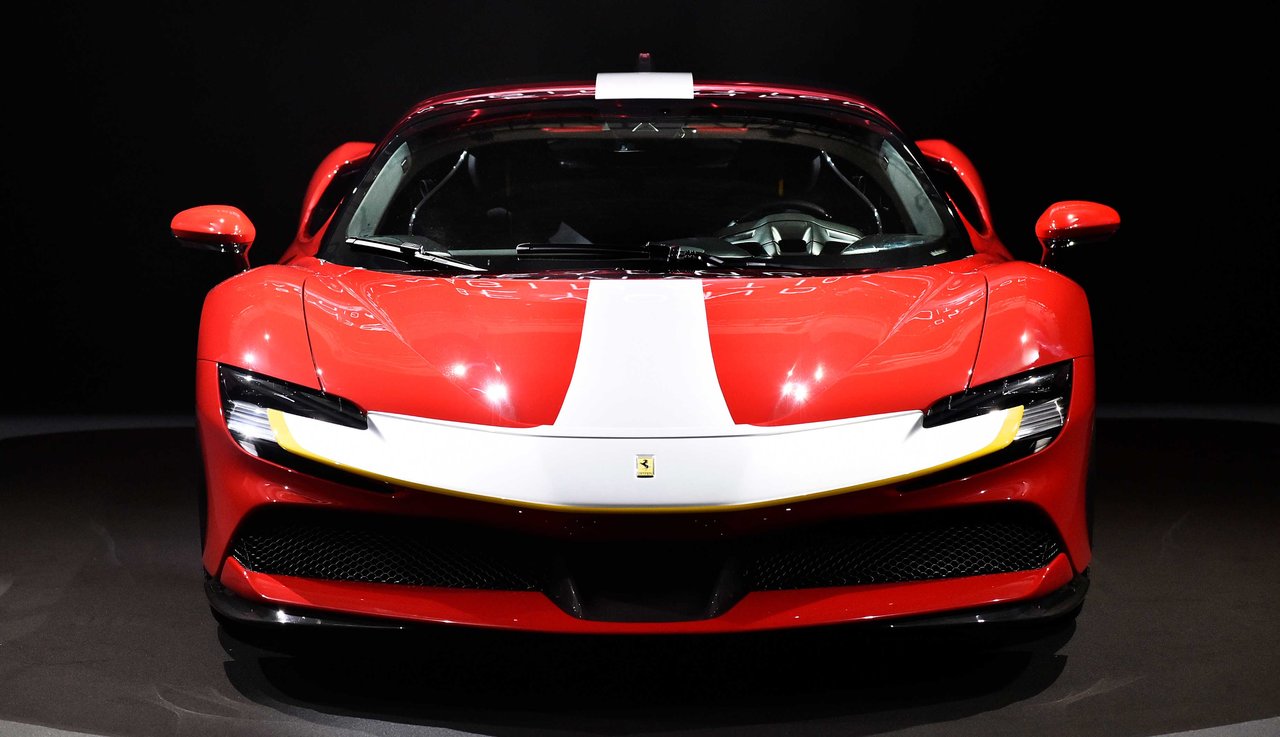
The styling of the SF90 Stradale, developed by rapidly transferring Ferrari's knowledge and skills gained in racing to its road cars, reduces frontal projected area by moving the cockpit position forward, thereby reducing drag.
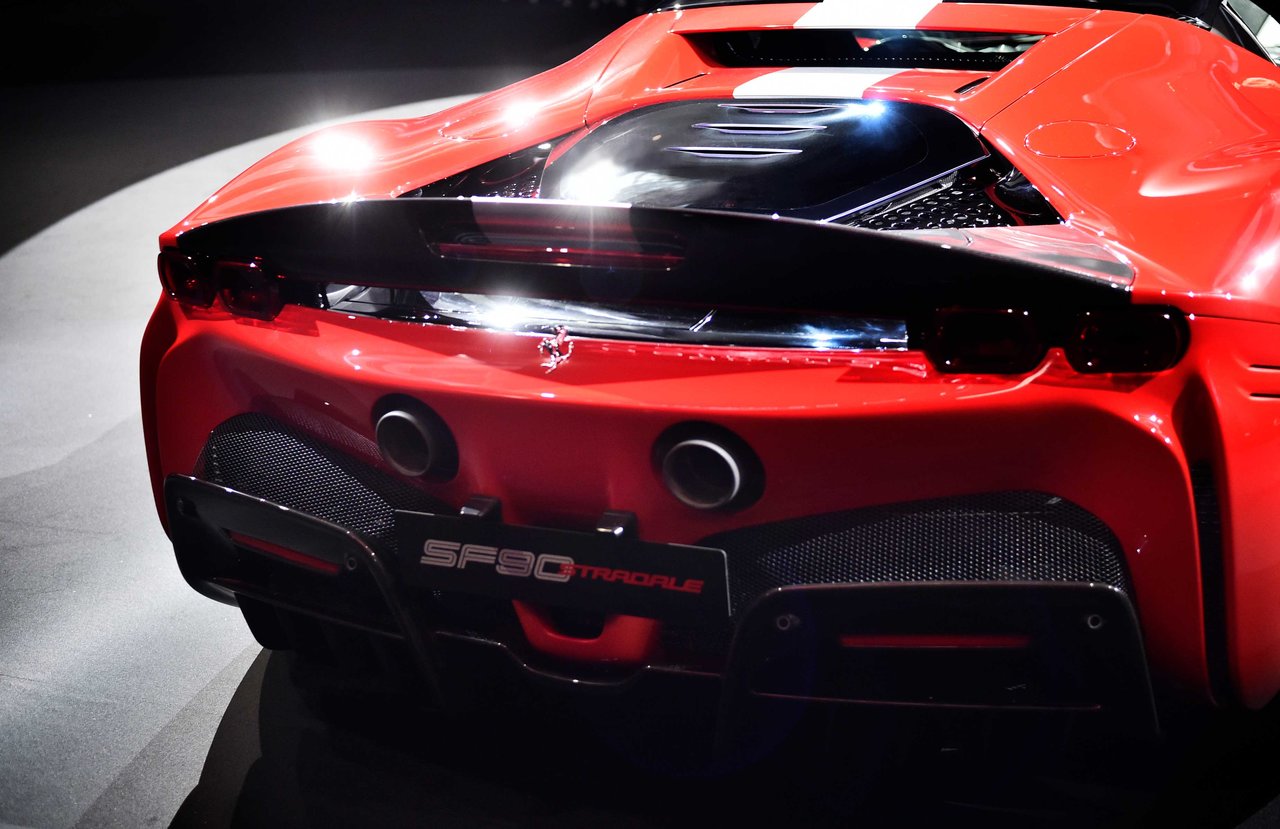
Furthermore, vortex generators at the front and a shut-off Gurney at the rear of the engine cover generate 390 kg of downforce at 250 km/h, a level of performance unprecedented for a production vehicle. The V8 model reaches the pinnacle of the brand's history.
The SF90 Stradale's powertrain combines a 3,990cc 90° V8 dry-sump twin-turbo engine, producing a maximum output of 780 PS at 7,500 rpm and a maximum torque of 800 Nm at 6,000 rpm, with three electric motors producing a maximum output of 162 kW (220 PS). The total system output is 1,000 PS.
One of the three motors is an MGUK (Motor Generator Unit, Kinetic) derived from Formula 1 applications, located between the engine and the new 8-speed dual-clutch gearbox, driving the rear wheels. The other two motors are mounted on the front axle, driving the left and right front wheels.
This achieves 0-100 km/h acceleration in 2.5 seconds, 0-200 km/h in 6.7 seconds, a top speed of 340 km/h, and a lap time of 79 seconds at Fiorano (Ferrari's test track).
The battery capacity is 7.9 kWh, allowing for a maximum range of 25 km on electric power alone. Drive modes include the all-electric 'eDrive', the standard 'Hybrid', 'Performance' where the engine continues to drive, and 'Qualify' which unleashes the system's full power.
Body dimensions are 4,710 mm in length, 1,972 mm in width, and 1,186 mm in height. The wheelbase is 2,650 mm, with a front track of 1,679 mm and a rear track of 1,652 mm. The vehicle weighs 1,570 kg with a front-rear weight distribution of 45:55. Tire sizes are 255/35ZR20 at the front and 315/30ZR20 at the rear, with brake rotor diameters of 398 mm at the front and 360 mm at the rear, among other published data.
The interior adopts a futuristic approach with an aircraft-like wraparound cockpit. An interface designed to create a 3D effect and a head-up display projecting all data onto the windshield create an environment that minimizes eye movement, allowing the driver to concentrate on driving.
Meanwhile, the tunnel area of the cabin is equipped with F1 control devices called 'bridges'. The use of a metal plate reminiscent of past iconic shift gates masterfully fuses the past and present. The price is 53.4 million yen.