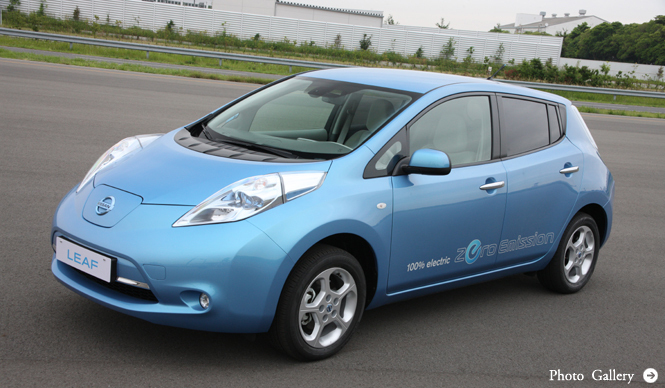
NISSAN LEAF | NISSAN LEAF
NISSAN LEAF
EV-Exclusive Model Off to a Strong Start
Nissan Motor Co., Ltd. announced on the 7th that the "Nissan Leaf," an electric vehicle (EV) for which reservations began in Japan on April 1st of this year, reached its 2010 fiscal year sales target of 6,000 units in just two months.
Text by Giraffe
Sales Target Reached in Two Months
This Leaf is the world's first mass-produced EV-exclusive model, scheduled for release in Japan starting December 2010. While its cruising range of around 160 km is not extensive, it has garnered high praise for its zero emissions, price, and advanced IT systems.
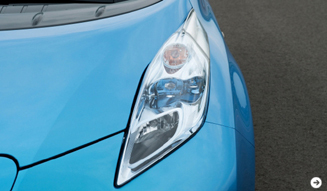
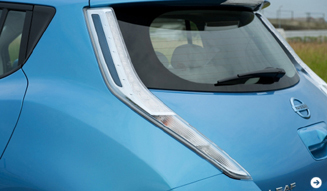
The vehicle, which achieved its 2010 fiscal year sales target of 6,000 units in just two months, shows a breakdown of individual reservation age groups as follows: 3% in their 20s, 13% in their 30s, 25% in their 40s, 25% in their 50s, and 34% aged 60 and over. This indicates a strong preference among older demographics, suggesting significant demand as a second car.
The company announced that reservations will continue to be accepted at dealerships. Following the sales launch in December, deliveries will proceed in order of reservation. Users unable to receive their vehicles within fiscal year 2010 will be prioritized for delivery starting in fiscal year 2011.
Nissan Motor Co., Ltd. Customer Relations
0120-315-232 (9:00-17:00)
BRAND HISTORY
Nissan began producing the Cedric under its own name in 1960, with the company's origins tracing back to 1937. Following World War II, it engaged in knock-down manufacturing of British Austin vehicles.
In 1966, Nissan merged with Prince Motor Company. Between 1983 and 1987, it established a joint venture with Alfa Romeo, producing passenger cars in Italy. At one point, Nissan vied for market share with Toyota, but faced a management crisis in the 1990s. In 1999, Renault acquired a stake, leading to the company's current structure.
Nissan's distinctiveness may lie in its approach to creating cars that fit the Japanese lifestyle. It has skillfully translated the evolving desires of the Japanese people—the dream of owning a personal car, the aspiration for high-performance vehicles, pride in Japanese cars with global value, and a penchant for luxury—into its products as motorization developed.
In 1966, during the dawn of motorization, the compact Sunny offered the dream of owning a "my car." In 1967, the Bluebird highlighted high performance. Responding to youth interest in motorsports, the Skyline was introduced in 1968, followed by the Fairlady Z in 1969, marketed as a sports car "recognized in America." These releases were rapid-fire.
During the bubble economy era, capitalizing on the market's demand for luxury cars, the Cima became a major hit in 1988. Concurrently, the Skyline GT-R, embodying the advancement of Japanese automotive performance, was unveiled in 1989, solidifying the "GT-R myth." This legacy continues to the present-day NISSAN GT-R.
The company's genuine human touch, such as featuring developers prominently in advertising to foster a closer connection with consumers, remains evident today. The image of an anthropomorphized corporation, driven purposefully forward like a living being, embodying the era's emphasis on performance and technology, is Nissan's signature.
It is true that Nissan has lagged behind competitors like Toyota in developing next-generation technologies. It is said that many businesses closed during the 1999 capital alliance with Renault, including hybrid technology, which Nissan had been leading at the time. While the four-door electric vehicle Leaf is set to launch in autumn 2010, Nissan's direction in environmental technology remains somewhat unclear.
(Updated August 2010)