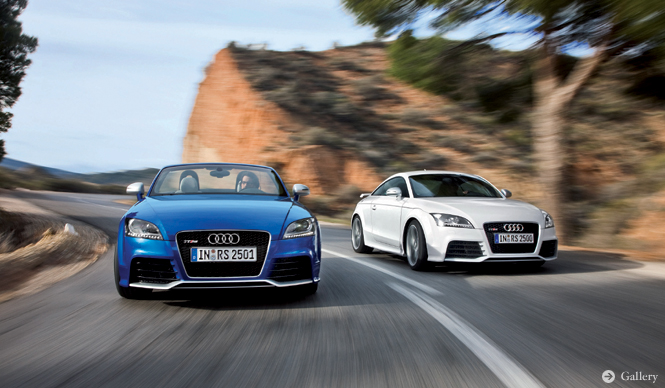
Audi TT-RS | The Most Powerful "Tourist Trophy" Ever
Audi TT-RS
The Ultimate "Tourist Trophy"
AudiAudi will unveil the most powerful version of the TT, the "TT-RS," at the Geneva Motor Show, which begins on March 5th.
Text by Giraffe
0-100 km/h in Under 5 Seconds
The biggest highlight of this top-tier TT model is its engine. It features a newly developed, direct-injection 2.5-liter inline-five twin-turbo. Audi once pioneered the world's first inline-five engine, deploying it across many models, but it disappeared from catalogs by the mid-1990s. Now, it's making a long-awaited comeback as the unit for the TT-RS.
According to Audi officials, the engine in this "TT-RS" is expected to produce a maximum output of 340 horsepower and a peak torque of around 46 kgm. These specifications will enable a 0-100 km/h acceleration in under 5 seconds and a top speed of 250 km/h (with limiter activated).
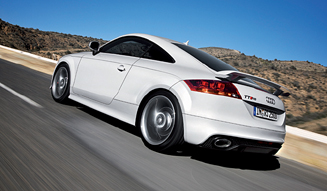
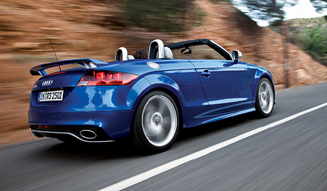
Coupe and Cabriolet Debut Simultaneously
The drivetrain utilizes Audi's renowned Quattro permanent all-wheel-drive system. To support its exceptional performance, reinforced suspension and large-capacity brakes have been incorporated. The transmission is planned to be available in both a 6-speed manual and a 6-speed S tronic.
The exterior features a specially designed bumper with a mesh air intake. The headlights incorporate Audi's signature bi-xenon LED daytime running lights, a staple on new Audi models. Combined with dedicated aerodynamic parts like the adjustable rear spoiler, the overall appearance is exceptionally sporty.
The TT-RS will be officially unveiled at the Geneva Motor Show on March 5th. It will be available in both coupe and cabriolet versions and is slated for production.
BRAND HISTORY
Audi's emblem is the "Four Rings." As you may know, each ring represents one of the automotive manufacturers: Audi, DKW, Horch, and Wanderer. All were based in Saxony and were pioneers of the German automotive industry at the beginning of the 20th century. However, the four companies, hit hard by the Great Depression after World War I, formed Auto Union in 1932 to survive. DKW focused on motorcycles and small cars, Wanderer on mid-sized cars, Audi on premium mid-sized cars, and Horch on luxury cars.
Following the defeat in World War II, Saxony in East Germany fell under Soviet occupation, and Auto Union ceased to exist. Anticipating this, a new Auto Union was established in Ingolstadt, Bavaria, in West Germany. Unlike BMW and Mercedes-Benz, Auto Union faced a challenging start without existing factories, but gradually built strength through production of vehicles like the DKW delivery van.
Acquired by Volkswagen at the end of 1964, Auto Union soon introduced new models bearing the Audi name. In 1969, it merged with NSU (known for its development of the Wankel engine), based in Neckarsulm, becoming Audi NSU Auto Union. From 1985 onwards, it has continued as Audi to the present day. Technologies like Quattro, dynamic performance backed by motorsport activities, elegant design, and high-quality finishes are driving Audi's popularity.