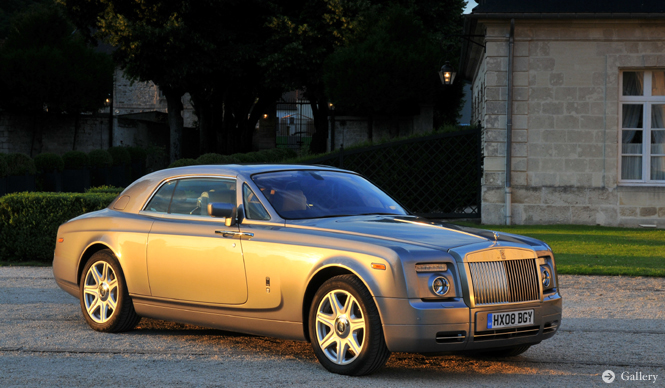
ROLLS-ROYCE PHANTOM COUPE | The Grand Tourer Owners Have Been Waiting For
ROLLS-ROYCE PHANTOM COUPE
Rolls-Royce Phantom Coupé
The Grand Tourer Coveted by Owner-Drivers
At the 2006 Geneva Motor Show,Rolls-Royceunveiled a coupe study model called the "101EX." Like the company's "Phantom," this car, with its aluminum spaceframe structure, was designed to be Rolls-Royce's ultimate driver's car, as evidenced by its shorter overall length and lower roofline compared to the Phantom.
Strong demand from enthusiasts yearning for the ultimate luxury coupe led to the production of the 101EX, and in response to these calls, Rolls-Royce announced the "Phantom Coupé" at the Geneva Motor Show two years later.
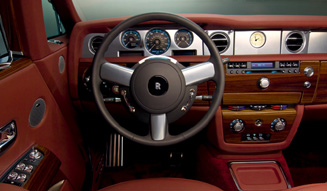
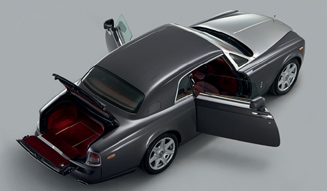
The fourth model in the series, following the Phantom, Phantom EWB, and Phantom Drophead Coupé, features rear-hinged "coach doors," similar to the Drophead Coupé, asserting its place as a member of the Phantom family. The interior offers a comfortable blend of luxurious materials and simple design, befitting a top-tier coupe.
The interior illumination, a highlight of the 101EX, can be ordered as an option. This "Starlight Headliner" adorns the roof lining with fiber optics, creating a starry sky effect that adds a touch of magic to night drives.
Meanwhile, by tuning the powertrain and suspension differently from the saloon, the joy of gripping the steering wheel is unique to the coupe. It has been crafted as the grand tourer that owner-drivers have long awaited, befitting the culmination of the Phantom series.

Rolls-Royce Phantom Coupé
Body | Length 5609 x Width 1987 x Height 1592mm
Engine | 6.75-liter V12
Max Output | 338kW [460ps] / 5350rpm
Max Torque | 720Nm [73.5kgm] / 3500rpm
Drivetrain | FR
Transmission | 6-speed automatic
Price | ¥49,980,000
(As of July 2008)
BRAND HISTORY
Henry Royce and Charles Rolls first met in 1904. Royce Ltd., which was involved in the motor trade in Britain, had prototyped an automobile. Rolls, having heard of its reputation, visited to test drive the car. Impressed by its excellent finish, Rolls offered to sell the cars Royce was producing, marking the start of Rolls-Royce.
The company cemented its reputation as a luxury car brand with the "40/50HP Series," which began production in 1906. This model, equipped with a six-cylinder engine, later became known as the "Silver Ghost." Its engine's smoothness and quietness, the car's high reliability, and the exquisite craftsmanship using high-quality materials earned it significant support from the upper class. The "Spirit of Ecstasy," Rolls-Royce's iconic mascot, also originated during this era.
The company continued its steady progress, introducing the "Phantom" in 1929 and acquiring the British marque Bentley in 1931. Although the company focused on aircraft engines during World War II, it resumed automobile production in 1947, creating legendary models such as the Phantom series, "Silver Cloud," and "Silver Shadow." However, the company went bankrupt in 1971 due to the struggles of its aircraft engine division. The aircraft engine division was spun off, and the remaining automotive division was temporarily placed under government control. In 1980, it became a subsidiary of Vickers plc.
Further turmoil ensued in the late 1990s with a bidding war between Volkswagen (VW) and BMW. In the end, the factory and the Bentley brand went to VW, while BMW acquired only the Rolls-Royce name. In 2003, with the Phantom, developed under the new management, Rolls-Royce embarked on a new chapter in its history.