Caterham Developing a 'Seven' with Suzuki Engine | Caterham
Caterham Seven
An Entry-Level Caterham Seven
Seven Developed with Kei Car Engine
British automaker Caterham has announced it is developing a model equipped with Suzuki's 660cc engine as an entry-level offering.
Text by OTSUKI Takuma (OPENERS)
The Lightest Seven Yet?
At the recent Goodwood Festival of Speed, Caterham unveiled the "ultimate Seven," the "Seven 620R" and has now announced it is developing the "smallest Seven," powered by a 660cc three-cylinder engine.
According to Graham Macdonald, CEO of Caterham Cars, Suzuki is a "leader in highly efficient engines and compact car production, and their passion aligns with ours." For Caterham, which "was particularly looking for lightweight powertrains," Suzuki was the ideal partner for developing the "lightest Seven."
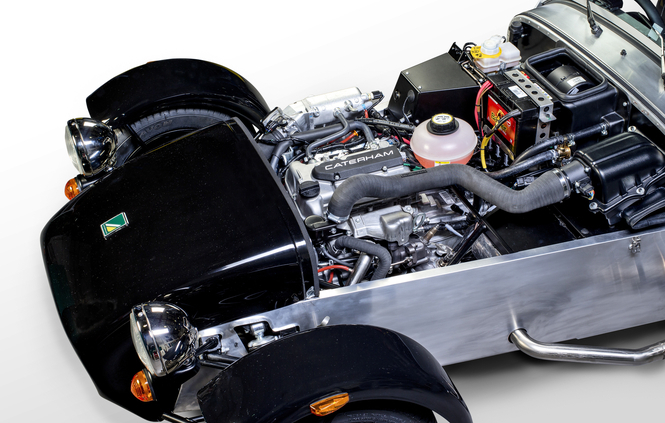
Although only one official photograph has been released, it shows a Suzuki three-cylinder turbo engine mounted longitudinally in the Seven's chassis.
Specific figures such as maximum output have not been disclosed, but it has been announced that some form of tuning has been applied.
Considering that many Kei car turbo engines produce around 64ps, it is highly likely that the output will exceed 100ps per liter.
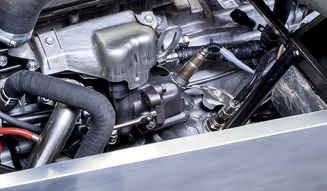
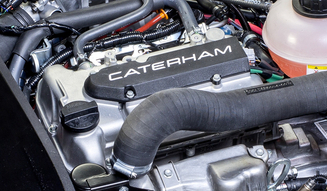
Suzuki offers the lightweight all-aluminum "K6A engine" and the even lighter "R06A engine." However, it has not been announced which of these engines will be installed in the Seven.
Regardless of which engine is used, the dry weight of the K6A is 60kg, and the R06A engine weighs 56kg, making it undoubtedly the lightest engine in Seven's history.
Given that the current Seven's dimensions are 3,370mm in length (3,100mm for the Superlight R600) and 1,575mm in width, it is possible that the new model will have a compact body comparable to the Kei car regulations of under 3,400mm in length and under 1,480mm in width.
As an entry-level model, the price is expected to be significantly lower, under £17,000 (approximately ¥2.55 million). An announcement is expected in August, with deliveries scheduled to begin by the end of 2013.