Aston Martin Valkyrie Details Revealed | Aston Martin
Aston Martin Valkyrie
Valkyrie Details Revealed
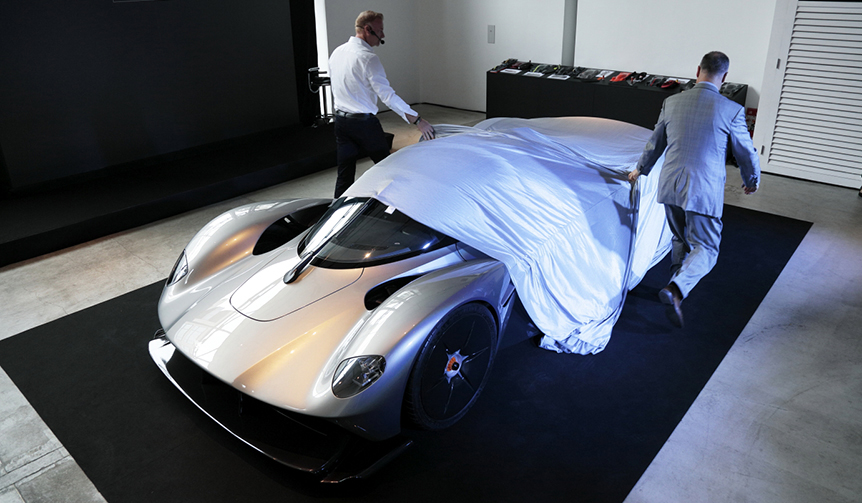
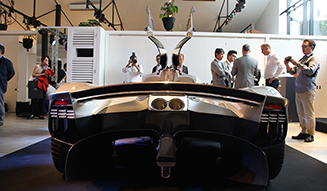
Aston Martin Japan has unveiled a near-complete mock-up of the exterior and interior of the "Valkyrie," which is attracting attention as a hypercar.
Photographs by UCHIDA Shunichi & AstonMartin JapanText by UCHIDA Shunichi
The Goal: 1:1
The Aston Martin road-going hypercar "Valkyrie" made its Japan debut.
Just a year ago, a mock-up model, then called the code name "AM-RB001",
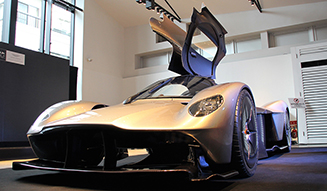
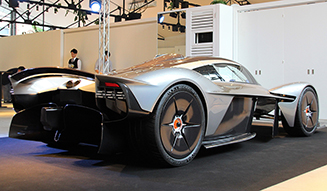
However, the model unveiled this time includes the interior and is said to be about 95 percent complete. While the essence of its exterior remains largely unchanged, details have been modified as a result of Adrian Newey's pursuit of aerodynamics, including downforce. The most significant change is the opening created in the body between the cockpit and the front wheel arches. This shape is optimal for generating downforce and simultaneously serves as a distinctive design feature of the Valkyrie.
The headlights also emphasize their engineered structure. By mounting the low and high beam mechanisms onto an anodized aluminum frame, Aston Martin has achieved a 30-40 percent weight reduction compared to conventional Aston Martin headlamps, in addition to enhancing their design.
The weight reduction extends even to the emblems. The wing badge on the front nose is made of 70-micron thick aluminum, scientifically bonded. A thickness of 70 microns is 30 percent the thickness of a human hair. Incidentally, compared to a regular emblem, the weight reduction is a remarkable 99.4 percent.
Why such a focus on weight reduction for the Valkyrie? It's because they aimed to achieve "1:1." This 1:1 refers to a power-to-weight ratio of 1,000 horsepower and 1,000 kg, for which materials like titanium and magnesium have been actively employed.
Aston Martin Valkyrie
Valkyrie Details Revealed
All 150 Units Already Sold Out
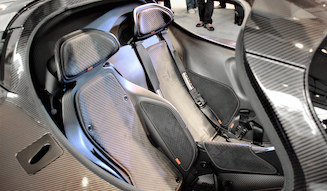
The interior unveiled this time features seats mounted directly to the floor to maximize space, with a seating position similar to F1 or Le Mans prototypes, where the driver's legs are extended forward. This is said to create a sense of unity with the car.
To allow the driver to concentrate on driving, all control switches are concentrated on the steering wheel. An LED screen displays all necessary driving information. The steering wheel is detachable to improve ingress and egress, and also serves as an anti-theft device.
For visibility, instead of conventional door mirrors, cameras are installed on both sides of the body to display the rear view. These images are shown on displays located at the base of the A-pillars.
The production run for the Valkyrie is limited to 150 units. All have already been sold out, and there is currently a waiting list for cancellations, according to Marek Reichman, Aston Martin Lagonda's Vice President of Design.
He mentioned that 11 orders have been placed from Japan, and the day before the unveiling to the press, he conducted the first consultations, stating, "We listened to their requests for one to one-and-a-half hours each. We will incorporate that input into the car's manufacturing. Customers can expect their cars in about two years from now. We plan to finalize more detailed specifications through multiple meetings with customers going forward."
The model is scheduled to be driven on public roads in 2019, with development progressing to match the level of Formula 1 in 2016. The vehicle price is expected to be around £2 million to £2.5 million.