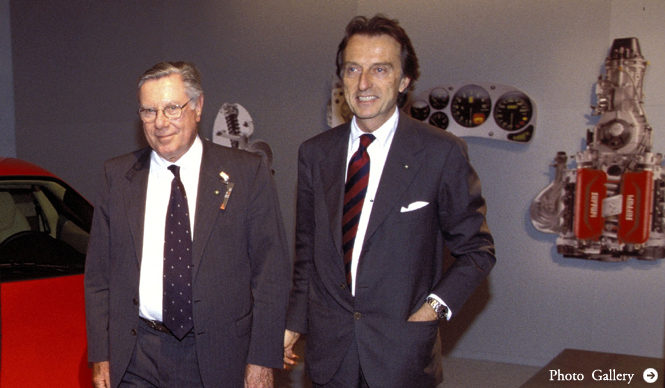
Sergio Pininfarina Passes Away
Sergio Pininfarina
Sergio Pininfarina Passes Away
Sergio Pininfarina, honorary chairman of the carrozzeria "Pininfarina"—known for its work with Ferrari and Alfa Romeo, as well as Japanese manufacturers like Honda—passed away on July 2, 2012, at the age of 86.
Text by OGAWA Fumio
The Italian Designer Who Shaped the Golden Age of Automotive Design
"Carrozzeria" is Italian for "carriage maker." The tradition of carrozzerie, combining manufacturing skill and aesthetic sensibility, has evolved alongside automobile production since the dawn of the car. Among these, the Italian carrozzeria "Pininfarina," though relatively young with its founding by Sergio Pininfarina's father, Battista, in 1930, experienced significant growth in the post-war era alongside the rapidly expanding automotive industry.
In Japan, Pininfarina was responsible for mass-produced vehicles such as the second-generation Nissan Bluebird and Cedric, and the Honda City Cabriolet, while also serving as a design consultant. In essence, they supported car manufacturing from behind the scenes.
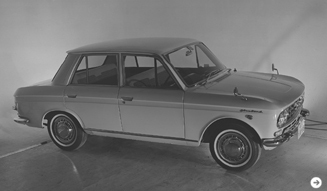
Datsun Bluebird 1200 4-door sedan
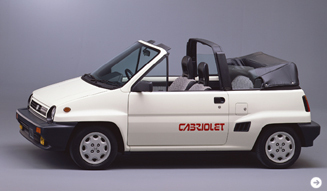
HONDA City Cabriolet
Pininfarina's reputation was cemented by a series of Ferraris. They began manufacturing bodies for Ferrari in the early 1950s. For a time, they competed with Scaglietti; while Scaglietti handled the 1958 "Ferrari 250 Testa Rossa," Pininfarina was responsible for the 1959 "250 GT Berlinetta SWB." However, from the 1970s onward, with very few exceptions, most Ferraris emerged from the Pininfarina studio.
Upon hearing the news of his passing, Ferrari Chairman Luca di Montezemolo issued the following statement:
"Sergio was a special presence for us at Ferrari. His name is inseparable from Ferrari's history and success. Sergio was one of the most important proponents of 'Made in Italy,' spreading trust in and the excellence of Italian culture worldwide. He played his part, serving as president of Confindustria (the Italian employers' federation) and as a senator for life. It would be insufficient to speak only of his legendary relationship with Ferrari. Together with Enzo, and later with me, he designed some of Ferrari's most iconic models, including the 'Testa Rossa' and the 'Enzo.'"
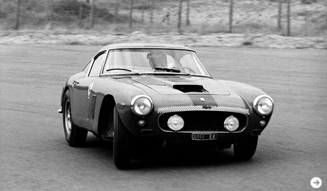
Ferrari 250 GT Berlinetta
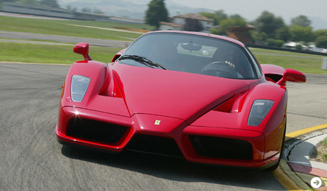
Ferrari Enzo
In keeping with Italian tradition, Pininfarina crafted Ferrari bodies from aluminum. Until the 1970s in Italy, the primary method involved shaping panels by placing wooden blocks with various curves behind an aluminum sheet and hammering it from the front. This was the work of artisans, many of whom were "flow" craftsmen. Controlling these individuals and ensuring the beautiful bodies were finished as planned was crucial. Given that this method was highly dependent on human intuition, Pininfarina's direction was vital.
As the decades progressed into the 1980s, Sergio modernized the studio's operations. Alongside advancing manufacturing automation, he actively promoted Pininfarina's design capabilities to the public through the creation of concept models.
One particularly memorable example is the Ferrari "Mythos," unveiled at the Tokyo Motor Show in 1989, during Japan's bubble economy era.
The Mythos, with its front section—including the cockpit—and its mid-engined rear section treated as separate masses and combined in an interlocking fashion, possessed a groundbreaking beauty. Although never put into production, it sent shockwaves through designers worldwide, including in Japan. Until the 1990s, when in-house studios at car manufacturers gained prominence, it was no exaggeration to say that beautiful automobiles emerged from Turin's Grugliasco (the suburban town where Pininfarina was headquartered).
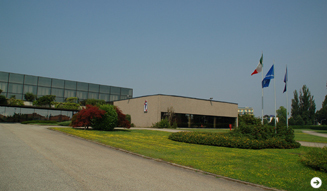
Another significant achievement of Sergio's was his keen understanding of the balance between automotive development and Pininfarina's survival. In 1986, he established a research center focused on advanced development using new technologies, pitching projects like city commuters to major automotive manufacturers globally. While manufacturers may not explicitly acknowledge it, projects undertaken by Pininfarina are, in fact, running on the streets far more than one might imagine.