A Prelude to the Revival of Lincoln's Flagship | Lincoln
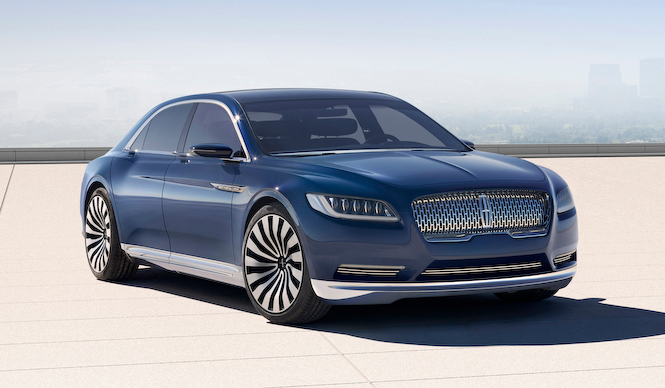
Lincoln Continental Concept
A Preview of Lincoln's Flagship Revival
The Continental, Lincoln's top-tier model, production of which ended in 2002, is finally set to return. Unveiled at the New York Auto Show, this full-size sedan concept car bears the historic Continental name and represents a supremely luxurious premium model.
Text by SAKURAI Kenichi
A Concept After 13 Years, for the Second Time
At the New York Auto Show, which opened on April 1st, Lincoln unveiled the "Continental Concept," a concept car bearing the name of its top-tier sedan, the "Continental."
As you know, the "Continental" is the flagship model of the Lincoln brand, first introduced in 1939, and was produced for a remarkable eight generations until 2002. In the 2000s, affected by the downsizing trend, its position was ceded to the Lincoln "MKS," a class below. Nevertheless, it remains in the memories of us Japanese as Lincoln's representative top model, remembered as "a ridiculously large American car that puts Mercedes-Benz S-Class to shame."

Lincoln Zephyr Continental Cabriolet (1940)
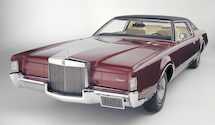
Lincoln Continental Mark IV (1972)
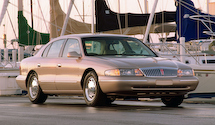
Lincoln Continental (1997)
Strictly speaking, the rear-wheel-drive "Town Car" used to sit above the Continental, and should have been called the flagship. However, the Town Car itself originated as a top trim level of the "Continental Mark IV." Coupled with the fact that most "Town Cars" were for corporate use, few would find it odd to refer to the Continental as the flagship model.
Currently, Lincoln's official lineup in Japan consists only of the mid-size SUV "MKX" and the full-size SUV "Navigator". In the US, however, the lineup includes the "MKZ" (equivalent to the D-segment, though noticeably larger than what we imagine as D-segment models), the "MKS" (equivalent to the E-segment, also noticeably larger), the crossover "MKT," and the SUV "MKC", "MKX," and "Navigator," establishing its presence as a premium brand.
The absence of compact cars can be interpreted as a deliberate strategy for a luxury brand. This segmentation can also be seen as a result of differentiation from Ford's respective models.
Incidentally, if we organize the relationship between Lincoln models and their Ford counterparts, the entry-level sedan "MKZ" is based on the Ford "Fusion" (not available in Japan). The larger sedan "MKS" is based on the Ford "Taurus" (formerly Five Hundred), the crossover "MKT" on the Ford "Flex," and the SUV "MKC" on the Ford "Escape (Japanese name: Kuga)", the "MKX" shares its platform with the Ford "Edge" (not available in Japan), and the "Navigator" is a sibling model to the Ford "Expedition."
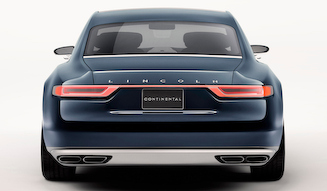
This is actually the second time Lincoln has presented a concept car foreshadowing the next Continental. The first concept car appeared in 2002, the same year production of the Continental ceased, and was presented as a design study hinting at the next model.
The body design was inspired by the "Continental Mark IV" (fourth generation), featuring a simple yet luxurious appearance. It was powered by a 414 ps V12 engine mounted at the front. Notable features included suicide doors and a distinctive trunk lid that slid diagonally upwards via remote control. One of the few units produced was notably sold to a collector at auction during the 2010 Monterey Sports & Classics event.
Lincoln Continental Concept
A Preview of Lincoln's Flagship Revival (2)
Hopes High for Production-Ready Release
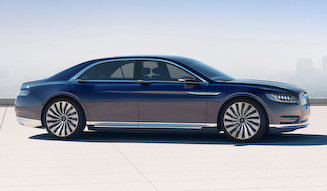
Unlike the first concept, the "second-generation" Continental Concept unveiled at this year's New York Auto Show, while building upon current Lincoln designs, employs an even more evolved design language.
Ford describes this concept car as "showcasing the future of full-size sedans, combining comfort, quietness, and luxury. Its characteristics are those of a powerful, smooth, and elegant sedan, while simultaneously heralding the arrival of a new full-size sedan for the Lincoln brand."
Mark Fields, President and CEO of Ford Motor Company, stated, "We are expressing the pinnacle of luxury through simple design, and conveying the presence of a full-size sedan with quiet dignity. The Continental Concept indicates the direction of luxury that the Lincoln brand will pursue. We will reintroduce the full-size luxury sedan, the Lincoln Continental, to the market in 2016."
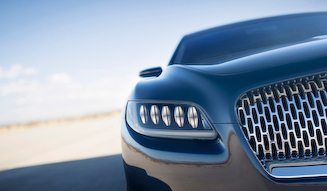
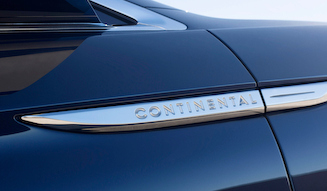
The Lincoln Continental Concept is not only a preview of a new full-size sedan but also expresses the evolution of Lincoln's design.
A key highlight is the front grille, which has been enlarged from a split design to a single, integrated unit. While it retains the emblem in the center, the high-quality polished aluminum grille signifies the dawn of a new era. Each mesh element is identical to the design of the Lincoln booth walls at the auto show, simplified and combined in a pattern inspired by the emblem's shape.
The LED matrix headlights flanking the grille also adopt a simple, horizontal design, exuding a calm expression. Each headlight lens cover houses five LEDs and comes standard with a laser-assisted high beam function.
The door handles, integrated into the lower frame of the window and operated by touch, which Lincoln calls E-latch doors, are likely to become a distinctive feature of future Lincolns. A light press causes the door to pop open, and when closing, it automatically locks once it reaches the semi-closed position.
While lacking ostentatious displays, this concept car appears to definitively express Lincoln's vision for the future.
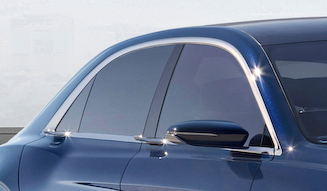
While it might be a bit premature, removing the concept car's cosmetic touches reveals the true face of the next Continental, and it's plausible to expect it to be released with almost the same form. This follows the same approach as the MKC concept, which previewed the production MKC. According to several insider accounts, the MKX concept, which previewed the next MKX at last year's Beijing Motor Show, also followed the same steps and is expected to debut in its production form largely unchanged.
Lincoln Continental Concept
A Preview of Lincoln's Flagship Revival (3)
The Proposal of "Quiet Luxury"
The engine for the Continental Concept unveiled this time has been announced only as a 3.0-liter V6 EcoBoost. While specific details on maximum output and fuel efficiency are not provided, it is expected to feature a lineup centered around downsized power units. The wheels are 21 inches in size.
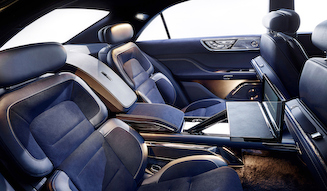
The interior showcases Venetian leather seats on the door trims and seats, reflecting a commitment to craftsmanship with a high-quality finish. Alcantara is generously used on the armrests and the center sections of the seat upholstery, complemented by a satin headliner and Wilton wool carpets.
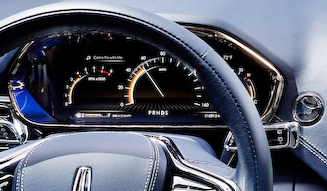
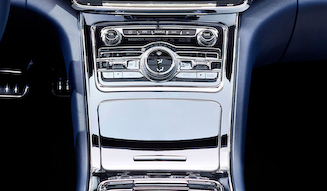
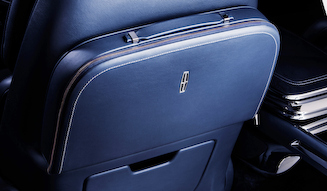
The rear seats feature 30 patented adjustable parts, promising a first-class level of comfort and seating. A Revel Ultima audio system with 19 speakers provides surround sound, while ambient lighting, a cooler for champagne or wine, and an LCD screen are integrated into the rear center console. The front seatbacks are equipped with a first-class travel bag made of Venetian leather, containing amenity items.
Rear-seat comfort is further enhanced by the SPD SmartGlass integrated into the roof. This tinted sunroof controls heat from direct sunlight, blocking 99% of UV rays while allowing for adjustable brightness with the press of a button. For instance, it can maintain the cabin temperature at 18 degrees Celsius even on a bright, sunny day.
Additionally, driver-assistance features are abundant, including enhanced park assist, pedestrian detection, and a 360-degree view camera. These features are integrated into the advanced infotainment system, "MyLincoln Touch," for intuitive operation.
David Woodhouse, Lincoln's Design Director, commented, "The Lincoln Continental name has historically symbolized not just luxury, but also beauty and elegance. We have modernized it, and with this concept car, we have expressed the modern beauty and elegance befitting the Continental name."
The development keyword, "The Future of Quiet Luxury," can be understood as representing a future flagship sedan that is serene and calming. By abandoning the aggressive front-end design of the past and establishing a new sense of relaxation and tranquility through its interior and exterior, crafted with a new design language, Lincoln aims to compete with European and Japanese premium cars. The Continental Concept, proposing a new value of luxury distinct from sporty performance or opulence, signals Lincoln's evolution to the next stage.