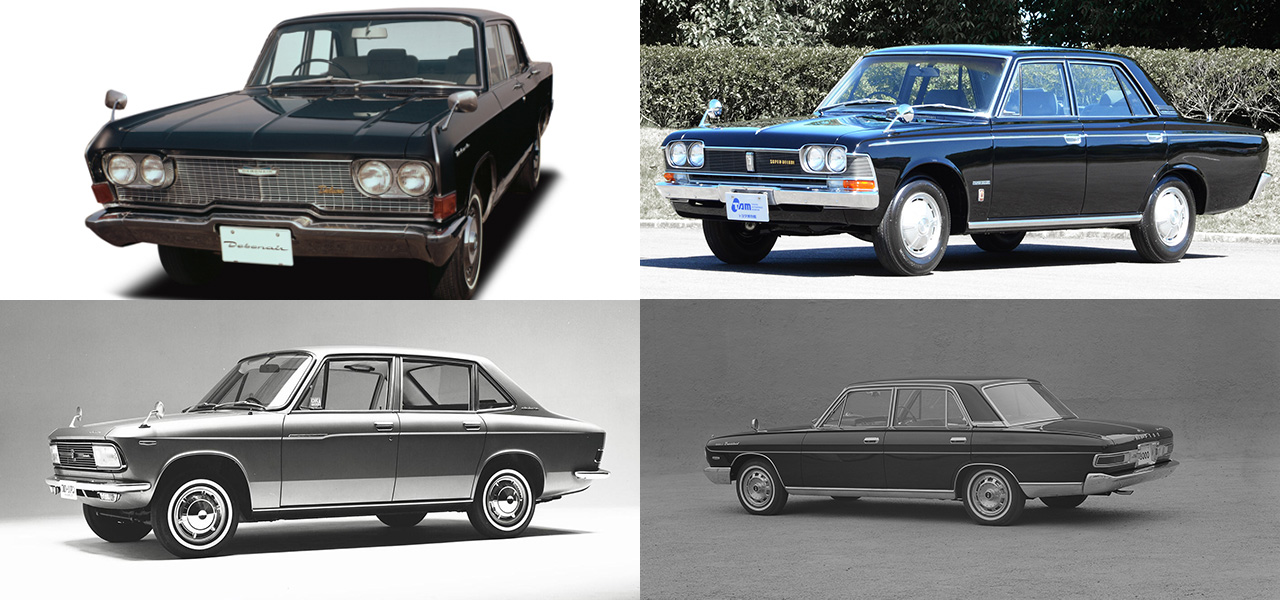
Four Quirky-Cool Japanese Sedans from the 1960s
1960s Japanese Sedans: Chosen by Design
In the 1960s, a larger body size signified status. Long before the advent of sharp, aerodynamic forms, Japanese sedans of the era featured a more relaxed design characterized by "big faces" and boxy bodies, exuding a unique charm that modern cars lack. Here, we introduce Japanese sedans from the '60s selected from this perspective.
Individuality Born from Constraints: The Genesis of Original Japanese Car Design
Japanese cars of the 1960s are captivating, aren't they? Many people likely feel that way. While some models might not be considered stylish, their "beautifully ugly" designs exude a presence that is all their own.
One of the catalysts for cars becoming more stylish was the introduction of "aerodynamic forms" in the early 1980s. These featured smooth body styles that appeared to reduce air resistance, a trend pioneered by Audi and Ford in Germany. It was sometimes said that science was designing cars.
Cars from before the aerodynamic era had "big faces" that seemed to create significant air resistance. Manufacturers actually placed value on making cars appear large and bulky. This was an era when Japanese cars were compact, with the first-generation Corolla measuring just 3.8 meters in length and 1.4 meters in width. Size was status.
Another reason for the allure of '60s cars is their distinctive designs, conceived with the large North American market in mind. In Japan at the time, producing cars of 5.5 meters in length (like a Lincoln) was impossible due to factory production lines and road conditions.
They were American-esque, yet unique. Individuality emerged from constraints, shaping the originality of Japanese cars. That, I believe, is the fascination of Japanese cars from the 1960s.
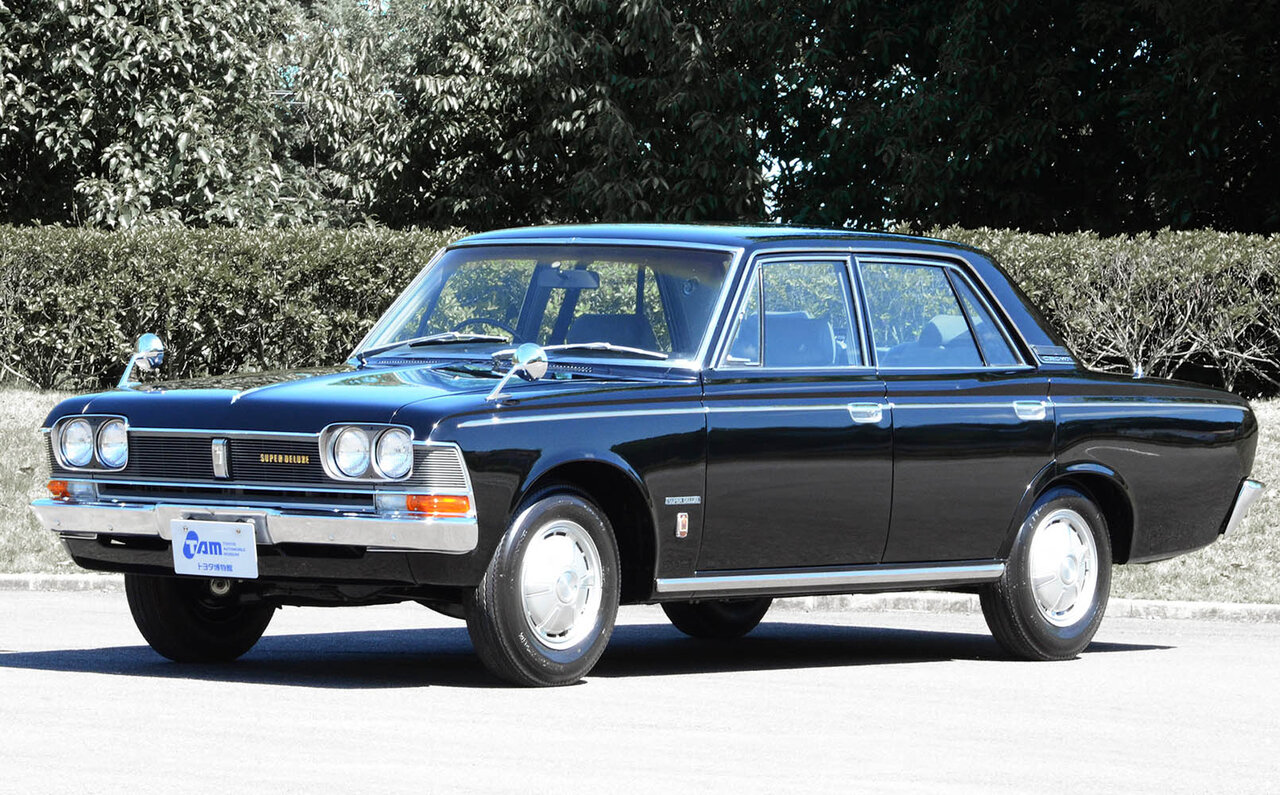
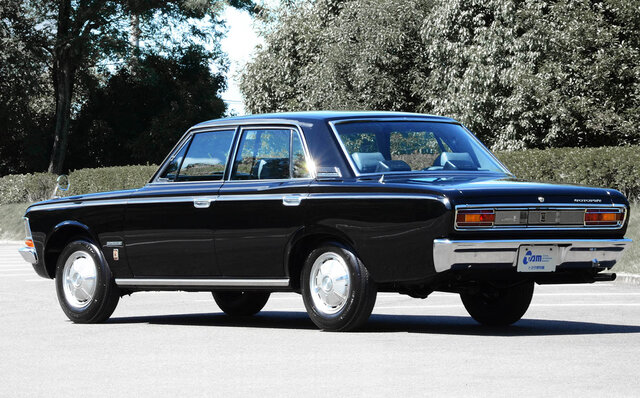
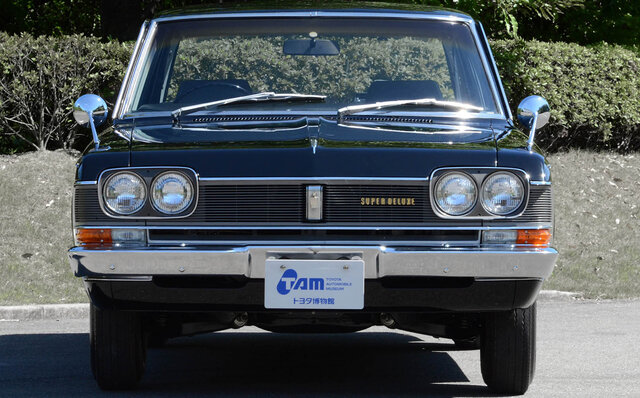
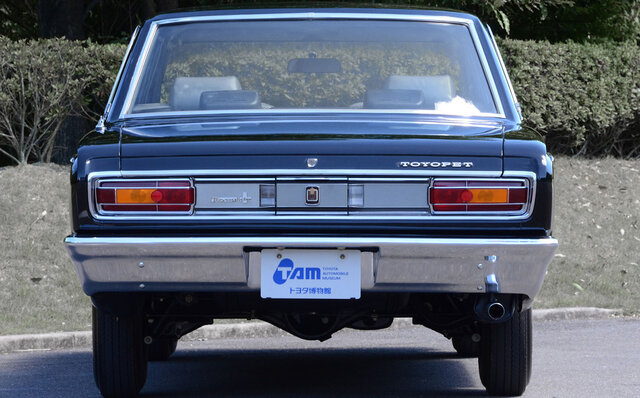
1) TOYOTA CROWN SUPER DELUXE (1967)
The Third-Generation Crown, Designed with Individual Users in Mind
While the first-generation Crown, released in 1955, and the second generation in '62 were primarily aimed at corporate clients, the third generation in '67 began to consider individual users.
By today's standards, the interior is heavily reliant on synthetic resins, and it hardly compares to the luxury sedans of Europe at the time. However, there's an undeniable sense of earnest effort. That's where its charm lies.
The engine is a 2-liter inline-six. While the four-door model was the main configuration, the hardtop was also introduced for the first time with this third generation, becoming a signature feature of the Crown thereafter.
Finding one in the used car market is rare. However, with some searching, you might still encounter one. The body follows Toyota's philosophy of the time for luxury cars: a separate frame construction. This soft ride quality is also a plus.
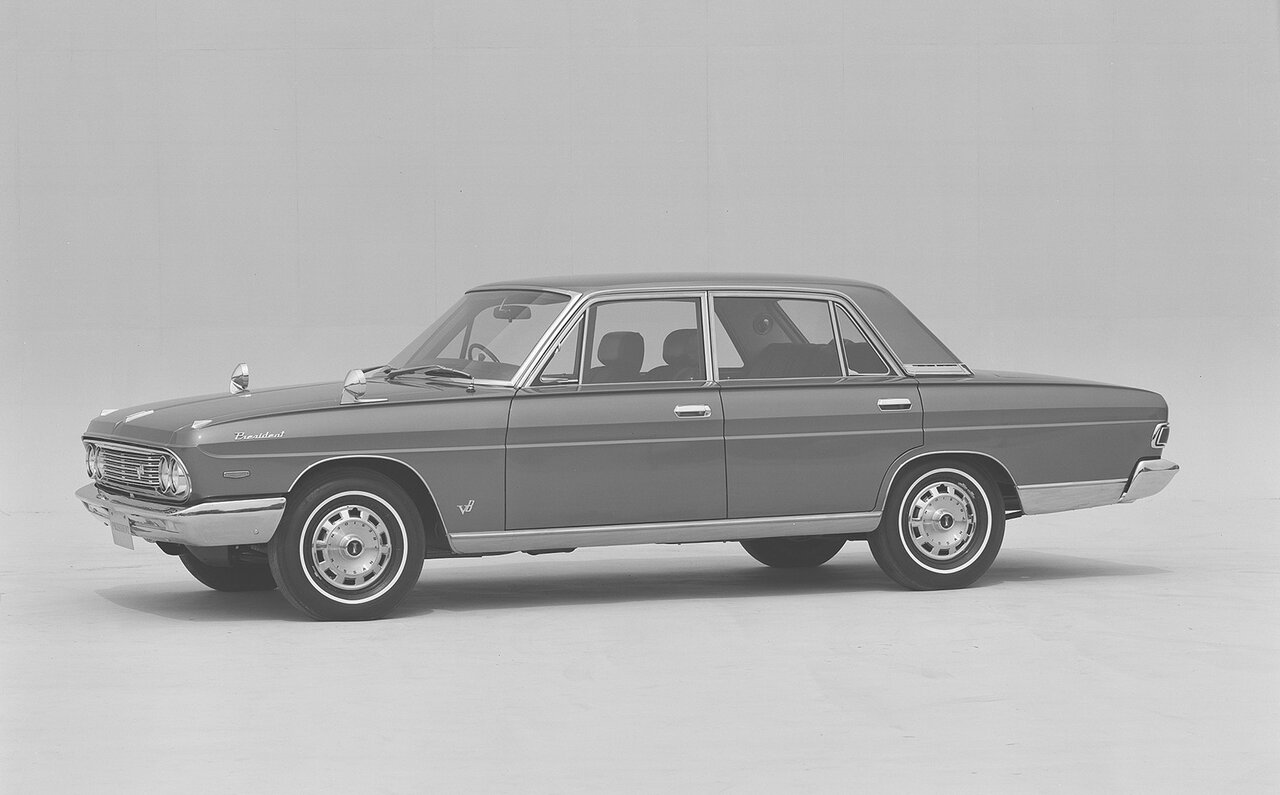
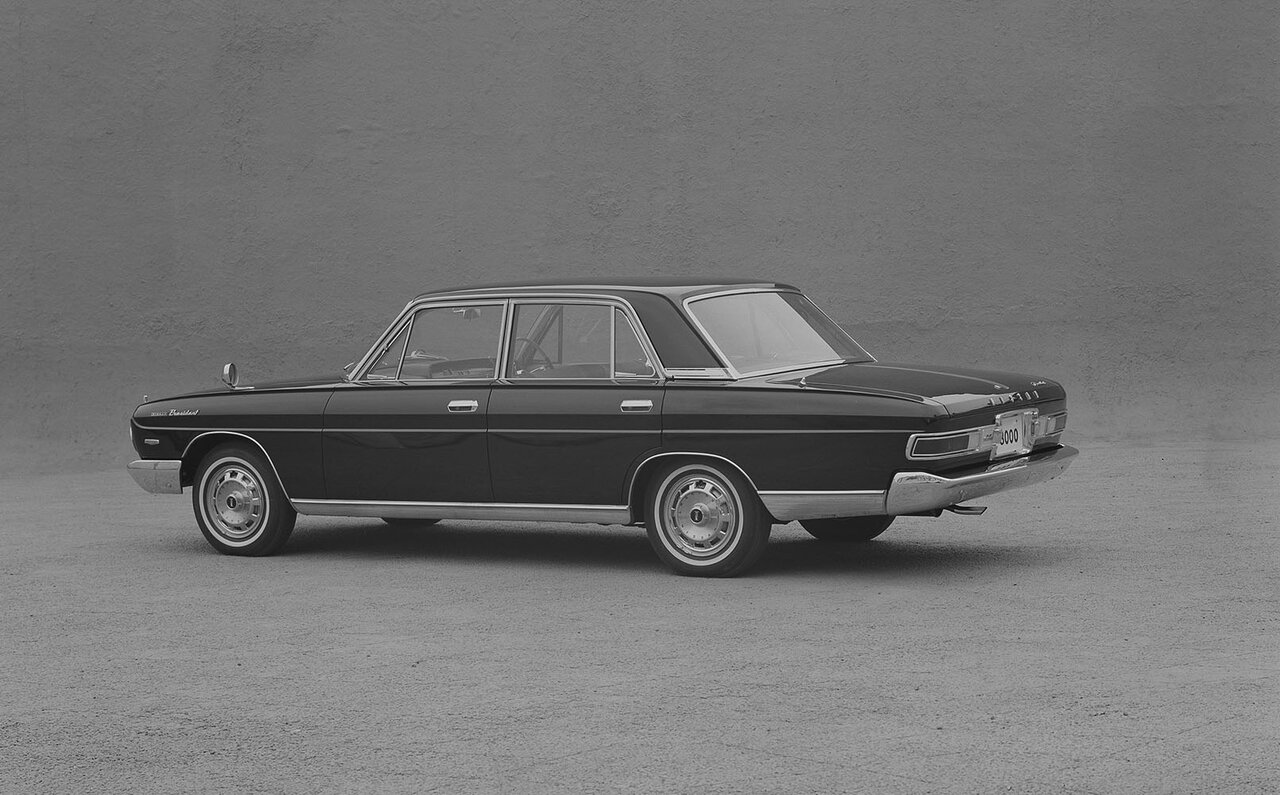
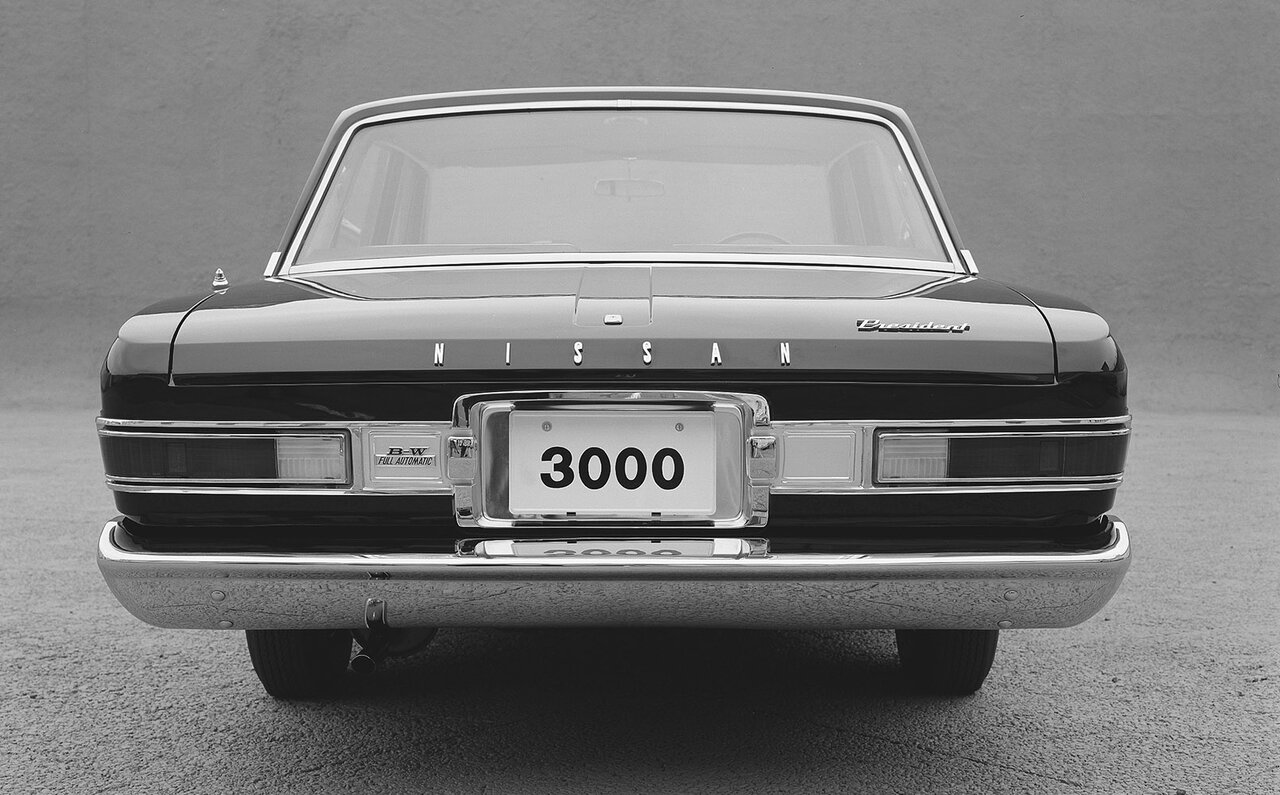
2) NISSAN PRESIDENT (1965)
A Style with an Air of Classical Architecture
The first-generation "Nissan President" enjoyed a surprisingly long production run, manufactured from 1965 to 1990 – a span of 35 years.
It didn't remain entirely unchanged; the engine was upgraded from an inline-six to a 4.4-liter V8 in 1977, and the headlights shifted from round quad units to square quad units in 1982.
At 5,280mm long, it was an imposing sight on the streets at the time. In other words, by the late '70s, it already looked dated. While Mercedes-Benz introduced the elegantly smooth S-Class (W126) in '79 and Audi released the aerodynamic 100 in '82, its blocky body panels felt out of place.
Yet, looking back, the styling, accented with chrome in key areas, is quite appealing. It even possesses an aura reminiscent of classical architecture. The interior is similar; the rear seats of the luxurious "Sovereign" trim, in particular, feature plush moquette upholstery. It's truly wonderful.
I haven't driven one recently, so I can't comment on its driving dynamics from a modern perspective. However, even back in the '80s, its overly soft suspension and an engine that lacked rev-happiness, despite good torque, didn't quite fit the go-go mood of the era. I remember that clearly.
But today, those very characteristics might be accepted as "character." Imagining myself driving with the dashboard's distinctive '70s horizontal bar meters in view, gripping the unusually thin steering wheel and driving steadily, sparks my interest.
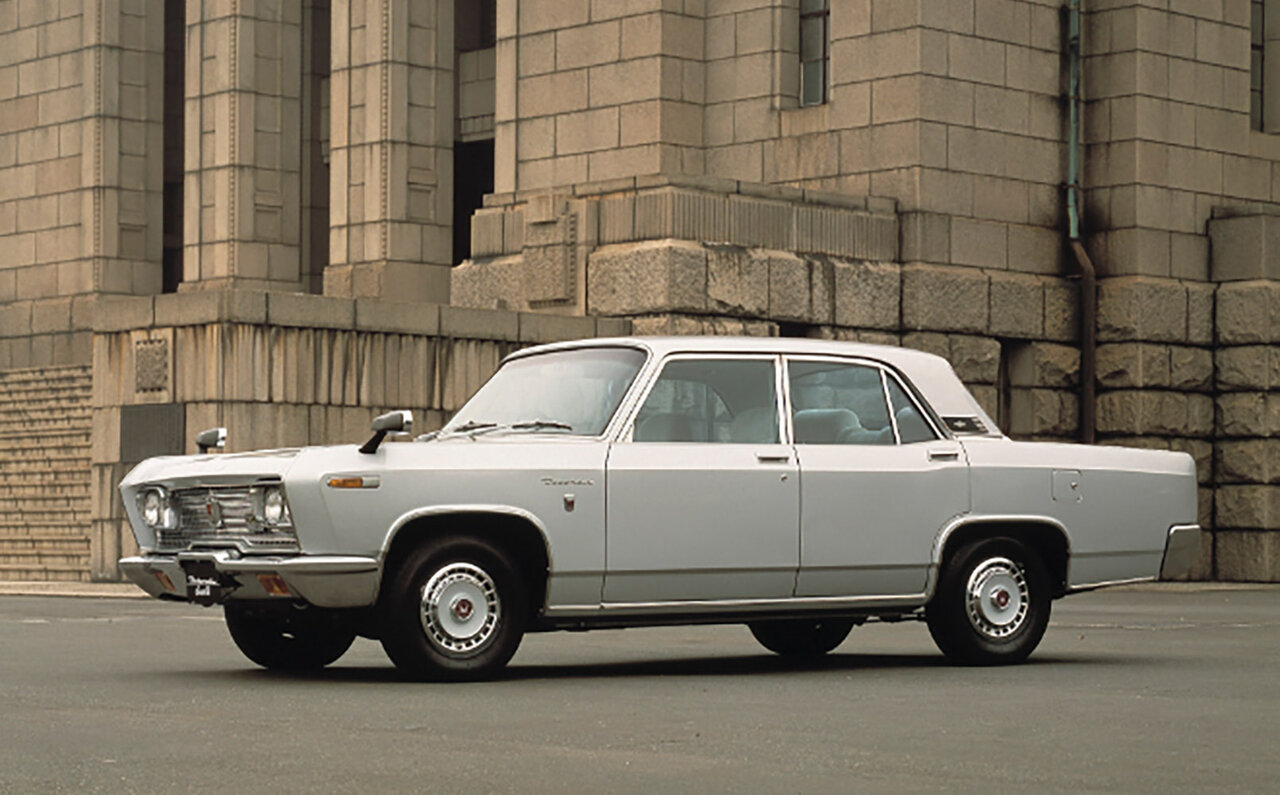
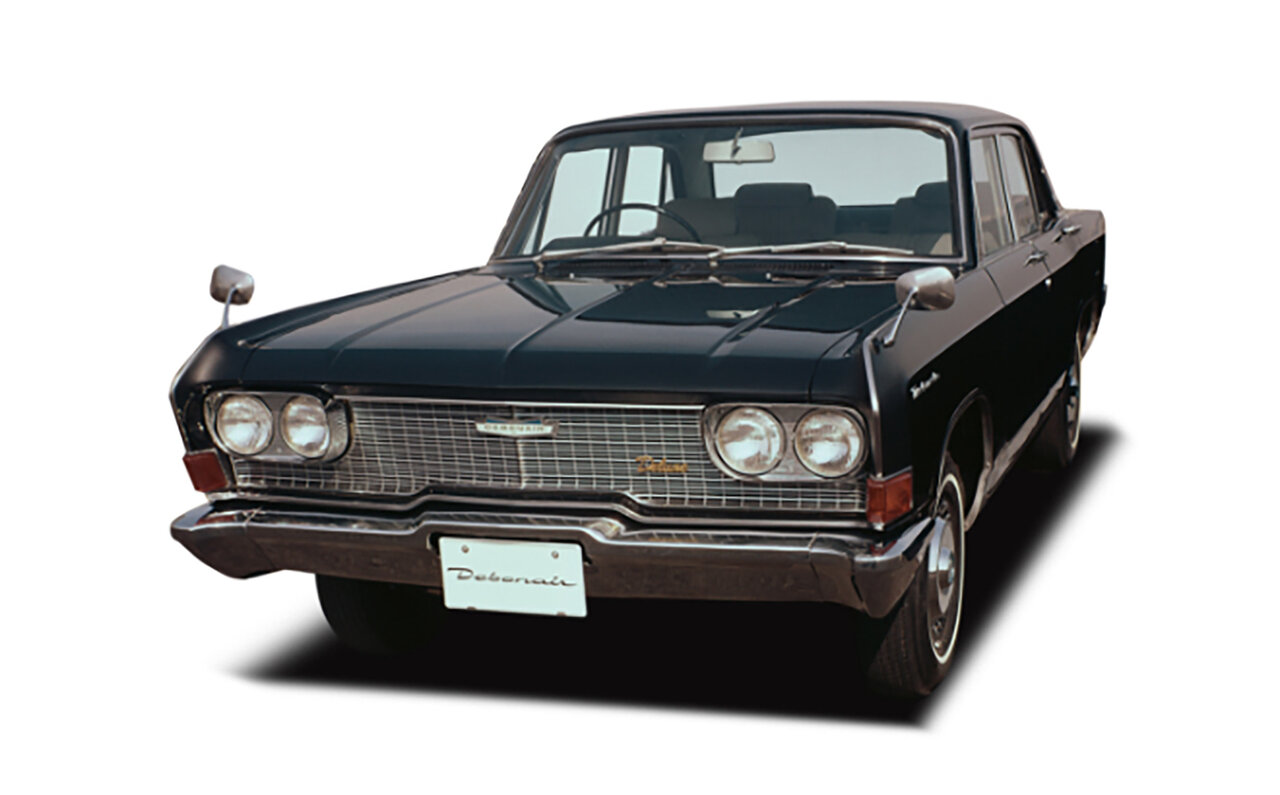
3) MITSUBISHI DEBONAIR (1964)
A Classical Style with Abundant Atmosphere
Much like the first-generation President, the first-generation "Debonair" from Mitsubishi Motors had a long lifespan, produced from '64 to '86. Even in the '80s, its classical style exuded a superb atmosphere.
In fact, the 4,670mm length and 2,690mm wheelbase were skillfully integrated, even conveying a sense of dynamism. The small tail fins, which seemed quaint and amusing to eyes of the time, now lend it a unique and appealing character.
As mentioned earlier, the body proportions are excellent, and the chamfered shoulder line adds a sense of tension to the overall form. The skill of Hans Bretzner, who was in charge of styling at GM, shines through. From a modern perspective, the influence of classic American cars also adds to its charm.
The engine is a 2.5-liter four-cylinder. Such a large displacement for a four-cylinder was unusual (though Porsche did use a 3-liter four-cylinder in the "944"). With its soft suspension and an engine that didn't like to rev, it seemed to have no market beyond being a chauffeur-driven car for Mitsubishi executives. Yet, I find myself wanting one now. Its popularity has grown considerably, and prices in the used car market are higher than expected.
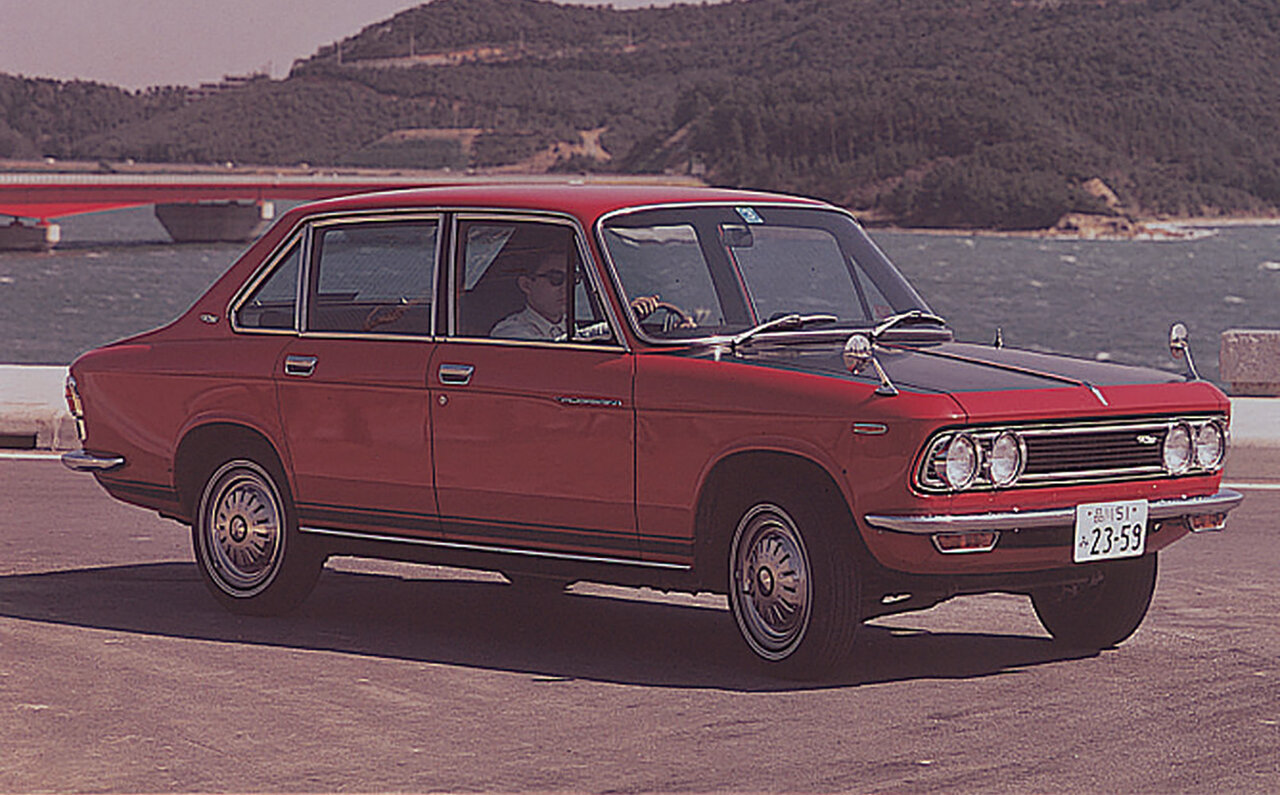
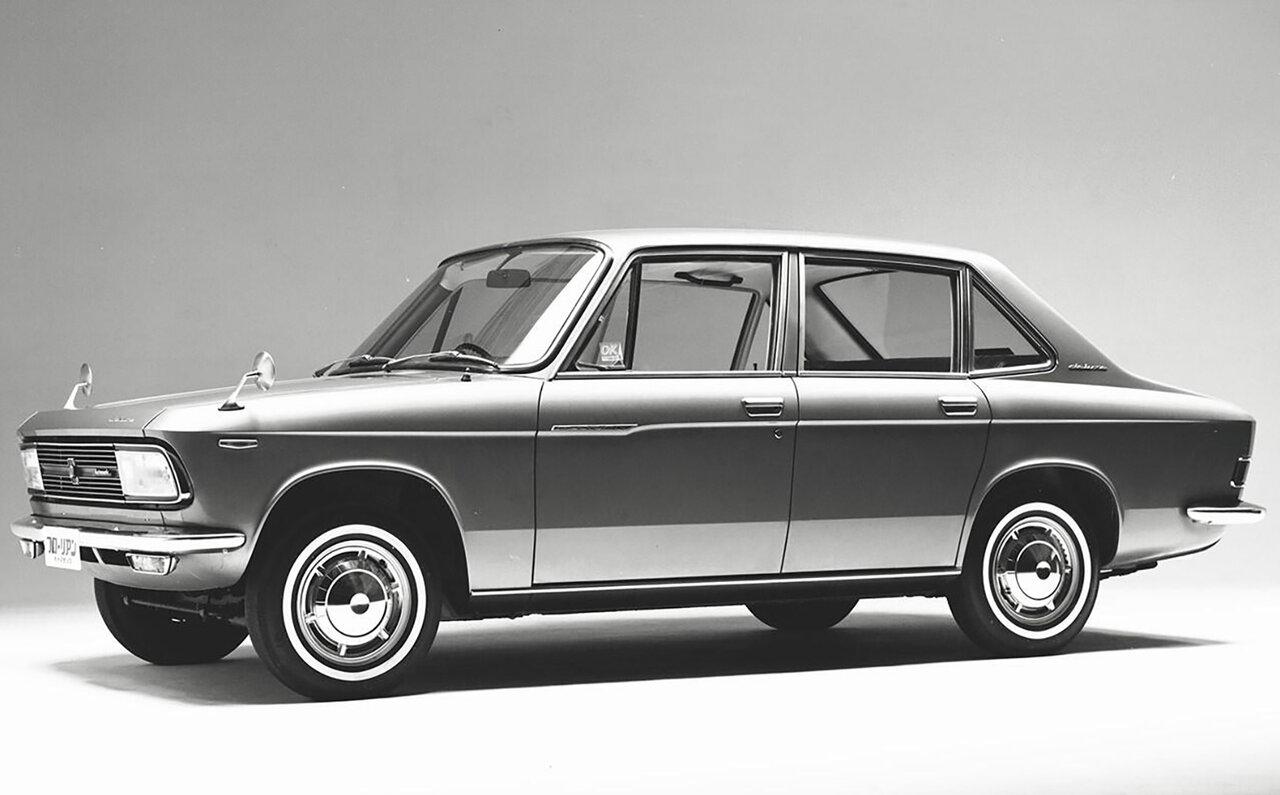
4) ISUZU FLORIAN (1967)
A "Beautifully Ugly" Design That's Charming Today
The Isuzu Florian, produced by Isuzu Motors from '67 to '82, was described by some as having "character, or perhaps only character." But looking at it now, isn't its "beautifully ugly" design rather appealing?
Its packaging is unique: a medium-sized body of 4,430mm length combined with a relatively long wheelbase of 2,500mm for its time. Isuzu, founded in 1930, was a top manufacturer of large commercial vehicles after World War II. The Florian served as an executive car for 15 years.
The body design was originally handled by Carrozzeria Ghia for the 117 Sedan. However, perhaps due to Isuzu's packaging requirements (unusual for Ghia's relationship with Isuzu?), the proportions were compromised, resulting in a visibly ponderous appearance.
Its remarkably thick-looking body was hardly sporty. While rival manufacturers were pursuing driving performance by refining body designs to appear low and long, along with their engineering, the Florian gave the impression of a "living fossil."
In the early '80s, it gained popularity for the fuel efficiency of Isuzu's signature diesel engines. However, today, due to diesel vehicle regulations in many municipalities like Tokyo, registration can be difficult. Your only option is to look for the 1.8-liter gasoline model.