Toyota Showcases Next-Generation Fuel Cell Vehicle Technology with the "FCV-R" | TOYOTA
TOYOTA
Toyota's Next-Generation Fuel Cell Technology
Showcased in the "FCV-R" Concept Car
With Honda and GM announcing their partnership in fuel cell vehicles, the race for leadership in next-generation powertrains, particularly among Japanese manufacturers, is heating up.Partnership with BMW for Fuel Cell Vehicle DevelopmentToyota, which is pursuing this path, aims to further solidify its position as a leader byFrankfurt Motor Showpresenting its fuel cell vehicle technology.
Text by SAKURAI Kenichi
A Preview Towards Commercialization in 2015
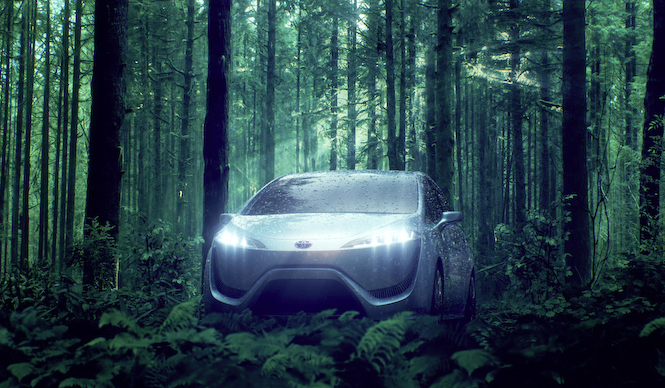
Toyota has announced that it will present the technology for its next-generation fuel cell vehicle, which runs on hydrogen and is slated for commercialization in 2015, at the Frankfurt Motor Show. This presentation will feature the concept car " FCV-R" unveiled at the 2011 Tokyo Motor Show.
The "FCV-R" is a four-door sedan measuring 4,745mm in length, 1,790mm in width, and 1,510mm in height. Equipped with a Toyota-made fuel cell stack producing 3.0 kW per liter, it achieves a driving range of approximately 420 miles (675 km). Emitting only water vapor, it is a clean technology and is drawing attention as a leading next-generation powertrain.
Previously, fuel cell vehicles were constrained by the weight of the fuel cell and the size and placement of hydrogen fuel tanks. However, improvements in the energy efficiency of the fuel cell stack and the miniaturization of the tanks have made it possible to secure practical cabin and luggage space for four adults. The hydrogen fuel tanks are divided into two and are positioned beneath the vehicle's floor.
The fuel cell stack installed in the FCV-R can start the engine even at low temperatures of -30°C, offering a wide operating range.
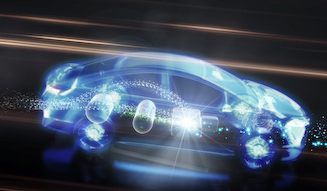
Toyota has created a roadmap envisioning fuel cell vehicles, described as the "ultimate eco-car," becoming common mobility by the 2020s. With the launch of practical fuel cell vehicles, they anticipate a reduction in the current price of around 70,000 euros, making them accessible, and the development of hydrogen refueling infrastructure.
In the realm of fuel cell vehicles, Honda and GM recently announced a partnership for the development of next-generation core systems.Nissan Forms Alliance with Mercedes-Benz and FordWith Nissan forming a three-way alliance with Mercedes-Benz and Ford, aiming for a launch in 2017, the competition for leadership in next-generation powertrains centered around fuel cell vehicles, with Japanese automakers as key players, is intensifying. Toyota has agreed to joint development with BMW and is aiming for widespread adoption, but the movements of Volkswagen, which is pursuing its own path, are also of interest.