A BEV for Car Enthusiasts—First Drive of the Porsche Taycan 4S | Porsche
Porsche Taycan 4S | Porsche Taycan 4S
A BEV for Car Enthusiasts—First Drive of the Porsche Taycan 4S
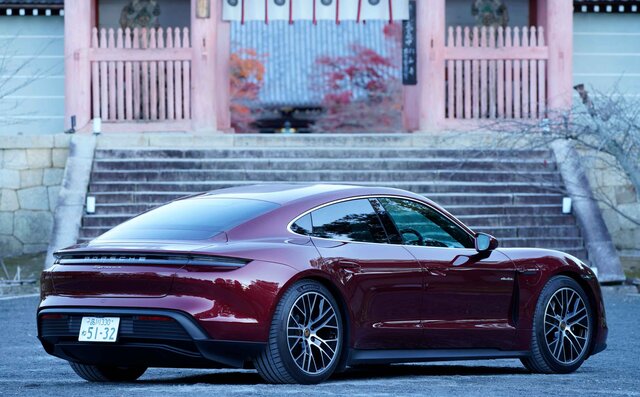
The "Taycan," Porsche's first all-electric sports car, made its world premiere at the 2019 Frankfurt Motor Show and garnered global attention. The base grade "Taycan 4S" arrived in Japan in 2020, and we had the chance to drive it.
Text by OGAWA Fumio
Cornering is its forte, and the brakes are exceptionally powerful
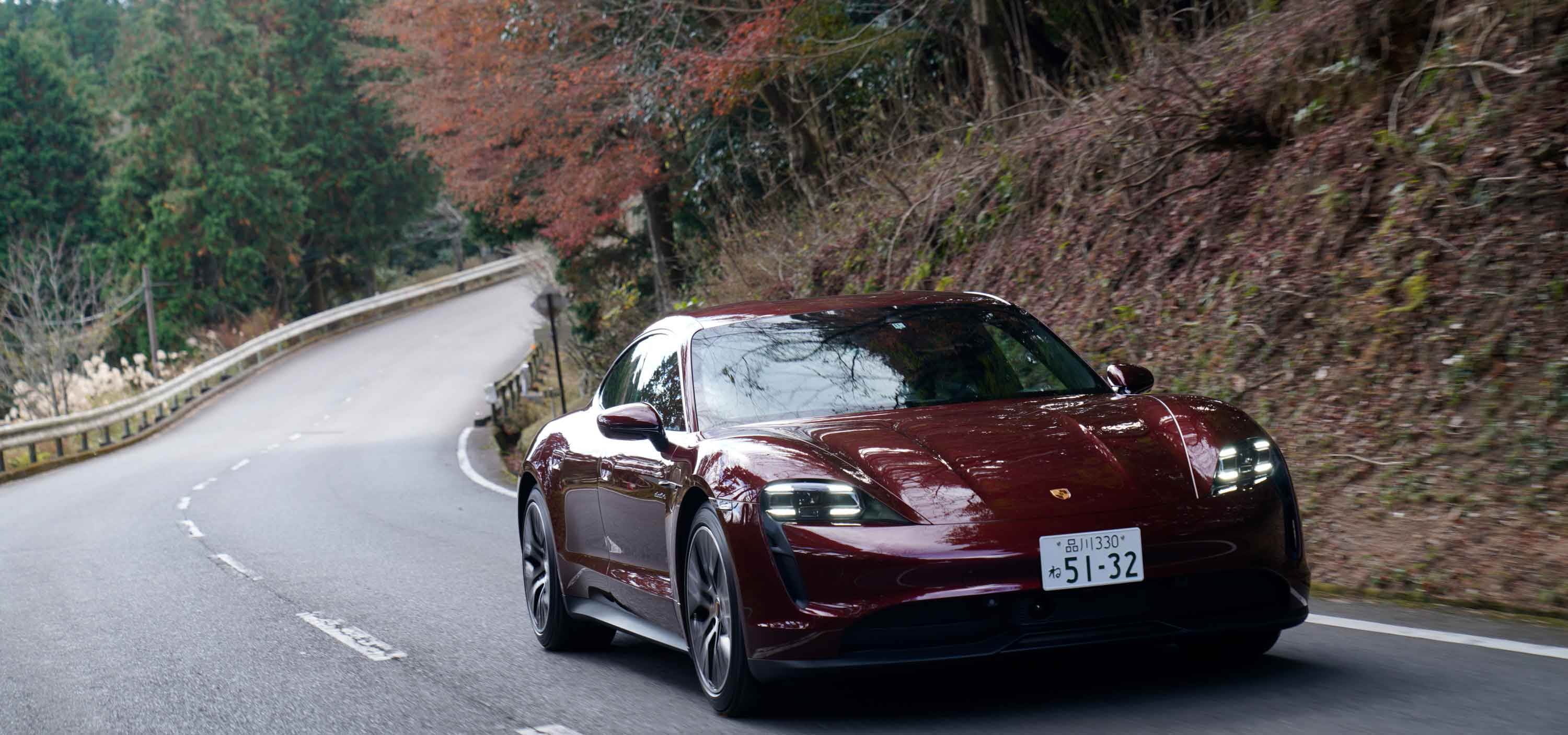
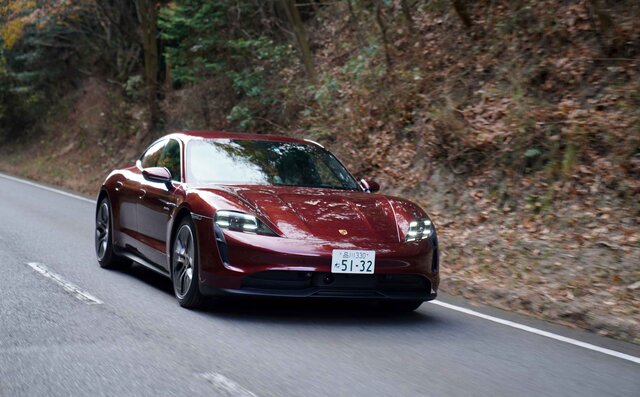
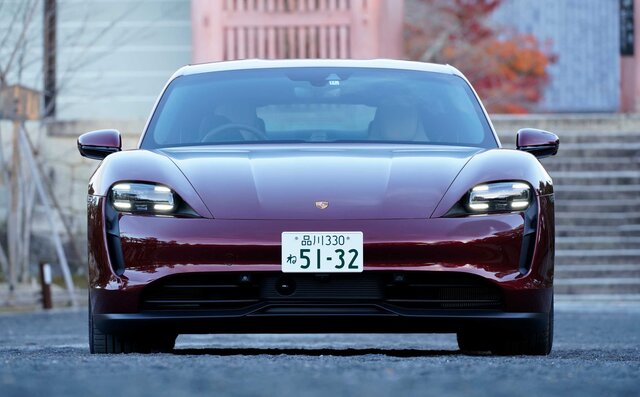
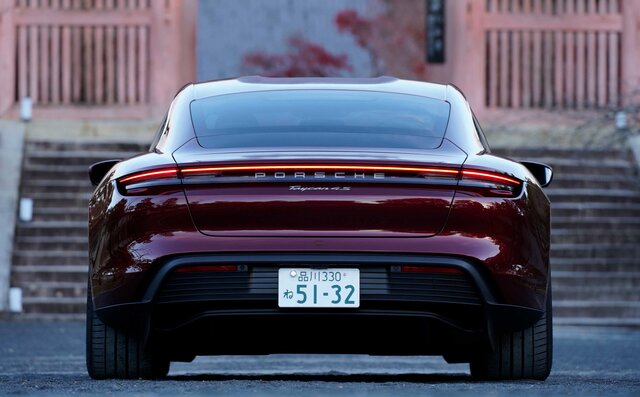
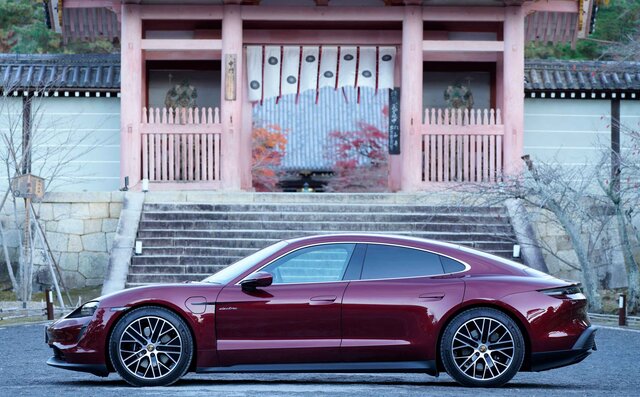
Porsche's much-anticipated electric vehicle, the "Taycan," has finally landed in Japan. Porsche Japan launched it on June 5, 2020. In early December, we had the opportunity to test drive it in Kyoto. We drove the popular base model, the "Taycan 4S," which delivered a smooth and superb performance.
The Taycan can be seen as a harbinger of Porsche's future direction in BEVs (Battery Electric Vehicles). As a four-door sedan with a length approaching five meters, it can also be viewed as Porsche's proposal for the next generation of sedans.
The Taycan 4S serves as the entry-level model within the three-tier lineup, which also includes the Taycan Turbo and Taycan Turbo S. It features all-wheel drive, with one electric motor each at the front and rear, producing 320 kW of power and 640 Nm of torque.
The Turbo model delivers 460 kW and 850 Nm. The Turbo S goes even further, with the same maximum output as the Turbo but a torque of 1050 Nm. Due to differences in battery capacity, the Taycan 4S with its 79.2 kWh battery has a range of 407 km, while the Turbo achieves 460 km. The Turbo S, with its more complex system including four-wheel steering, has a slightly lower range of 412 km.
While the 4S may not match the higher-spec models in terms of numbers, its performance is more than sufficient when driven. The acceleration is strong, but not jarringly so; it feels like a large car, with speed building in a more measured way.
However, as the torque suggests, it possesses a surge of power on the highway that allows it to easily lead the flow of traffic. With its launch control function, pressing the accelerator pedal fully temporarily increases the power from 320 kW to 360 kW, offering an athletic burst of speed. Nevertheless, during our test drive in Kyoto, despite driving on the highway, the surrounding traffic was heavy, preventing us from testing this feature.
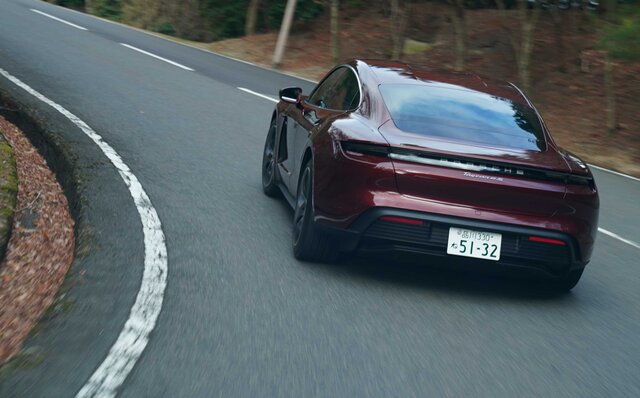
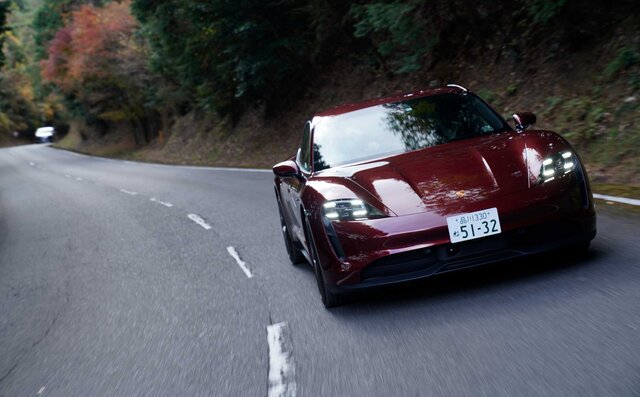
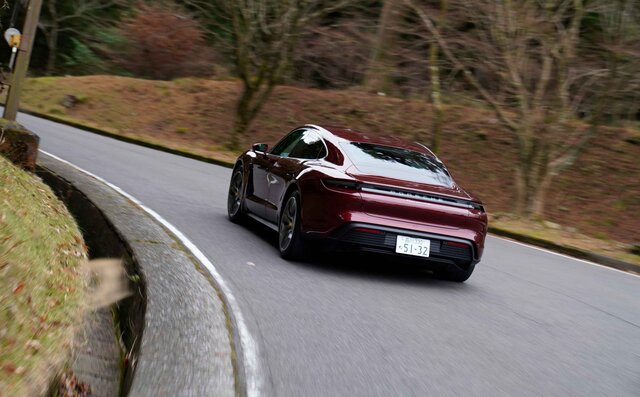
Cornering, in fact, is where it truly excels. This became clear on the Mt. Hiei Driveway. Even on a series of tight corners, it handled them with effortless grace. In fact, the drive was thoroughly enjoyable.
With the heavy components, including the battery, positioned as low as possible to achieve a low center of gravity, the car navigates curves with agile responsiveness to steering inputs.
The brakes are exceptionally powerful, and the pedal feel is remarkably natural, making you almost forget you're driving a large sedan.
It Also Functions Perfectly as a Family Car
The advantage of the 4S lies in its slightly softer suspension setup. While the Turbo S is astonishingly fast, its suspension feels noticeably firmer. Even when the drive mode selector is set to "Normal," which softens the damping, the Turbo S remains relatively stiff.
Photo shows Taycan Turbo S
This became apparent after driving the 4S. In "Normal" mode, it offers a truly comfortable ride with no harshness. Conversely, selecting "Sport" via the dial tightens the damping, providing a distinctly sporty feel.
If you find the 4S lacking in performance, opting for the "Performance Battery Plus" as an option can provide power comparable to the higher-tier models. This is a viable alternative to choosing a higher model outright. In this configuration, the range also extends to a maximum of 463 km.
Photo shows Taycan Turbo S
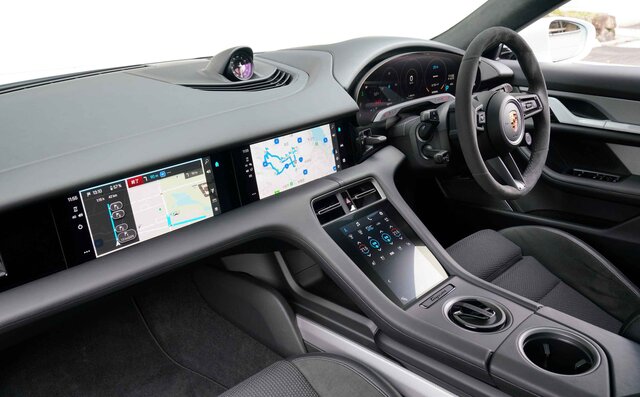
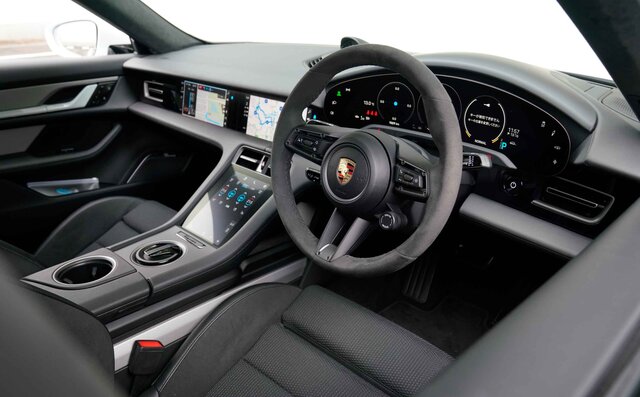
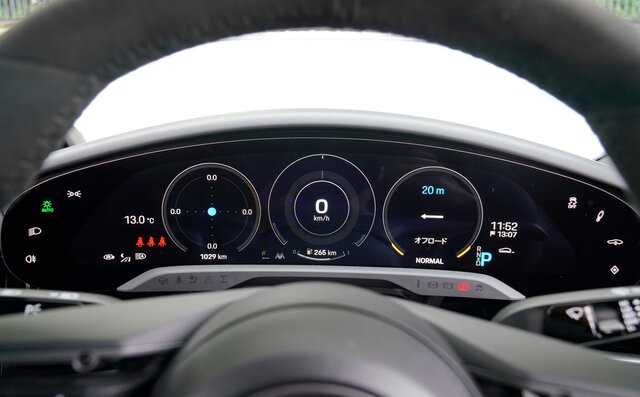
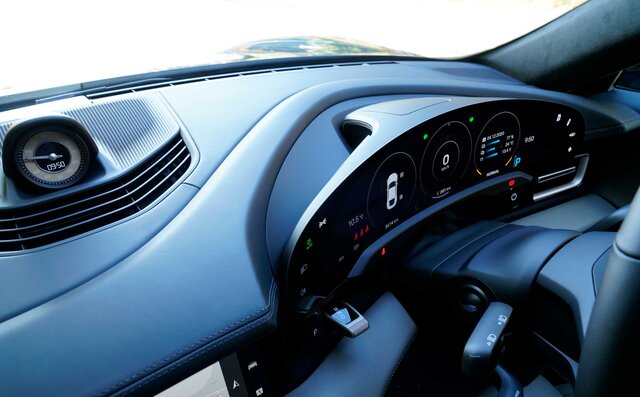
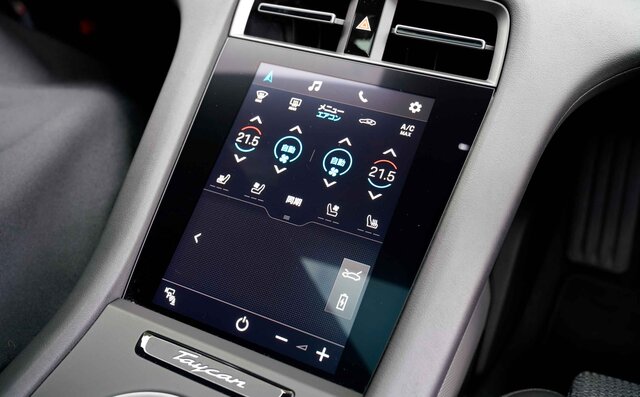
The interior is exceptionally comfortable. Four LCD monitors with touch controls are integrated, including the instrument cluster. The display, which shows speed, battery level (range), and G-meters for lateral and longitudinal forces, is a characteristic touch from Porsche, the sports car manufacturer.
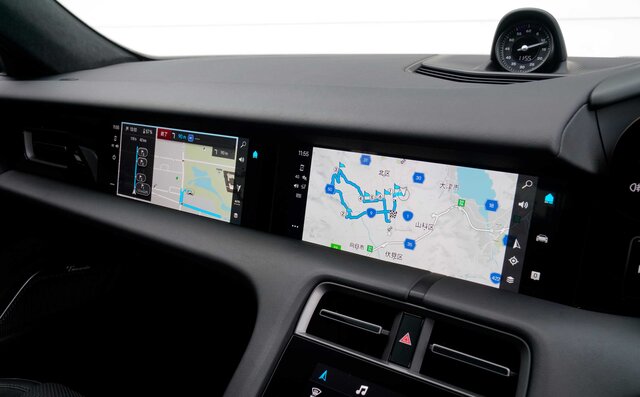
The infotainment monitor on the dashboard conveniently allows for simultaneous display of various information, such as navigation on one screen and music on another while driving.
Photo shows Taycan Turbo S
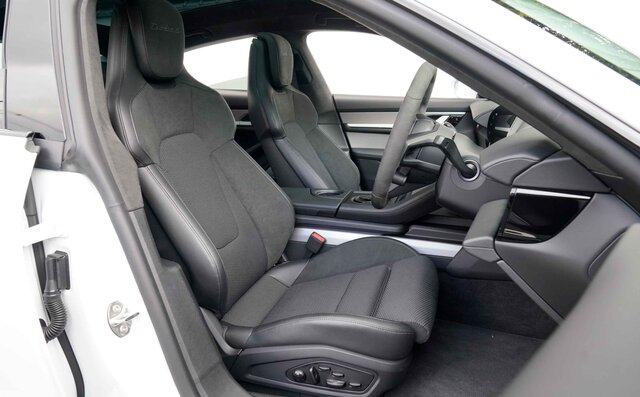
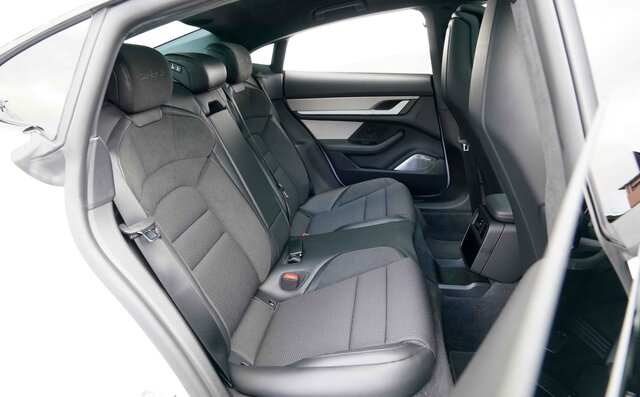
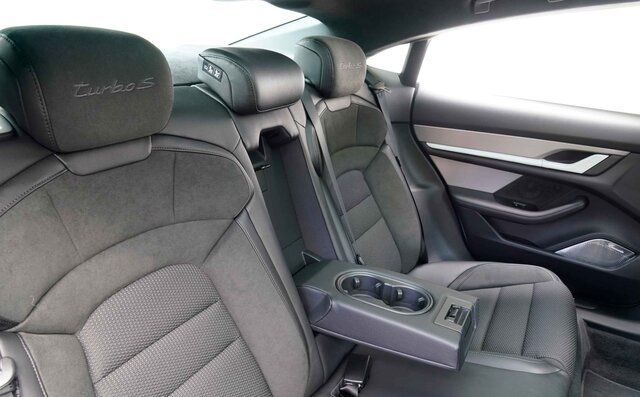
While legroom in the rear is somewhat limited, two adults can sit comfortably. Its sedan body style also makes entry and exit easy, suggesting it would function well as a family car.
Porsche plans to install dedicated chargers called "Turbochargers" at Porsche dealerships across Japan (referred to as "Turbocharging Stations"), capable of charging to approximately 80% in 24 minutes.
Photo shows Taycan Turbo S
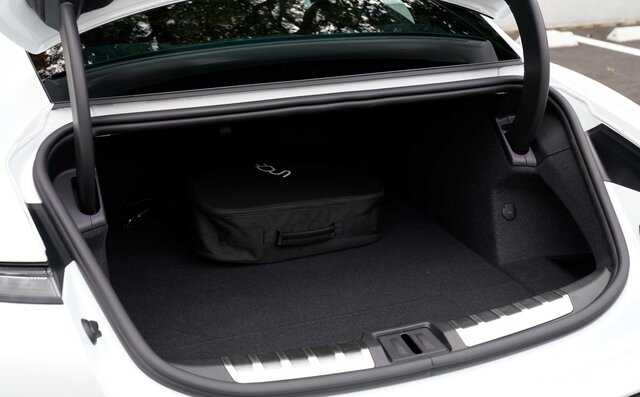
As mentioned earlier, the large battery capacity means less frequent charging. For users commuting daily, it's possible to visit a charging station only once a month. This eliminates the need for a home charging installation.
Pricing starts at ¥14,481,000 for the Taycan 4S, ¥20,231,000 for the Taycan Turbo, and ¥24,541,000 for the Taycan Turbo S. As is typical with Porsche, a wide array of options are available. Any of these models will leave a strong impression after a drive. The Taycan demonstrates that BEVs can be enjoyed by car enthusiasts as well.