Witnessing Volvo's Recent Prowess: A Test Drive of the Volvo XC40 PHEV | VOLVO
VOLVO XC40 Recharge Plug-in Hybrid T5 | VOLVO XC40 Recharge Plug-in Hybrid T5
A Compact PHEV Where the Engine's Presence is Barely Perceptible
Volvo recently revamped the powertrains for its compact SUV XC40, premium mid-size SUV XC60, and flagship SUV XC90, moving towards electrification. This time, we test-drove the PHEV model of the XC40, the "XC40 Recharge Plug-in Hybrid T5."
Text & Photographs by NANYO Kazuhiro
A Model Venturing into the Ambitious Genre of Compact PHEVs
Volvo already had PHEVs in its higher series, such as the "XC90" and "XC60," utilizing the SPA (Scalable Product Architecture) platform for the 60 and 90 series. While the know-how and feedback could be leveraged, and it was a planned move, developing a PHEV for the XC40, based on the smaller CMA (Compact Modular Architecture) platform for the 40 series, was not as simple as it might seem.
The XC40, in terms of its class and size, is a European C-segment SUV. Even in the premium segment, this is a high-volume, practical, everyday car class in Europe, where balancing weight, performance, and economy is crucial. In higher classes, 2-ton high-performance PHEVs or 2.2-2.4 ton+ BEVs are accepted as environmentally friendly, but considering that a Rolls-Royce of yesteryear weighed around 2.2 tons, the situation is quite something.
Indeed, looking at the European C-segment landscape, PHEVs are limited to models like the Volkswagen "Golf GTE" nearing the end of its lifecycle, or niche offerings such as the "Mini Countryman Cooper SE ALL4 PHEV" and BMW "225xe Active Tourer" making a modest showing. Among Japanese cars, the Toyota "RAV4" PHEV garnered attention for its strong sales, but at 4,600mm in length, the RAV4 is closer to the D-segment in size.
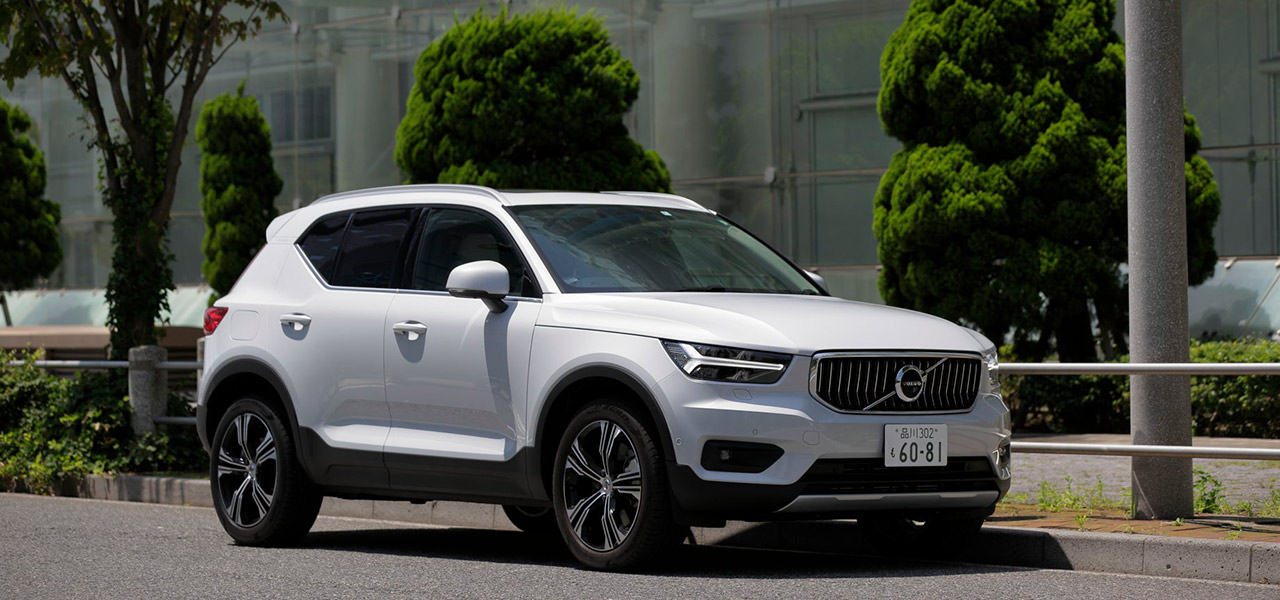
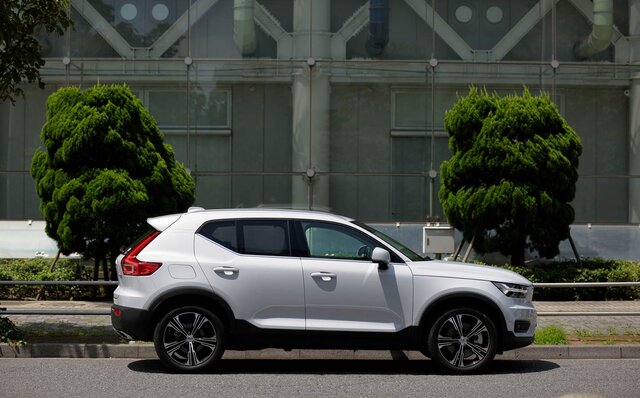
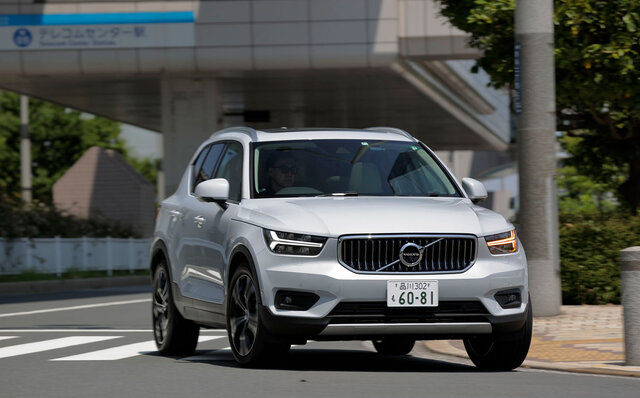
While the XC40 is only 20mm wider than the RAV4, its height is about 30mm lower, and its length is a significant 175mm shorter. At just over 4.3 meters, it is only slightly longer than the BMW models. This positions it perfectly as a compact PHEV in the C-segment, and it's a crossover SUV right in the middle of current trends.
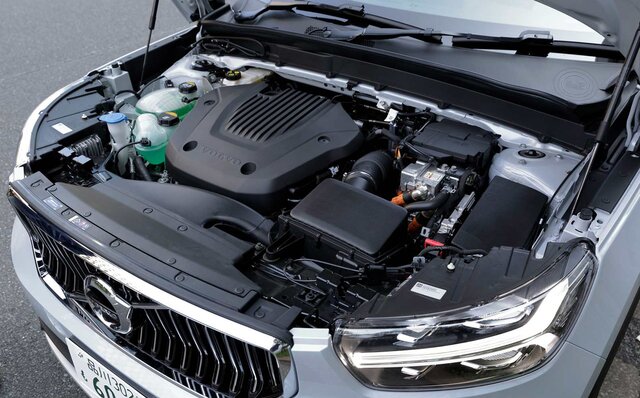
The drivetrain is front-wheel drive, perhaps to avoid added weight, rather than all-wheel drive. A newly developed Drive-E 1.5-liter three-cylinder engine is paired with Volvo's in-house developed 7-speed dual-clutch transmission with an integrated electric motor, dubbed "7DCT-H." It is powered by a 10.91 kWh lithium-ion battery housed within the center tunnel.
The battery is positioned in the center of the vehicle for crash safety, with a design to detach in case of significant impact, a concept inherited from the XC90 and XC60 T8 Twin Engine. While the battery adds weight compared to conventional gasoline or diesel AWD versions, the weight distribution is balanced at approximately 60:40 front to rear. Notably, the ground clearance of 210 mm is maintained, befitting an SUV, showcasing the advantages of the CMA platform, which was developed with electrification in mind.
Agile Handling Expected of a C-Segment SUV
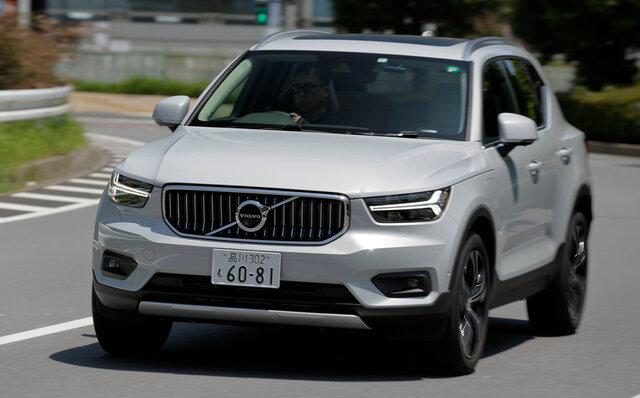
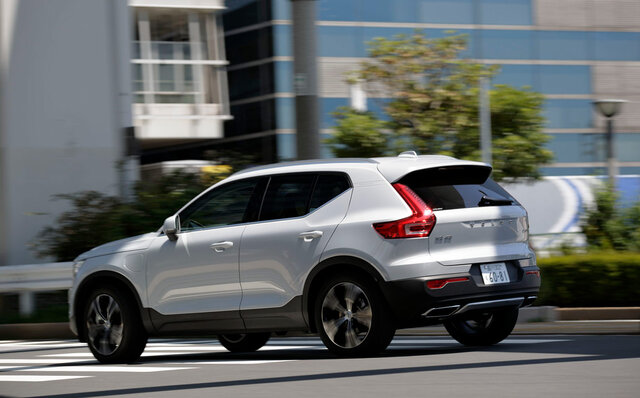
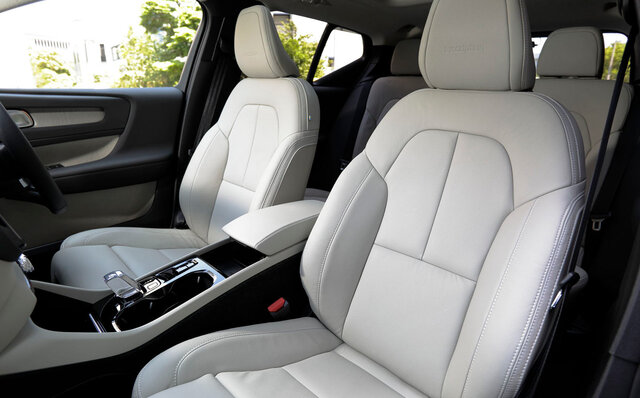
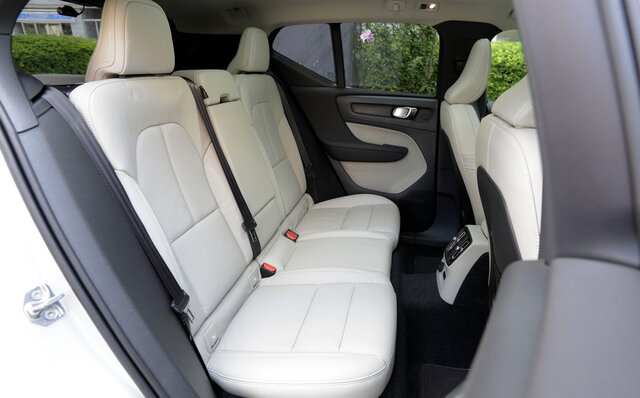
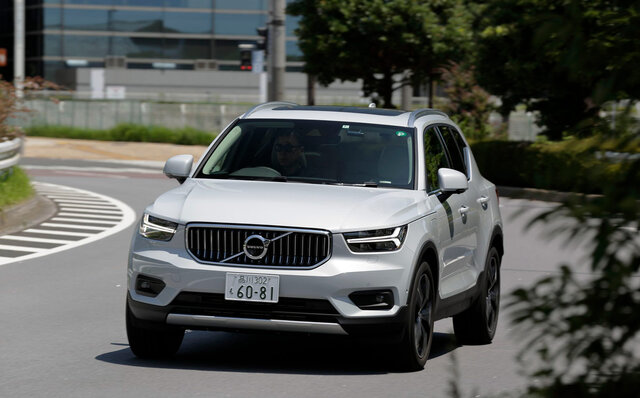
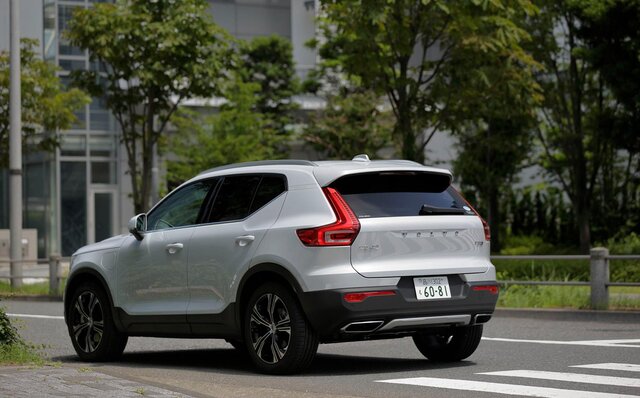
The test car's body color was a new shade called "Glacier Silver Metallic," a near-white silver with a subtle blue nuance, creating rich tonal variations like a glacier. The Nappa leather interior was in beige and charcoal gray, complementing the body color while adding warmth through a subtle contrast.
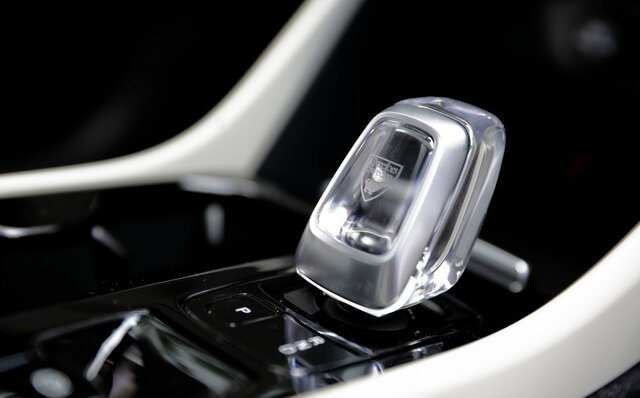
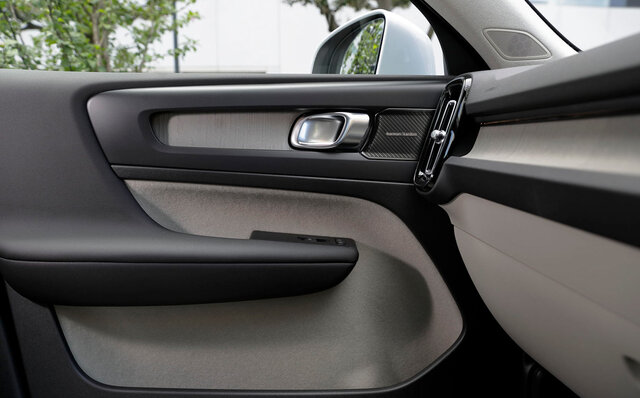
Meanwhile, the interior, featuring genuine materials like aluminum air vent dials and door handles, matte drift wood panels, an Orrefors crystal gear selector, and wool door trim, is a testament to Volvo's unique world. Previously, the XC40 was often characterized by vibrant and bold contrasts and two-tone schemes, exemplified by the R-Design. In contrast, this XC40 Recharge appears considerably more mature.
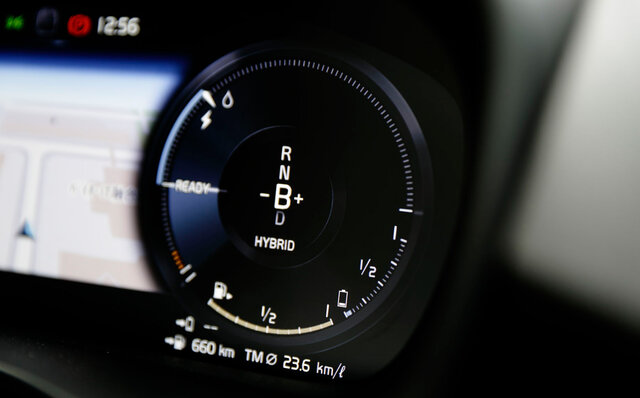
Although the new three-cylinder engine is equipped with an idling stop function, urban restarts are almost always handled by EV driving, meaning the electric motor takes over. Consequently, there's no vibration from the engine restarting. When the drive mode is set to "Pure Mode," the car operates solely on electric power up to 135 km/h. Even in "Hybrid Mode," the engine rarely intervenes. As long as there is charge in the battery indicator, which is located in the lower right of the instrument panel, the car will actively prioritize electric driving unless you floor the accelerator.
While the maximum electric range is stated as approximately 41 km, it's possible to reserve a specific battery percentage through the touchscreen to ensure sufficient electric driving in urban areas after exiting highways. However, this setting is not remembered after turning off the power and restarting; it resets if you take a break and then continue your journey.
This is one of the few inconveniences noted in terms of usability. However, it's certain that the agile handling expected of a C-segment SUV is complemented by a smoothness and quietness that exceed expectations. Another impressive aspect is that even when the battery is nearly depleted, the fuel economy doesn't degrade as much as anticipated. While a certain amount of battery capacity is reserved by default to maintain onboard functions like air conditioning and safety systems, any surplus power generated through B-mode, braking, downhill coasting, or engine combustion is efficiently channeled back to the electric motor.
Maintaining an Average Fuel Economy of 14.7 km/L Even When Driving on the Metropolitan Expressway with Engine Only
Furthermore, the 1.5-liter turbo in the XC40 Recharge is highly tuned, producing 180 ps and 260 Nm, offering substantial torque. The paradox of a PHEV is that when the battery is low, it becomes merely an inefficient ICE vehicle. Many PHEVs are paired with large-displacement engines to mask the increased weight from the battery and the drop in power and torque when the battery is depleted. However, unlike the period when the electric motor was usable, they struggle to mitigate the fuel economy degradation.
However, the XC40 Recharge PHEV T5 managed to maintain an average fuel economy of 14.7 km/L even when driven solely by the engine on the Metropolitan Expressway with the battery nearly depleted. This is close to the catalog value of 15.1 km/L in highway mode, suggesting its true performance. Admittedly, when starting with a full charge and in EV mode, the display showed as high as 21 km/L. It's understandable that the average fuel economy would gradually decrease over half a day. Nevertheless, the fact that it held steady at this lower threshold was quite surprising.
Most PHEVs function primarily as EVs within a radius of about 30 km from home, provided they start with a full charge, reducing the need to visit gas stations for those with infrequent long-distance travel. Unlike BEVs, there's no range anxiety when venturing out, but the concern about fuel economy degradation on longer trips has traditionally been a significant drawback, acting as a psychological barrier for weekend getaways. However, the XC40 Recharge clearly addresses this by relying on its highly efficient downsized turbo engine to maintain a respectable minimum fuel economy.
Another noteworthy feature is Volvo's in-house developed 7-speed DCT. It utilizes two separate clutches to transmit power: one for the electric motor to gears 2, 4, 6, and reverse, and the other for the 1.5-liter turbo to gears 1, 3, 5, and 7. While both clutches may engage simultaneously in Power Mode, the DCT's design allows for seamless power transitions and efficient coasting and energy regeneration with minimal loss.
In essence, the XC40 Recharge PHEV T5 is a highly strategic offering as a compact PHEV, skillfully reconfiguring existing technologies. Owners may not need to subscribe to fast-charging plans or learn charging station etiquette, but those accustomed to the quiet and smooth EV driving experience of a compact PHEV will likely consider a BEV in a few years. The fact that Volvo can propose such a compelling vehicle in the still-developing genre of compact PHEVs demonstrates their recent prowess.