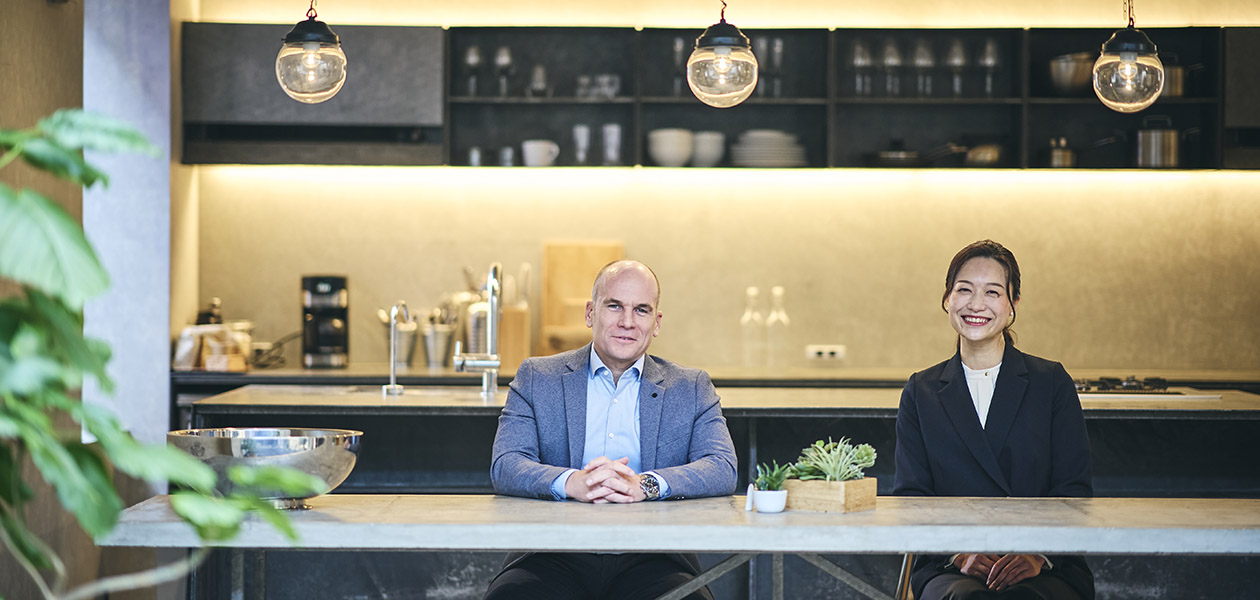
The Value of Food in Nurturing People and Weaving Stories
Presented by PORSCHEPORSCHE
Interview: Philipp von Witzendorff, President of Porsche Japan × Misaki Iwaki, Culinary Researcher and Miso Connoisseur
A cross-interview to understand what Porsche Japan President Philipp von Witzendorff is seeing and thinking now. This time, he discusses food with Misaki Iwaki, who is active as a culinary researcher and miso connoisseur with the aim of "conveying health through food."
Text by AOYAMA Tsuzumi | Photographs by TAKAYANAGI Ken (INTERVIEW), FUJII Yui (EVENT) | Edit by MAEDA Yoichiro
A Conversation Between Two Food Enthusiasts Begins
"I love rice, so I have no worries about living in Japan." This is what President Philipp reportedly replied when Porsche executives asked him if he could adapt to Japanese culture upon his appointment as president of Porsche Japan.
This anecdote illustrates how much President Philipp values food, as he began by discussing it, rather than differences in language or business customs.
Hearing President Philipp speak, Iwaki recalls her own past struggles with anorexia, bulimia, and skin problems in her teens. She found that a review of her diet was the catalyst for improvement.
<Iwaki>
"My experience sparked my interest in food, and after working as a nutritionist, I became independent. I am now active as a 'culinary researcher.' I share foods that I've personally found to be truly beneficial, and I continue to develop and convey recipes that can be practiced by children or those who aren't confident cooks. While there are many delicious dishes, I believe that what can be practiced in daily life is most important."
"My experience sparked my interest in food, and after working as a nutritionist, I became independent. I am now active as a 'culinary researcher.' I share foods that I've personally found to be truly beneficial, and I continue to develop and convey recipes that can be practiced by children or those who aren't confident cooks. While there are many delicious dishes, I believe that what can be practiced in daily life is most important."

Iwaki has served as an instructor for cooking classes and food-related lectures over 1,500 times, and she also runs her own cooking class, misa-kitchen. She has made numerous appearances on radio, television, and in magazines. She also works as a seminar instructor, promoting practical cooking.
<President Philipp>
"You practice helping many people based on your own experiences. Your work is truly wonderful. I also love delicious food, but I feel that many people in Europe and North America have lost their sense of balance regarding food. In that regard, Japanese people seem to have a good balance. You have a rich food culture and a passion for food, yet you never overeat."
"You practice helping many people based on your own experiences. Your work is truly wonderful. I also love delicious food, but I feel that many people in Europe and North America have lost their sense of balance regarding food. In that regard, Japanese people seem to have a good balance. You have a rich food culture and a passion for food, yet you never overeat."
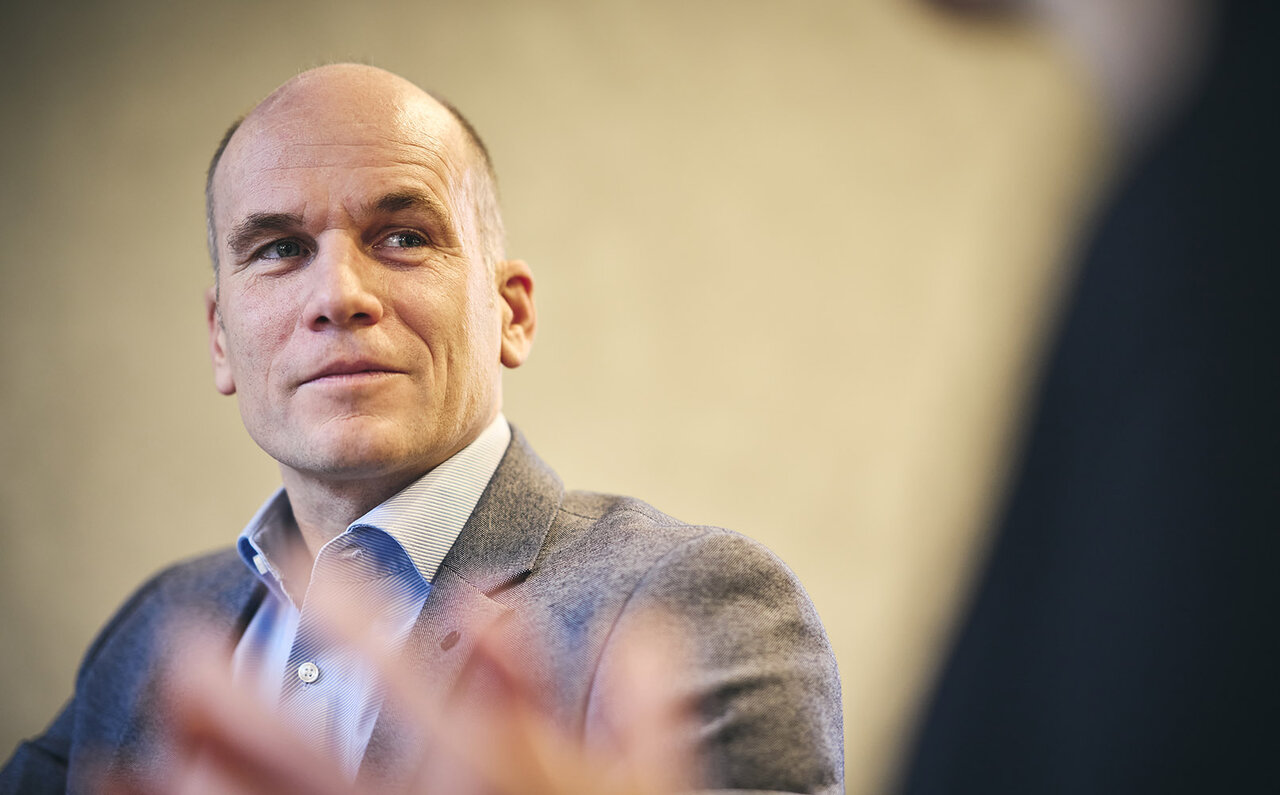
<Iwaki>
"Where ingredients are grown, who produced them, and how they were made. By understanding the background of our food, not just eating it because it's delicious, I believe we become more conscious of cherishing it. At the same time, being interested in what we consume connects to maintaining a proper balance in our bodies and minds, doesn't it?"
"Where ingredients are grown, who produced them, and how they were made. By understanding the background of our food, not just eating it because it's delicious, I believe we become more conscious of cherishing it. At the same time, being interested in what we consume connects to maintaining a proper balance in our bodies and minds, doesn't it?"
Regarding the background of ingredients, Iwaki has a particular strong interest in "miso." When she wanted to understand the seasonings she used in cooking, she began researching miso production methods and the stories of the producers, becoming fascinated by its depth. Since 2015, she has visited miso breweries, and by the time of this interview, she had visited 91.
The Importance of Food Education Reflected in Traditional Japanese and German Ingredients
<Iwaki>
"By visiting breweries across the country and learning about miso, I've come to understand Japanese culture more deeply. Just as sausages vary by region in Germany, miso also has various types that reflect the culture of the land."
"By visiting breweries across the country and learning about miso, I've come to understand Japanese culture more deeply. Just as sausages vary by region in Germany, miso also has various types that reflect the culture of the land."

<President Philipp>
"Both German sausages and Japanese miso are traditional foods of their respective countries, but miso seems to have more varieties. In my opinion, Japan has been more successful in preserving its traditions. Unfortunately, in Germany, traditional food culture is gradually disappearing."
"Both German sausages and Japanese miso are traditional foods of their respective countries, but miso seems to have more varieties. In my opinion, Japan has been more successful in preserving its traditions. Unfortunately, in Germany, traditional food culture is gradually disappearing."
A journey centered around food is also a journey to understand culture. And in terms of cultural inheritance, food education is undeniably important for passing down culture to children. Iwaki also actively engages in food education activities at nursery schools and elementary schools to provide children with experiences that make them "enjoy eating."
<Iwaki>
"I heard that Porsche Japan is supporting a project to provide organically grown rice from Kisarazu City, Chiba Prefecture, for school lunches in elementary and middle schools. Rice is an important staple for Japanese people. I think it's a wonderful initiative. President Philipp, you also visited an elementary school in Kisarazu City to participate in a school lunch tasting session and spoke with the children. How was it speaking with them directly?"
"I heard that Porsche Japan is supporting a project to provide organically grown rice from Kisarazu City, Chiba Prefecture, for school lunches in elementary and middle schools. Rice is an important staple for Japanese people. I think it's a wonderful initiative. President Philipp, you also visited an elementary school in Kisarazu City to participate in a school lunch tasting session and spoke with the children. How was it speaking with them directly?"

<President Philipp>
"I love seeing children explore the world with curiosity. Unfortunately, with the advancement of digital devices, opportunities to fully exercise that curiosity seem to be diminishing. That's why I believe experiences like eating and touching are becoming increasingly important. Through the experience of eating organic rice for lunch, I wanted them to understand how rice is produced. So, the producer of the organic rice and the mayor of Kisarazu City were also present at the tasting session, where they spoke to the students about this particular rice, and we ate lunch together. It was a very enjoyable experience to talk with the children who were actually eating the organic rice."
"I love seeing children explore the world with curiosity. Unfortunately, with the advancement of digital devices, opportunities to fully exercise that curiosity seem to be diminishing. That's why I believe experiences like eating and touching are becoming increasingly important. Through the experience of eating organic rice for lunch, I wanted them to understand how rice is produced. So, the producer of the organic rice and the mayor of Kisarazu City were also present at the tasting session, where they spoke to the students about this particular rice, and we ate lunch together. It was a very enjoyable experience to talk with the children who were actually eating the organic rice."
Porsche Japan considers Kisarazu City, Chiba Prefecture, home to the Porsche Experience Center Tokyo, as a priority community and engages in various ongoing CSR activities. The "Organic Rice School Lunch Project" is one of these initiatives.

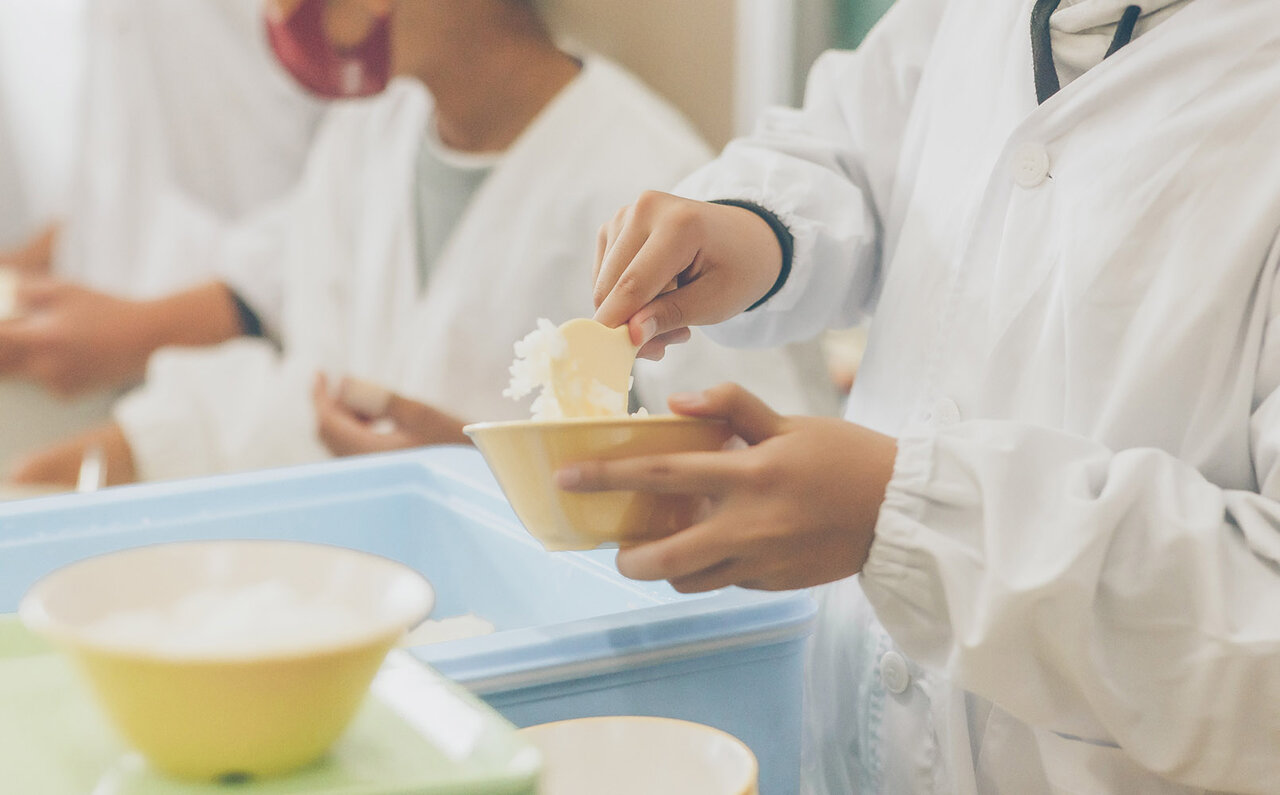
President Philipp Experiences "Japanese School Lunch"

A time to eat and chat with the mayor of Kisarazu, organic rice producers, and elementary school students.
<President Philipp>
"Of course, Porsche has nothing to do with cooking. We are not in the food business, nor are we involved with nutrition. However, Porsche is undeniably related to performance and fitness. Through our support for this organic rice school lunch project, we want children to understand that food is important for their performance. Considering the background, the philosophy connects. Ultimately, it also connects to enjoying life. I brought a 911 Carrera T and a Taycan GTS to the elementary school in Kisarazu, and the children's excitement upon seeing the Porsches was also memorable."
"Of course, Porsche has nothing to do with cooking. We are not in the food business, nor are we involved with nutrition. However, Porsche is undeniably related to performance and fitness. Through our support for this organic rice school lunch project, we want children to understand that food is important for their performance. Considering the background, the philosophy connects. Ultimately, it also connects to enjoying life. I brought a 911 Carrera T and a Taycan GTS to the elementary school in Kisarazu, and the children's excitement upon seeing the Porsches was also memorable."
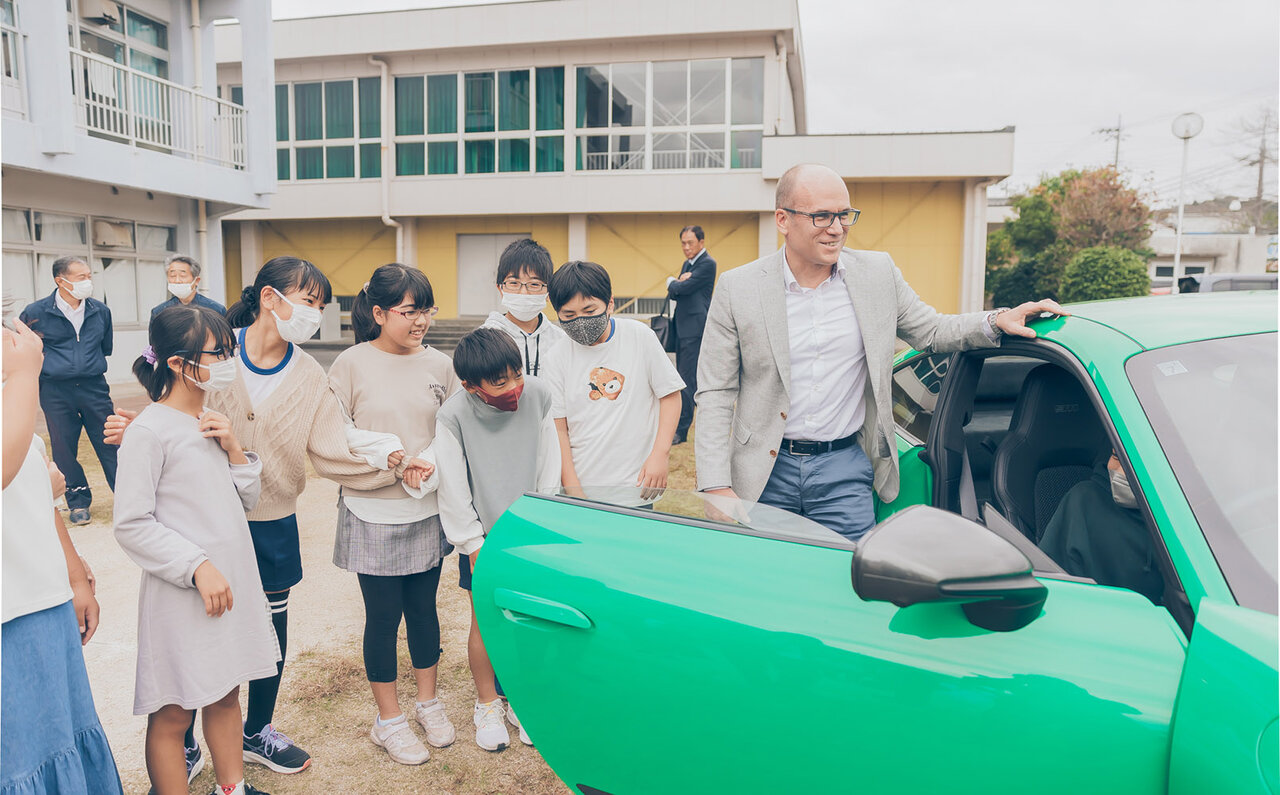
Children excitedly exclaim, "It's a Porsche!" "Wow!" President Philipp also let students sit in the driver's seat, saying, "I'll give you a special experience."
President Philipp continued, addressing Iwaki, who said, "I find many things I can strongly relate to. Food and cooking enrich our lives."
<President Philipp>
"Eating is an everyday occurrence, isn't it? It's also an essential activity. That's why we want to make it enjoyable and interesting. What's wonderful about your activities, Iwaki, is that you are passionately working to enrich daily food. At the same time, there are challenges regarding food. Social issues like food loss, and health problems caused by convenient processed foods. In Western countries, the idea that sugar is very unhealthy is widespread, but how do you teach children about sugar?"
"Eating is an everyday occurrence, isn't it? It's also an essential activity. That's why we want to make it enjoyable and interesting. What's wonderful about your activities, Iwaki, is that you are passionately working to enrich daily food. At the same time, there are challenges regarding food. Social issues like food loss, and health problems caused by convenient processed foods. In Western countries, the idea that sugar is very unhealthy is widespread, but how do you teach children about sugar?"
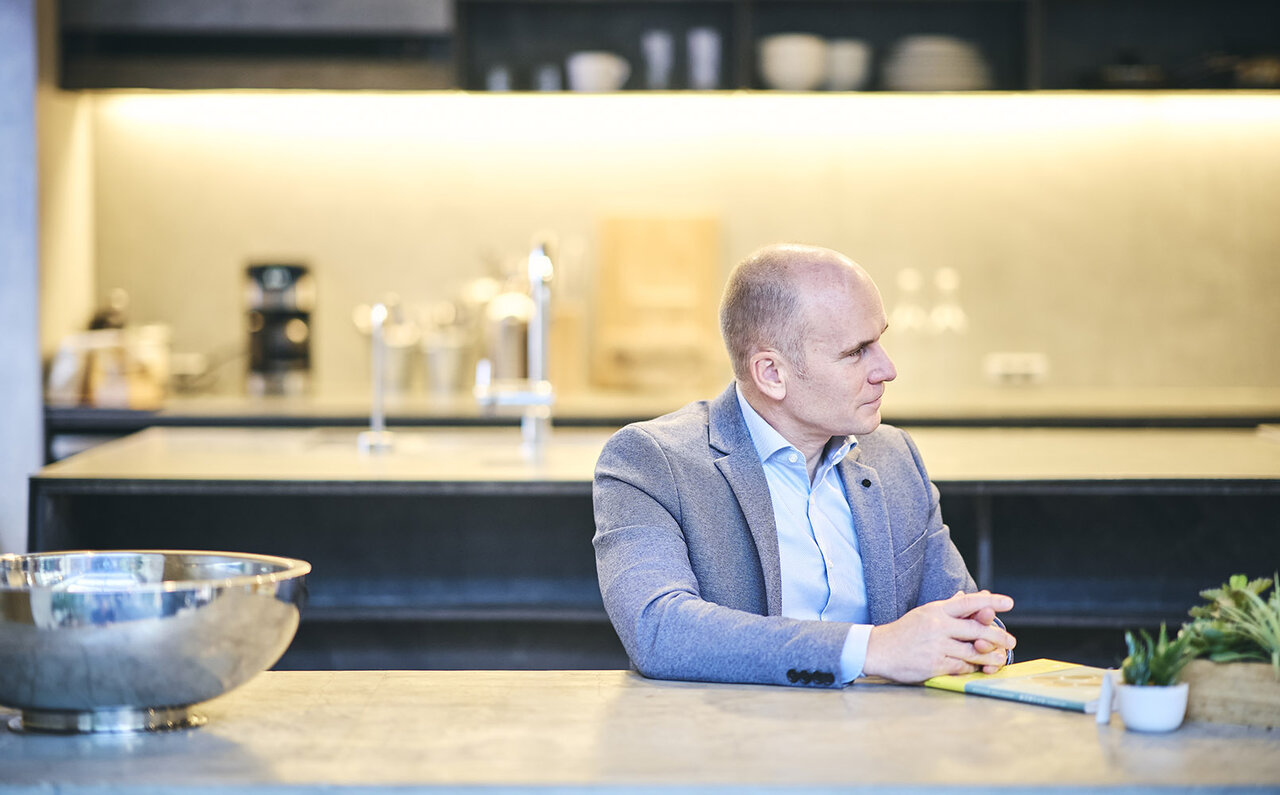
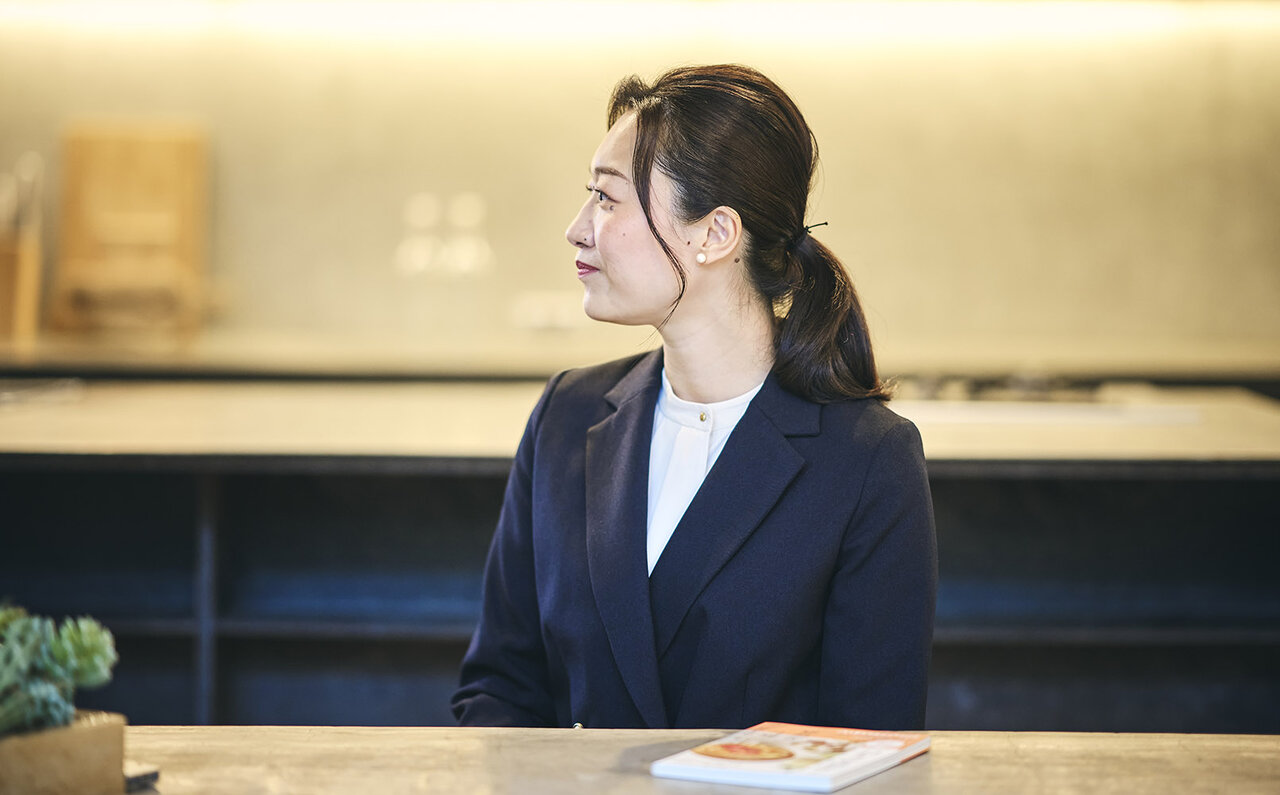
<Iwaki>
"I don't say that sugar is evil. It's sweet and delicious, and sweet things make us feel happy. However, overeating or consuming too much is problematic. Processed foods contain a lot of sugar, and we end up consuming more than we realize, so through the experience of making things ourselves, I try to help them understand the amount they are ingesting."
"I don't say that sugar is evil. It's sweet and delicious, and sweet things make us feel happy. However, overeating or consuming too much is problematic. Processed foods contain a lot of sugar, and we end up consuming more than we realize, so through the experience of making things ourselves, I try to help them understand the amount they are ingesting."
It is said that if people develop unbalanced, bad habits in childhood, they are difficult to break as adults. In that regard, President Philipp emphasizes the importance of teaching properly from a young age, highlighting the significance of food education for children.
President Philipp Tastes Miso from Various Regions of Japan
President Philipp, who shows strong curiosity about Japanese culture, is also deeply interested in the miso breweries Iwaki has visited and the miso from various regions of Japan laid out before them. As President Philipp asks how to best enjoy them, Iwaki begins a tasting session, explaining each miso one by one.
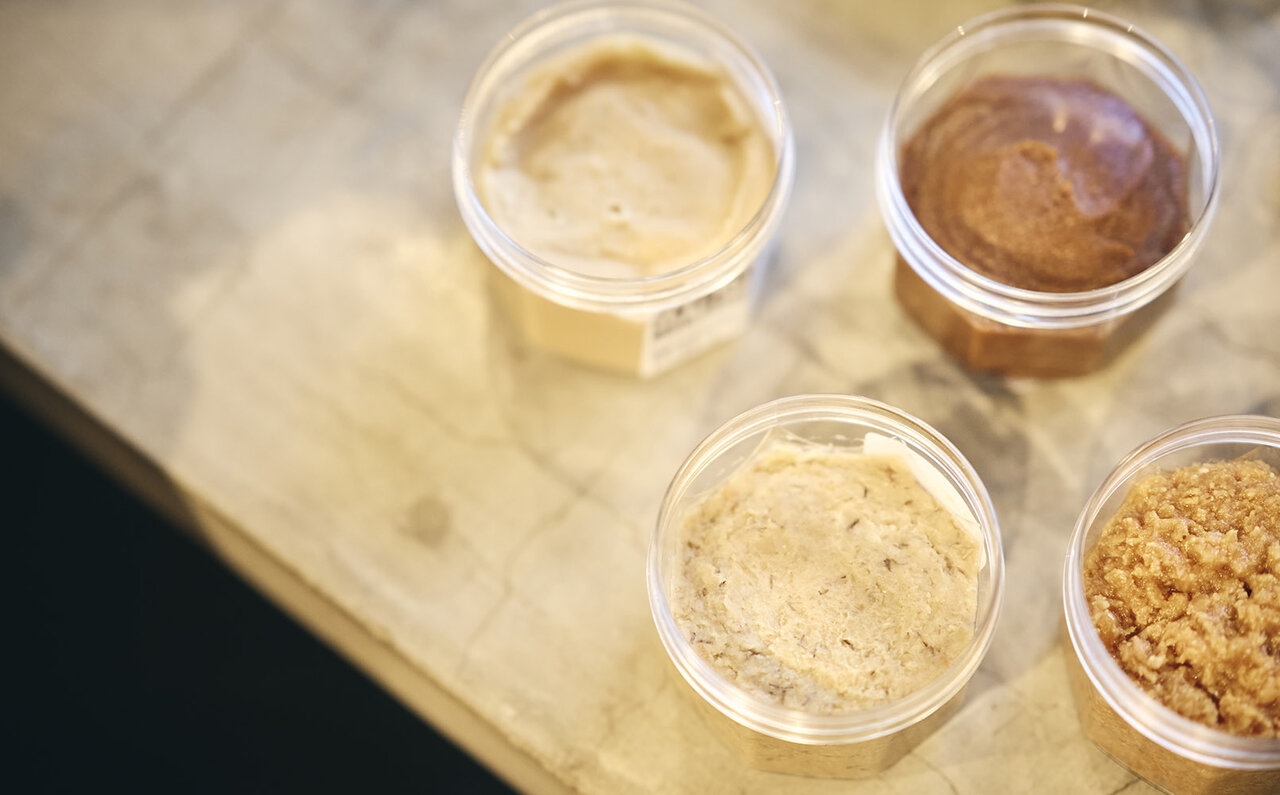
Miso from various regions of Japan prepared by Iwaki for this discussion.
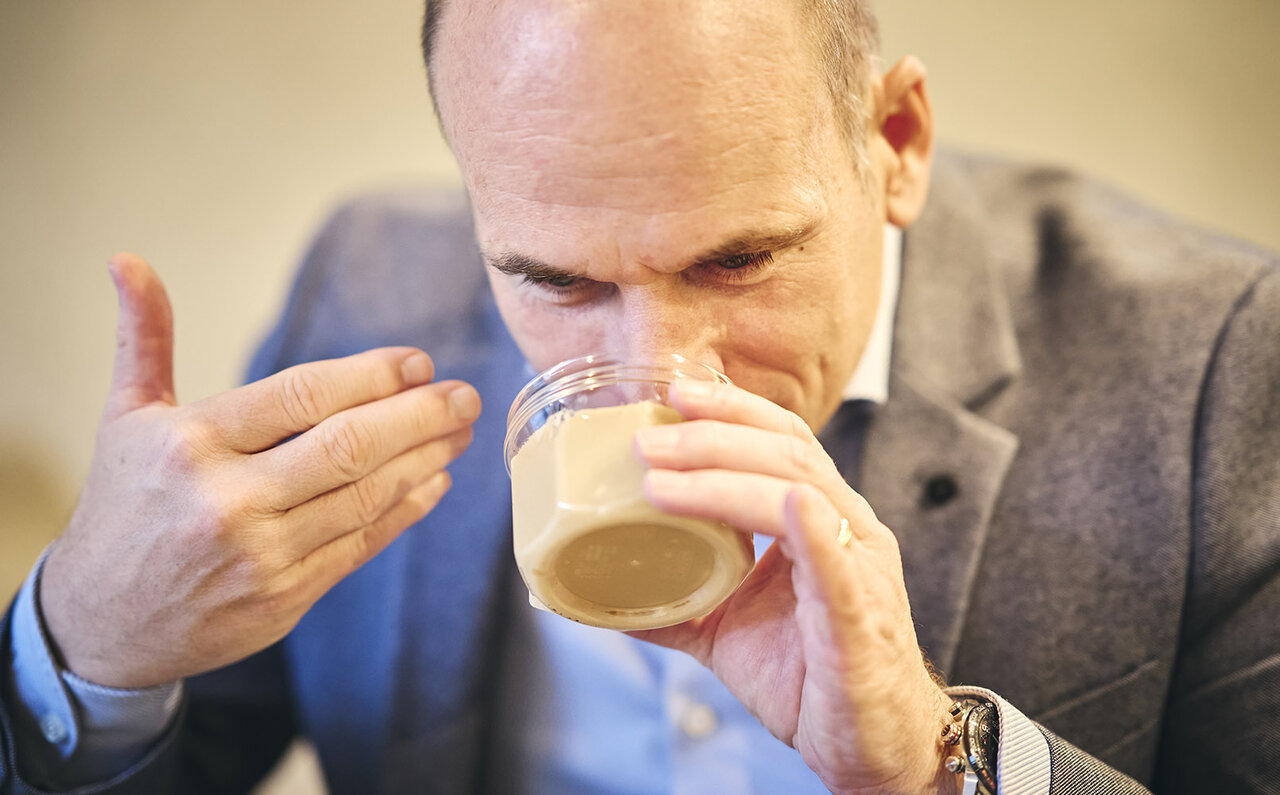
He smells the aroma of all the miso and tastes them. His interest in food seems endless.
President Philipp enjoys the visual differences and smells the aromas. "It smells like plums," "Is this fig?" he remarks, describing his impressions as if he were tasting whiskey or wine.
When Iwaki began her miso brewery tours in 2015, there were about 1,000 miso breweries nationwide. However, in eight years, 200 have closed. Amidst this reality, the miso she produces embodies the desire to preserve traditional methods for the future. To slightly change the conventional image of miso, the label design is inspired by whiskey labels.
<Iwaki>
"The ones I brought today are all made by hand in traditional wooden vat breweries, so their flavors and aromas are unique and distinctive. In Japan, miso is mainly used in miso soup, but by tasting miso itself and discovering your preferences, you can find new ways to enjoy it, such as different ways of eating it or pairing it with ingredients."
"The ones I brought today are all made by hand in traditional wooden vat breweries, so their flavors and aromas are unique and distinctive. In Japan, miso is mainly used in miso soup, but by tasting miso itself and discovering your preferences, you can find new ways to enjoy it, such as different ways of eating it or pairing it with ingredients."

"Gachi Miso" Produced by Iwaki

Of the five types of miso, President Philipp's favorite was "Gachi Miso Aka-Naka," made by Inoue Miso Soy Sauce in Tokushima Prefecture, founded in 1875. It is characterized by a nutty aroma.

Tasting small amounts of the five types of miso.
Discovering and Conveying Stories
<President Philipp>
"Tradition must be preserved, but it also needs to evolve. As you are doing, Iwaki, presenting it in new ways is important. Miso artisans also need generational succession, and new approaches are necessary to attract young people's interest. I was surprised by the differences between the various types of miso I tasted. Furthermore, the type of koji used varies by region, which changes the type of miso, and differences in aging periods create variations in color, all produced by hand. The entire story is astonishing and deeply moving."
"Tradition must be preserved, but it also needs to evolve. As you are doing, Iwaki, presenting it in new ways is important. Miso artisans also need generational succession, and new approaches are necessary to attract young people's interest. I was surprised by the differences between the various types of miso I tasted. Furthermore, the type of koji used varies by region, which changes the type of miso, and differences in aging periods create variations in color, all produced by hand. The entire story is astonishing and deeply moving."
President Philipp jokingly suggests that such stories could command high value if served in Michelin-starred restaurants. The感動 (kandō - deep emotion) evoked by the aroma and taste of carefully crafted miso, and the exhilaration of driving a Porsche – the common thread is a passionate story passed down through tradition.
And stories need storytellers. "I truly hope you will become an evangelist," President Philipp said, offering his encouragement to Iwaki with great expectation.
And stories need storytellers. "I truly hope you will become an evangelist," President Philipp said, offering his encouragement to Iwaki with great expectation.
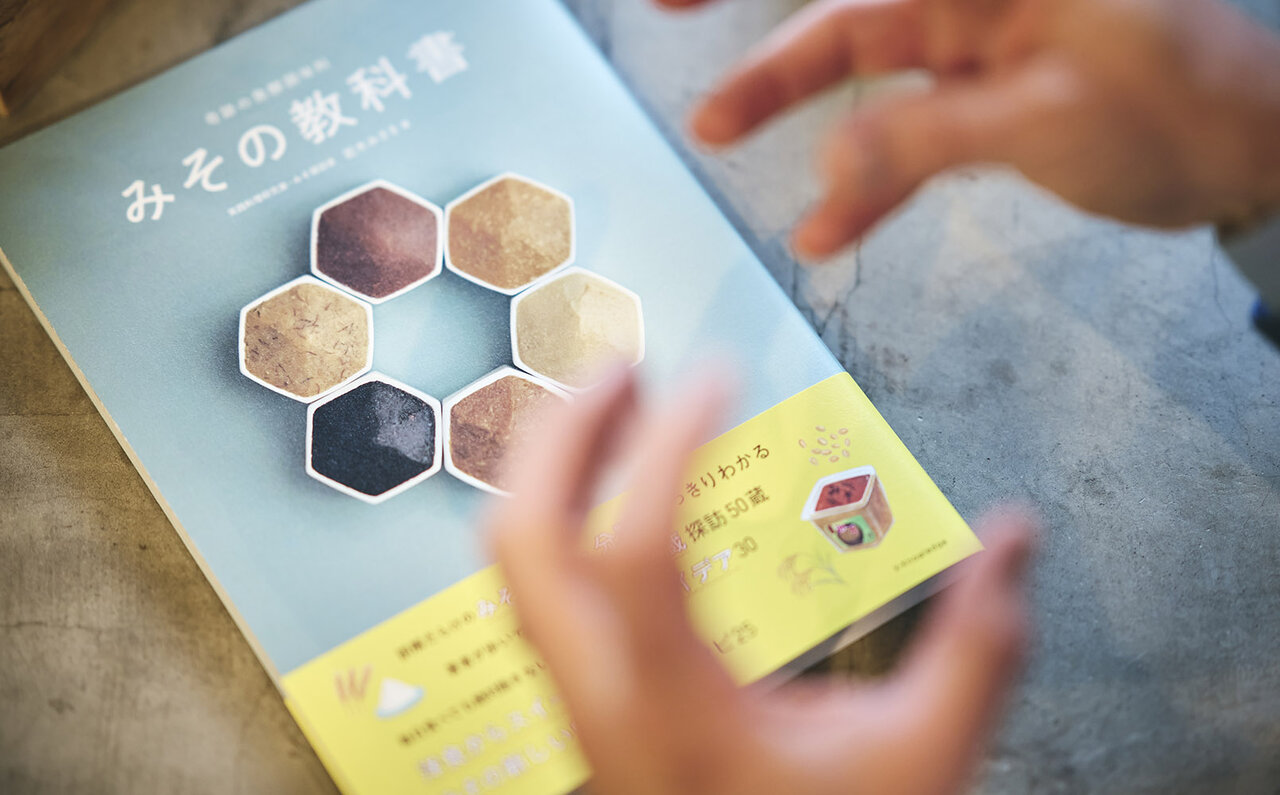
Iwaki's book, "Miraculous Fermented Seasoning: The Miso Textbook" (published by X-Knowledge)
Philipp von Witzendorff
President and CEO of Porsche Japan. After holding management positions at Mercedes-Benz in Canada, Germany, and international markets, he served as Chairman of the Board of Directors for Porsche's direct retail operations in Germany from April 2019. He assumed his current role on July 1, 2022.
President and CEO of Porsche Japan. After holding management positions at Mercedes-Benz in Canada, Germany, and international markets, he served as Chairman of the Board of Directors for Porsche's direct retail operations in Germany from April 2019. He assumed his current role on July 1, 2022.
Misaki Iwaki
Born in 1988 in Kanagawa Prefecture. She develops and photographs recipes, writes articles, appears in media such as radio and TV, and is involved in export projects for JETRO and the Ministry of Agriculture, Forestry and Fisheries. She runs the cooking class misa-kitchen in Shibuya Ward, Tokyo. Focusing on the theme of "connecting production and consumption," she actively visits miso breweries across the country to convey the appeal of miso, a traditional Japanese food.
Born in 1988 in Kanagawa Prefecture. She develops and photographs recipes, writes articles, appears in media such as radio and TV, and is involved in export projects for JETRO and the Ministry of Agriculture, Forestry and Fisheries. She runs the cooking class misa-kitchen in Shibuya Ward, Tokyo. Focusing on the theme of "connecting production and consumption," she actively visits miso breweries across the country to convey the appeal of miso, a traditional Japanese food.