May 13, 2022
Test drive of the Lexus RZ, the brand's first dedicated battery EV prototype—What kind of driving experience does Lexus aim for? | LEXUS
LEXUS RZ | The Lexus RZ
Test drive of the Lexus RZ, the brand's first dedicated battery EV prototype—What kind of driving experience does Lexus aim for?
Motor journalist Fumio Ogawa test drives the prototype of the "RZ," a dedicated battery EV (BEV) model that Lexus unveiled globally on April 20th. Here is his report on the driving experience.
Text by OGAWA Fumio | Photographs by Lexus International
High level of refinement, even as a prototype
EVs are evolving. A car that makes you think so is expected to arrive within 2022. That car is the Lexus RZ. It's the brand's first BEV (battery electric vehicle) crossover SUV.
The Lexus RZ, whose outline was announced on April 20, 2022, measures 4,805mm in length and 1,635mm in height. For comparison, it's longer than the Toyota Harrier (4,705mm length, 1,660mm height). It uses a dedicated EV chassis and is all-wheel drive with motors front and rear.
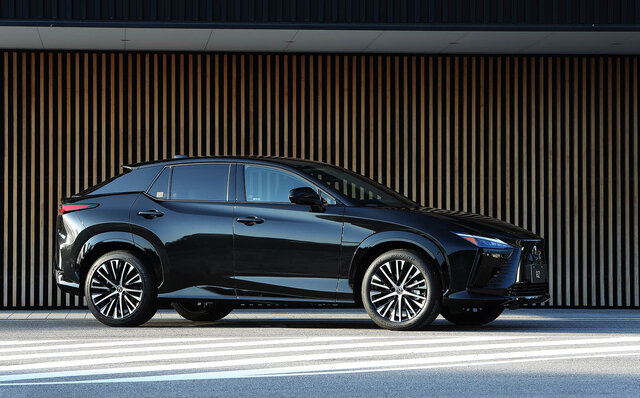
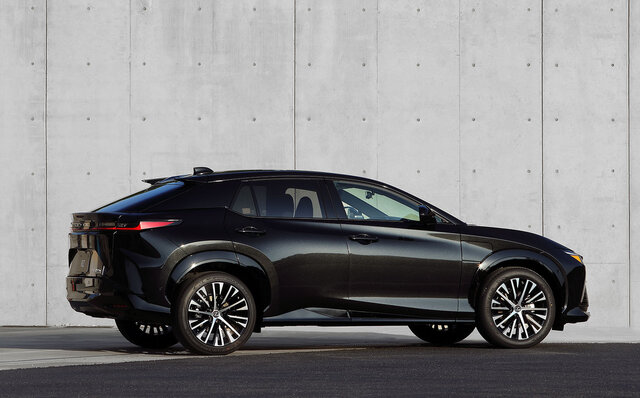
The styling is also suitably aggressive. With a wheelbase of 2,850mm, the packaging is excellent. It feels like a good balance of sportiness and practicality, making it a car to watch if you're looking for a premium battery-powered SUV.
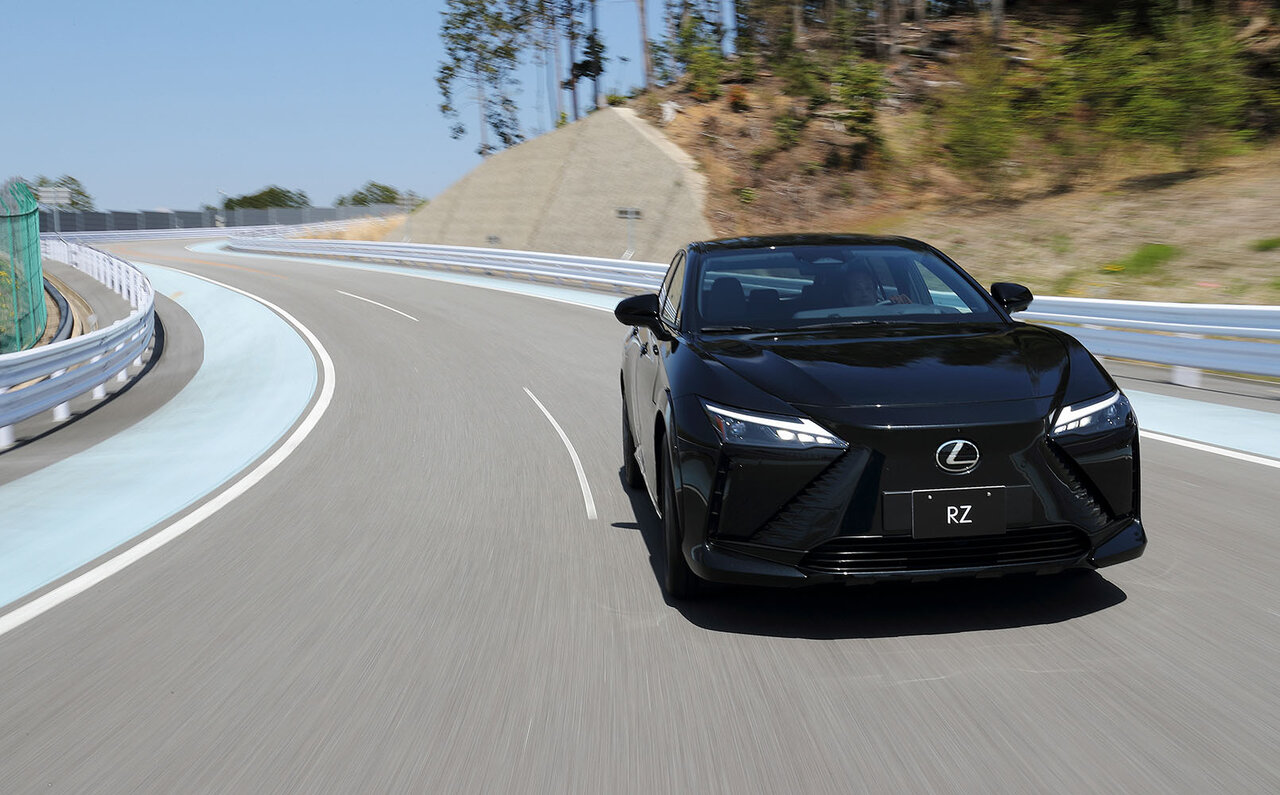
The motor output is 150kW at the front and 80kW at the rear. With a battery capacity of 71.4kWh, it's quite powerful. For example, it surpasses the all-wheel-drive version (80kW/80kW) of the BEV "Toyota bZ4X," which Toyota Motor Corporation is scheduled to release on May 12, 2022.
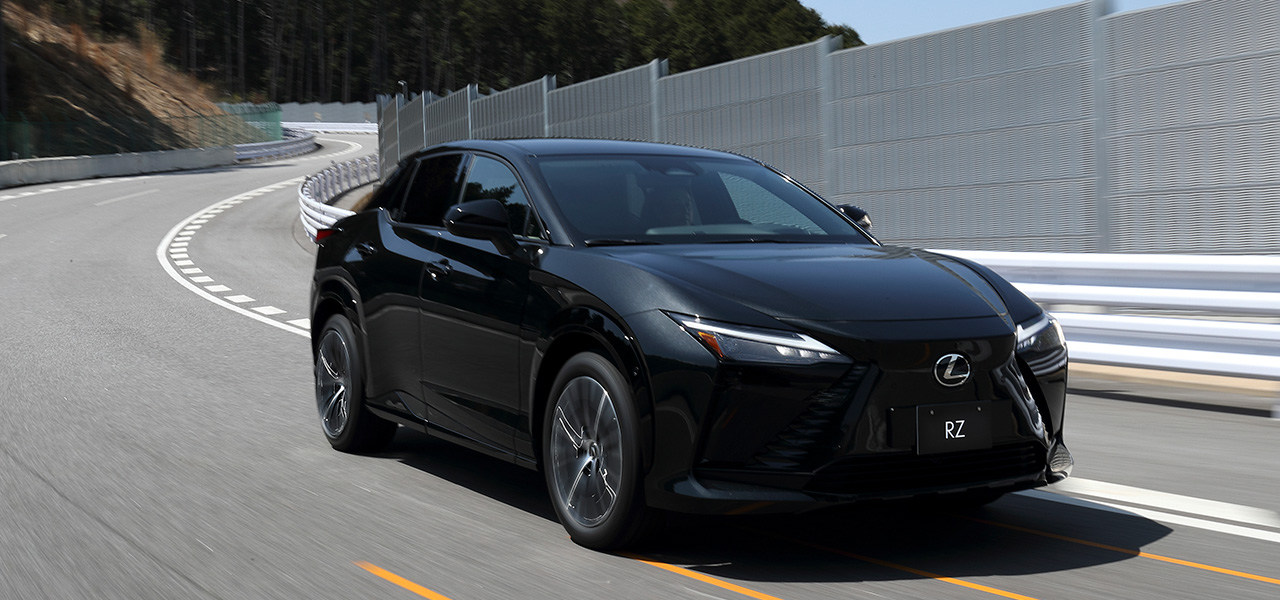
I test drove a pre-production prototype of the RZ in April 2022 at a test course in Aichi Prefecture. The actual car made a far more dynamic impression than the pre-released images suggested. In other words, it looked like it would perform exceptionally well. The sculpted bodywork, full of dynamism, and the prominent 20-inch wheels draw the eye.
"What's important in an EV is chassis controllability," said Takeshi Watanabe, the chief engineer who led the development, when speaking about the RZ prototype. By effectively controlling the motors and brakes, performance in driving, cornering, and stopping is enhanced. He noted that there are many things that can be achieved precisely because it is a BEV.
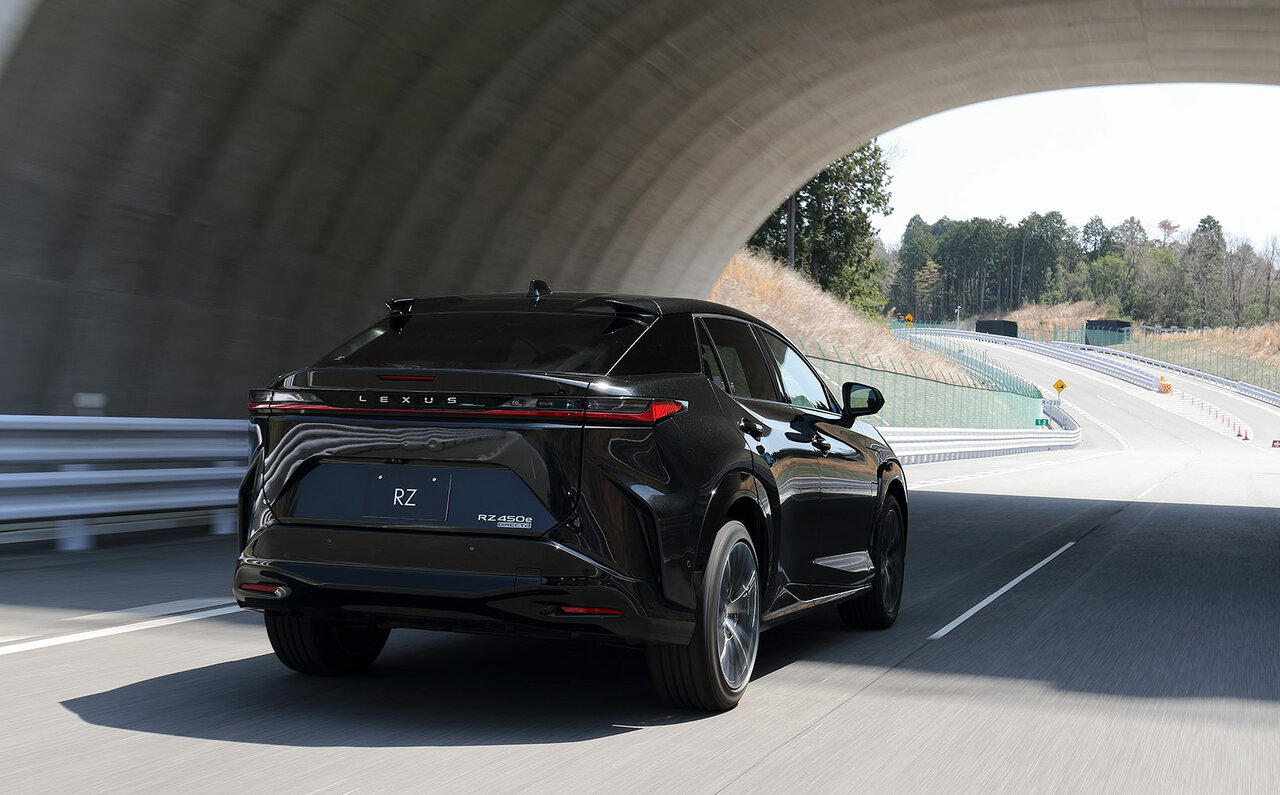
Honestly, I too had thought, "Aren't all BEVs pretty much the same these days?" But after riding in the RZ prototype, I reconsidered: there really are differences. Its handling is that remarkable. At least, that's how I felt on the test course.
What are its distinguishing features? In a word, it's the "natural" handling that Mr. Watanabe described, smooth in every aspect. It accelerates smoothly, without resisting the driver's intentions, corners obediently, and brakes precisely as intended when the pedal is applied.
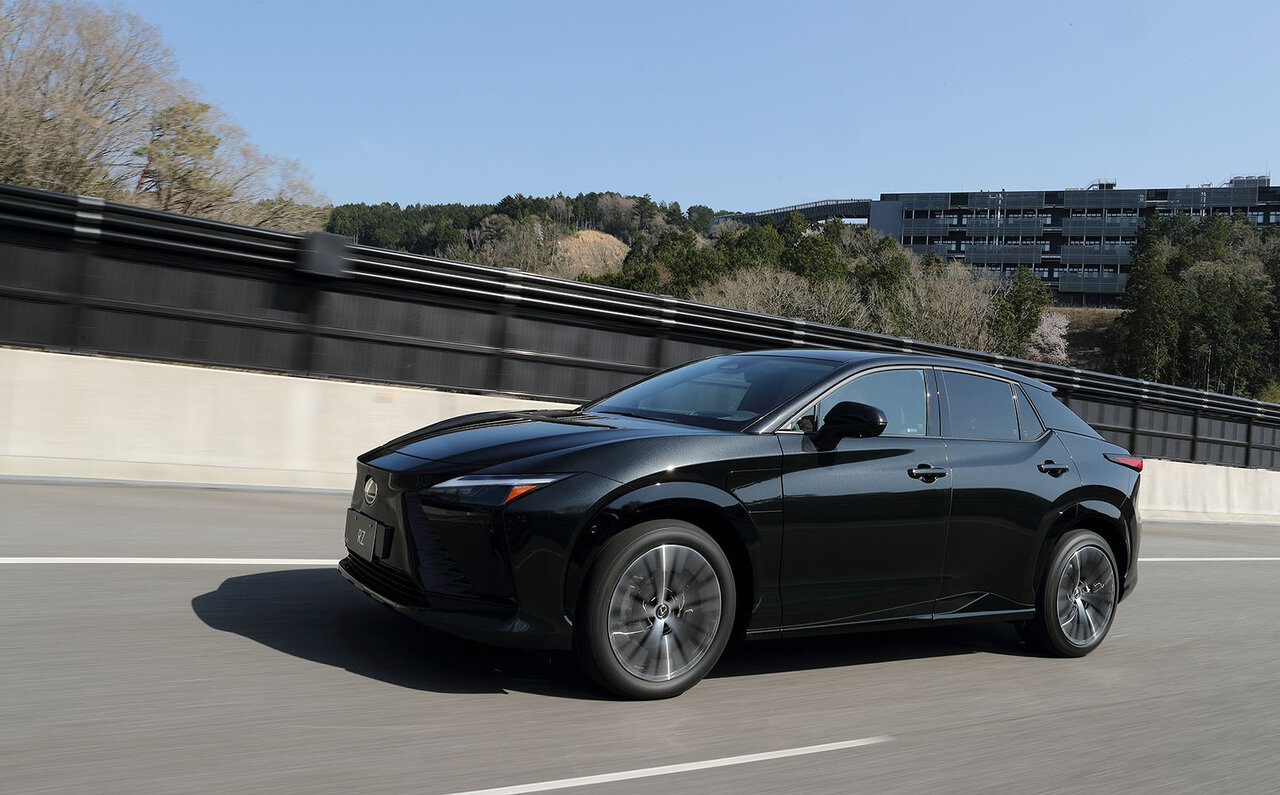
You might think all of the above are obvious. However, achieving them is quite challenging. Even with BEVs, you often find areas for improvement, such as a ride that's too stiff despite good driving dynamics, or some other aspect that leaves you thinking, "This could be better." Even as an unfinished prototype, the RZ gave me the impression of a high level of completion.