A Different Breed from Your Typical Pseudo-SUV — A Test Drive of the All-New Toyota Yaris Cross Hybrid and Gasoline Models | TOYOTA
TOYOTA YARIS CROSS E-Four HYBRID Z TOYOTA YARIS CROSS HYBRID Z TOYOTA YARIS CROSS G
Test Drive of the All-New Toyota Yaris Cross Hybrid and Gasoline Models
Launched in August 2020, the Toyota Yaris Cross is a compact SUV. It utilizes the TNGA "GA-B" platform, developed concurrently with the compact hatchback Yaris, and is marketed as an urban SUV offering all-around appeal, including design, driving enjoyment, fuel efficiency, space utility, and safety performance. We test-drove the hybrid and gasoline 4WD and FF models to experience the ride of this popular model.
Text & Photographs by HARA Akira
Hybrid E-Four (4WD) and FF Models
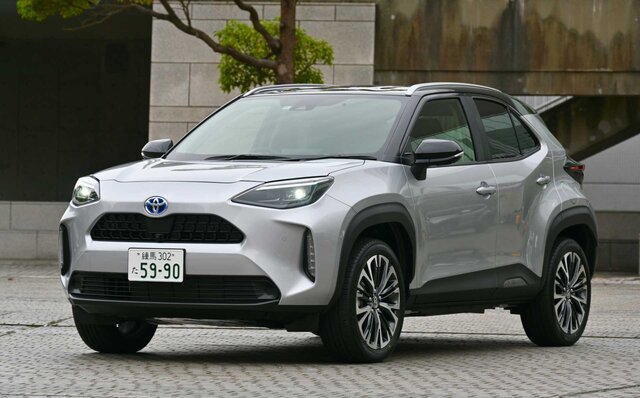
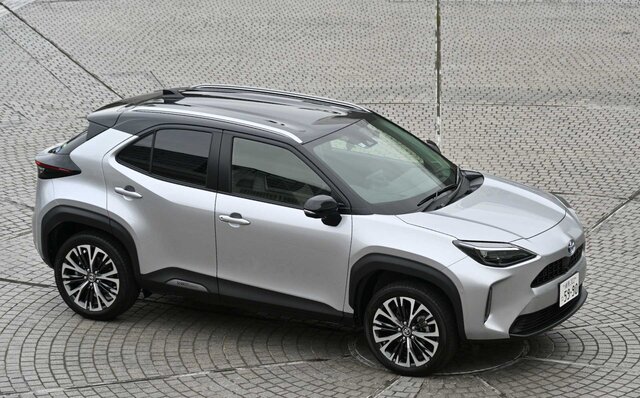
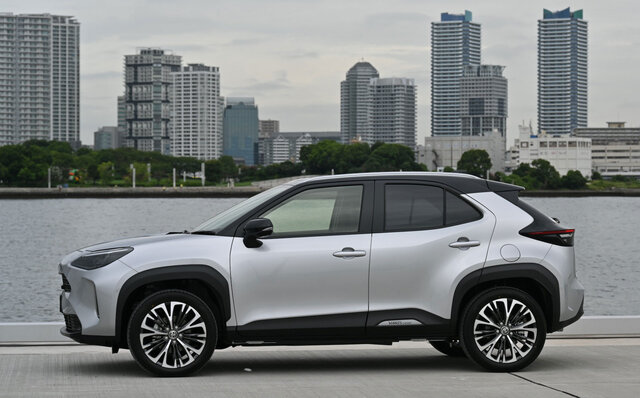
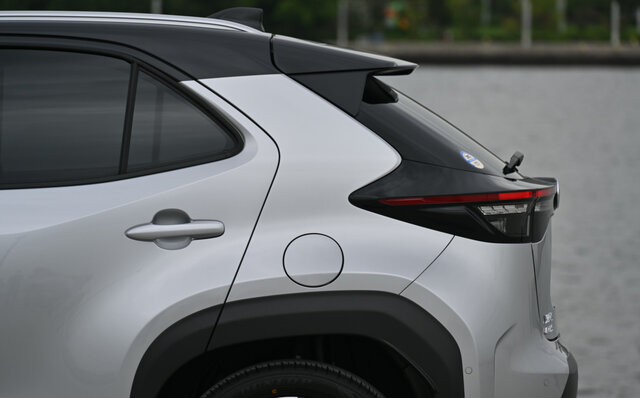
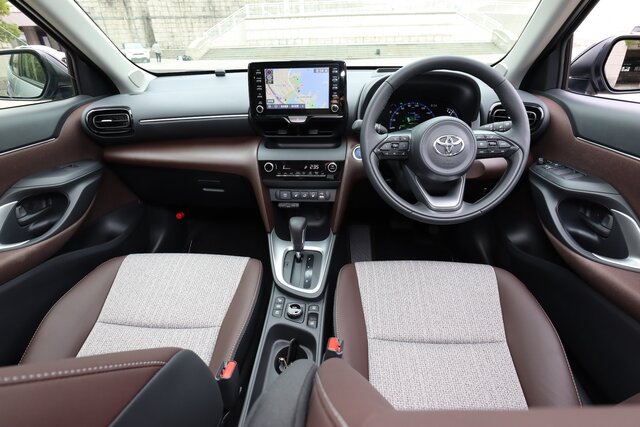
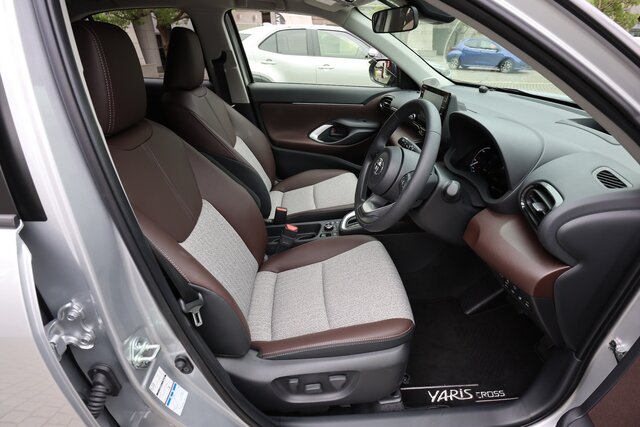
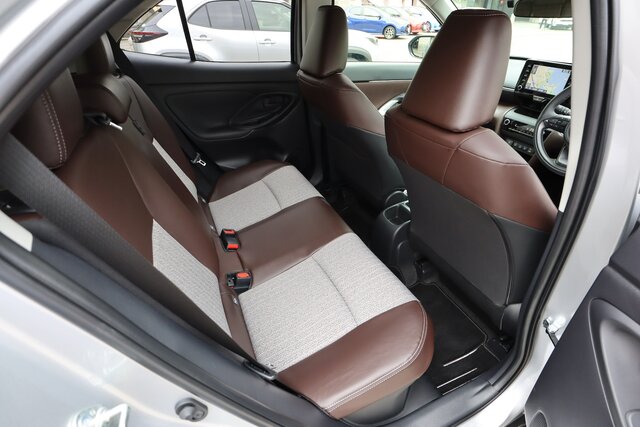
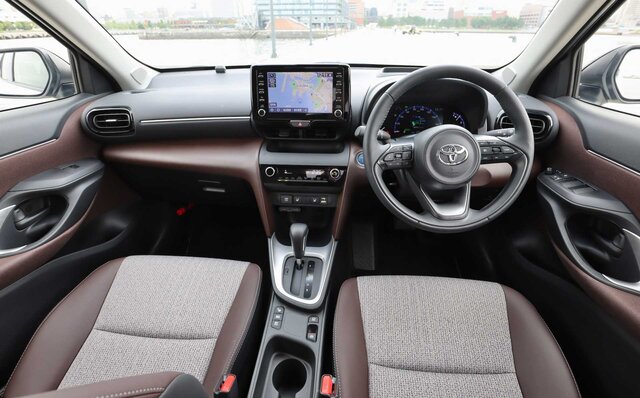
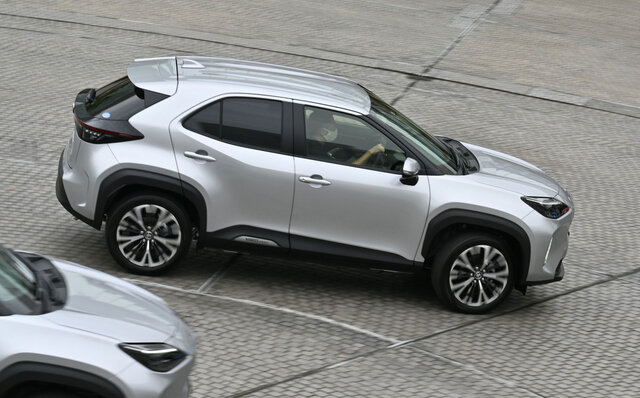
Our first drive was the E-Four, the hybrid 4WD model, in the top-tier "Z" grade. This model featured a two-tone body with silver metallic and a black roof, and the interior was a sophisticated color scheme combining brown synthetic leather with tweed-like fabric.
Toyota Yaris Cross E-Four Hybrid Z
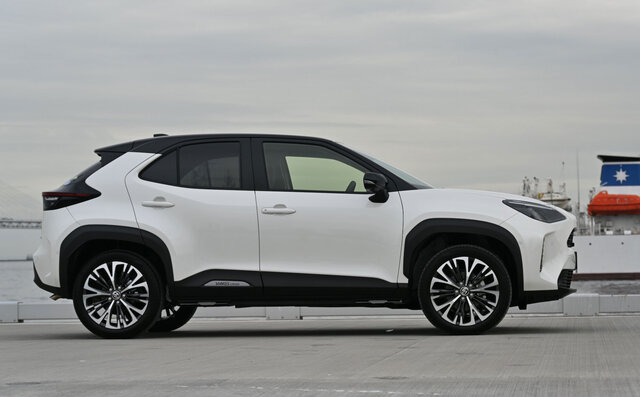
The body, measuring 4,180mm long (240mm longer than the Yaris), 1,765mm wide (70mm wider), and 1,590mm high (90mm taller), houses a 1.5-liter three-cylinder "M15A-FXE" Dynamic Force engine producing 91ps (67kW)/120Nm, paired with a front motor generating 80ps (59kW)/141Nm, and a rear motor delivering 5.3ps (3.9kW)/5.2Nm, forming an electric 4WD system. Upon starting, the rear motor assists with initial acceleration, providing a strong takeoff. The car handles urban driving with ease, its relatively light 1,270kg 4WD body allowing for nimble maneuvering.
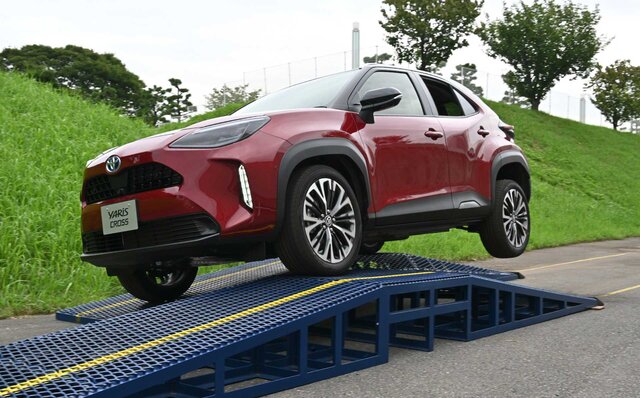
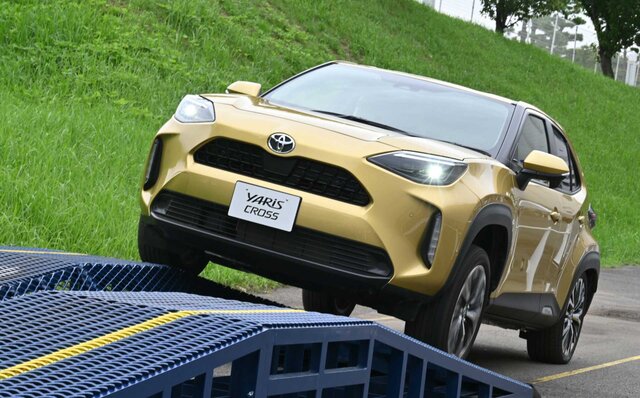
Toyota Yaris Cross E-Four Hybrid Z Navigating Moguls
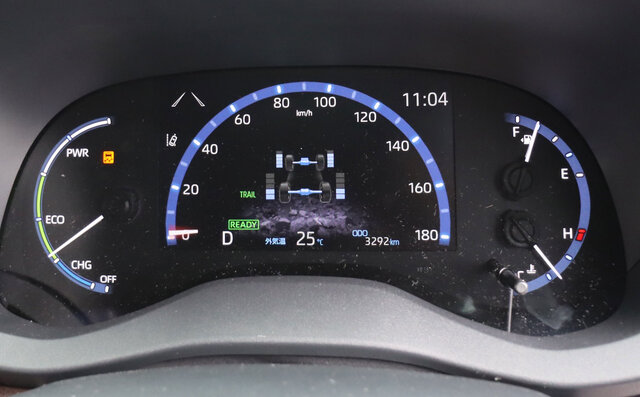
Meter indicating the 4WD system is engaged by the rear motor
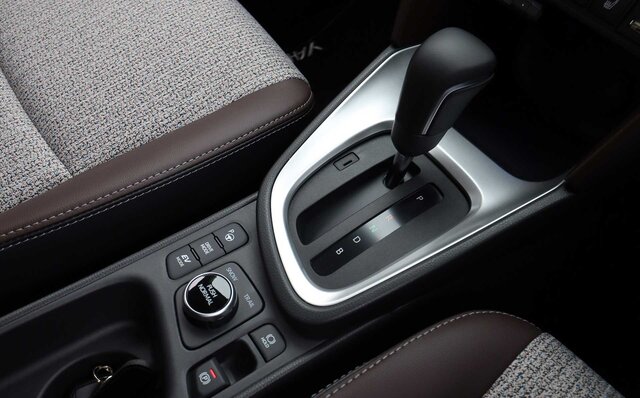
TRAIL mode dial located below the shift lever
With a minimum ground clearance of 170mm, entry is effortless. Settling into the slightly raised driver's seat, the lower waistline compared to the Yaris, which felt somewhat confined, offers a noticeably wider field of vision.
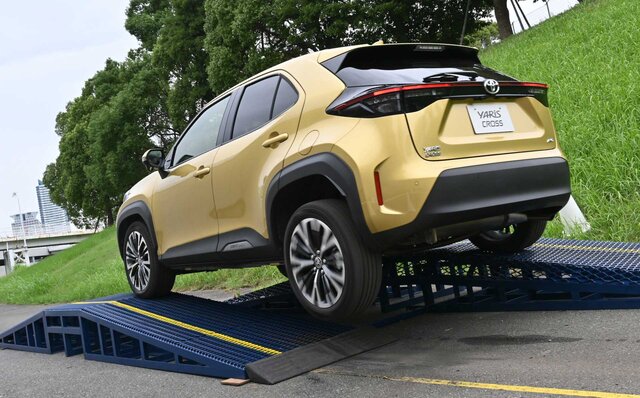
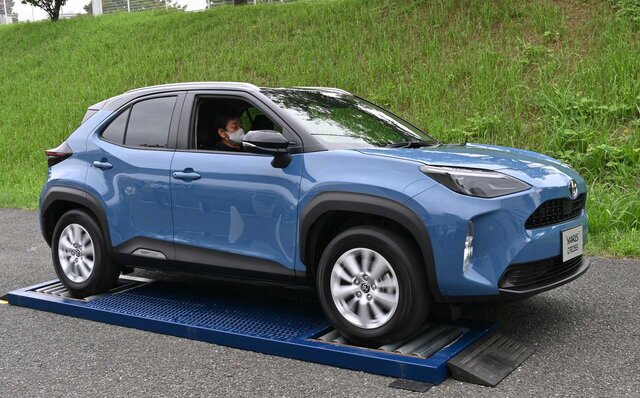
Below the shift lever is a mode selector dial exclusive to the E-Four system, offering two modes: TRAIL and SNOW. The TRAIL mode is for escaping when stuck on rough terrain, and SNOW is for snowy roads. We tested this on an off-road course simulating banks and moguls prepared by Toyota. Even when one tire was lifted off the ground, the system effectively transferred torque to the wheels in contact with the ground, allowing us to clear the obstacles. This demonstrated its off-road capability, setting it apart from typical pseudo-SUVs.
Toyota Yaris Cross E-Four Hybrid Z
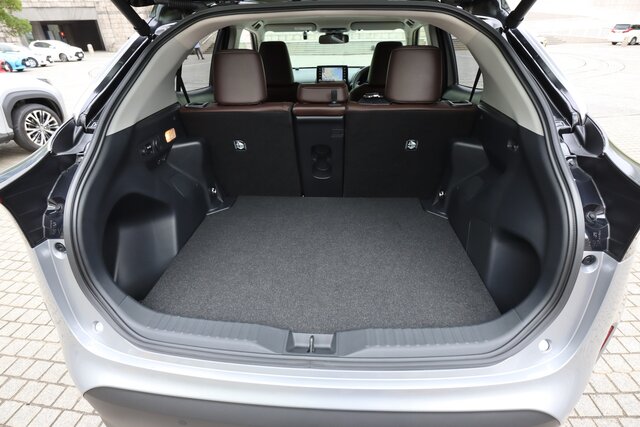
Furthermore, the compact nature of the 4WD system does not compromise cargo space. During urban driving with frequent stops and starts, the fuel economy exceeded 20 km/L, demonstrating excellent efficiency. For users in regions like Hokkaido with heavy snowfall and frequent long-distance travel, the E-Four appears to be the optimal choice.
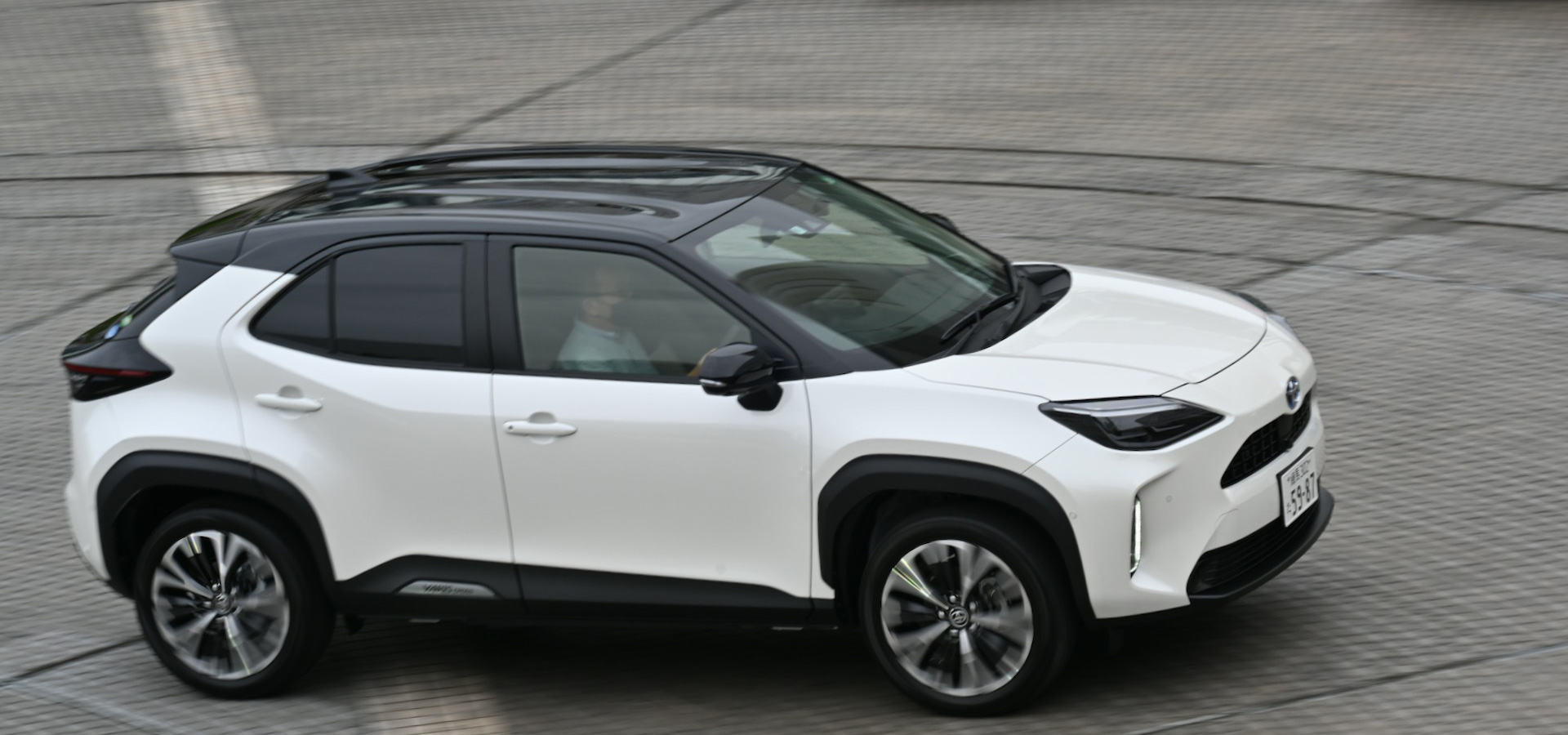
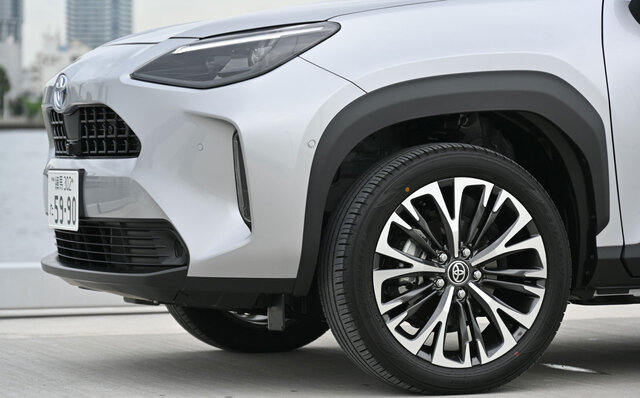
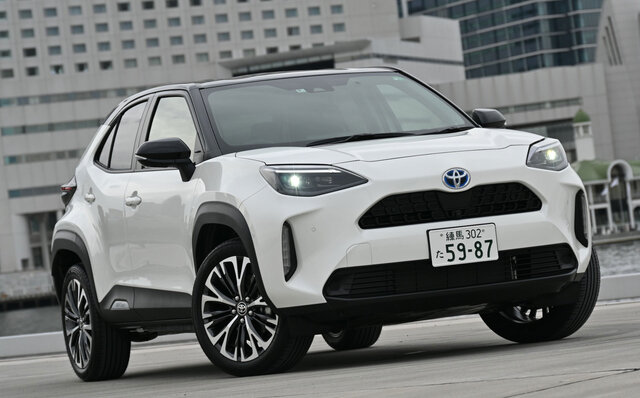
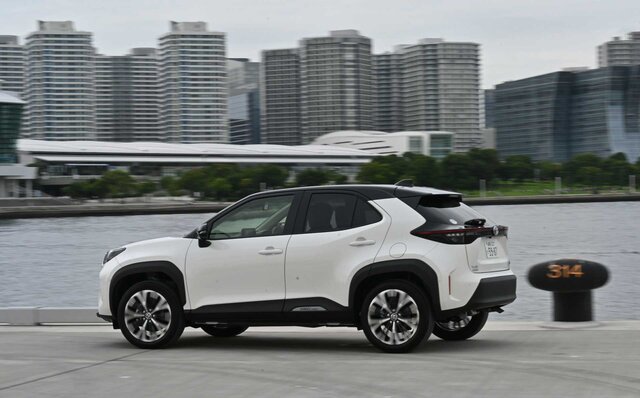
The hybrid FF model, which lacks a rear motor, embodies the quintessential urban compact SUV. This particular model was a two-tone variant with a white pearl crystal shine body and a black mica roof. Its front fascia, with its slightly protruding lower bumper and sharp headlights, bore a striking resemblance to a Stormtrooper from "Star Wars." Perhaps this is a peculiar observation unique to the author.
Toyota Yaris Cross Hybrid Z
Weighing approximately 80kg less than the E-Four at 1,190kg, this model benefits from its lighter weight, offering brisk acceleration from a standstill and responsive re-acceleration. Its performance is more than adequate for city driving. The large 215/50R18 tires transmit some shock over bumps, but the high body rigidity prevents any lingering vibrations. Compared to the Yaris, the rear legroom is more generous, ensuring passenger comfort even on longer journeys.
Gasoline FF and 4WD Models
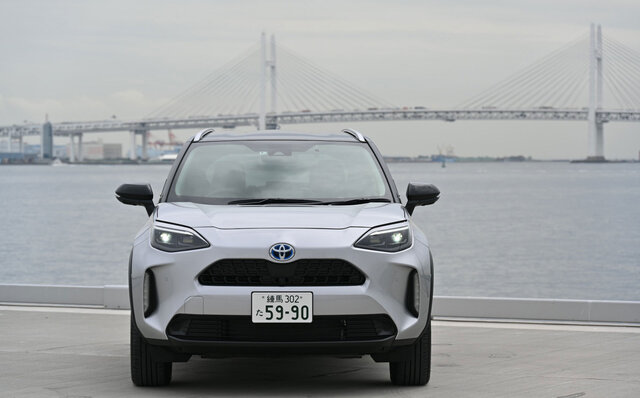
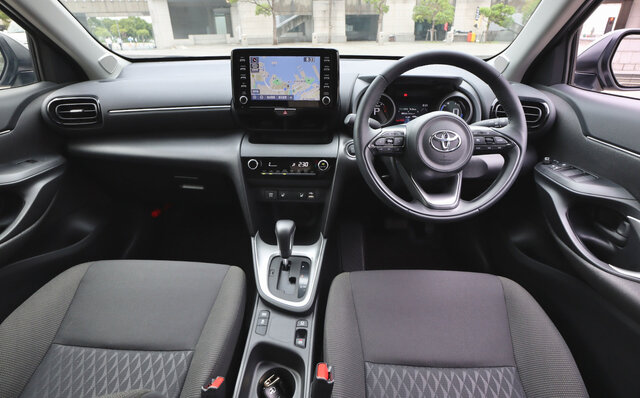
Next, we drove the gasoline model, the FF "G" grade. It featured a simple black fabric interior with a single-tone silver exterior and a digital meter designed to resemble binoculars.
Toyota Yaris Cross G
The 1.5-liter three-cylinder "M15A-FKS" Dynamic Force engine produces 120ps (88kW)/145Nm and drives the front wheels via a CVT with a gear mechanism. While the distinct sound of the three-cylinder engine is audible during initial acceleration, it becomes remarkably quiet at cruising speeds. The fuel economy during our test drive was around 15 km/L, which is respectable for a gasoline model. This is likely due to its lighter weight of 1,120kg, even lighter than the hybrid.
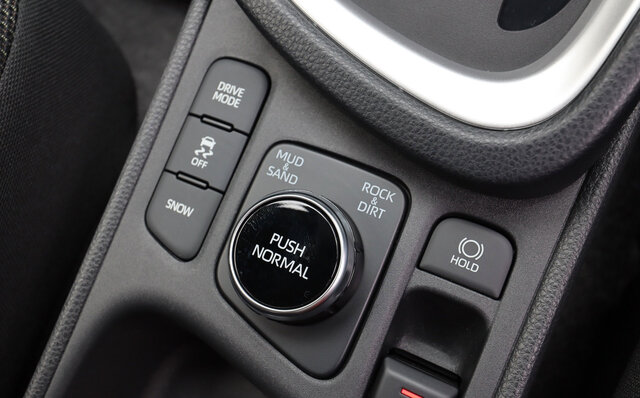
We also drove the gasoline 4WD model on the same off-road course used for the hybrid. This model is equipped with the Multi-Terrain Select system, similar to the higher-end RAV4, allowing for three settings: "NORMAL" for general conditions, "ROCK & DIRT" for uneven surfaces like rocky terrain, and "MUD & SAND" for slippery surfaces such as sand or mud.
Gasoline 4WD Model Clearing Moguls in "ROCK & DIRT" Mode
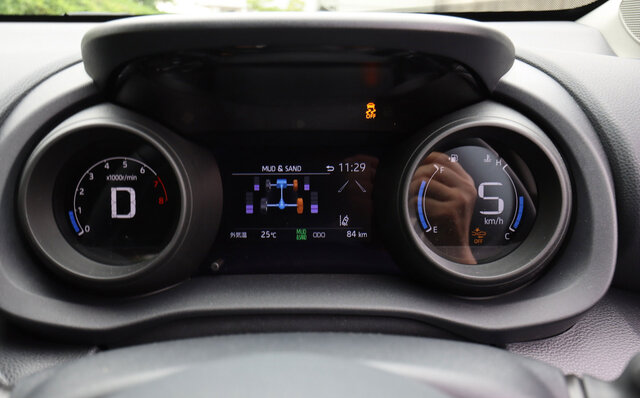
On the banks and moguls, we were instructed to use "ROCK & DIRT," and on the rollers, "MUD & SAND." Following these instructions, we found that both modes enabled us to escape from stuck situations. While the drive system operates on similar principles to the e-Four, the gasoline 4WD, connected by a propeller shaft (also visible on the monitor), offers superior 4WD performance. For users looking to expand their adventures, the gasoline 4WD Yaris Cross is the perfect choice.
After the test drive, we spoke with Yasunori Suizawa, Chief Engineer at Toyota Motor Corporation, who was in charge of the Yaris Cross development. He explained, "The Yaris Cross was developed in parallel with the Yaris; essentially, we just changed the upper body. The powertrain is the same, but since this model is about 100kg heavier, we adjusted the final gear ratio. This slightly impacts fuel economy, but with the hybrid 2WD model exceeding 30 km/L, it's more than sufficient."
Gasoline 4WD Model Clearing Rollers in "MUD & SAND" Mode
Multi-Terrain Select dial equipped on the gasoline 4WD model
Gasoline 4WD meter showing the connected front and rear drive and torque distribution
He further commented, "Currently, the entire market is shifting towards SUVs, and customers are replacing their sedans and hatchbacks, particularly hybrids like the Prius and Aqua, with these vehicles. The Yaris Cross offers adaptive cruise control with full-speed tracking, ample cargo space for venturing off the beaten path, excellent fuel efficiency, and an affordable price. With a length of just over 4 meters, it fulfills these needs, and we hope customers will find this size to be just right."