Name and substance completely renewed—Test drive of Toyota's new compact model "Yaris" | TOYOTA
Toyota YARIS Z | TOYOTA Yaris Z
Test Drive of Toyota's New Compact Model "Yaris"
The Vitz has been renamed Yaris for Toyota's compact model, which has undergone a full model change. The name has been unified with the global model, and the car has been released. Approximately 37,000 units were ordered in the first month of sales (sales target: 7,800 units per month), indicating a strong start. We test drove the hybrid and 1.5-liter gasoline models, checking their respective charms on a 150km round trip from Tokyo to Futtsu, Chiba Prefecture.
The Powerful Hybrid Model
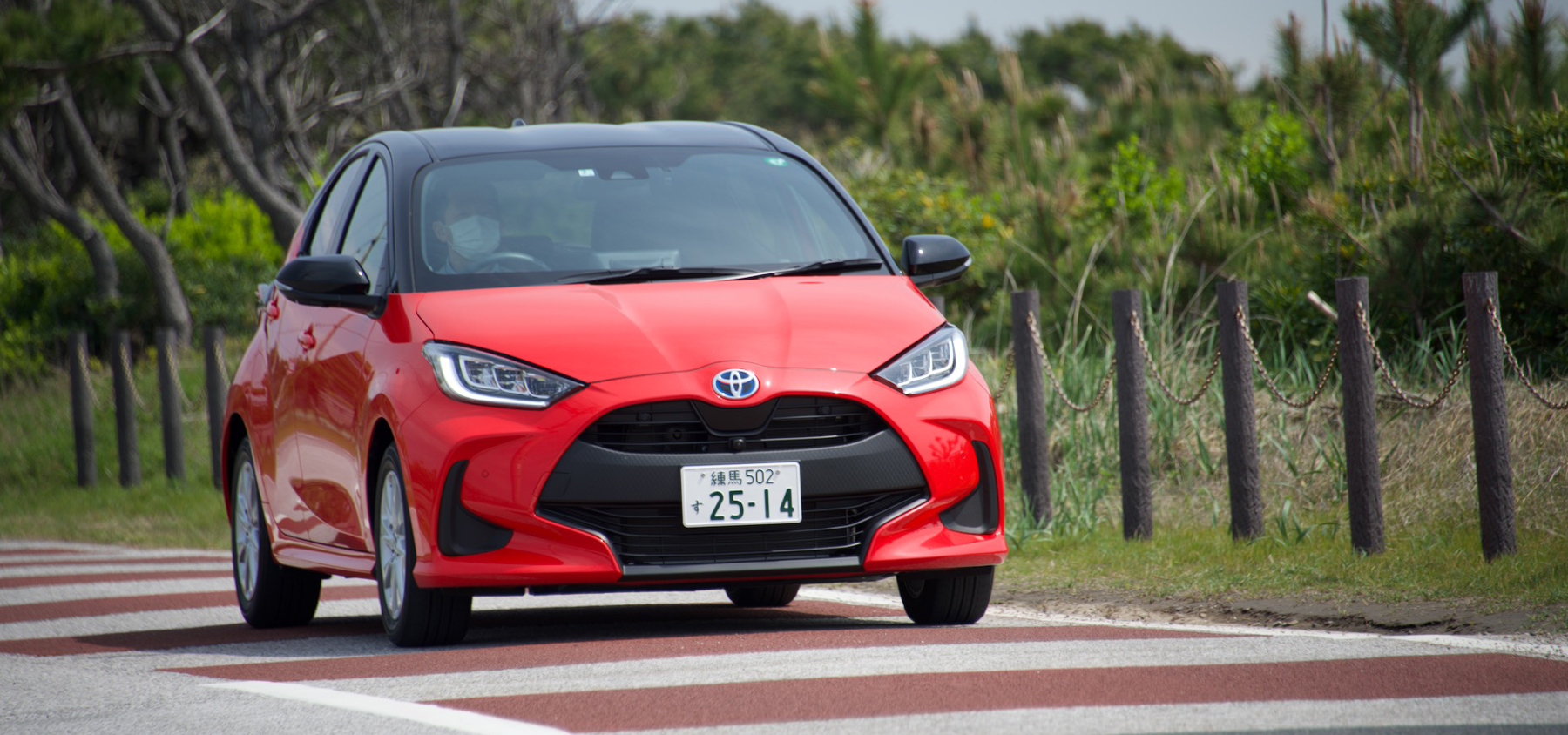
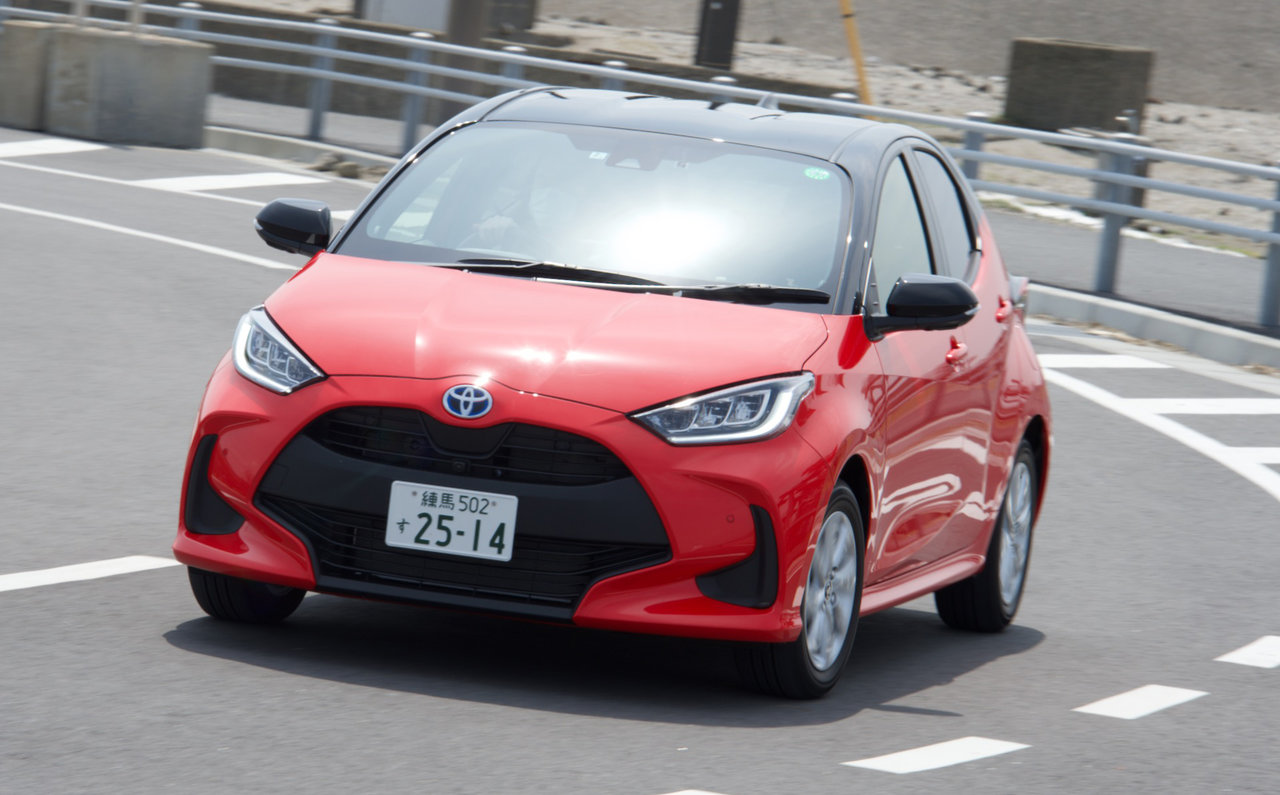
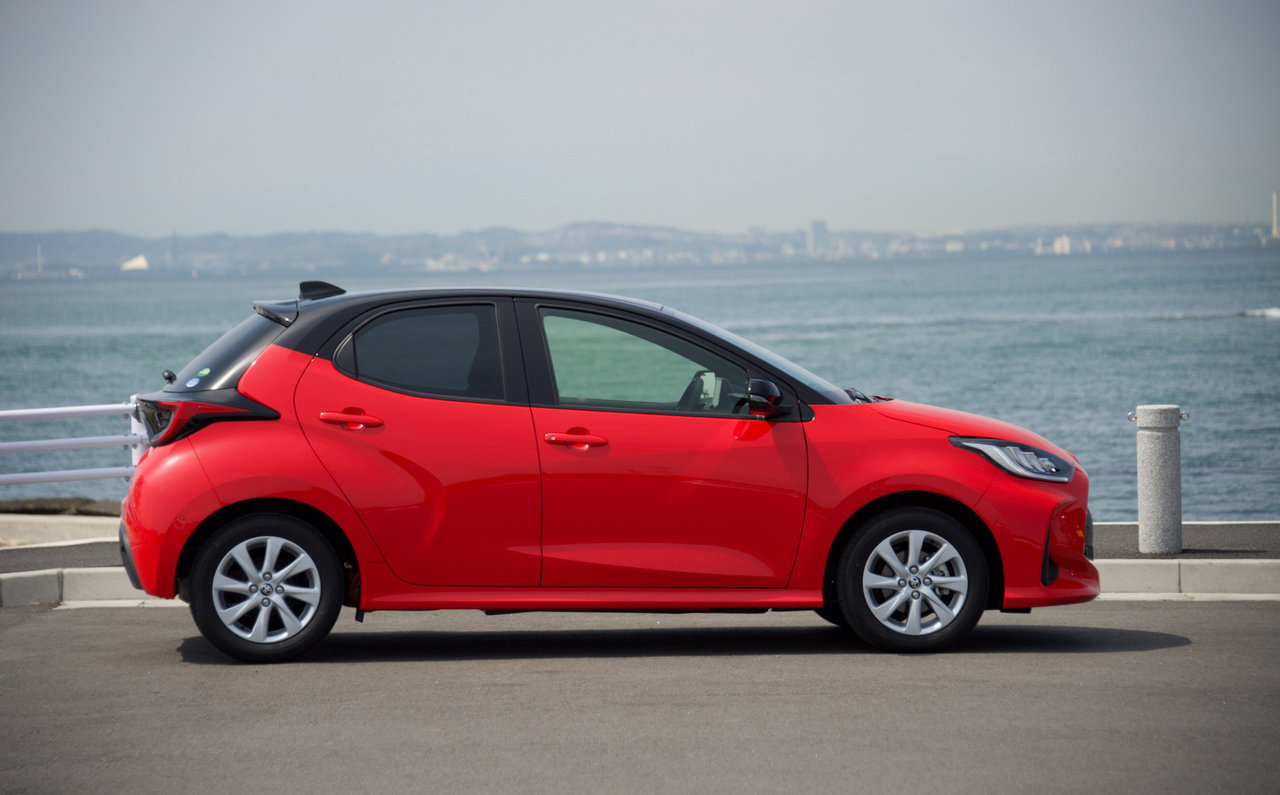
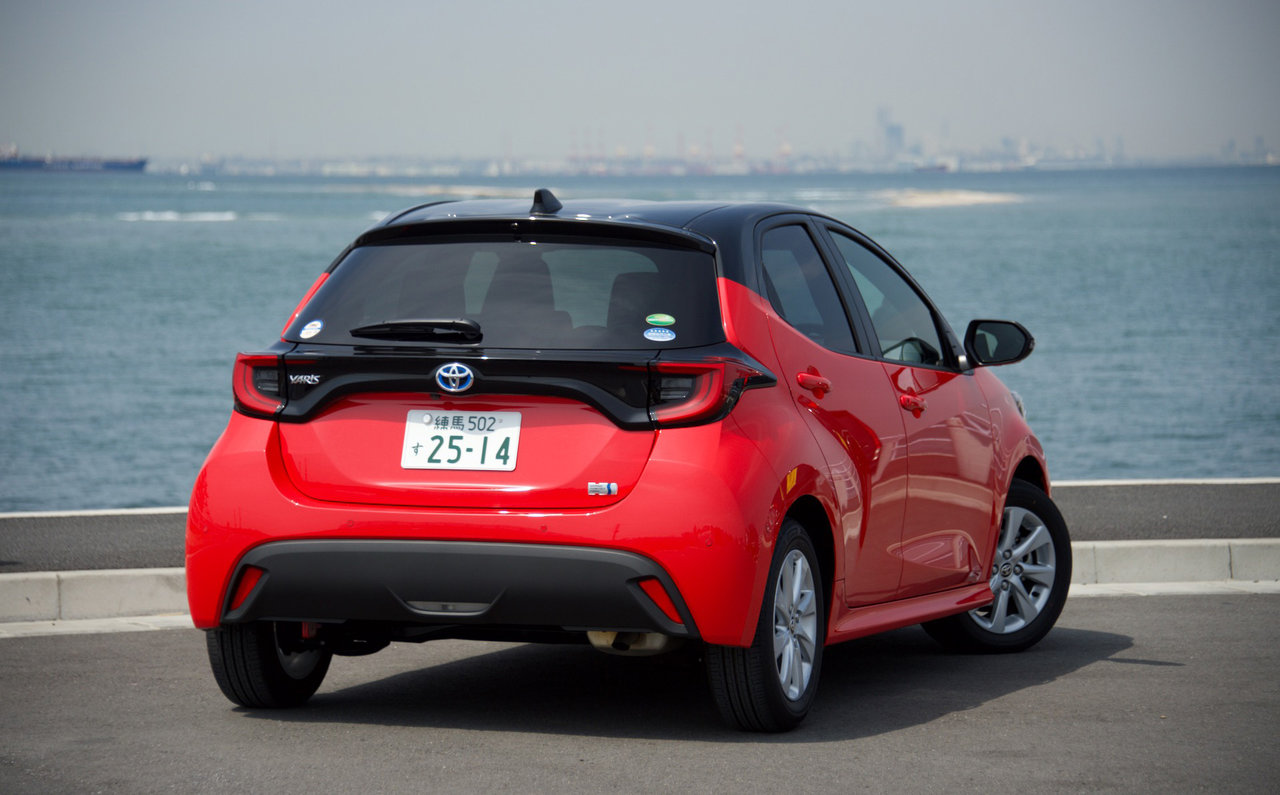
First, we tested the "Grade G" (¥2.13 million), expected to be the best-selling hybrid model. The exterior, with its two-tone black roof and Coral Crystal Shine body, presents a pleasingly premium feel despite its round, compact shape.
The body utilizes Toyota's new TNGA platform, specifically the "GA-B" for compact cars, designed for low center of gravity and high rigidity. Dimensions are 3,940mm (length) x 1,695mm (width) x 1,500mm (height), with a curb weight of 1,060kg.
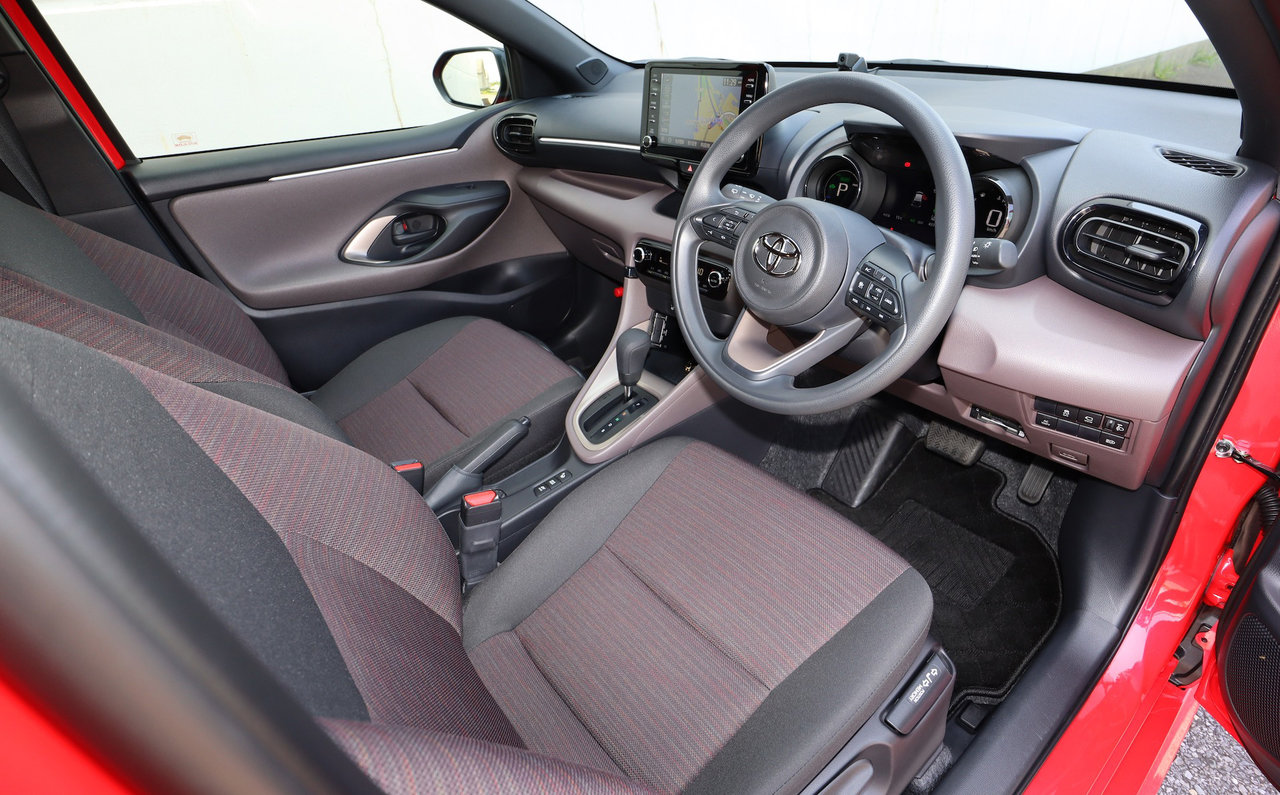
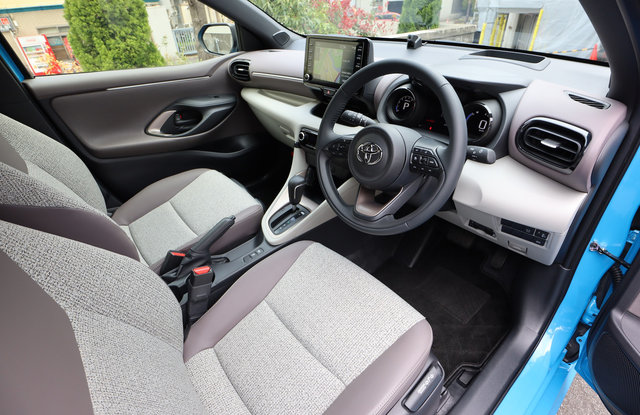
The interior is decidedly driver-focused. The widened pedal box, thanks to the narrow transverse-mounted three-cylinder engine, and the compact steering wheel (approx. 37cm) are well-positioned, allowing the driver to find an ideal driving posture. The driver's seat easy-return function, which automatically remembers the position, is also a convenient feature.
The unique shapes of various elements, such as the deeply sculpted door grips and the binocular-like instrument cluster, convey the designers' commitment to creating more than just a spacious compact car.
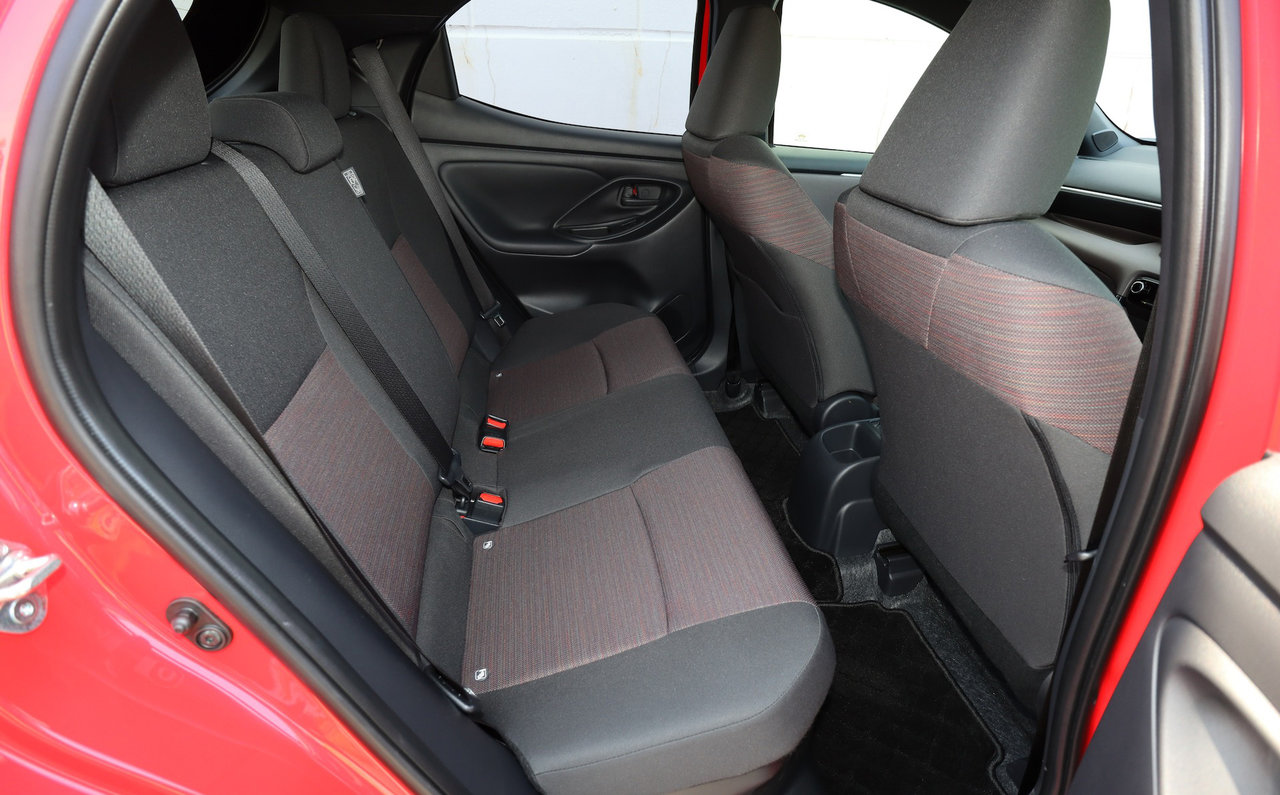
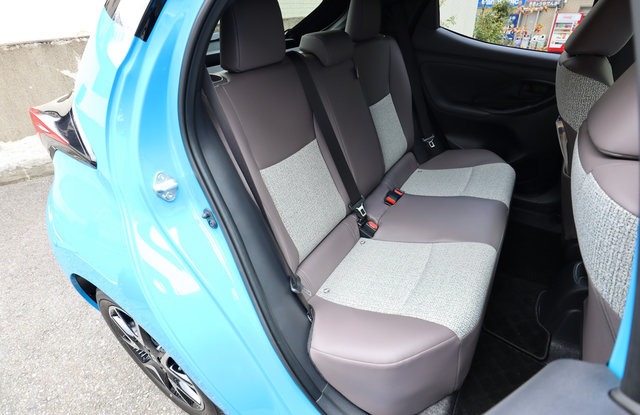
The rear seats, with their narrow window area and proximity to the front seats, can feel a bit enclosed. However, surprisingly, there was enough space to tuck one's feet under the front seats, making it less cramped than it initially appeared.
The powertrain combines a 1.5-liter inline three-cylinder gasoline engine (model "M15A-FXE") producing 67kW (91ps) at 5,500rpm and 120Nm of torque between 3,800-4,800rpm, with an electric motor generating 59kW (80ps) and 141Nm. This is paired with an electric continuously variable transmission (e-CVT) hybrid system.
Thanks to a roughly 30% increase in power compared to the previous model, a lighter body, and the adoption of a lithium-ion battery (totaling about 40kg lighter than the predecessor), the car is impressively quick, both on city streets and highways.
The suspension is set on the firmer side, transmitting minor vibrations from road imperfections. However, these vibrations do not reach the head, allowing the driver's gaze to remain steady. This is a comfortable setup for long drives. Experienced drivers, perhaps those who admired German cars in their youth, might find this characteristic particularly appealing.
On the highway, we utilized the ACC (Adaptive Cruise Control), activated by two buttons on the right side of the steering column. The LTA (Lane Tracing Assist) function keeps the car centered in its lane, reducing driver fatigue on long journeys when actively engaged.
However, the adoption of an electric parking brake means the follow-up function is canceled below 30 km/h, which is a drawback in heavy traffic.
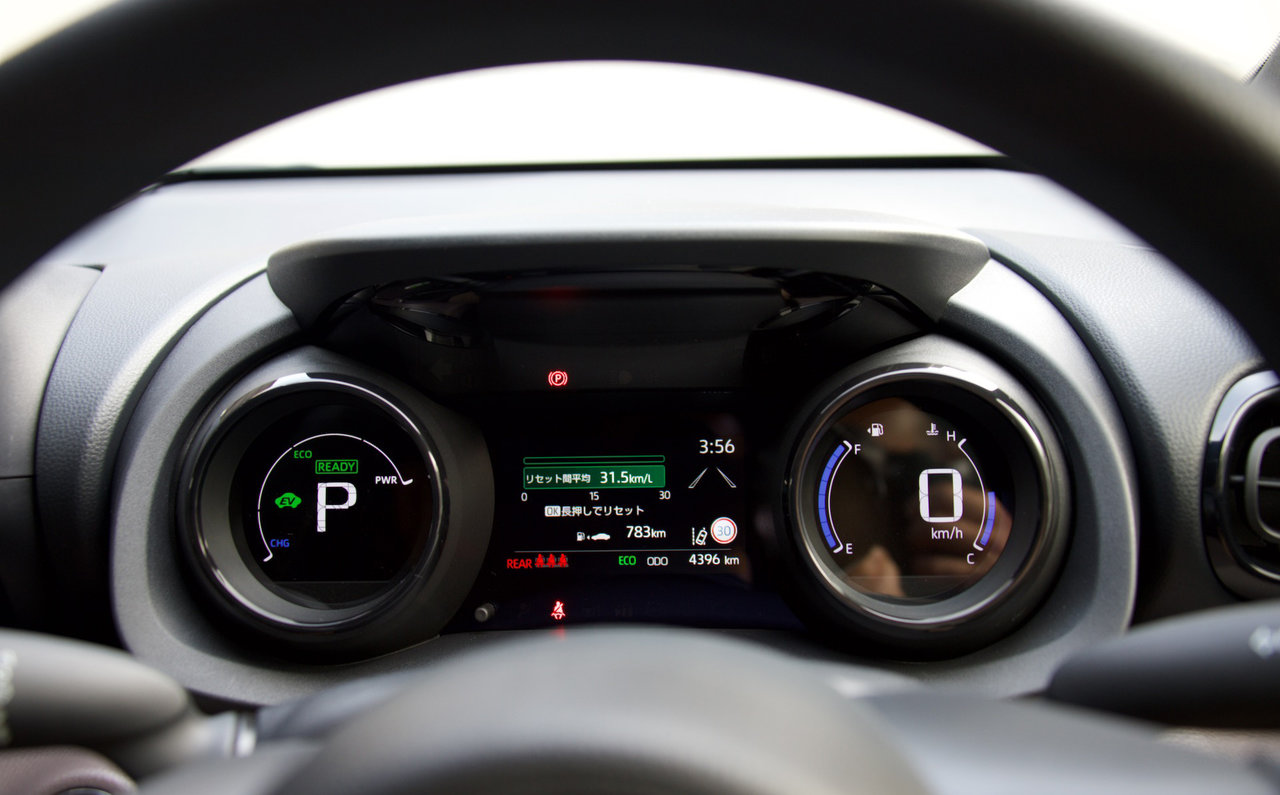
The meter displayed an average fuel economy of 31.5 km/L (WLTP mode: 35.8 km/L). Our actual refueling was 4.88 liters, resulting in a calculated 30.7 km/L based on full-to-full measurement. With a 36-liter fuel tank, the cruising range exceeds 1,000 km. Despite its compact size, this car possesses the qualities of a true GT.
The Sporty Gasoline Model
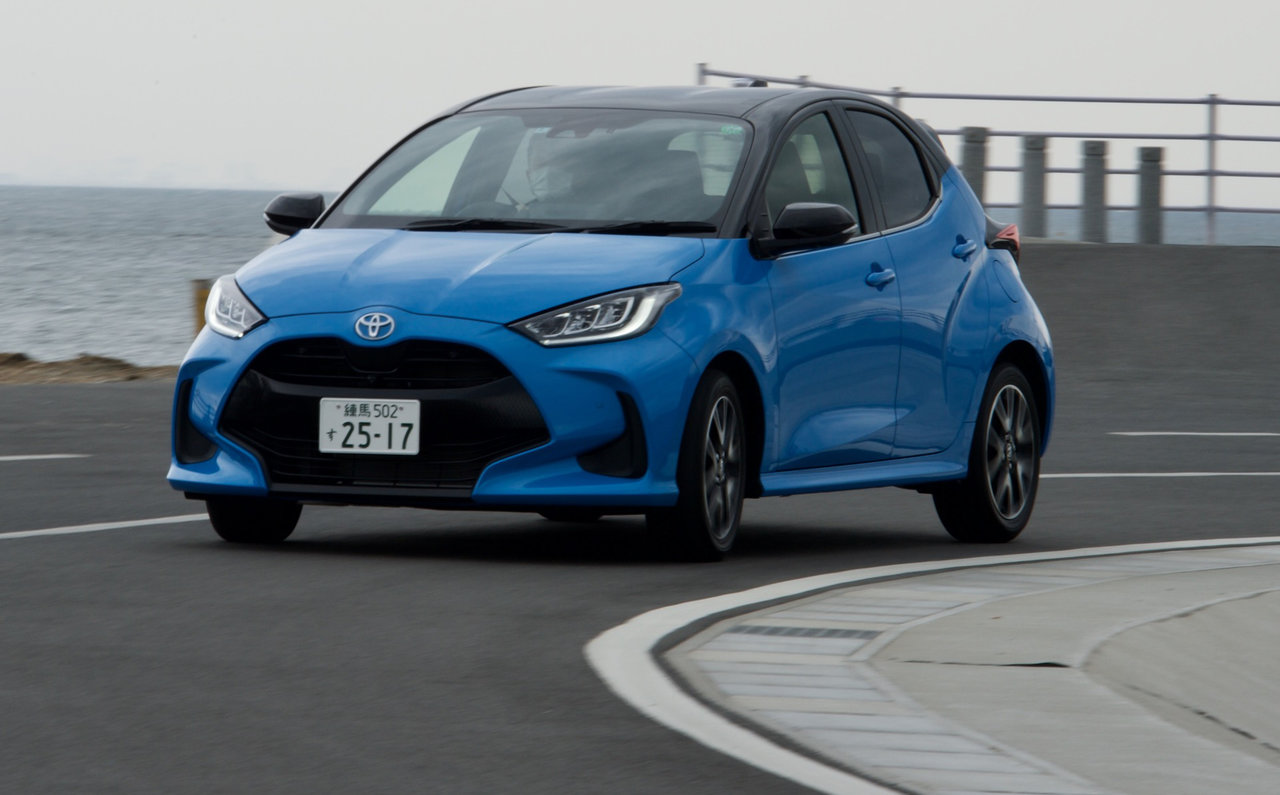
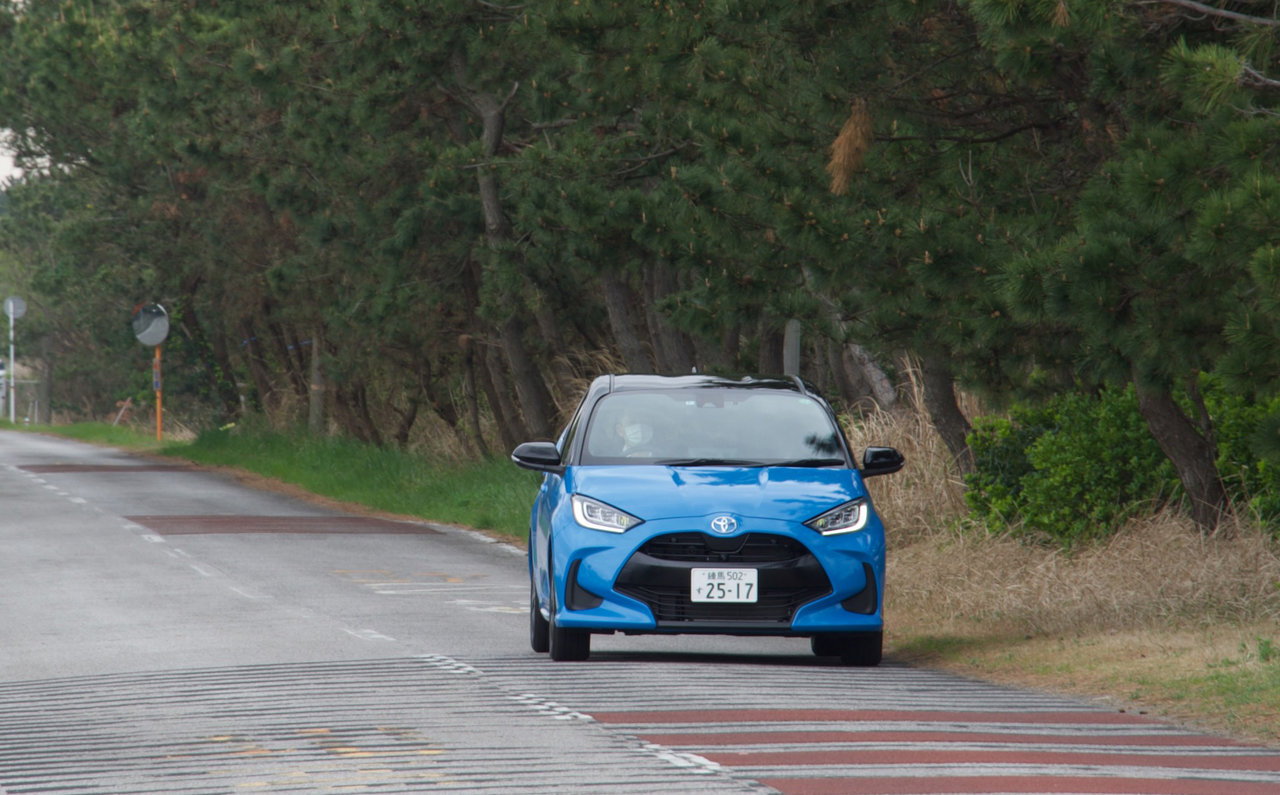
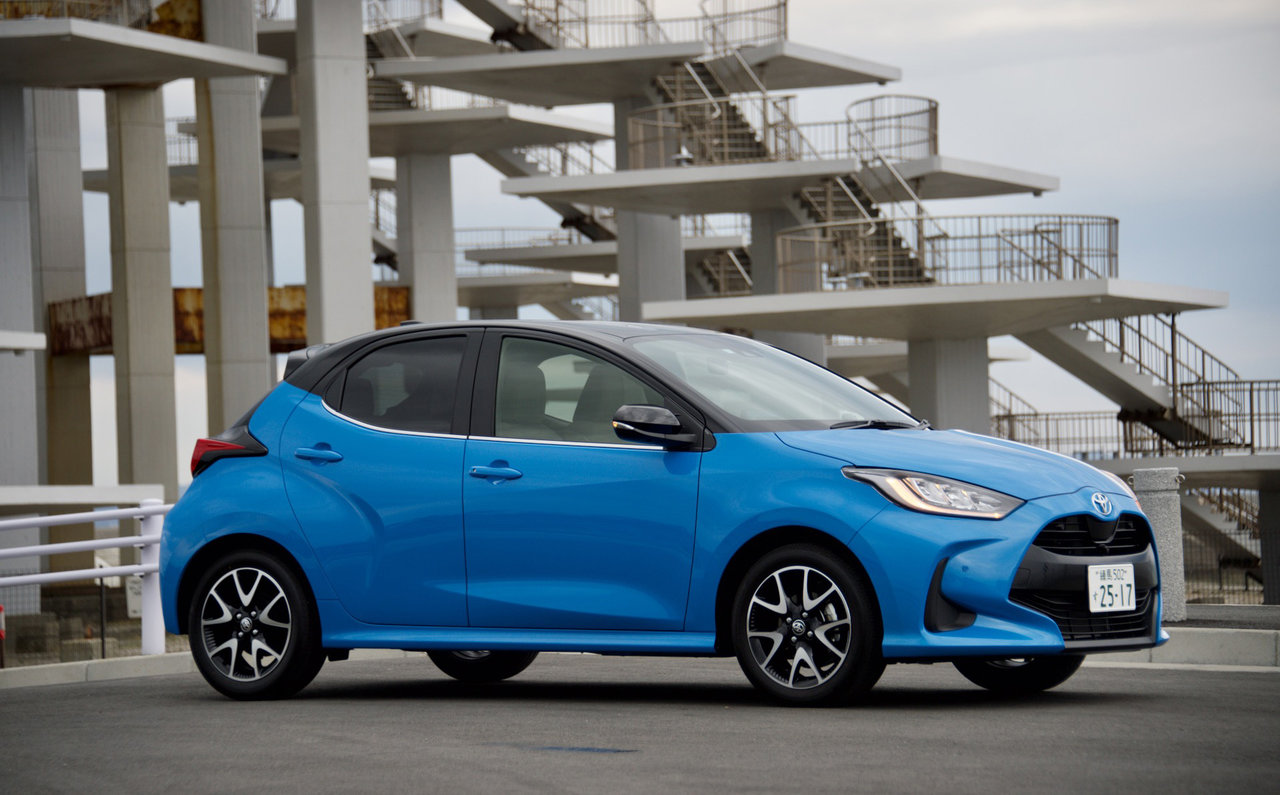
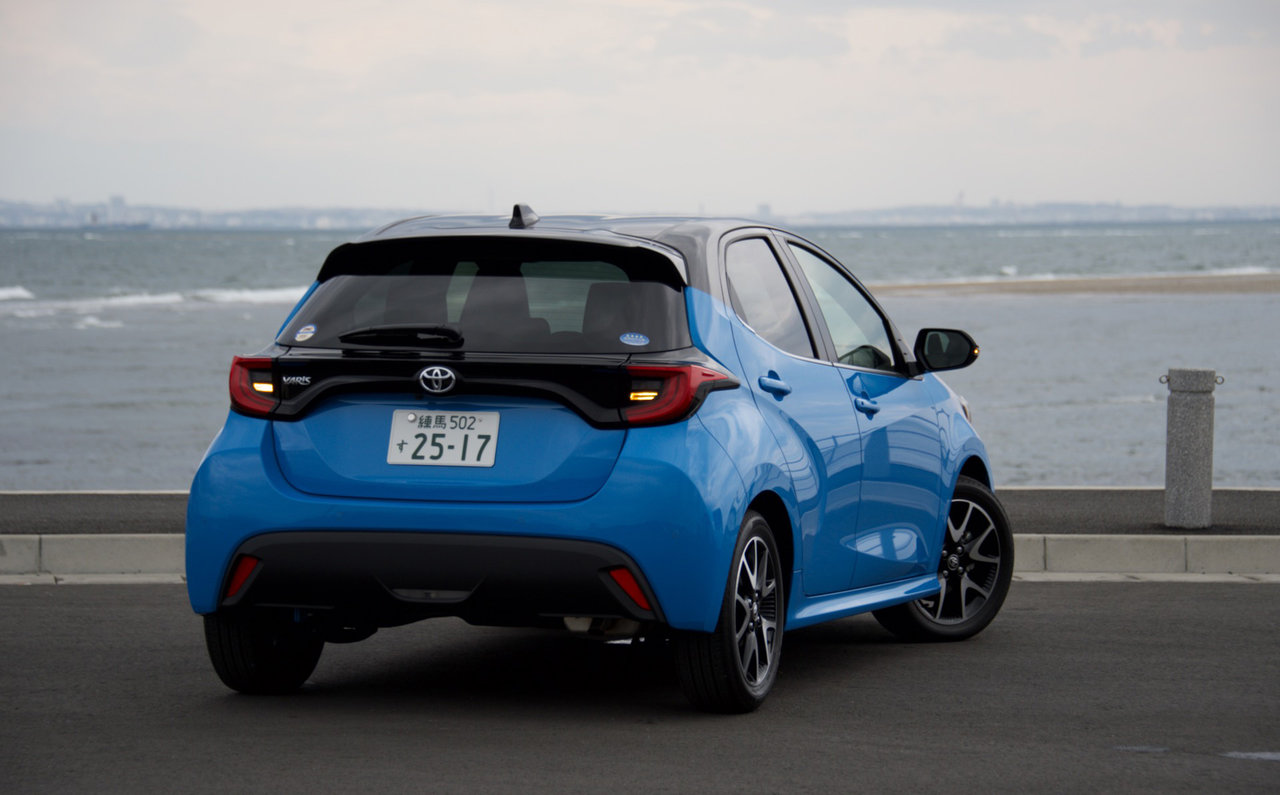
The other model tested was the top-grade "Z" (¥1.926 million) equipped with a 1.5-liter gasoline engine. Its youthful exterior features a two-tone body in Cyan Metallic (a vibrant blue) with a black roof.
The transverse-mounted engine at the front is the "M15A-FKS" 1.5-liter inline three-cylinder Dynamic Force engine, producing 88kW (120ps) at 6,600rpm and 145Nm of torque between 4,800-5,200rpm. To balance fuel efficiency and high output, this latest modular engine, with 500cc per cylinder, incorporates direct injection, a longer stroke, and gear-driven balance shafts. It drives the front wheels via a "Direct Shift-CVT" with a launch gear.
With a curb weight of 1,020kg, the car accelerates briskly from a standstill. The launch gear effectively synchronizes engine sound and acceleration feel until higher speeds are reached, skillfully eliminating the "rubber band effect" often associated with CVTs. This is a welcome improvement.
At cruising speeds, the engine maintains a low RPM range, typically below 2,000rpm. However, during re-acceleration, it quickly reaches the desired speed with a characteristic three-cylinder sound and vibration. This CVT performs its duties admirably. The optional color head-up display, which is easy to read, further enhances driver satisfaction.
The suspension, likely due to the optional 185/55R16 high-performance tires (a size up from the standard 185/60R15), transmits more road surface information than the hybrid model. However, the high body rigidity and well-functioning suspension ensure that shocks are absorbed quickly and effectively.
During turns at intersections and corners, the lighter front end of the gasoline model changes direction nimbly, offering a sensation akin to driving a small sports car.
With paddle shifters, the car would likely offer a fully engaging experience on winding roads. For users prioritizing such driving dynamics, a six-speed manual transmission model is also available. Fuel economy recorded was 18.2 km/L (WLTC mode: 21.6 km/L).
Testing the Parking Assist System
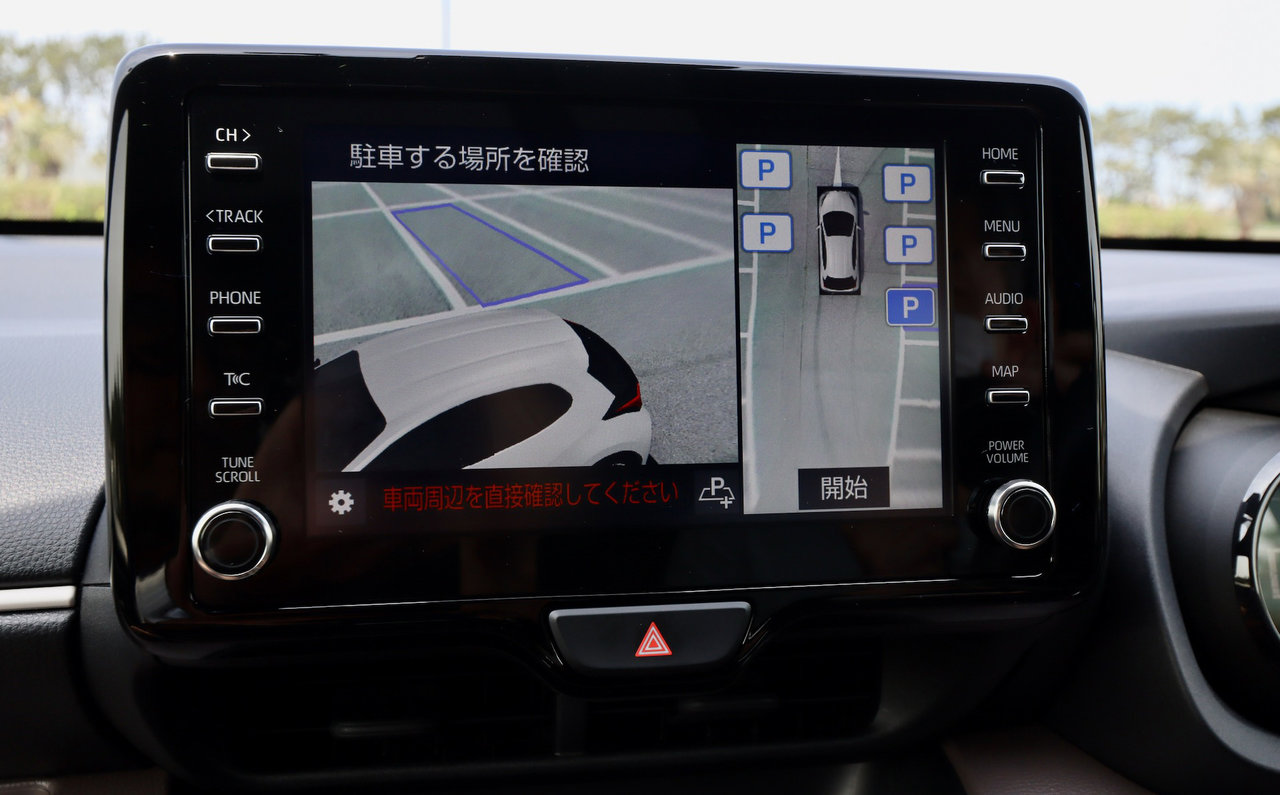
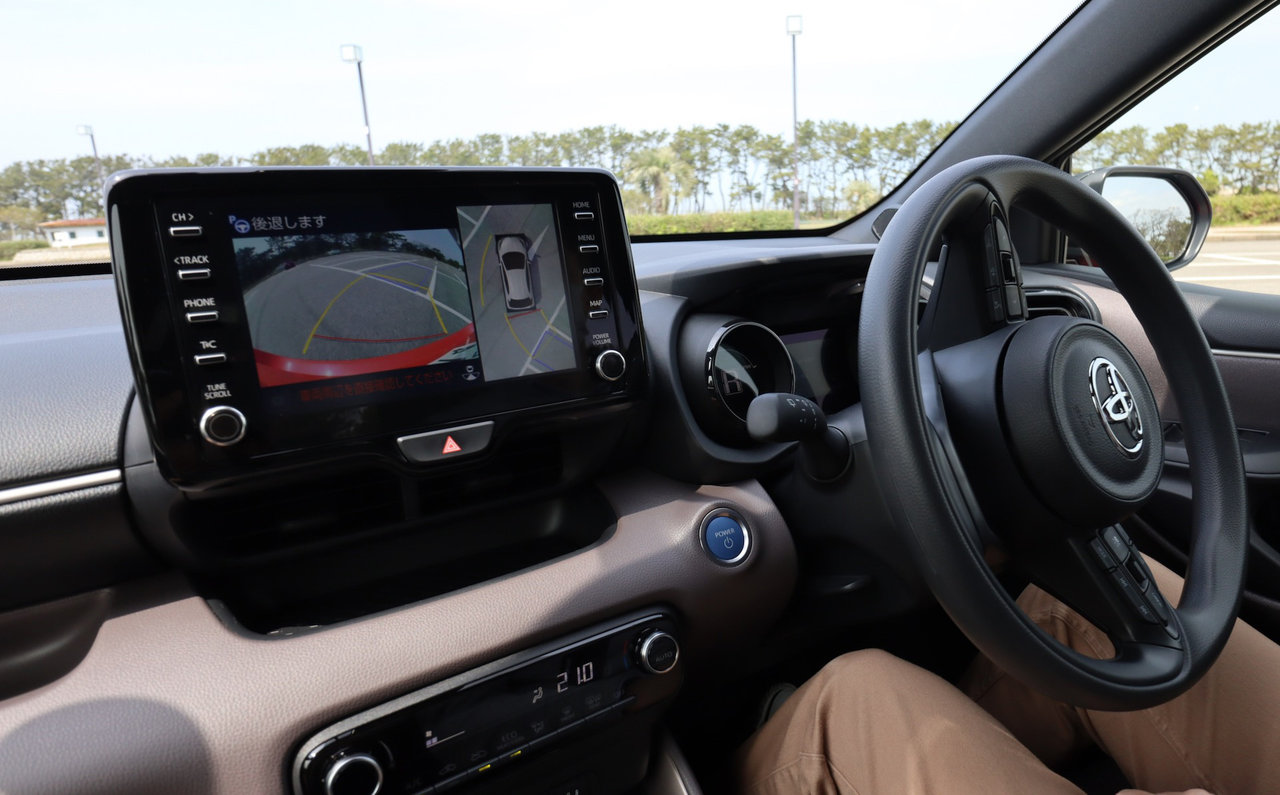
The hybrid model was equipped with the optional "Advanced Park" (with Panoramic View Monitor) advanced parking assist system (¥77,000), which we tested in a spacious, empty parking lot.
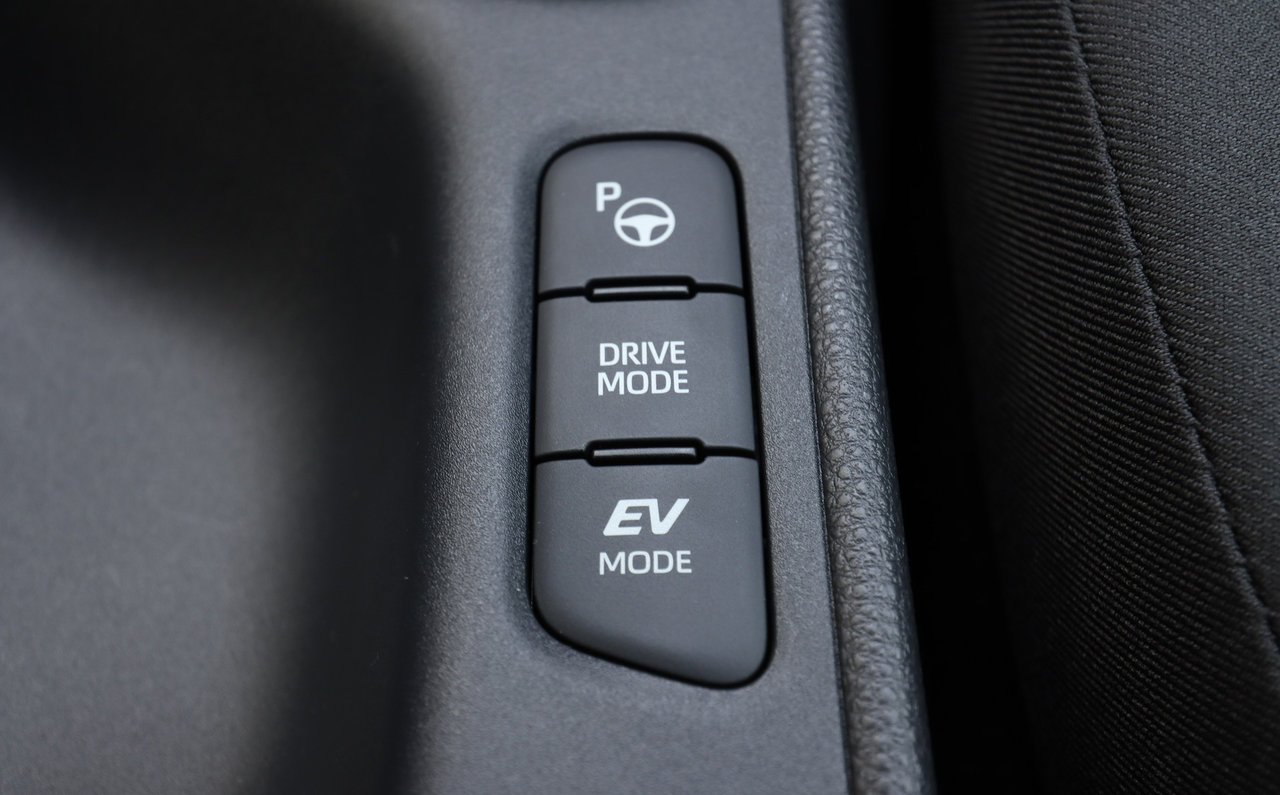
Operation is simple: press the parking switch on the console to start. The monitor displays a top-down view of the parking space, and you select the desired spot. Following the on-screen prompts, simply shift between Drive and Reverse, and the car expertly maneuvers itself into the space with automated steering. The steering wheel rotates with considerable force, requiring a firm grip to counteract its torque.
The system completed a parallel park in about 40 seconds and a perpendicular park in about 60 seconds. Impressively, during the perpendicular park, the car repositioned itself slightly closer to the road after initially entering the space.
The new Yaris offers distinct personalities depending on the powertrain: the hybrid model behaves like a GT car, while the gasoline model feels like a sports car. With a wide array of color options and optional equipment, finding the perfect configuration promises to be an enjoyable experience.
TOYOTA Customer Relations Center
Tel. 0800-700-7700 (9:00-18:00)
https://toyota.jp