January 22, 2015
The True Capabilities of the Land Rover Freelander 2 | Land Rover
Land Rover Freelander 2
If it's an SUV, it belongs to an SUV brand.
The Capability of the Land Rover Freelander 2
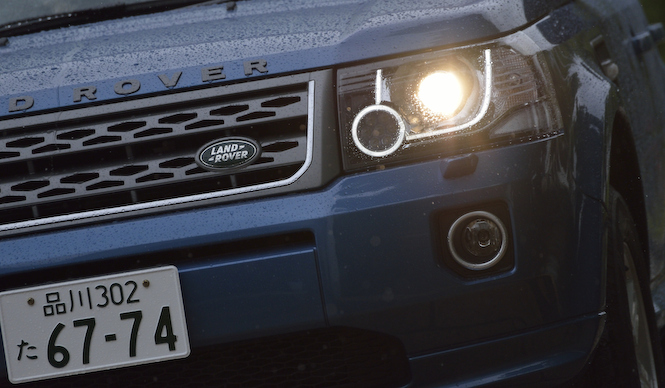
Late last year, along with a refresh of the interior and exterior design, the previous 3.2-liter inline-six engine was replaced with a 2.0-liter inline-four engine, downsizing thepowertrain.Land Rover "Freelander 2." Don't underestimate this car just because it's the entry model of the Land Rover brand. While it may be overshadowed by the stylish "Evoque", the philosophy unique to an SUV-specialist brand lives on in this car. Tatsuya Kuushima delves into the origins of the now mature Freelander 2.
Text by KUSHIMA TatsuyaPhotographs by ABE Masaya
The Origins of Land Rover
The global SUV boom that began in America in the 1990s has led to almost every car manufacturer now producing tall vehicles. In 1999,BMW, followed byPorsche, VW, and Volvo.
Until then, SUVs were the exclusive domain of American and Japanese manufacturers. The Toyota Hilux Surf and Nissan Terrano were SUVs that also hit it big in North America.
In Europe, Land Rover was the representative. While they released their first 2WD model with the "Evoque" last year, they were previously known as "the world's only 4WD specialist manufacturer."
So, what are the origins of Land Rover? It's deeply connected to the Jeep.
After World War II, a British car manufacturer noticed a Jeep left behind in the UK and began development. It's believed to have been a Willys MB or Ford GPW. The person who noticed it was an executive at Rover at the time who personally used one.
However, by that point, its purpose had significantly diverged from that of the Jeep.
Unlike the Jeep, which was developed at the request of the US Army, Rover's development project, undertaken after the war, aimed at cultivating rough farmland. In other words, it was for agricultural use.
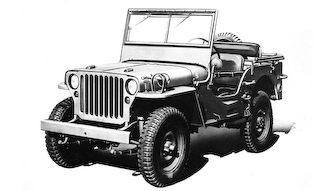
Willys MB
Skipping the detailed story, Land Rover was born from such a background.
The first model was exhibited at the Amsterdam Motor Show in 1948. This was the "Series 1."
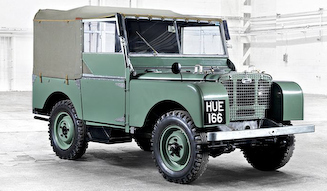
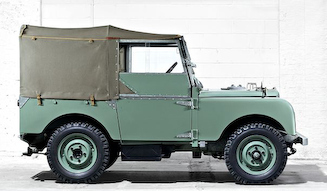
Land Rover Series 1
Land Rover's model lineup today consists of the Series 1, 2, and 3, the ancestors of the "Defender"; the "Range Rover" released in 1970; and the "Discovery," born as its sibling in 1989.
The Discovery was developed to compete with models like the Isuzu Big Horn and Mitsubishi Pajero of the time.
The "Freelander 2" introduced here began development in the 1990s. It was an additional model anticipating the rise of compact SUVs in the American market.
Land Rover Freelander 2
If it's an SUV, it belongs to an SUV brand.
The Capability of the Land Rover Freelander 2 (2)
Downsizing is All Good
The first "Freelander" appeared in 1997, underwent a full model change in 2006, and became the "Freelander 2" thereafter.
It has a monocoque structure based on a FWD shared with the "Evoque" for its basic body frame. Therefore, it previously mounted a six-cylinder engine transversely.
Normally, the engine would be mounted longitudinally for a 4WD package with a center differential, but this was not possible with the frame structure. Consequently, the mechanism was undeniably a bit complex, and a snatch phenomenon occurred where the large engine moved back and forth relative to the accelerator's on-off action. It can be said that there were some limitations in that regard.
However, as you know, with the advent of the Evoque, Land Rover acquired a 2-liter inline-four turbo unit.
It's a versatile unit called EcoBoost, also found in the Ford Explorer.
Therefore, the new Freelander 2 is now equipped with it. While the width is 1,910mm, considering the vehicle's class with a length of 4,515mm, it's a perfect match.
Furthermore, we must not forget that it's a direct-injection type, which is efficient in combustion and environmentally friendly. This also helps reduce nitrogen oxide and carbon dioxide emissions.
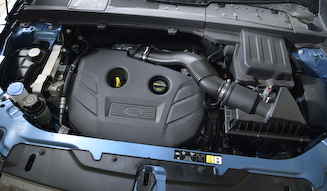
Yet, it delivers a maximum output of 240ps, 7ps more than the aforementioned conventional 3.2-liter inline-six. This is truly "high efficiency."
Additionally, the engine itself is about 40kg lighter, which is another advantage. Powertrain downsizing is truly all good. Moreover, the transmission is also a 6-speed AT with manual mode, the same as the Evoque. This can also be considered an aspect of improved efficiency.
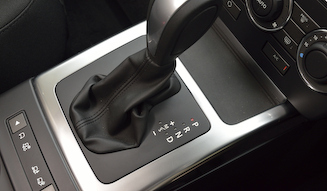
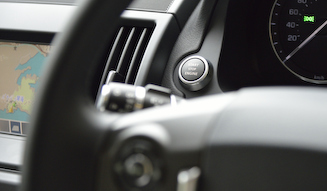
However, since the Evoque has already announced the adoption of a 9-speed AT, there is a possibility that this car will also be equipped with it in the future.
I actually drove an Evoque with the 9-speed AT specification, albeit in a test state, and it showed remarkably smooth and seamless shifting. With the 6-speed transitioning to an overdrive-like gear ratio, fuel economy improvements during high-speed driving seem highly promising.
Land Rover Freelander 2
If it's an SUV, it belongs to an SUV brand.
The Capability of the Land Rover Freelander 2 (3)
The Land Rover Pedigree
The interior quality has also significantly improved this time. The design of the instrument panel and center console has been changed, and the shift from a lever-type to an electronically controlled parking brake is one of those changes. Small details are shared with higher-end models. This is a welcome consideration for customers.
What I noticed when I sat in it was that the command driving position is still present. The seating position is high, allowing you to naturally adopt a posture where you can survey the four corners of the car. This is exactly the same as the Discovery. While primarily intended for off-road driving superiority, it also aids in parking on-road, needless to say. You can truly appreciate its usability.
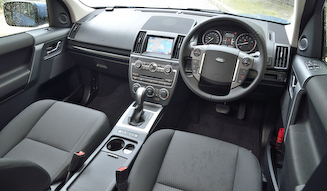
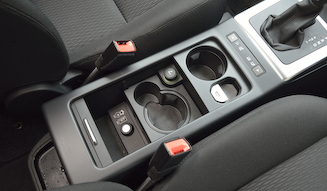
And what you feel when you start driving is the excellent balance. The front-biased weight distribution has been corrected, making the front feel lighter and the handling more agile. It conveys the car's inherent size.
Also, and perhaps surprisingly, this turbocharger engages from low RPMs, so the car is propelled forward with ample torque without needing to rev the engine high. This aspect truly dispels any negative perceptions of displacement downsizing.
At this point, I realized that the body rigidity must have also increased in the new model.
The more you turn the steering wheel, the stronger the sense of unity with the body becomes. Furthermore, the quietness has certainly improved.
It seems likely that these aspects were also addressed along with the powertrain changes.
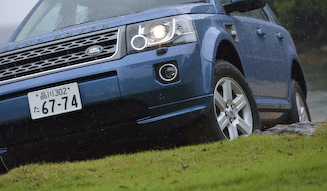
The Japanese specification of the Freelander 2 comes in a single grade. The price is significantly suppressed considering the equipment, achieving 3.99 million yen. It's the most accessible Land Rover. However, if I were to be picky, I wish there had been a bit more change to the exterior this time. With such significant improvements to the interior, it wouldn't have hurt to further stimulate customer desire.
Well, I'm fully aware that this conservatism is part of its charm. So, will it undergo a radical change in the next full model change?
Land Rover Freelander 2
Body Dimensions | Length 4,515 x Width 1,910 x Height 1,740 mm
Wheelbase | 2,660 mm
Tread Front/Rear | 1,600 / 1,615 mm
Ground Clearance | 210 mm
Minimum Turning Radius | 5.5 meters
Weight | 1,820 kg
Engine | 1,998cc Inline-4 DOHC Direct Injection Turbo
Max Output | 177 kW (240ps) / 5,500 rpm
Max Torque | 340 Nm / 1,750 rpm
Transmission | 6-speed Automatic
Drivetrain | 4WD (Full-time 4WD with Haldex rear axle differential)
Tires | 235/65R17
Suspension Front | MacPherson Strut
Suspension Rear | Link Strut
0-100km/h Acceleration | 8.8 seconds
Top Speed | 200 km/h
Fuel Economy (JC08 mode) | 9.0 km/ℓ
CO2 Emissions (EU Combined) | 224 g/km
Price | 3,990,000 yen