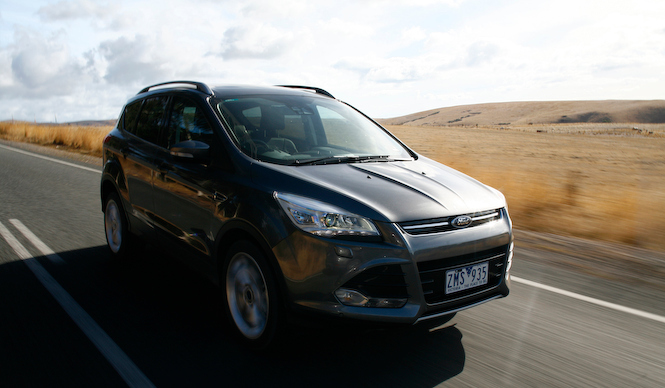
Test Drive: The New Ford Kuga in Australia | Ford
Ford Kuga
Full Model Change: A Renewed Design
First Drive of the New Kuga Abroad
The Ford Kuga first went on sale in Japan in 2010. As it's only been available here for about two years, one might think, "Already a model change?" However, this model has already been on the market for over five years overseas. Tatsuya Otani test drove the new Kuga, based on the Focus, in Australia. This report comes from Down Under.
Text by OTANI Tatsuya
How Much of the Ford Bloodline Can It Retain?
Its face has become more taut and refined.
The current model already has a rather dignified look, but the new one possesses an even more spirited expression.
Ford's compact SUV, the Kuga, has entered its second generation, and its international launch event was held in Adelaide, Australia. Having recently revisited the current Kuga before the press event, I was sure I remembered its appearance clearly. Yet, upon encountering the new model at the venue, I didn't get the impression of a significant design change.
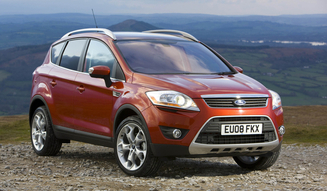
The first-generation Kuga
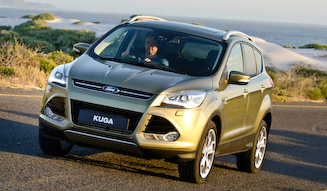
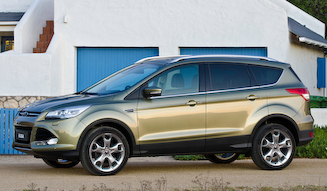
The second-generation Kuga
One reason for this might be that it continues to adopt Ford's "Kinetic Design" language, carried over from the previous generation.
Furthermore, since the positioning and basic concept of the model are the same as the previous generation, there was little need to alter the overall size or proportions.
However, as I examined the new model more closely under the brilliant autumn sun of the Southern Hemisphere, I began to notice subtle differences from the current model.
First, the front grille has become significantly slimmer, and the headlights are shallower vertically, giving it a slightly more 'almond-shaped' appearance.
This seems to be the reason it appeared to have a more 'taut face.' Additionally, the air intake in the chin spoiler area, previously a single trapezoid, is now divided into three sections, further enhancing its sharp image.
But the side design represents an even more significant change.
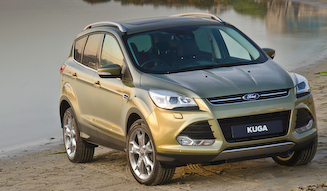
While there's no striking difference in the window graphics, the body panels are etched with multiple strong character lines, giving it a deeply sculpted, three-dimensional appearance. The sharpness of the press lines suggests a considerable investment in its production.
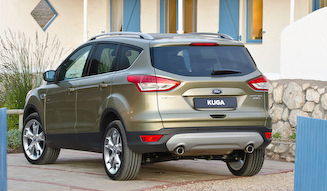
The rear design is similar, maintaining the basic image while adopting sharper, more three-dimensional styling.
The fundamental approach is the same as the first generation. Within this framework, how can the level of refinement be deepened and a sense of luxury be emphasized? And how much of the Ford family lineage, represented by the Focus, can be preserved? Shortly after meeting the new Kuga, I began to suspect that the development concept centered on these two points. As I continued the test drive, this premonition solidified into conviction.
Ford Kuga
Full Model Change: A Renewed Design
First Drive of the New Kuga Abroad (2)
Equipped with a Proprietary 4WD System
To describe the new Kuga's hardware in a single sentence: "It's the Kuga, rebuilt with the same technology as the new Ford Focus."New FocusIt shares the same platform as the Focus. Therefore, even as an SUV, its driving performance can be expected to be quite high.
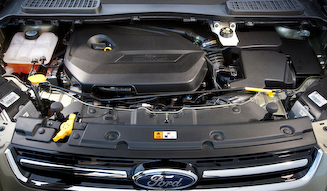
On the other hand, there are also several differences from the Focus. The wheelbase is 40mm longer than the Focus's, at 2,690mm. The engine has also been 'downsized' from the Focus's 2.0-liter naturally aspirated four-cylinder to a 1.6-liter direct-injection turbocharged EcoBoost four-cylinder.
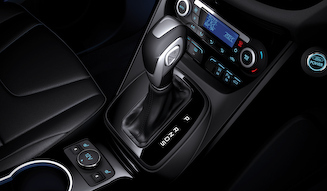
Unlike the Focus's dual-clutch 6-speed AT, the Kuga employs a torque converter 6-speed AT. Furthermore, the drivetrain has been changed from front-wheel drive to full-time 4WD.
This full-time 4WD system is a new proprietary development by Ford, with no involvement from suppliers like Haldex.
Additionally, while the Japanese-spec Focus is manufactured in Thailand, the Kuga is imported from Ford's Valencia plant in Spain.
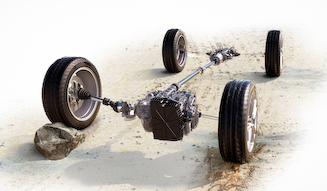
Previously, Ford offered two SUV models in this class: the European-developed Kuga and the Escape, jointly developed by Ford in Japan and the US. However, based on the "ONE Ford" strategy proposed by current CEO Alan Mulally in 2008, these two models have been consolidated into the new Kuga, developed primarily in Europe. In North America, however, the same model will be sold under the Escape name due to brand recognition.
Ford Kuga
Full Model Change: A Renewed Design
First Drive of the New Kuga Abroad (3)
Is the Downsized Engine Sufficient?
Even for a "compact" SUV, it's understandable to feel a bit apprehensive about a 1.6-liter engine.
However, Ford's luxury SUV, the Explorer, effortlessly moves its 2.0-ton body with the 2.0-liter version of the latest "EcoBoost" downsized engine. The new Kuga, on the other hand, weighs approximately 1.6 tons. This means the displacement per ton of weight is comparable between the two vehicles.
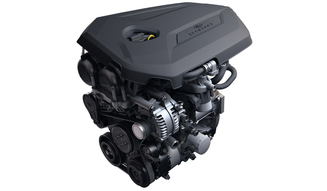
The Kuga is equipped with a 1.6-liter inline 4-cylinder EcoBoost engine, boasting a maximum output of 134kW (182ps) at 5,700rpm and a peak torque of 240Nm (24.5kgm) at 1,600-5,000rpm.
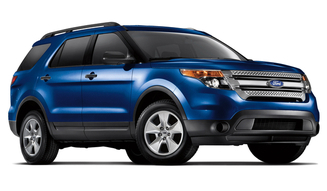
The Ford Explorer. This massive vehicle, measuring 5 meters long, 2 meters wide, and weighing over 2 tons, is also powered by a 2.0-liter EcoBoost engine.
Indeed, the new Kuga delivered a powerful performance as expected.
Generally, downsized engines deliver strong torque from low RPMs, often making them feel more agile off the line than larger displacement naturally aspirated engines.
The new Kuga is no exception; it feels responsive even in stop-and-go city traffic, without any sense of sluggishness.
Even when accelerating on the clear, straight roads common in the Australian countryside (with speed limits around 100 km/h), the engine's smooth power delivery, with its redline starting at 7,000rpm, allows for confident overtaking.
Admittedly, in terms of top-end exhilaration, the previous model's 5-cylinder, 2.5-liter engine might have had a slight edge.
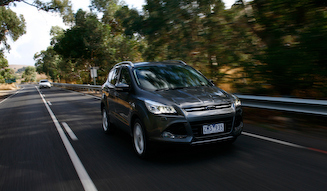
However, for everyday drivability, the 1.6-liter is more than sufficient.
Moreover, the 1.6-liter excels in engine smoothness and quietness. Like other modern downsized engines, the 1.6-liter also offers good fuel economy, with the Australian documentation citing a combined fuel consumption of 12.5 km/L. The gap with its main rival, the Volkswagen Tiguan, should be significantly narrowed.Tiguan
In any case, the 1.6-liter EcoBoost engine is highly versatile and is a powertrain that one would eagerly anticipate for the Japanese-spec Focus, which will only be offered with a 2.0-liter naturally aspirated engine.
Ford Kuga
Full Model Change: A Renewed Design
First Drive of the New Kuga Abroad (4)
A Remarkably Confident Suspension
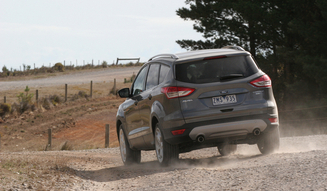
The ride comfort has also seen remarkable improvement. Compared to the current model, which had a somewhat rugged, sporty feel, the new Kuga shares a focus on solid handling. However, the suspension movement is smoother, leading to significant enhancements in comfort and refinement.
What's surprising is that this comfort remains largely unchanged even with the 19-inch tires. Furthermore, road noise has been substantially reduced compared to the current model, likely due to improvements such as the adoption of double weatherstripping around the doors.

Yet, despite these numerous advancements, the fact that it never forgets the joy of driving is quintessentially Ford.
The steering is exceptionally precise. It reacts accurately even to the slightest turn of the wheel from a straight line, and the absence of unnecessary body movements during such maneuvers is commendable.
The positioning of the tires is also precise, ensuring the car moves predictably through every phase of a corner. For the driver, this translates into a highly reassuring suspension setup.
Moreover, the new Kuga not only refines these core Ford driving characteristics but also enhances its equipment levels.
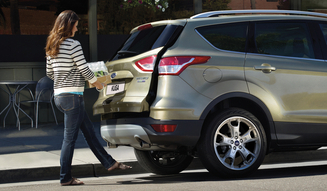
Notable examples include the hands-free tailgate, which opens and closes automatically with a kicking motion under the rear bumper, driver aids such as automatic braking and lane keeping, and a suite of stability controls including rollover prevention.
However, Ford's approach to car manufacturing—prioritizing cost for driving dynamics and ensuring the driver feels these benefits most strongly behind the wheel—has remained unchanged since the debut of the first Focus.
For Ford fans, this can truly be considered the ideal compact SUV.

FORD KUGA
Body Size | Length 4,540 x Width 1,840 x Height 1,710 mm
Wheelbase | 2,690 mm
Weight | 1,720 kg
Engine | 1.6-liter Inline 4-cylinder DOHC Turbo
Maximum Output | 134kW (182ps) / 5,700 rpm
Maximum Torque | 240Nm (24.5kgm) / 1,600-5,000 rpm
Transmission | 6-speed Automatic
Gear Ratio | 1st: 4.548
2nd: 2.964
3rd: 1.912
4th: 1.446
5th: 1.000
6th: 0.746
Drivetrain | 4WD
Front Suspension | Independent MacPherson Strut
Rear Suspension | Control Blade Multi-link
Tires Front/Rear | 225/45R18 / 225/40R18
Brakes Front/Rear | Ventilated Disc / Disc