Test Drive the New Cayenne | Porsche
Porsche Cayenne | Porsche Cayenne
No Weak Points Found
The third-generation "Cayenne," which underwent a full model change in August 2017 and made its Japan premiere at the Tokyo Motor Show 2017. Motor journalist Hirohisa Kaneko test-drove the latest model of this important vehicle, which debuted as Porsche's first SUV and has now become the company's backbone.
Text by KANEKO Hirohisa
Front Inherits the Second Generation's Image, Rear Significantly Changed
The Porsche "Cayenne" has undergone a full model change,Third Generationand has been reborn as the third generation. I had the chance to test drive the European specification on the island of Crete in Greece, and I would like to report on that experience.
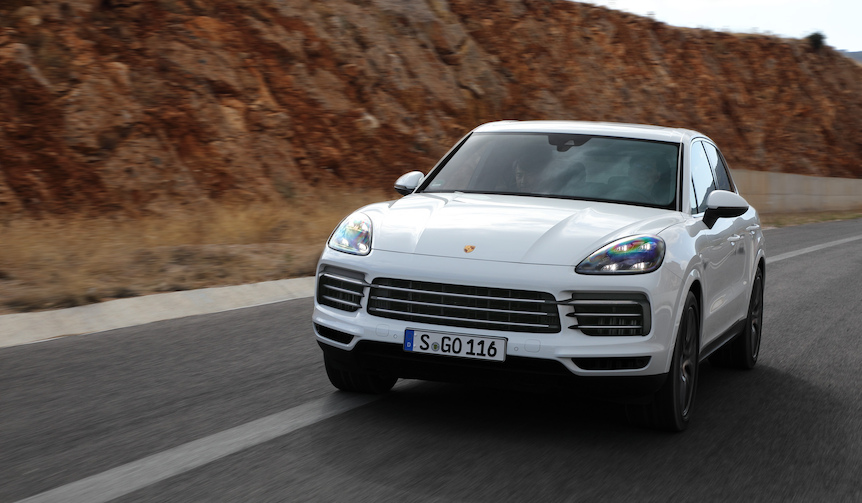
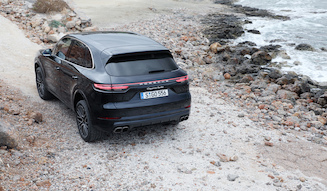
Even in its third generation, the silhouette is so similar to the second generation that it's instantly recognizable as a Cayenne. The design of the front grille and around the headlights also strives to inherit the image of the second generation as much as possible.
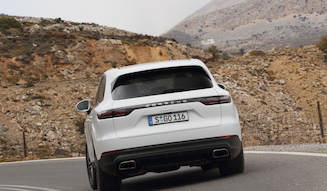
However, the rear style has changed significantly. It now features a continuous horizontal garnish and taillight unit, similar to the second-generation "Panamera" which underwent a full model change earlier. From the rear, the third generation is instantly distinguishable.
 Porsche Cayenne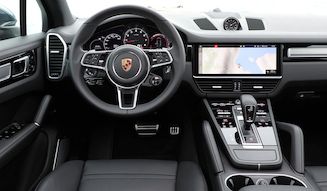
Opening the door and sitting in the driver's seat, looking around the interior, the influence of the Panamera is significant. The numerous buttons and switches that were lined up on both sides of the shift lever on the center console in the second generation have been neatly replaced by a touch panel. Furthermore, many operations can now be performed via voice control, a feature also adopted from the Panamera.
It's not just Porsche, but modern cars are rapidly becoming more multifunctional, with an increasing number of devices being equipped. How to organize these is a key challenge for each company's development team. Touch panels and voice control are common solutions, but while some manufacturers like Volvo, Land Rover, and Tesla are radical in minimizing buttons and switches, Porsche can be considered more conservative. For us, the quality of Japanese voice input is crucial, and we confirmed that the third-generation Cayenne's input is accurate, fast, and at the latest level, comparable to other manufacturers.
Porsche Cayenne | Porsche Cayenne
No Weak Points Found (2)
Plug-in Hybrid and Diesel to Arrive Later
The newly announced Cayenne comes in three models: the standard "Cayenne," the high-performance "Cayenne S," and the ultra-high-performance "Cayenne Turbo."
Each is equipped with a different engine. The Cayenne features a 3-liter V6 turbo, the Cayenne S a 2.9-liter V6 twin-turbo, and the Cayenne Turbo a 4-liter twin-turbo.
All models are paired with an 8-speed Tiptronic S automatic transmission (torque converter type) and drive all four wheels.
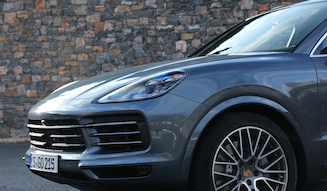 Porsche Cayenne S
"A plug-in hybrid model, significantly evolved from the second generation, and an advanced version of the diesel model offered in the second generation will be added in the future."
The development engineer confirmed the plans for future lineup expansion.
As soon as I started driving the new Cayenne on the public roads of Crete, I could immediately feel the refined sporty driving sensation. Although the Cayenne has undergone numerous revisions with this full model change, I could instantly experience its "Cayenne-ness."
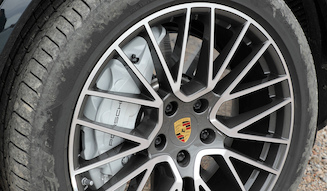
Porsche Cayenne S
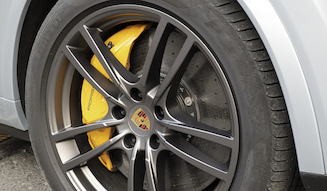
Porsche Cayenne
The chassis, with its solid rigidity, combined with the taut suspension, makes it feel like driving a sports car. The steering wheel feedback is sharp and precise, accurately guiding the large SUV body.
The benefits of the staggered tire sizes and the standard 4WS (four-wheel steering) are clearly evident. The increased use of aluminum in the chassis and body for weight reduction compared to the previous generation also contributes. There is no ambiguity in the car's response to driver inputs.
Porsche Cayenne | Porsche Cayenne
No Weak Points Found (3)
The Cayenne Turbo is in a Class of Its Own
While the Cayenne has a maximum output of 340 hp, the Cayenne S, equipped with twin turbochargers to produce 440 hp, raises questions about the difference. However, driving on the open public roads, it was difficult to perceive a significant difference in speed.
The clear differences lie in the sound and the smoothness of acceleration. Compared to the Cayenne, the Cayenne S's engine sound has a finer resonance when the accelerator pedal is pressed, and the power delivery is smoother.
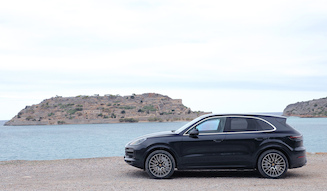
Porsche Cayenne Turbo
The prices for the Japanese specifications have already been announced: the Cayenne is ¥9.76 million, while the Cayenne S is ¥12.88 million, a difference of over ¥3 million. The main difference lies in the sound and the smoothness of acceleration. The Cayenne is already more than sufficiently fast, but the emotional difference during acceleration accounts for most of the price difference.
In contrast, the Cayenne Turbo was in a league of its own. The speed generated by its 550 hp maximum output is beastly, and the brakes, suspension, and chassis that control it are also special.
The engine sound has a unique resonance and power, reacting vividly to even the slightest press of the accelerator pedal. Yet, in normal mode, the ride comfort is gentle and soft, filling the drive with a sense of premium comfort even at slow speeds.
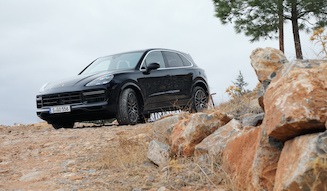
Porsche Cayenne Turbo
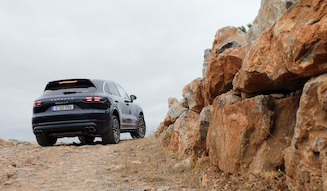
While one might be curious to compare the Cayenne and Cayenne S, the Cayenne Turbo possesses performance and appeal far beyond them. Hence, its price of ¥18.55 million is nearly double that of the Cayenne. It is expensive for a reason.
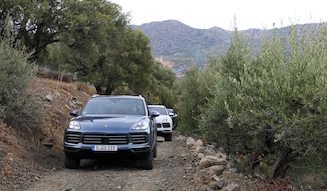
Although I could only test the off-road performance in limited conditions this time, the control system that varies output characteristics and drive force distribution according to the road surface is an evolution of the previous model, so sufficient performance is likely secured.
Porsche Cayenne | Porsche Cayenne
No Weak Points Found (4)
Even Porsche Has Entered an Era of Vehicle Intelligence
The expansion of driver assistance systems and connectivity is also inherited from the Panamera. The luggage capacity has increased by 100 liters compared to the previous generation, and judging holistically, the finish shows no weak points. It successfully inherits the "Cayenne-ness" from the previous generation while adding new value without contradiction. I am eager to drive the Japanese specification soon.
Also, as I was unable to drive on expressways or dedicated motorways, the distance for testing the driver assistance systems was short. I would like to test this aspect on another occasion.
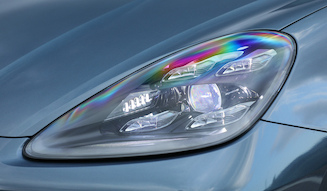
Porsche Cayenne S
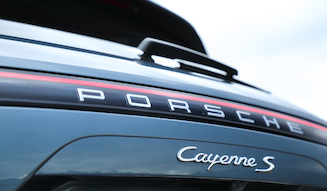
Existing Cayenne owners will likely find the new model appealing. This is because, while being an SUV, it possesses a sporty driving feel reminiscent of the "911" and " Boxster", and it inherits the Cayenne's excellent practicality without compromise.
And for those who have never driven a Cayenne, the new model embodies what one expects from the Porsche brand.
For both types of customers, the standard equipment of driver assistance systems such as Active Cruise Control (ACC) and Lane Keeping Assist (LKAS), as well as LED headlights, represents significant new value.
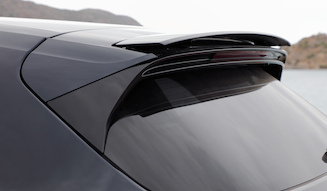
Porsche Cayenne Turbo
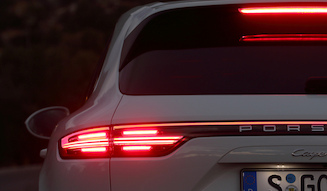
Porsche Cayenne
The "Porsche Communication Management System" (PCM), already standard on sports car models like the 911, Boxster, and Cayman, enables constant internet connectivity, and this is also standard on the new Cayenne. In other words, even Porsche has entered an era of actively embracing vehicle intelligence.
The new Cayenne, which has evolved the appeal of its predecessors and incorporated the new value of intelligence, has developed into the backbone of Porsche and presents a flawless package.
The first generation, as Porsche's first SUV, first four-door car, and first non-sports car, was a passionate and ambitious masterpiece that established the foundation for today's SUV image. The second generation, while lighter due to the omission of a transfer case and leaning slightly towards on-road use, also added a plug-in hybrid version. The third generation inherits the second generation while meticulously equipping standard driver assistance and connectivity features as expected of a modern car, striving for safety and automation. The Japanese market introduction is scheduled for mid-2018.
Porsche Customer Care Center
0120-846-911