
Test Drive: Audi S6 and S7
Audi S6 / S6 Avant / S7 Sportback
Test Drive: Audi S6 and S7
German premium brands offer high-performance models within their lineups. Think M for BMW, AMG for Mercedes-Benz. These manufacturer-tuned cars, pursuing ultimate performance, never fail to captivate automotive enthusiasts. Audi's S models, however, occupy a unique niche, balancing high performance with an unwavering commitment to comfort—a position unlike that of other brands. What is the essence of these S models? And what technologies does Audi employ to define them as such? Tatsuya Otani investigates.
Text by OTANI Tatsuya
The Distinct Position of Audi's S Models
The new Audi S6 and S6 Avant have debuted, equipped with a V8 twin-turbo engine producing 420 horsepower. Concurrently, the S7 Sportback, featuring the same engine, has been introduced to the A7 Sportback lineup.
When considering German premium brand "mid-size sports models," the Mercedes-BenzE63 AMG" and theBMW M5" immediately come to mind. However, with 524 horsepower (557 horsepower with the performance package) for the E63 AMG and 560 horsepower for the M5, both are significantly more powerful than the S6.
So, does this mean the S6 and S7 Sportback are completely outmatched? While they may not match the absolute power of the E63 AMG or M5, Audi's true sports models that compete with these are the "RS" series. The "S" models clearly occupy a different position.
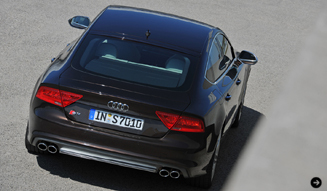
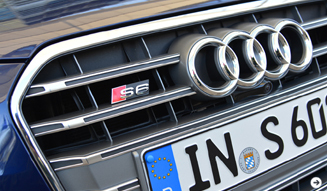
Audi's "RS," Mercedes-Benz's "AMG," and BMW's "M" are all top-tier performance models in the road car segment. While their comfort has improved significantly in recent years, these three series maintain a philosophy of pursuing high performance even at the expense of everyday usability, resulting in potential capable of circuit driving.
In contrast, Audi's "S" models prioritize comfort while maintaining excellent performance. To put it more precisely, the "S" designation represents a shift in emphasis from sportiness towards everyday usability.
Audi S6 / S6 Avant / S7 Sportback
Test Drive: Audi S6 and S7 (2)
Serenity at 250 km/h
Indeed, upon entering the test car and starting the engine, there is no hint of the powerful 400-plus horsepower engine. Thanks to innovations I'll discuss later, vibrations are virtually non-existent, and noise barely reaches the cabin. It makes you wonder, "Is this really a sporty model with a V8 twin-turbo?" The cabin is remarkably serene and comfortable, to the point of raising such questions.
This impression remains unchanged once you start driving. Equipped as standard with adaptive air suspension, which is not available on the A6 or A7 Sportback, both the S6 and S7 Sportback smoothly absorb all shocks from the road, providing a supple ride without any harshness. While the suspension is undoubtedly firmer than that of the A6 or A7 Sportback, the way the four-wheel suspension strokes fluidly speaks to Audi's expertise, honed through its continuous development of the "quattro" all-wheel-drive system and its deep understanding of stable road holding. The result is a setup that allows for a degree of flexibility rather than rigidly controlling body movements.
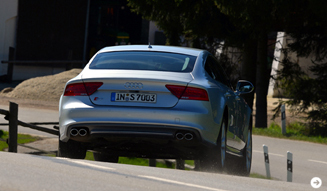
However, by conventional standards, the S6 and S7 Sportback are exceptionally fast. They achieve 0-100 km/h in 4.6 seconds (S6 Sedan) or 4.7 seconds (S6 Avant/S7 Sportback). Like other German high-performance models, their top speed is electronically limited to 250 km/h. During my test drive on the Autobahn, the car reached 240 km/h in a very short time. I had to ease off the throttle due to traffic ahead, but the acceleration at that point suggested that the top speed would easily exceed 250 km/h without the limiter. This is performance that would have been considered supercar territory not long ago.
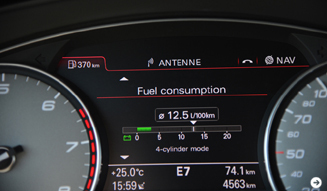
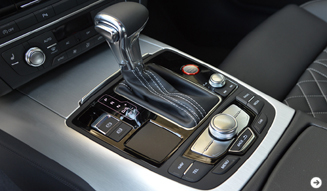
Despite this, the new generation 4.0-liter V8 twin-turbo engine incorporates numerous advanced technologies, achieving a 25% improvement in fuel efficiency compared to the previous model.
At its core lies the downsizing concept, pioneered by the Volkswagen Audi Group. This advanced engine technology, which reduces displacement to minimize friction loss and achieves high efficiency and output through turbocharging and direct injection, is now adopted by many automakers, particularly in Germany. Furthermore, the downsizing concept is increasingly being applied not only to mainstream family cars but also to high-performance vehicles.
Audi S6 / S6 Avant / S7 Sportback
Test Drive: Audi S6 and S7 (3)
Cutting-Edge Engine and Noise Control
Audi has followed the trend of applying the downsizing concept to high-performance cars with the new S6 and S7 Sportback. However, simply matching the technology of other manufacturers would not satisfy their pioneering spirit. Therefore, they have further advanced the downsizing concept with the integration of "Cylinder on Demand" (cylinder deactivation system), achieving even greater fuel efficiency.
While seemingly unrelated, the downsizing concept and cylinder deactivation share the same fundamental idea: reducing the effective engine displacement when high torque is not required. However, the downsizing concept utilizes turbocharging to increase displacement, whereas cylinder deactivation reduces the apparent displacement when unnecessary.
With four of the eight cylinders deactivated, the effective displacement is halved to 2 liters, which is undoubtedly advantageous for fuel economy. However, if the engine's quietness were also reduced to that of a four-cylinder, it would defeat the purpose. In reality, even when the cylinder deactivation mode is engaged, all eight pistons continue to move, so there is no significant change in vibration. Nevertheless, the reduction in combustion cycles subtly alters the vibration modes.
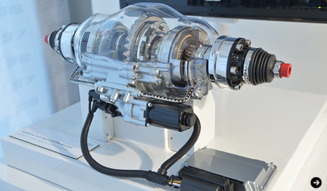
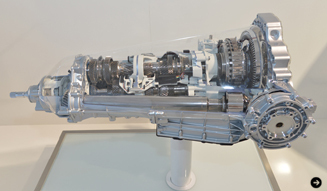
To address this, Audi has implemented measures to contain the issue from both acoustic and vibrational perspectives. Firstly, "vibration" is managed by active engine mounts, which generate their own vibrations to counteract the engine's vibrations. For "sound," four microphones embedded in the ceiling detect noise within the cabin, and an "Active Noise Control" system, which emits canceling sound through the audio speakers, is standard to ensure quietness.
The "S" models, preceding their rivals, adopted the concept that "sporty models should also be comfortable." The new Audi S6 and S7 Sportback, as their latest iterations, successfully combine monstrous performance with the comfort of a luxury sedan.
How will their rivals respond? Their next moves are eagerly anticipated.
The new Audi S6, S6 Avant, and S7 Sportback are expected to be introduced to Japan this autumn. Prices are anticipated to be around 12 million yen.

Audi S6
Engine | V8 DOHC Twin-Turbo
Displacement | 3,993 cc
Max. Output | 309 kW (420ps) / 5,500-6,400 rpm
Max. Torque | 550 Nm / 1,400-5,200 rpm
Length x Width x Height | 4,931 x 1,874 x 1,440 mm
Tread (Front/Rear) | 1,627 x 1,618 mm
Vehicle Weight | 1,895 kg
Transmission | 7-speed S tronic
Drivetrain | All-wheel drive
Trunk Capacity | 530 ℓ
Fuel Consumption | 9.6 ℓ/100 km (NEDC)
CO2 Emissions | 225 g/km
Top Speed | 250 km/h
0-100km/h Acceleration | 4.6 seconds
Price | €72,900
Audi S6 Avant
Engine | V8 DOHC Twin-Turbo
Displacement | 3,993 cc
Max. Output | 309 kW (420ps) / 5,500-6,400 rpm
Max. Torque | 550 Nm / 1,400-5,200 rpm
Length x Width x Height | 4,934 x 1,874 x 1,446 mm
Tread (Front/Rear) | 1,627 x 1,618 mm
Vehicle Weight | 1,950 kg
Transmission | 7-speed S tronic
Drivetrain | All-wheel drive
Trunk Capacity | 565-1,680 ℓ
Fuel Consumption | 9.7 ℓ/100 km (NEDC)
CO2 Emissions | 226 g/km
Top Speed | 250 km/h
0-100km/h Acceleration | 4.7 seconds
Price | €75,250
Audi S7 Sportback
Engine | V8 DOHC Twin-Turbo
Displacement | 3,993 cc
Max. Output | 309 kW (420ps) / 5,500-6,400 rpm
Max. Torque | 550 Nm / 1,400-5,200 rpm
Length x Width x Height | 4,980 x 1,911 x 1,408 mm
Vehicle Weight | 1,945 kg
Transmission | 7-speed S tronic
Drivetrain | All-wheel drive
Trunk Capacity | 535-1,390 ℓ
Fuel Consumption | 9.6 ℓ/100 km (NEDC)
CO2 Emissions | 225 g/km
Top Speed | 250 km/h
0-100km/h Acceleration | 4.7 seconds
Price | €79,900
*All specifications and prices are for the home market.