March 25, 2015
Test Drive the Second-Generation BMW 1 Series! | BMW
BMW 1 Series
Test Drive: The Engaging Second-Generation 1 Series
Even as an entry-level model, the 1 Series embodies the "BMW essence." The second generation, launched with a full model change in September 2011, features a unified 1.6-liter engine. Notably, it incorporates an 8-speed automatic transmission, aiming to balance power and fuel efficiency with a modern approach.
Text by OGAWA FumioPhoto by ARAKAWA Masayuki
The Second-Generation Compact Hatchback Loved by Many
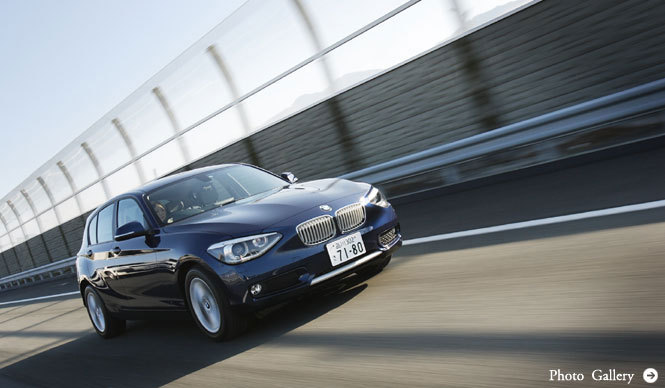
The BMW 1 Series is a hatchback that entered the market alongside bestsellers like the Volkswagen Golf and Audi A3. It asserts its uniqueness with a sporty driving feel, achieved through its longitudinal engine layout and rear-wheel drive.
The body is a practical 4-door hatchback, appealing to younger drivers who enjoy driving or urban dwellers who don't require a larger vehicle. While the previous generation offered coupe and convertible variants, their addition to the current model lineup is expected a bit later.
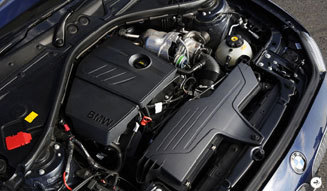
The new 1 Series offers two versions of its 1.6-liter engine, differentiated by their tuning. The 116i, which I drove, features a 1.6-liter 4-cylinder turbo producing 136 ps (100 kW) and 220 Nm of torque. A more powerful version, tuned to produce 170 ps (125 kW), is designated as the 120i.
The 116i has a base price of 3.08 million yen. The test car was a "116i Style," featuring stylish accents in color and material for both the interior and exterior. This model's base price is 3.18 million yen.
BMW 1 Series
Test Drive: The Engaging Second-Generation 1 Series (Part 2)
Packaging Designed for Driving Enjoyment
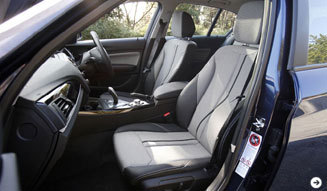
The 1 Series, in general terms, is a model that benefits from a desirable package: the natural handling characteristics of rear-wheel drive combined with a lightweight, compact body. In an era of increasingly large vehicles, its maneuverability, reminiscent of the older 3 Series, is appreciated by BMW enthusiasts. BMW's styling philosophy emphasizes a rearward shift of the cabin – the passenger space – to achieve an ideal 50:50 front-to-rear weight distribution.
During the drive, the engine, equipped with Valvetronic and Double VANOS (variable valve timing and lift), impresses with its willingness to rev.
The twin-scroll turbocharger, which covers a wide range from low to high RPMs by varying its capacity, provides a natural boost and a flat torque curve. Whether navigating city streets, highways, or winding roads for pleasure, the car delivers enjoyment and practicality in all situations.
BMW has consistently positioned its products as driving machines, prioritizing the "fun" experienced by the driver, even if it meant compromising slightly on packaging and interior space.
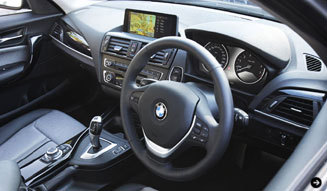
BMW was an early adopter of the "central theme" dashboard, angling instruments towards the driver, and the 116i, even as a 4-door, remains true to this tradition. The best seat is always the driver's seat. You'll understand why when you drive it.
BMW 1 Series
Test Drive: The Engaging Second-Generation 1 Series (Part 3)
Significant Improvements in Power, Torque, and Fuel Efficiency
A new 8-speed automatic transmission has been adopted. Its precise control works exceptionally well with the "Driving Experience Control" system. This system, operated by a switch near the shift lever, allows selection between "Sport," "Comfort," and "ECO PRO mode," which aims to improve real-world fuel economy. The button adjusts engine response and shift timing. To truly appreciate the "essence" of this BMW, "Sport" mode is particularly recommended, allowing you to experience the unique sensation of a small-displacement BMW engine delivering power above 3,000 rpm.
Conversely, for those prioritizing the 116i's improved environmental performance as a modern car, the ECO PRO mode is available. It provides guidance for fuel-efficient acceleration and displays information such as changes in driving range.
Furthermore, it features earlier upshift timing, an engine auto start/stop function, a brake energy regeneration system, and a power steering system with electric assistance that consumes less energy than hydraulic systems. BMW claims this results in a "11 percent increase in maximum output and a 38 percent increase in maximum torque, while improving fuel efficiency by 24 percent."
BMW 1 Series
Test Drive: The Engaging Second-Generation 1 Series (Part 4)
Gear Shift Pattern Similar to Touring Car Racers
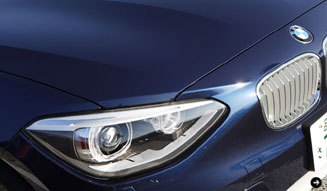
The aluminum finish of the Style's kidney grille presents a novel impression, particularly appealing to those who appreciate superior design. The AT selector, with its distinctive spatula-like shape, becomes intuitive to use without looking, demonstrating that functional design has not been overlooked.
This car's engine revs freely, and the suspension is well-tuned. While it might feel slightly firm at high speeds, it exhibits suppleness when navigating a series of curves on winding roads. Furthermore, its excellent body control contributes to a strong sense of driving enjoyment.
When operating the gears manually, frequently shifting between 3rd and 5th gear, which have close ratios, allows for quick acceleration out of corners. Pushing the floor shifter forward shifts up, while pulling it back shifts down – the opposite of many other manufacturers.
This shift pattern is also used in BMW's touring car race vehicles, reflecting the company's emphasis on sportiness. Regardless, selecting the optimal gear for various cornering radii by pushing and pulling the shifter is a genuinely satisfying experience. The combination of a relatively small displacement engine and a multi-gear transmission works exceptionally well.
The Only Quibble: The Steering?
If there's one point of dissatisfaction, it's the steering. While it reacts to even the slightest movement around the center, the car's response feels somewhat lacking when you begin to turn. This is less noticeable when setting a precise steering angle for a corner, but on straight roads and in general, it feels somewhat unsettled.
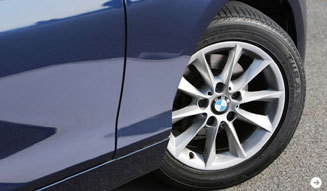
With truly excellent steering, you're immediately impressed the moment you touch the wheel, thinking, "This is great!" But with the 116i, I found myself thinking, "Hmm?" Could it be the Bridgestone Turanza tires? These are European-market tires that add comfort to the sporty Potenza line. Perhaps the feeling would be different with other tires. It's a minor point, but for humans who value sensory experience, such details are significant. If you test drive at the showroom, take your time and evaluate this aspect.
If we accept the premise that diversity makes cars more interesting, then BMW's commitment to rear-wheel drive, adhering to its policy of "driving pleasure" even in a compact car, deserves renewed appreciation.