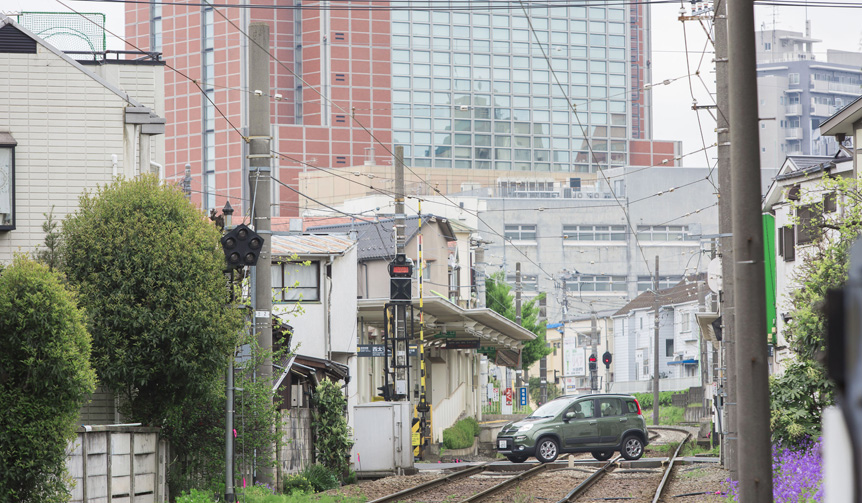
Test Drive the Fiat Panda 4x4 | Fiat
Fiat Panda 4×4 | A Test Drive
A Compact 4WD Model for the Discerning Enthusiast
Test Driving the Fiat Panda 4×4
The Fiat Panda 4×4 is a rare gem in the world of compact four-wheel-drive vehicles. While Japan has its own category for Kei cars, including 660cc 4WD models like the Jimny and Hustler, the Panda stands as the smallest offering from an imported brand. Larger B-segment crossovers such as the Peugeot 2008 and Ford EcoSport are available, but they are all front-wheel-drive. With a lineup exclusively featuring a 6-speed manual transmission, it caters to a niche audience, but for those who insist on a manual gearbox in their European car, the driving experience is remarkably exhilarating.
Text by SAKURAI KenichiPhotographs by TSUKAHARA Takaaki
Surprisingly Capable Off-Road Performance
Currently, the Fiat Panda available in Japan is a front-wheel-drive model featuring a 6-speed Dualogic (robotized manual) transmission with AT mode, powered by an 875cc, 63kW (85ps) turbocharged inline-two 8-valve engine called MultiAir. This is the sole model offered in the standard lineup.
The importer, FCA Japan, supplements this with limited editions of the 5-speed manual and 4×4 models, released several times a year. This strategy of introducing special, limited-run versions that appeal to European car fans, even in a Japanese market where automatics have long been dominant, can be seen as a sound business model given the limited customer base. FCA Japan's commitment to offering these desirable, albeit scarce, niche European cars as regular imports makes them a conscientious importer for those dedicated enthusiasts.
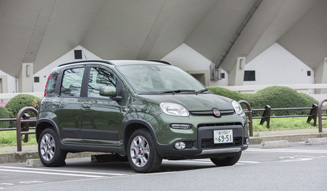
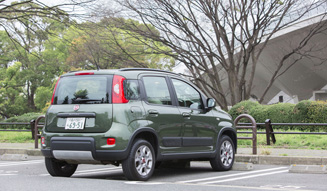
The Panda 4×4 featured here is a model that FCA Japan launched late last year as a limited edition of 340 units. Building on this, on January 30th of this year, they released the "Panda 4×4 Adventure Edition" as a special model with a limited run of 60 units nationwide. This edition comes standard with outdoor activity equipment, including a base carrier for skis and snowboards, and a durable luggage mat for the cargo area. Furthermore, starting July 10th, they are offering the "Panda 4×4 Comfort," limited to 120 units in total: 100 in "Tuscan Green" and 20 in "Venetian Blue." This Comfort model includes fully automatic air conditioning and rear privacy glass as standard.
These are simply different model names based on equipment variations; the fundamental mechanics remain identical. However, with limited editions, if you're interested, you must act quickly before they sell out. This is where this report gains its value.—This is just the editorial department's own musings, as usual.
Fiat Panda 4×4 | A Test Drive
A Compact 4WD Model for the Discerning Enthusiast
Test Driving the Fiat Panda 4×4 (2)
Surprisingly Nimble Performance
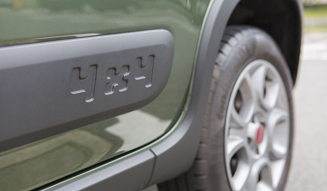
Compared to the standard front-wheel-drive model, the Panda 4×4 is 30mm longer, 25mm wider, and 65mm taller. As the body design clearly shows, these dimensions are due to the addition of front and rear underguards altering the bumper design, and the inclusion of fender moldings. While the changes are minor, they contribute to increased ground clearance and lend the 4WD model a more rugged image.
The wheels are also exclusive to the Panda 4×4, and the tire size has been changed from the standard model's 185/55R15 to 175/65R15.
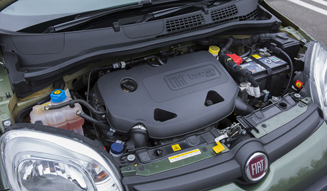
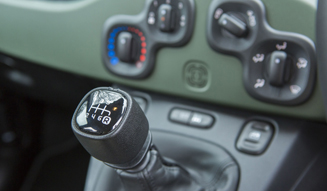
The engine is the familiar 875cc, turbocharged inline-two 8-valve TwinAir, also found in the Fiat 500. The sole specification available in right-hand drive is the 6-speed manual transmission. At low speeds, there's a characteristic vibration from the twin-cylinder engine, but as you press the accelerator, the engine revs smoothly and spins with agility. With a maximum output of 63kW (85ps) at 5,500rpm and peak torque of 145Nm (14.8kgm) at 1,900rpm, it provides ample power for the 1,130kg body. Utilizing the manual transmission allows for surprisingly nimble driving.
However, gears 5 through 6 are set as overdrives for fuel efficiency. Therefore, the engine performs best when you shift up early in urban driving and maintain a cruising speed. While engine noise and external sounds (primarily road noise) do enter the cabin during acceleration, this is a car at a price point where such factors are not a major concern. Instead, there's a peculiar joy in extracting the maximum power yourself as you drive.
In front of the shift lever, there is an "ECO" mode switch. When pressed, it noticeably reduces power, decreasing maximum output by 6kW (8ps) and clearly dulling acceleration and throttle response.
Although we couldn't test the fuel efficiency gains during this drive, it's reasonable to expect some improvement when combined with features like the engine start-stop system.
The manufacturer's official fuel consumption rating under the JC08 mode is 15.5 km/ℓ.
Fiat Panda 4×4 | A Test Drive
A Compact 4WD Model for the Discerning Enthusiast
Test Driving the Fiat Panda 4×4 (3)
Reliable as a "Lifestyle 4WD"
The notable 4WD system is a electronically controlled, torque-on-demand, full-time system, a departure from the previous viscous coupling torque-split type. It operates primarily as a front-wheel-drive vehicle, distributing power to the rear wheels only when the front wheels lose traction – commonly known as a "slip-and-grip" 4WD system. This setup features a differential at the front and rear, with an electromagnetic clutch connecting them ahead of the rear differential. In modern terms, it might be more easily understood as an ITCC (Intelligent Torque Control Coupling) system.
At speeds below 50 km/h, the ELD (Electronic Differential Lock) switch on the center console can be engaged to lock the differentials. This is effective for maintaining grip in low-speed situations, such as escaping ruts in muddy or snowy conditions. Coupled with the transmission's extra-low first gear ratio of 4.100, this system is highly dependable in such scenarios.
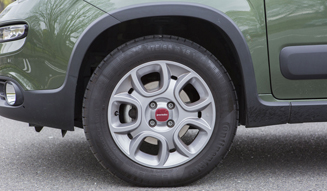
The narrower tire size compared to the standard equipment is another detail reflecting the development team's commitment to enhancing off-road performance. While these are eco-type tires not ideal for off-road use, the choice of size itself indicates a deliberate consideration.
If equipped with M+S (Mud + Snow) tires for snowy conditions, the additional ground clearance, the manual transmission with its low gearing, the ELD, and crucially, the lightweight chassis – only 60kg heavier than a front-wheel-drive model – all contribute to a capable off-road performance package. It's a shame we couldn't test it on snow, but it's undeniably a reliable "lifestyle 4WD." Even in urban driving, it offers a significant sense of security during adverse weather conditions, such as the increasingly frequent guerrilla downpours.
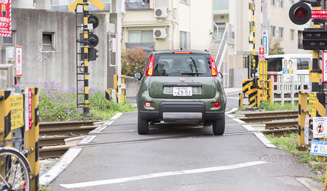
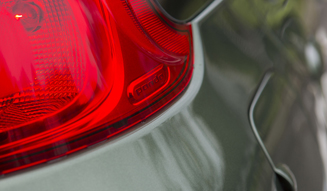
On paved roads, the 65mm increase in ride height has minimal impact. The ride comfort is quite pleasant. In fact, the improved forward visibility makes it feel even easier to drive in the city. Starting in first gear and quickly shifting to second, then third and fourth, you reach speeds that allow you to comfortably keep pace with traffic. Despite its sub-liter engine displacement, low-end torque is sufficient, and once moving, it tolerates relaxed driving, shifting between third and fourth gears.
Fiat Panda 4×4 | A Test Drive
A Compact 4WD Model for the Discerning Enthusiast
Test Driving the Fiat Panda 4×4 (4)
A Car That Resonates
On winding roads and in appropriate situations, while there is some body roll, it offers stable cornering. It's surprisingly sporty for a vehicle with its tall, SUV-like character. It handles undulations smoothly without feeling unsettled, exhibiting the refined manners of a typical European compact car. For users who believe the manual transmission is the essence of a European car (a small but dedicated group), this car offers an ideal driving experience.
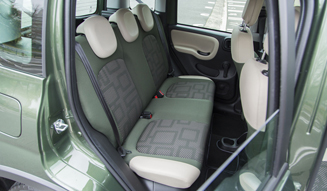
Despite being a 4WD, it's this size with only a manual transmission. Even the rear window is manually operated, a rarity these days. Whether the price of ¥2,516,400 (including tax) for the Panda 4×4 is high or low is for the user to decide. However, for those who find enjoyment in a manual transmission (a rare breed), the spacious and surprisingly practical cargo area, flexible seating arrangements, and stylish interior are sure to appeal. It's a car that hits the mark perfectly.
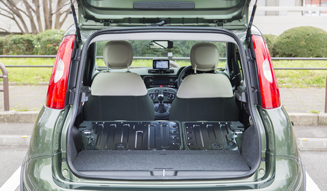
Of course, the number of people who can appreciate this car positively is likely small. For some, the manual transmission alone is a deal-breaker. FCA Japan is aware of this, hence the limited sales. However, Fiat's bold decision to implement a practical two-cylinder engine – unusual for a car today – and the Panda 4×4's adoption of a manual transmission, also uncommon now, make it a valuable presence that defies the automotive hierarchy where bigger is always better.
It might be a personal assumption, but a BMW 3 Series owner might feel diminished next to a 5 Series, and a 5 Series owner would likely not want to park beside a 7 Series. However, driving this car makes you feel detached from such societal automotive hierarchies. It fulfills a desire for ownership without feeling inferior, even when parked next to a Mercedes. Italian manufacturers, especially Fiat, excel at creating distinctive, resonant cars, as exemplified by the Cinquecento.

Fiat Panda 4×4 | A Test Drive
Body Dimensions | Length 3,685 × Width 1,670 × Height 1,615 mm
Wheelbase | 2,300 mm
Tread Front/Rear | 1,410 / 1,410 mm
Vehicle Weight | 1,130 kg
Engine | 875 cc Inline 2-cylinder SOHC Intercooled Turbo
Maximum Output | 63 kW (85 ps) / 5,500 rpm
(ECO Switch ON) 57 kW (77ps) / 5,500 rpm
Maximum Torque | 145 Nm (14.8 kgm) / 1,900 rpm
(ECO Switch ON) 100 Nm (10.2 kgm) / 2,000 rpm
Transmission | 6-speed MT
Drivetrain | 4WD
Tires | 175/65R15
Brakes Front/Rear | Ventilated Disc / Disc
Suspension Front | MacPherson Strut
Suspension Rear | Torsion Beam
Fuel Economy (JC08 Mode) | 15.5 km/ℓ
CO2 Emissions | 150 g/km
Trunk Capacity | 225-870 Liters
Steering Position | Right
Price | ¥2,516,400 (Panda 4×4 Comfort: ¥2,581,200)
CIAO FIAT
0120-404-053 (9:00-21:00, open year-round)