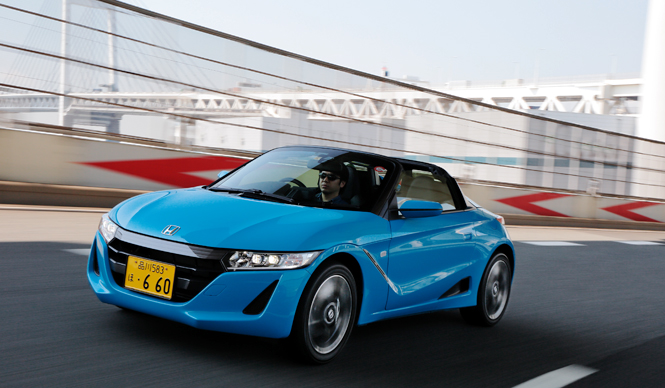
A Drive in the Honda S660, Japan's Tiniest Mid-Engine Sports Car
Honda S660 | Honda S660
A Sports Car Japan is Proud to Show the World
Test Drive: Honda S660, the Smallest Mid-Engine Sports Car
Announced at the 2013 Tokyo Motor Show, theS660 Concepthas finally been released as the long-awaited production model "S660" after two years. The concept of a mid-engine sports car in the Kei car class is a successor to the "Beat," which was released in 1991 and remains popular. The S660, a crystallization of Honda's ambition and technological prowess, which brought the concept car almost directly to production, was immediately taken out for a drive on public roads.
Text by SAKURAI KenichiPhotographs by HANAMURA Hidenori
A Unique Exotic Model
While waiting at a traffic light at an intersection, I lost count of how many pedestrians looked at me and how many took photos with their smartphones. The rarity of the model, being a hot new release, certainly played a part. The car used for the shoot, in a rather flashy and vibrant blue called Premium Beach Blue Pearl, likely contributed as well. However, more than anything, it was the anticipation surrounding this brand-new model, the "S660," that was palpable.
The intense gaze of onlookers is usually reserved for Ferraris and Lamborghinis; Porsches and Aston Martins, sadly, don't quite command this level of attention. Of course, no one drives a car solely to be noticed or to show off, but this illustrates the public's fascination with the newly debuted S660. Ferrari and Lamborghini are ultra-luxury sports cars, each costing well over 20 million yen. To see a car priced at about one-tenth of that garner such attention highlights just how much of a sensation the S660's arrival is.
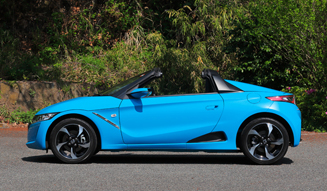
Honda S660 α
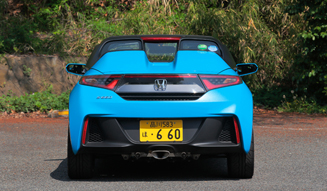
Honda S660 α
While a closer look reveals minor differences in detail, the appearance is essentially identical to the "S660 Concept" that captivated audiences at the Tokyo Motor Show two years ago. The roof is a detachable soft-top, which Honda calls a roll-top. Removing it is simple: release the center lock above the windshield, then undo the two side fasteners and a lever. It's so easy that one person can open and close it. Once removed, the roll-top can be rolled up, as its name suggests, and neatly stored in the utility box under the front hood.
With keywords like mid-engine, open-top, and two-seater, one might think of Italian supercars, but as you know, the S660 is a legitimate Kei car that fits within Japan's Kei car regulations.
For those who remember the "Beat" that debuted in 1991, it will evoke nostalgia, while for today's generation who may not know it, it will appear as a novel Kei car concept.
Furthermore, Honda has a history of selling small sports cars like the "S500," "S600," and "S800," which originated from the concept car "S360" in the 1960s. Coupled with its F1 racing image, many fans still recognize Honda as a sports car manufacturer.
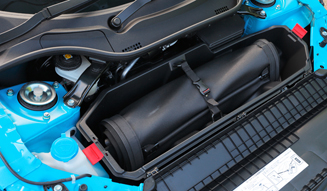
Honda S660 α
Honda S660 | Honda S660
A Sports Car Japan is Proud to Show the World
Test Drive: Honda S660, the Smallest Mid-Engine Sports Car (2)
Rigidity Beyond Its Class: A Testament to the Specially Developed Body
Report at the time of announcementThe vehicle's specifications are detailed in the report, but for a quick recap, the compact body measures 3,395mm in length, 1,475mm in width, and 1,180mm in height, fitting within Kei car dimensions, with a wheelbase of 2,285mm. Located behind the center of the vehicle is a transversely mounted 658cc three-cylinder DOHC turbo engine, familiar from the "N-One" and "N-Box." The turbo system has been specially developed and tuned for the S660, achieving a maximum output of 47kW (64ps) and a maximum torque of 104Nm (10.6kgm).
The transmission options are a 6-speed manual and a 7-speed CVT with paddle shifters located behind the steering wheel. The suspension features MacPherson struts at the front and dual-link struts at the rear. It also boasts 260mm diameter disc brakes front and rear, and the "Agile Handling Assist," a first for Kei cars, which uses these brakes to apply appropriate stopping power based on the vehicle's movement during cornering, facilitating a smooth and stable ride along the intended line.
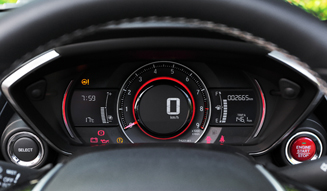
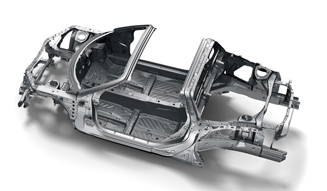
The body, which generously uses 60% high-tensile steel, imparts a remarkably solid impression when you get in, partly due to its small size. Even when going over bumps, this feeling of solidity doesn't waver, and the body remains completely rigid. This high-rigidity chassis has, of course, been specially developed for the mid-engine sports car S660. While a manufacturer of Honda's global scale likely utilizes some shared parts in production, it's clear this car wasn't made easy by simply repurposing parts to prioritize the mid-engine sports car concept.
The solid feel, even in the way the doors open and close, immediately distinguishes it from the practical Kei cars we are familiar with, likely due to its robust body and structure.
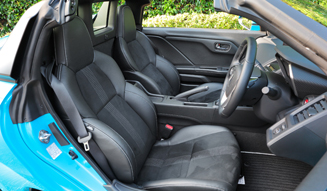
The seats, located beyond the doors which are not excessively large despite being two-door, are compact yet fit the body snugly, offering an attractive design and finish. These are also custom-made items, not shared with other models.
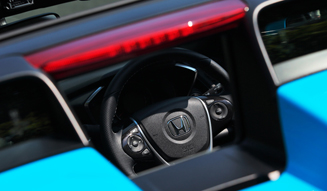
The small steering wheel has a sporty design that complements the S660's cockpit. Once adjusted, the three pedals (accelerator, brake, clutch), footrest, and steering wheel align naturally, allowing the driving position to settle comfortably into your body. My experience tells me that a car where the driving position feels naturally correct is exceptionally well-engineered.
Honda S660 | Honda S660
A Sports Car Japan is Proud to Show the World
Test Drive: Honda S660, the Smallest Mid-Engine Sports Car (3)
The Car Turns Around You
The seating position is remarkably low; a "Prius" driving alongside appears enormous. My eye level feels below the trunk lid of the car in front. Engaging first gear and lightly pressing the accelerator, the S660 smoothly picks up speed without any effort. The immense torque——while not exactly immense, is sufficient to move the 830kg body along with traffic without any strain or stress.
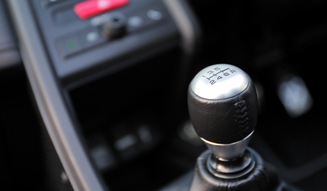
The shift feel is clearly a point of focus, with a sporty, precise engagement requiring only a slight wrist movement. The sound from behind is that of a crisp sports car, immersing you in the exhilaration of driving a mid-engine car.
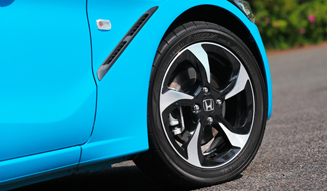
The specially developed Advan Neova tires, sized 165/55R15 at the front and 195/45R16 at the rear, have a tread pattern similar to S-tires, suggesting a focus on dry grip. Surprisingly, the ride comfort is not compromised. This is likely a benefit of the rigid body mentioned earlier. A strong body hides many flaws——(though there are no flaws, to be clear). The suspension is on the firmer side, but it feels mild rather than harsh. The suspension moves well, allowing the tires to utilize their full grip potential.
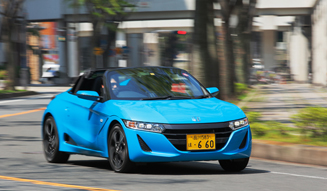
Although the test drive was primarily in urban areas, the performance on winding roads remains unknown. However, the feeling of acceleration with grip, thanks to the weight distribution towards the rear wheels, and the way the front loads up when you lift off the accelerator before a corner, perceptible through the steering, all point to a first-class sports car driving experience. Braking, then slightly turning the wheel early to induce a gentle yaw at the front outside, entering the corner. Finding the clipping point and lightly applying the accelerator. The smooth cornering, with weight transferring to the outside tire, is textbook mid-engine sports car behavior.
As you increase speed, this mid-engine sports car character becomes more pronounced, allowing you to enjoy a drive where the car seems to pivot around you. This is a testament to the low center of gravity chassis and the ideal 45:55 static weight distribution. Crucially, it's easy to gauge the load on each tire, which can be translated to grip on the road. The car's responsiveness is exceptional.
The cornering speed is surprisingly high, and to put it frankly, it doesn't feel like a Kei car at all. While certainly rewarding for skilled drivers, even beginners can fully enjoy the car's movements without hesitation. This is why driving is called a sport, and this car earns the title of sports car.
Honda S660 | Honda S660
A Sports Car Japan is Proud to Show the World
Test Drive: Honda S660, the Smallest Mid-Engine Sports Car (4)
Fun and Sporty Driving
The "Agile Handling Assist" is particularly well-tuned. Its electronic intervention is almost imperceptible, working discreetly to provide precise support for enjoyable sporty driving. Consequently, even at typical city speeds, you experience a stable ride as if all four wheels are glued to the road.
Mid-engine cars are often perceived as being prone to oversteer and easily entering a spin——making them seem difficult to drive. However, the S660 allows you to experience surprisingly fast cornering safely (regardless of legality). While I haven't tested it on a circuit or winding roads, the nervousness one might expect from a mid-engine layout was completely absent during this test drive.
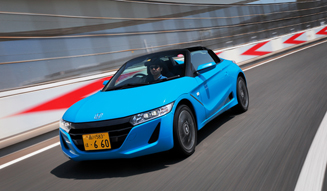
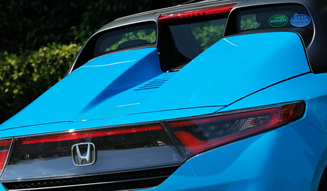
Compared to its rival, the Daihatsu "Copen," another open-top sports Kei car, the S660 has an advantage in stability. On the other hand, when driving with the top down at high speeds, the Copen seemed to handle wind buffeting slightly better. While the S660 offers comfortable open-air motoring at 40-50 km/h, wind intrusion becomes noticeable around 80 km/h, diminishing the sense of exhilaration. Conversations with the passenger required a slightly raised volume. However, considering the legal speed limit for Kei cars, this setup, comfortable up to 80 km/h, is arguably practical enough.CopenDue to the mid-engine layout, there is virtually no space for luggage when carrying two people. Depending on the driver's height, there might not even be space behind the seat, making it impossible to even place a bag. Consequently, its practicality is significantly inferior to the Copen. However, this is a trade-off for the driving enjoyment that comes with a genuine sports car design.
Due to the mid-engine layout, there is virtually no space for luggage when carrying two people. Depending on the driver's height, there might not even be space behind the seat, making it impossible to even place a bag. Consequently, its practicality is significantly inferior to the Copen. However, this is a trade-off for the driving enjoyment that comes with a genuine sports car design.
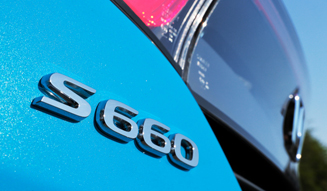
Honda S660 | Honda S660
A Sports Car Japan is Proud to Show the World
Test Drive: Honda S660, the Smallest Mid-Engine Sports Car (5)
The Interior Could Have Benefited from More Material Refinement
The S660 is a mid-engine car that is fun to drive, allowing you to fully enjoy the act of driving itself. Given the constraints of the Kei car class and the compromises in practicality inherent to its mid-engine layout, I won't dwell on them. However, setting practicality aside, if asked whether the S660 is a perfect 100 points solely based on its driving enjoyment, there are indeed some areas for improvement.
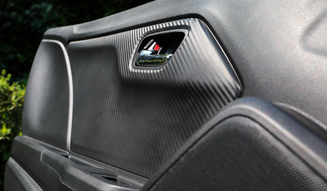
Consider the interior, for example. While one might offer excuses like "it's a Kei car" or "compromises are necessary given the performance and price point of around 2 million yen," the finish is unfortunately rather cheap. The interior design itself is not bad, but the material quality, in particular, does not exceed what one might expect from a typical Kei car. Unlike the N-Box, this is unequivocally a sports car. It's not a car aimed at mass appeal. If sports cars, like SUVs, are chosen based on personal preference, then more effort should be put into selecting interior materials and finishes that provide a quality experience, making unique users feel they made the right choice.
The Booming World of Kei Cars
If the interior had a more premium feel, I believe many people would be eager to purchase it, even if the price were 100,000 yen higher. I'm not suggesting the use of carbon or aluminum in the interior just because it's a sports car. Fiat and Peugeot have already proven that it's possible to create interiors with unique textures and finishes without resorting to expensive materials. The interior could have benefited from more creative material choices and finishes to enhance its appeal.
On the way back to the editorial department after the test drive, while driving along Harumi Dori, I happened to be alongside an older model Copen. As expected, I felt the driver's keen gaze, and I found myself admiring it, thinking, "That Copen is really well cared for." While the Kei car regulations might be an anomaly globally, it's also true that this category is supported by owners with a passion for Japanese automotive culture. It makes me genuinely happy to see a new sports car emerge from Honda's Kei car division, which was once uncertain of its future, and to witness the resurgence of the Kei car category as a vibrant part of Japan's automotive heritage.

Honda S660 | Honda S660
Body Dimensions | Length 3,395 x Width 1,475 x Height 1,180 mm
Wheelbase | 2,285 mm
Tread Front/Rear | 1,300 / 1,275 mm
Minimum Ground Clearance | 125 mm
Weight | (CVT) 850 kg (MT) 830 kg
Engine | 658 cc Inline 3-cylinder DOHC
Bore x Stroke | 64.0 x 68.2 mm
Compression Ratio | 9.2:1
Maximum Output | 47 kW (64 ps) / 6,000 rpm
Maximum Torque | 104 Nm (10.6 kgm) / 2,600 rpm
Transmission | CVT with Manual Mode 6-speed MT
Drivetrain | MR
Suspension Front/Rear | MacPherson Strut / Dual Link Strut
Tires Front/Rear | 165/55R15 75V / 195/45R16 80W
Brakes Front/Rear | Disc
Minimum Turning Radius | 4.8m
Fuel Economy (JC08 Mode) | (CVT) 24.2 km/ℓ (MT) 21.2 km/ℓ
Price | (α MT/CVT) 2.18 million yen (β MT/CVT) 1.98 million yen
Honda Customer Relations Center
0120-112010