Aston Martin's Century of Heritage | Aston Martin
Aston Martin
And Into a New Era
A Century of Aston Martin Heritage
In 2013, Aston Martin celebrated its centenary, marking 100 years since the brand's inception. Founded in Britain by Lionel Martin and his friend Robert Bamford, this world-renowned sports car marque continues to captivate automotive enthusiasts today. Here, we delve into the history of Aston Martin, tracing its evolution across generations from its early days to the present and into the future.
Text by OGAWA Fumio
Winning Races Was the Ultimate Goal
The UK remains a global leader in the production of race cars and sports cars, including Formula 1 machines. Among the traditional sports car manufacturers, Aston Martin, founded in 1913, stands out. The company was established by Lionel Martin, a young man passionate about racing, and his friend Robert Bamford. The name Aston Martin was derived from the Aston Hill climb, a challenging hill road where they frequently competed.
Initially, the primary objective was to win races, so they built cars by combining existing engines with existing chassis sourced from elsewhere. Despite this approach, they achieved considerable success. However, in 1915, they produced a car of their own design, which can be considered their true beginning.
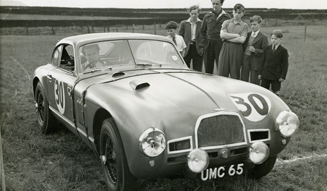
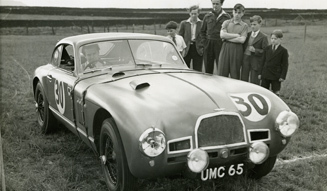
Aston Martin DB2 (1950)
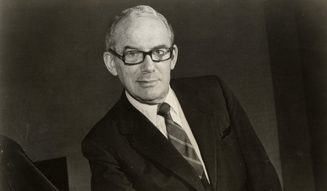
In 1947, industrialist David Brown acquired Aston Martin. The DB series, which continues to this day, is named after his initials.
Between the two World Wars, the company produced a string of successful racing cars that are now highly prized by collectors. However, mass production only began after its acquisition by David Brown in 1947. In the same year, Brown also purchased Lagonda, a British luxury car manufacturer. He acquired the lightweight alloy-block inline-six engine designed by W.O. Bentley, the founder of Bentley, for Lagonda, and fitted it into the DB series.
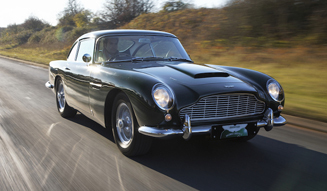
Aston Martin DB5 (1963)
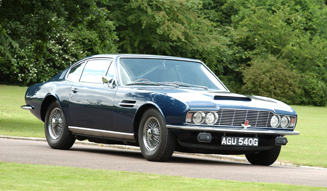
Aston Martin DBS (1967)
If a company, like life, has its ups and downs, then its second peak, its golden age, began with the launch of the DB series in 1950. These grand tourers, bearing David Brown's initials, included the DB2, DB Mark III, and DB4. The DB5, featured in the film "Goldfinger," along with the DB6 and the DBS, which continued into the 1970s, cemented the marque's great reputation.
Aston Martin
And Into a New Era
A Century of Aston Martin Heritage (Part 2)
A Distinctive Style
In terms of styling, numerous models that have left an indelible mark on automotive history were produced. Beginning with the DB4 GT Zagato in 1958, the image of an elegant, powerful, and slightly exotic sports car was carried forward to the V8 in 1972. From the mid-1970s onwards, large-displacement engines and a bold, somewhat unconventional style, exemplified by the large sedan Lagonda in 1976, came to define Aston Martin's identity.
The third golden era began when the company was acquired by Ford's Premier Automotive Group (PAG) in 1999. Building on the DB7 launched in 1994, the Vanquish, unveiled in 2001, marked the beginning of the new generation that continues to this day.
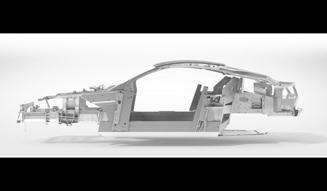
Since 2003, Aston Martin's new models have featured its proprietary body structure, known as VH (Vertical Horizontal) architecture, a lightweight aluminum spaceframe bonded together.
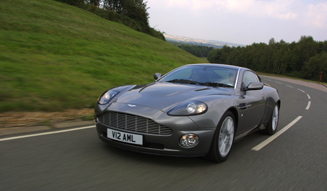
Aston Martin V12 VANQUISH (2001)
After David Brown sold the company in 1971, Aston Martin faced financial difficulties but finally found stability under the umbrella of a major corporation. Initially, the company was managed by Wolfgang Reitzle, a talented engineer recruited from BMW, with the aim of becoming a sports car manufacturer capable of rivaling Porsche.
When Ford disbanded PAG, Aston Martin was purchased by a group of investors in 2007. Ulrich Bez, who had been involved since the PAG era, became CEO. By securing funding from investors in Qatar and elsewhere, he further strengthened Aston Martin's foundation. He elevated the golden age further through the use of a lightweight chassis bonded with adhesives, high-performance V12 and V8 engines, and a diverse product range.
Aston Martin
And Into a New Era
A Century of Aston Martin Heritage (Part 3)
Farewell to Ulrich Bez
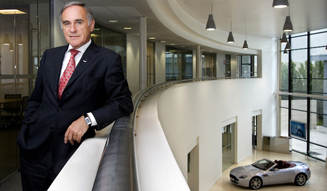
Bez, who had been involved in the development of models such as the 993 at Porsche and the V8 at BMW, eventually transferred management rights and assumed the role of CEO. He secured funding from investors, including those from Qatar, and worked to strengthen Aston Martin's position.
Notable initiatives included active participation in motorsport, such as the 24 Hours of Le Mans and other WEC races, as well as the development of the Chinese market. More recently, the company has continued to generate news through the expansion of its assembly plant in Gaydon, UK, and the introduction of its bespoke service, known as 'Q'.
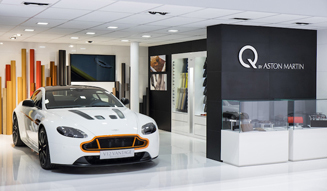
'Q by Aston Martin,' the ultimate personalization service designed to fulfill every owner's request.
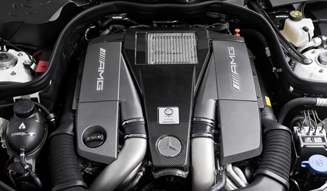
In the summer of 2013, Aston Martin announced a technical partnership with Mercedes-Benz. The integration of AMG-sourced V8 engines is expected soon.
A significant benefit of having a German automotive professional like Bez lead the company has been the strengthening of ties with German car manufacturers. A prime example is the technical partnership with Mercedes-Benz, announced in the summer of 2013. This agreement entails the supply of AMG V8 engines and drive components for Aston Martin's next generation of models.
In an era where development costs are substantial, securing funding and subsequently providing returns to shareholders is crucial. This multifaceted approach is a key strength of Aston Martin today.
Ulrich Bez stepped down as CEO at the end of 2013, and a new CEO is expected to be announced shortly. Aston Martin continues its generational transition, moving into a new era.