Rolls-Royce: The World of Bespoke Craftsmanship
Rolls-Royce
In Pursuit of Ultimate Comfort
Rolls-Royce: The World of Bespoke
Founded in Britain in 1904, Rolls-Royce Motor Cars celebrates its 110th anniversary this year. The art of bespoke, tailoring cars based on individual commissions, is a hallmark of the company's craftsmanship that continues to this day. Recently, artisans from the Goodwood headquarters were invited to Japan for "The Icon Tour," showcasing their master skills.
Text by OGAWA FumioPhotographs by ABE Masaya
110 Years Since Rolls and Royce Met
"Bespoke," meaning custom-made, is a key selling point for Rolls-Royce Motor Cars. With artisans ready to fulfill any special request, let's take a glimpse into the world of bespoke, prompted by their recent visit to Japan.
"Bespoke commands a significant extra cost. The fact that many still choose it is likely a testament to their success," says Dan Palmer, General Manager for the Asia Pacific region.
He explains that the elaborate event, which included bringing artisans from the UK for live demonstrations, was held to introduce more people to the allure of the Rolls-Royce brand, epitomized by its bespoke offerings.
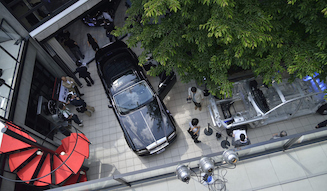
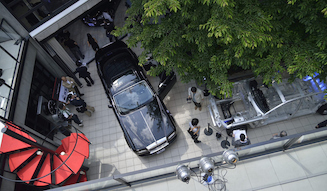
Held in Roppongi, Tokyo, on May 16, 2014, this user-focused event, titled "The Icon Tour," marks the 110th anniversary of the meeting between Rolls and Royce and is the first stop in an Asian tour.
The event features various elements, including bare chassis, engines, and test drives, with the highlight being an introduction to the world of bespoke. Future stops are planned for Hong Kong and Seoul.
Rolls-Royce
In Pursuit of Ultimate Comfort
Rolls-Royce: The World of Bespoke (2)
The artisans who traveled from the UK were Uls Meiner, head of the bespoke department; Mark Court, responsible for decorative painting; and Hana Clear, who handles sewing for seats and other upholstery.
"We train highly skilled technicians to meet our customers' complex demands. We can offer any color for body paint and seat leather, provided it's not patented. We approach requests for wood, interior materials, special leathers, and embroidery with an open mind," Clear states proudly.
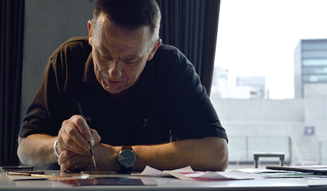
Mark Court, Decorative Painter
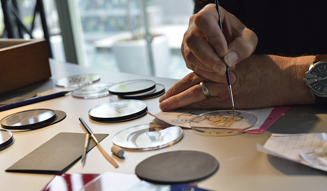
"Before working at Rolls-Royce, I painted pub signs. After joining, I trained at the Berlin motorcycle factory, honing my skills on the fine coachlines of fuel tanks and fenders for BMW Motorrad products." Court speaks, displaying a variety of brushes, including some made ofリス (squirrel) hair, which he says are particularly good for paint application.
"With cars, you have to draw a six-meter line in one go without any unevenness or brush marks. It requires absolute concentration." Among the brushes he brought were some made of squirrel hair, which he notes are "particularly good for paint application."
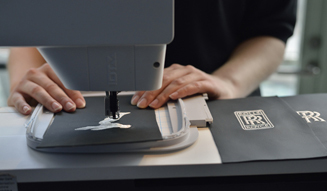
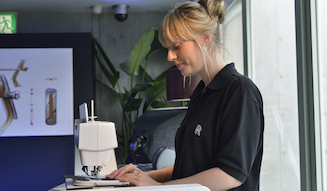
Hana Clear, Seat and Upholstery Seamstress
Clear, an Associate in the sewing department, highlights the quality of the leather used in Rolls-Royce cars.
"We use leather from cattle raised on pastures protected by low-voltage electric fences, not barbed wire, to prevent scratches. The tanning and dyeing processes are complex, but we spare no expense to achieve perfection, selecting the best parts from 11 cows for a single Rolls-Royce."
The beauty of bespoke lies in its reflection of national and cultural influences. While some specifications, perhaps quintessentially British, include picnic sets integrated into the luggage compartment, the burgeoning Chinese market sees requests for special red hues and embroidery of dragons and horses.
"But they probably can't be resold in other countries, can they?" the staff member jokes.
Rolls-Royce
In Pursuit of Ultimate Comfort
Rolls-Royce: The World of Bespoke (3)
A Feeling Like Being in Your Own Home
The Rolls-Royce bespoke department handles two main types of commissions. One is based on individual customer requests, often incorporating elements like royal crests. The other is one-off models created for shows and events, known as collection models.
The latest collection model, unveiled at the Concorso d'Eleganza Villa d'Este in Italy in June, is the "Phantom Drophead Coupé Waterspeed Collection". This unique car was created by the bespoke department as a tribute to Sir Malcolm Campbell, who set speed records in the 1920s with his Bluebird.
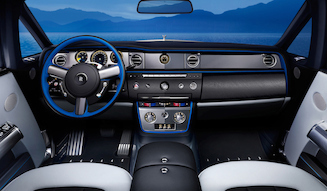
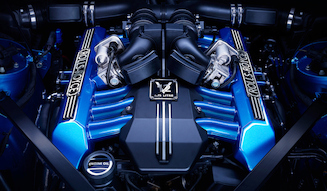
The body is finished in Majorelle Blue, the same color as the Bluebird, with nine layers of paint meticulously hand-polished. The intricate coachlines were also hand-drawn by a specialist over many hours, and the metal panels were hand-formed by skilled craftsmen using tools.
As automotive automation advances and in-car connectivity and safety features become more sophisticated, differentiation from competitors to maintain a top-tier image will increasingly rely on bespoke customization. "A feeling like being in your own home" is how Palmer describes the appeal of bespoke. It is perhaps this pursuit of ultimate comfort that drives people towards bespoke.