An Interview with Joji Nagashima, BMW's Japanese Designer | BMW
BMW
The "Shape of BMW" Continues into the Future
An Interview with Japanese Designer Joji Nagashima
Many harbor a vague admiration for BMW cars, seeking a stylishness distinct from Japanese automobiles. But did you know that the person in charge of their design is actually Japanese? Top Japanese designers who have ventured onto the world stage are now active in various European manufacturers. Mr. Joji Nagashima, introduced here, is one of the foremost among them. This is his first appearance on OPENERS.
Interview & Text by KAWAMURA YasuhikoPhotographs by TSUKAHARA Takaaki
Perhaps Germany Next?
──You've been active at BMW since 1988, but you actually had a career before that, with over 30 years in Europe?
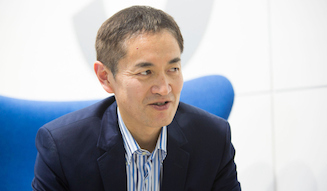
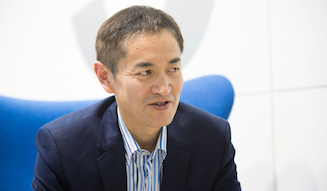
Joji Nagashima (hereinafter, Nagashima)Yes, I actually first joined Opel. I graduated from a university in Detroit, USA, and one of my professors had connections at Opel, so I joined in 1980. It was still West Germany back then. I worked on production cars, but mainly focused on concept cars and rally cars.
──However, you suddenly moved to Renault four years later.
NagashimaI was headhunted. From Germany, it's easy to get to Paris, right? So I thought, 'I'd like to try France, maybe I should go' (laughs).
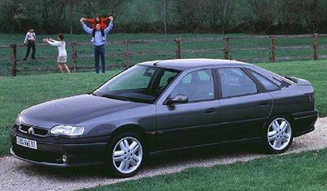
Renault Safrane
──So, was your interest in France as a country and Paris as a city greater than your interest in Renault itself?
NagashimaThat might have been part of it, but it wasn't just that. Renault was state-owned at the time and performing very poorly. However, when a company is in that situation, everyone's desire to 'change the company somehow' becomes stronger, right? In times like those, you can try more things with design.
France has a unique atmosphere even within Europe, so I could have new experiences. Plus, with the company in that state, I thought it might be interesting. After joining, I first worked on the design of a four-door model called 'Safrane'.
──And that design won an internal competition?
NagashimaRenault's design at the time was rather old-fashioned. It wasn't very internationalized, and the designs were very 'typically French.' Perhaps that was a good thing.
──Yet, you left Renault after only three years.
NagashimaIt was quite challenging for various reasons. Not so much that the 'work was difficult,' but rather that many things were simply not well-organized. My rhythm of life, my lifestyle, became a bit difficult. Of course, there were many good aspects too. So, I thought, 'Perhaps Germany next' (laughs).
BMW
The "Shape of BMW" Continues into the Future
An Interview with Japanese Designer Joji Nagashima (Part 2)
The "Z3" Was a Practice Piece for Clay Modeling
──You've been at BMW since 1988, but there are many manufacturers in Germany besides BMW, aren't there?
NagashimaGermany really changes atmosphere depending on the region. Of course, it might be different now, but back then, the northern parts felt like everyone was a police officer. The doorbell rang, I opened the door, and there was a stranger saying, 'Your window is dirty' (laughs). But the southern part, where BMW is located, was completely different. It was comfortable to live there, almost like Italy.
──So, if Mercedes had been in the south, would you have gone there?
NagashimaThere were other reasons, so I probably wouldn't have gone there anyway (laughs). In any case, the work content is important, but since you're living there for many years, the location is also important. Munich is closer to Paris than to northern Germany, for example.
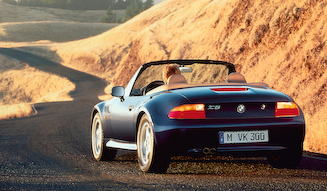
BMW Z3 Roadster
──And then you joined BMW and first worked on the "Z3." Was that something you initiated because you wanted to design a sports car?
NagashimaThat was about one or two years after I joined. It started as a project for clay modelers to practice on, a 'split model' where one half would be mirrored to create a whole car. Honestly, it started with a 'anything goes' attitude (laughs).
──So, it wasn't decided at that point that it would go into production?
NagashimaNot at all. However, around that time, there was a wave of popularity for small sports cars.
──From Mazda!?
NagashimaI can't say (laughs), but at any rate, it was later upgraded to an official project, and then it really began. Around the same time, there was also the E30 (second-generation "3 Series"), which was also selected in a competition. I forget which one came first.
BMW
The "Shape of BMW" Continues into the Future
An Interview with Japanese Designer Joji Nagashima (Part 3)
Finding the "BMW Shape"
──Regarding recent BMW cars, the core models like the "3 Series," "5 Series," and "7 Series" have a similar feel, and one might say their designs seem to be converging. Furthermore, with the recent addition of various new models in between, I personally feel that their individual characters are becoming less distinct.
NagashimaI understand what you mean (laughs).
──So, will there eventually be a course correction towards a direction where each model, like the 3, 5, and 7 Series, possesses a strong individual identity, similar to when Chris Bangle was the Design Director?
NagashimaHmm, we have to do that. However, I believe Bangle's influence was necessary to strongly emphasize the family resemblance as we see it now. The fact that they appear a bit more subdued recently is, I believe, an intentional result about 80% of the time.

BMW 3 Series

BMW 5 Series
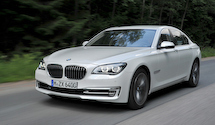
BMW 7 Series
──Changing the subject, personally, I don't really see the electric "i3" as having the "BMW shape" (laughs).
NagashimaMy job is to check the works in progress of all designers. But recently, the number of models has increased so much that I can no longer see them all.
──What about the Active Tourer (which generated buzz as BMW's first front-wheel-drive model)?
NagashimaI wasn't involved in that (laughs).
──For example, the i3 fundamentally doesn't have an "engine room." Even so, is there a concept of expressing "BMW-like proportions" within that?──
NagashimaWe have to, but we haven't achieved it yet. Just like the 3, 5, and 7 Series, it takes several generations to develop a "BMW-like shape." So, I believe the i3, being its first model, still lacks that. Of course, the face, for example, clearly has the expression of a BMW car.
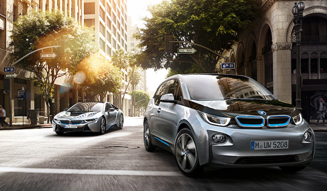
BMW i3
BMW
The "Shape of BMW" Continues into the Future
An Interview with Japanese Designer Joji Nagashima (Part 4)
Models That Remain, Models That Change
──The "X5," with its new model, has barely changed in size or packaging.
NagashimaIt's true that it's very close to the previous generation. But that doesn't mean it will stay that way. It's not that we won't change it in one generation, but on the other hand, there's the difficulty of not knowing if a major change will be successful.
──The "3 Series Coupe" became the "4 Series." Does a name change like that alter the designer's mindset?
NagashimaThis is clearly aiming for the upper market. Visually, it's been clearly elevated by one level.
Regarding width, we've been very restrained to accommodate Japan's mechanical multi-story parking garages. If that weren't a factor, the width would likely be even greater. However, that falls under 'packaging,' and we actually have no authority to meddle with that.
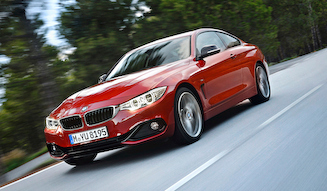
BMW 4 Series Coupe
Personally, I think the E30 (second-generation 3 Series) was truly excellent (laughs).
──Finally, hearing such a "candid opinion" from Mr. Nagashima, he is no longer just a designer, but a "Design Conductor" who controls the overall direction of future design, and we can expect him to continue to shine. With the addition of EV and front-wheel-drive models to its lineup, BMW cars are embarking on a new start, and we eagerly anticipate their designs.

BMW AG, Head of Exterior Creative Design
NAGASHIMA Joji
Born in Tokyo in 1955. After graduating from Musashino Art University's Department of Industrial Design, he moved to the US for graduate studies. From 1980, he worked on concept and rally car designs at Adam Opel. In 1985, he designed the "Safrane" at Renault. He then joined BMW in 1988 and has been there since, with major works including the "Z3" (1996), "5 Series" (1996), and "3 Series" (2005). Most recently, he was involved in the design of the "Gran Lusso Coupe".