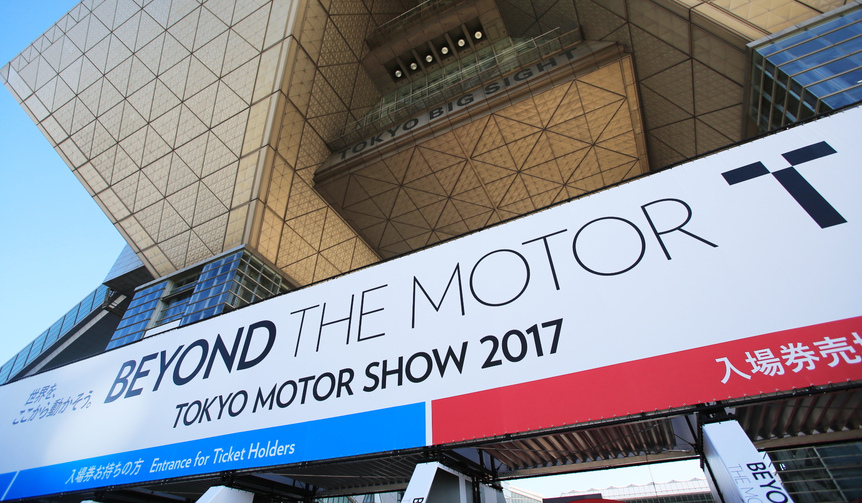
Tokyo Motor Show 2017: An Insider's Look with Hirohisa Kaneko
Tokyo Motor Show 2017 | Tokyo Motor Show 2017
Tokyo Motor Show 2017: An Insider's Look with Hirohisa Kaneko
The Tokyo Motor Show 2017, Japan's largest auto exhibition held every two years, has opened. This is a summary of the show from the perspective of a motor show journalist who toured the press day events before the public opening. The first installment features Hirohisa Kaneko.
Tokyo Motor Show 2017: An Insider's Look with Fumio Ogawa
Photographs by ARAKAWA Masayuki & othersText by KANEKO Hirohisa
The Future of the Tokyo Motor Show
Tokyo Motor Showis at a crossroads. This is the impression I got after walking around the complex venue at Tokyo Big Sight.
First, the number of exhibiting manufacturers from overseas has decreased again. Not a single manufacturer from America, Britain (including BMW's MINI), or Italy is exhibiting. This means we can no longer enjoy seeing the supercars and ultra-luxury cars, such as Rolls-Royce, Bentley, Aston Martin, McLaren, Ferrari, and Lamborghini, which are rarely seen in normal circumstances.
The show has become limited to Japanese and German manufacturers, with a few from Volvo. The very purpose of a motor show is to offer a comprehensive view of the world's automobiles, so it is regrettable that it has become so one-sided.
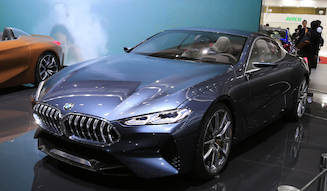
BMW Concept 8 series
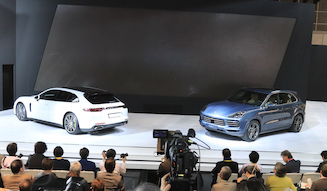
Porsche panamera / cayenne
In previous shows, there were always a few world premiere models from imported car manufacturers, but this year, there wasn't even one, which was quite disappointing.
The venue being divided into the East and West Halls, with each hall further subdivided into smaller rooms, is nothing short of a flaw for a motor show venue. The organizing body should fundamentally rethink the venue setup and start over.
Even so, there were some impressive exhibits.
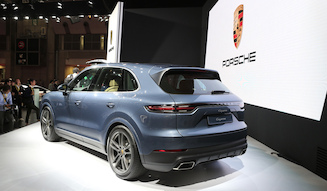
Porsche Cayenne
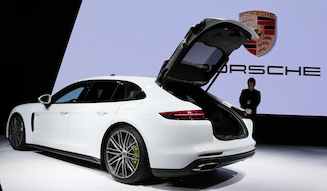
Porsche Panamera Turbo S e-Hybrid Sport Turismo
Immediately upon entering the East Hall, Porsche unveiled the "Cayenne" and the "Panamera Sport Turismo" for their Asian premiere. It was purely coincidental, but the fact that the two cars unveiled by Porsche were not two-door sports cars, but an SUV and a GT, symbolizes the era.
SUVs have now gained complete acceptance and have become central to the lineups of many manufacturers. What was once merely an alternative choice for a select few who were tired of sedans and station wagons is now offered by virtually every manufacturer. This was clearly evident at the show.
From high-performance luxury SUVs like the Cayenne to mini-van-based SUVs, the range is vast. The generalization and diversification of SUVs have perhaps become so widespread that they no longer stand out, but this was one of the major trends at this Tokyo Motor Show.
Tokyo Motor Show 2017 | Tokyo Motor Show 2017
Tokyo Motor Show 2017: An Insider's Look with Hirohisa Kaneko (Part 2)
The Major Trends: Diversification of SUVs and EV/Autonomous Driving Technology
Generalization often leads to a plethora of mundane items that have simply become part of the routine. Amidst this, Yamaha's concept car, the "Cross Hub Concept," stood out. It's a three-seater pickup truck capable of carrying two motorcycles. Pickups are one of the origins of SUVs, and with the reintroduction of the Toyota Hilux in Japan, a return to these roots is occurring. This also aligns with the trend of SUV diversification.
As expected, the electrification of powertrains, such as EVs (electric vehicles) and plug-in hybrids, and the development of autonomous driving technology are also reflected in the concept cars, following the global trend. Audi showcased the "A8", which incorporates the most advanced Level 3 autonomous driving technology, and next to it was the concept car "Elaine", which achieves full Level 4 autonomous driving.
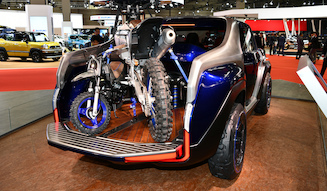
YAMAHA CROSS HUB CONCEPT
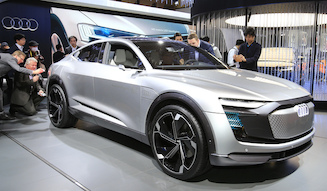
Audi Elaine
Mercedes-Benz has been advocating the concept of "CASE" even before the show. This acronym stands for Connectivity, Autonomous Drive, Sharing, and Electrification. These are the four elements that not only Mercedes-Benz but also future automotive development aims to achieve, and they will significantly transform mobility.
The realization of these elements will lead to the elimination of traffic accidents, improved energy efficiency, and reduced human burden. The inherent drawbacks of automobiles will be largely resolved, and the time previously spent driving can be used effectively for personal pursuits. Audi metaphorically explains this by stating that "Elaine can create one hour, extending the day to 25 hours."
Tokyo Motor Show 2017 | Tokyo Motor Show 2017
Tokyo Motor Show 2017: An Insider's Look with Hirohisa Kaneko (Part 3)
The Key to the Future: The Power of Design
Will such an era truly arrive soon?
It sounds almost too good to be true, making me a bit suspicious. If it does, cars will transform into mere means of transportation. The joy of driving and the pleasure of maintaining and cherishing old cars will become purely niche hobbies.
These cars will be supported by advanced digital technology, and various standards will likely be unified, making it inevitable that cars will become increasingly similar. Automobile manufacturers will no longer be able to differentiate their products as they do now.
While this trend is already noticeable, what will manufacturers use to appeal their products to customers when that time comes?
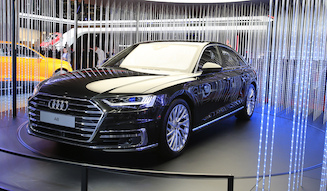
Audi A8
Design and brand will undoubtedly become crucial.
Mazda's"Vision Coupe" and "Mazda Kai Concept" shown at this exhibitionstrongly emphasized exterior design.
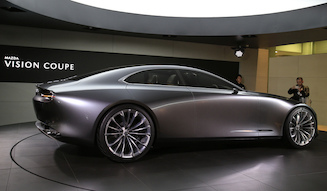
Mazda VISION COUPE
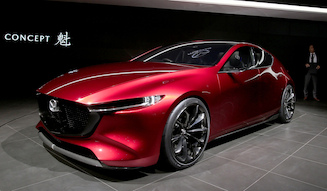
Mazda 魁 CONCEPT
The Vision Coupe is a four-door coupe that evolves the "Vision RX" exhibited at the previous Tokyo Motor Show, and it is the epitome of refinement. Composed of simple lines and surfaces, it may appear plain at first glance, but its extremely restrained and meticulously crafted form is infinitely beautiful. It is so smooth to the touch that one wants to caress it, and it even seems to possess a life of its own. It is undoubtedly one of the standout vehicles of this show. I highly appreciate the long-term vision and effort to develop the previous Vision RX.
The "Mazda Kai Concept," a more realistic proposal, hints at the next-generation Axela and demonstrates Mazda's focus on design.
Mazda is not solely focused on electrification; they have also just announced "Skyactiv-X," which pursues engine efficiency to the extreme. Furthermore, their booth's presentation was meticulous, and they succeeded in showcasing their uniqueness at the motor show. If more manufacturers like Mazda had offered such substance and displays, the Tokyo Motor Show would have been far more fruitful.
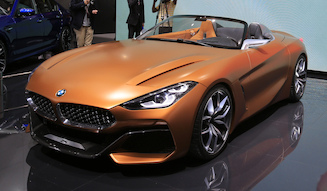
BMW concept Z4
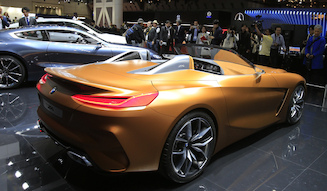
In terms of design, BMW brought the beautiful "8 Series Concept" and the " which appears to be close to production "Concept Z4". Both are large two-door GT and sports car models, representing the glamour of the automotive world.
Conversely, it was disappointing not to see the "Supra," which is said to be a sibling model to the Z4, or a successor to the "S-FR" compact sports car exhibited previously, from Toyota. Especially when cars are becoming mere utility items, sports models are precisely what is needed.
Tokyo Motor Show 2017 | Tokyo Motor Show 2017
Tokyo Motor Show 2017: An Insider's Look with Hirohisa Kaneko (Part 4)
Exhibits of Cutting-Edge Technology and Unique Approaches
A notable trend in design is the near disappearance of the retro style that was once very popular. The only exception was Volkswagen's concept car, the "I.D. BUZZ." Perhaps with the immense and challenging tasks presented by CASE, as mentioned earlier, there is no time to look back at the past. Incidentally, the I.D. BUZZ is a Level 5 fully autonomous vehicle that even lacks a steering wheel.
Lexus strongly emphasized autonomous driving. They announced the "LS" with its advanced driver-assistance technology, and unveiled the "LS+ Concept," which aims to achieve Level 4 autonomous driving on expressways by 2020.
At the previous show, they exhibited a concept car based on the LS, powered by a fuel cell. However, this concept car only mentioned autonomous driving technology, with no details on the powertrain or anything else. This suggests that autonomous driving technology is currently Lexus's most pressing challenge. In fact, the newly announced LS is equipped with the most advanced driver-assistance technology among current Japanese cars, and it has turned out as intended.
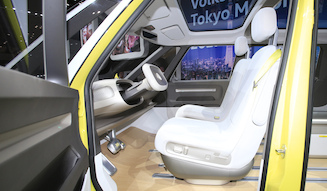
Volkswagen I.D.BUZZ
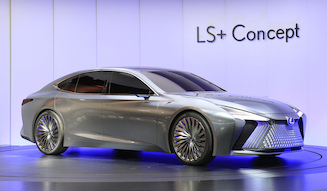
LEXUS LS + concept
Although there were no specific exhibits like concept cars, Toyota's Executive Vice President Didier Leroy made a subtle yet significant announcement.
He revealed that Toyota's research institute currently has 200 engineers working diligently to commercialize next-generation "all-solid-state batteries" by the early 2020s, which will replace the lithium-ion batteries used in current plug-in hybrid and electric vehicles.
If these batteries become practical, the landscape of next-generation vehicles and the balance of power among manufacturers could change dramatically. Hearing this, I was excited and wished they could have shown at least a glimpse of it, even if through concept cars or imagery. After all, a motor show is a place to inspire dreams.
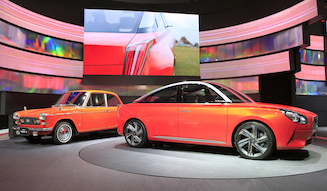
Daihastu Compagno
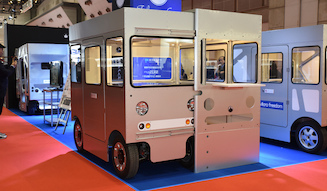
Takayama Cars Micro freedom
In contrast to Toyota, Daihatsu attracted attention with its charming "Compagno" concept car. Its level of completion was so high that I wished they would put it into production. However, Daihatsu has a history of creating appealing concept cars that never make it to market, so I'm wary of being fooled again.
A motor show is not solely the domain of major manufacturers. Seeing exhibits from small, unknown venture companies relying on their ideas is also part of the show's appeal. This time, as in the past, there were cars that would be fun to own if they sold well, such as the "Ikeya Formula," a sports car resembling a classic racing car but road-legal, and the surprisingly feasible "Freedom Space."
As mentioned at the beginning, the Tokyo Motor Show is at a crossroads. This reflects the rapid changes occurring in automobiles themselves. While it's undeniable that the show was less vibrant compared to European and American shows, there were still remarkable exhibits like Mazda's. I hope the organizing body will engage in thorough discussions and make a renewed effort for future shows.