Interviews with Key Figures at the Tokyo Motor Show | CITROEN
CITROEN
CITROEN CEO Linda Jackson
Citroen: Inspiring People
Now that the DS line has become an independent brand, what is Citroen aiming for? We spoke with CEO Linda Jackson, who visited Japan for the Tokyo Motor Show.
Text by OGAWA FumioPhotographs by ARAKAWA Masayuki
A Brand for Those Who Want to Be Different
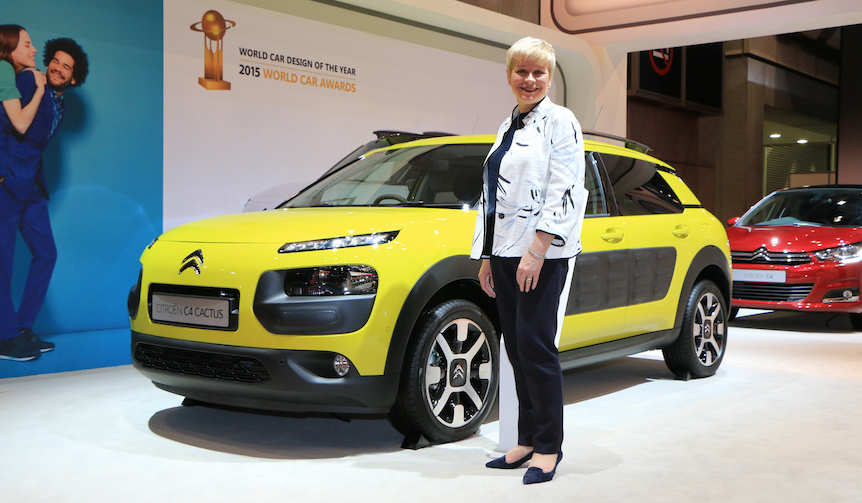
Citroen brought its European bestseller, the C4 Cactus, to the Tokyo Motor Show. It features a rounded shape with what are called 'Airbumps'—resin panels resembling rubber—on the doors. Its cute yet dynamic styling is eye-catching. It's a shame it sells so well in Europe that it's rarely imported to Japan. The appeal of Citroen cars lies in their diversity. Even their minivans have a playful spirit and unique features. They are truly user-centric.
Linda Jackson, CEO of France's Citroen, visited Japan for this show. Appointed in June 2014, her key task now is to navigate the three brands within the group, including Peugeot, now that DS has become an independent brand. While one might see the sales network in Japan as not yet catching up to its potential, the brand still has significant room for growth, making its future Japanese strategy a topic of great interest.
—Now that the DS line, which has driven one extreme of Citroen's image with its sharp edge, has become an independent brand, what will Citroen's strategy be?
I am positive about Citroen's future. The separation of Citroen and DS in June 2014 was a great opportunity. It allows us to concentrate on the 'Citroen' brand. Without being pulled in two directions by DS, we are now focused on communicating our core values to customers.
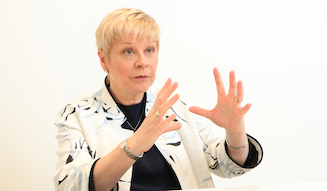
Linda Jackson
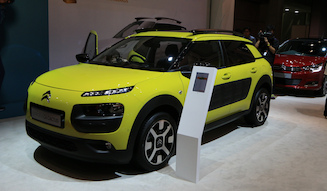
Citroen C4 Cactus
—What kind of brand do you want Citroen to be?
In a word, it's a brand for people who want to be different. At the same time, it's a brand that makes you feel good. As a brand competing in a market with many rivals, we believe it's essential to stand out. This requires a distinctive appearance that sets us apart from other cars. That distinctiveness comes from creativity, particularly in styling. The C4 Cactus has a unique style unlike anything else, which is crucial for Citroen.
—The 'C4 Picasso' and 'C4 Grand Picasso' sold in Japan have unique features that differ from Japanese and German minivans, which seems to be a strength.
If styling is the primary means of market success, then functionality is the second. This includes ride comfort, interior design, and cargo space—elements that make users feel they need a Citroen in their daily lives. For example, the C4 Picasso is a model designed with diverse seat arrangements and optimized space efficiency.
—You mentioned 'feeling good' earlier; could you elaborate a bit more?
In English, we call it 'feel good,' which translates to 'making life easier.' For cars, this means improving the usability of the vehicle in daily life by enhancing connectivity—wireless technology—and providing infrastructure that allows various apps to be used within the car. However, due to the involvement of communication technology, there can be differences between markets.
Citroen also emphasizes its heritage. There's potential for the hydropneumatic suspension.
CITROEN
CITROEN CEO Linda Jackson
Citroen: Inspiring People (2)
The 2CV and Méhari Are Still Major References
Citroen CEO Linda Jackson is currently pursuing a unique branding strategy among the brands within the same group, Peugeot and DS.
—Many overseas car manufacturers are now actively working to help younger generations understand their heritage. Besides DS, Citroen also has popular models like the '2CV' and 'Méhari.' How do you incorporate this heritage?
Citroen has a Conservatoire in Paris, preserving over 100 past models. When I became CEO, I gathered my team there for a full day to deeply consider what Citroen truly is. Fortunately, we have fans all over the world. There are passionate Citroënistes in Japan, and in Brazil too. What is Citroen? What we've learned from our heritage is that it's something that inspires people.

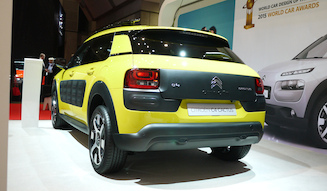
—At the 2015 Frankfurt Motor Show, you unveiled an open-top version of the Cactus called the 'Cactus M concept car.' The 'M' reportedly stands for Méhari, sparking discussion about its connection to that classic model. Why the Méhari?
If asked whether we intend to build the Méhari again, I would say no. When asked if we plan to produce the 2CV, which was manufactured from 1949 to 1982, again, I reply: We could never create something so wonderful twice. However, both the 2CV and the Méhari continue to be major inspirations for us today. These originals taught us the important lesson that silhouette creates identity. You can recognize a Citroen just by its silhouette on the street. That is what matters.
—What about the unique hydropneumatic suspension, once synonymous with Citroen's luxury models, which used hydraulics and nitrogen gas? While current models no longer feature this system, could a similar system be adopted in the future?
Of course, we can't rule it out. The possibility always exists. What's important for a Citroen is a comfortable ride. We will be strongly focusing on this going forward and are open to new technologies to achieve it. The previous hydractive suspension combined with electronic control was too expensive. If we can develop a more affordable yet effective technology and implement it across all models, it could create a new character.