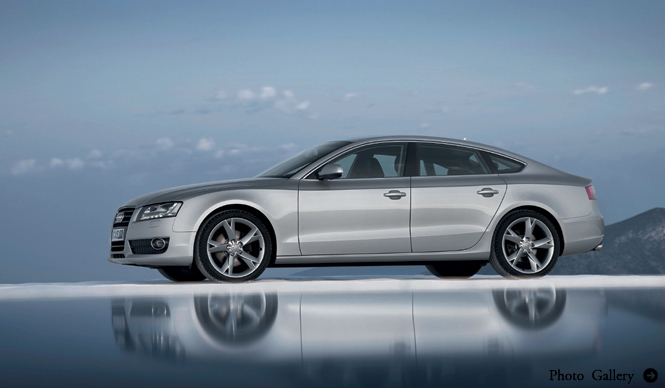
Audi A5 Sportback | The elegance of a coupé, the comfort of a sedan, and the practicality of an Avant.
Audi A5 Sportsback | Audi A5 Sportback
The elegance of a coupé, the comfort of a sedan, and the practicality of an Avant.
Audiannounced that sales of the "A5 Sportback" will begin in Europe from September.
Text by Giraffe
Two gasoline and three diesel power units
This model is the production version of the "Sportback Concept" that was unveiled at this year's Detroit Auto Show and generated considerable buzz. The concept of being as elegant as a coupé while combining the comfort of a sedan and the practicality of an Avant appears to have been carried over directly.
The power units adopted are two gasoline engines: a 2.0-liter inline-4 "TFSI" (211ps) and a 3.2-liter V6 (265ps), and three diesel engines: a 2.0-liter inline-4 turbo diesel "TDI" (170ps), a 2.7-liter TDI (190ps), and a 3.0-liter V6 TDI (240ps). All of them are direct-injection and comply with Euro 5 emissions standards. Furthermore, Audi's traditional quattro all-wheel drive system is employed in the gasoline models.
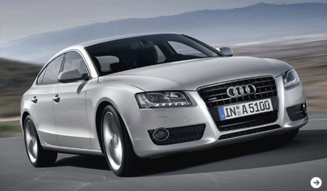
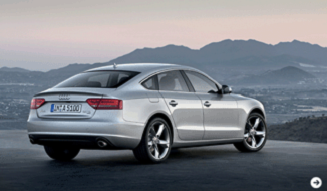
Official unveiling at the Frankfurt Motor Show in September
The body dimensions, utilizing the platform shared with the A4 and A5, are 4711mm in length, 1854mm in width, 1391mm in height, and a wheelbase of 2810mm. While the front and rear overhangs are shorter than the A4's, the overall length, width, and wheelbase are slightly larger, with a lower vehicle height.
The interior space comfortably accommodates four adults, and it offers a luggage capacity of 480 liters, the same as the A4 Avant. With the rear seats folded down, the capacity expands to an impressive 980 liters.
Along with the announcement of sales commencement, the sporty "S line" trim was also revealed. This model features exclusive interior and exterior parts, allowing for a more sporty aesthetic.
The A5 Sportback will officially debut at the Frankfurt Motor Show in September before commencing sales in Europe. The German domestic sales price is announced at 36,050 euros (approximately 4.8 million yen).
Audi Communication Center
0120-598-106
BRAND HISTORY
Audi's emblem is the "Four Rings." As you may know, each ring represents one of the automotive manufacturers: Audi, DKW (de:ka:ve:), Horch, and Wanderer. All were based in Saxony and were leading brands in the German automotive industry at the beginning of the 20th century. However, facing the repercussions of the Great Depression after World War I, the four companies formed Auto Union in 1932 to survive. DKW specialized in motorcycles and small cars, Wanderer in mid-size cars, Audi in premium mid-size cars, and Horch in luxury cars.
However, following Germany's defeat in World War II, Saxony in East Germany fell under Soviet occupation, and Auto Union ceased to exist. Anticipating this, the new Auto Union was established in Ingolstadt, Bavaria, in West Germany. Unlike BMW and Mercedes-Benz, Auto Union faced a challenging start without existing factories, but gradually built its strength through production of vehicles like the DKW delivery van.
Acquired by Volkswagen at the end of 1964, Auto Union soon introduced new models bearing the Audi name. In 1969, it merged with NSU (known for its development of the Wankel engine), headquartered in Neckarsulm, becoming Audi NSU Auto Union, and since 1985, it has continued as Audi to the present day. Technologies such as quattro, dynamic performance backed by motorsport activities, elegant design, and high-quality finishes are driving Audi's popularity.