March 4, 2015
Audi TTS Coupe | The Performance of a "Toned" TT (Part 1) - Audi TTS Coupe Test Drive
Audi TTS Coupe
The Power of a "Tuned TT" (Part 1)
2008 is "The Year of Audi" – we test-drove Audi's exceptionally sporty and design-conscious TTS Coupe, one of the many new models being released, to confirm its capabilities.
By Satoshi UbukataPhotos by Masayuki Arakawa
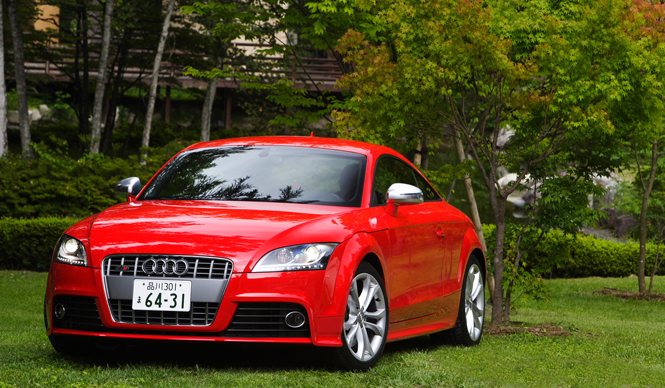
Subtly SportyWhat is the most Audi-like model right now? If asked, we would confidently answer, "The TT."
This is because the first-generation TT, launched in 1998, created a new form of sports car with its sharp design, and the second generation in 2006 achieved impressive weight reduction through Audi's signature aluminum space frame technology, symbolizing the Audi brand.
The "TTS" introduced here is the TT, meticulously engineered to the standards of Audi's traditional sports version, the "S model."
S models are production cars that generously incorporate technology cultivated through motorsport, characterized by their high-performance engines and Audi's proprietary full-time four-wheel-drive system, "quattro." The lineage traces back to the "Audi Coupe S2," which debuted in 1990. Currently, the lineup includes top-tier models for each range, led by the "S8," along with the "S6," "S5," and "S3" (not available in Japan).
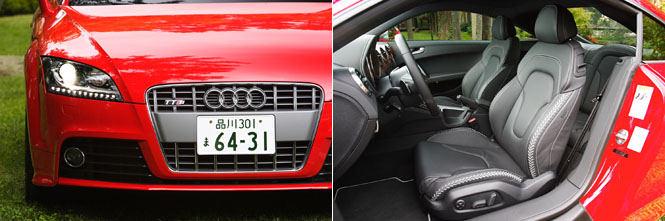
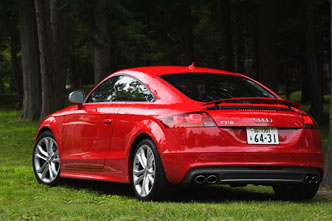
The silver-shining door mirrors, the single-frame grille with prominent vertical bars, the headlights with integrated LED daytime running lights, the quad exhaust pipes, and the TTS emblem are the distinctions from the base model. One cannot help but feel the S model lineage in the way these elements subtly convey sportiness.
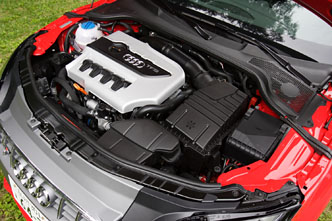
A Swift 0-100 km/h in 5.2 SecondsIn contrast, the engine evolution is remarkable.
The 2.0-liter direct-injection gasoline engine, "2.0 TFSI," based on the engine for the "TT 2.0 TFSI," has been enhanced with a larger turbocharger, reinforced components, and revised design, resulting in an advantage of 72 hp (53 kW) and 70 Nm, achieving a high performance of 272 hp (200 kW) at 6000 rpm and 350 Nm between 2500-5000 rpm. Combined with the 6-speed S tronic dual-clutch transmission and quattro, it boasts a top speed that marks 100 km/h from a standstill in just 5.2 seconds.
BRAND HISTORY
Audi's emblem is the "Four Rings." As you may know, each ring represents one of the automotive manufacturers: Audi, DKW, Horch, and Wanderer. All were based in Saxony and were leading brands in the German automotive industry at the beginning of the 20th century. However, affected by the Great Depression following World War I, the four companies, in a bid for survival, formed Auto Union in 1932. DKW specialized in motorcycles and small cars, Wanderer in mid-size cars, Audi in premium mid-size cars, and Horch in luxury cars.
However, due to Germany's defeat in World War II, Saxony in East Germany fell under Soviet occupation, and Auto Union ceased to exist. Anticipating this, the new Auto Union was established in Ingolstadt, Bavaria, in West Germany. Unlike BMW and Mercedes-Benz, Auto Union faced a difficult start without existing factories, but gradually gained strength through the production of vehicles like the DKW delivery van.
Auto Union, acquired by Volkswagen at the end of 1964, soon introduced new models bearing the Audi name. In 1969, it merged with NSU (known for its development of the "Wankel engine"), headquartered in Neckarsulm, becoming Audi NSU Auto Union, and since 1985, has continued as Audi to the present day. Technology such as quattro, dynamic performance backed by motorsport activities, elegant design, and high-quality finishes are driving Audi's popularity.