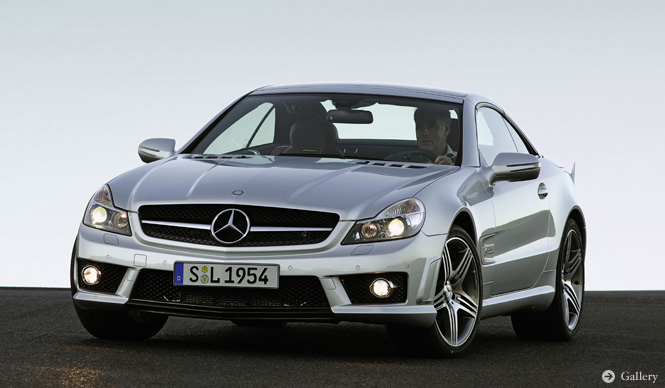
Mercedes-Benz SL63 AMG
Mercedes-Benz SL63 AMG
Mercedes-Benz SL63 AMG
AMG's Advanced Engineering
The "Mercedes-Benz SL-Class" underwent a major minor change in 2008, transforming so dramatically it was mistaken for a new model. Its AMG variant also received a facelift around the same time, with the existing "SL65 AMG" undergoing a bold metamorphosis and the new "SL63 AMG" joining the lineup.
What's noteworthy about the SL63 AMG is its newly developed powertrain. The engine is a 6.2-liter V8, independently designed by AMG and already familiar from other AMG models. It boasts a formidable 525 ps at 6800 rpm and 630 Nm of torque at 5200 rpm, delivering the sharp response and overwhelming power expected of its displacement, characteristic of a naturally aspirated engine.
The transmission paired with this is revolutionary. The newly developed "AMG SPEEDSHIFT MCT" is based on the 7-speed automatic "7G-TRONIC" but replaces the torque converter, essential for automatics, with a wet multi-plate clutch. This achieves approximately 30% reduction in size and weight, while also shortening gear change times. With no slip inherent to a torque converter, the direct feel is naturally enhanced. Yet, it achieves smoothness comparable to a torque converter AT. Alongside its impressive V8 engine, it stands as a prime example showcasing AMG's advanced engineering prowess.
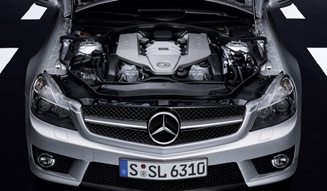
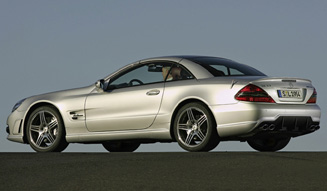

Mercedes-Benz SL63 AMG
Body | Length 4600 x Width 1820 x Height 1300 mm
Engine | 6.2-liter V8
Max Output | 386 kW [525 ps] / 6800 rpm
Max Torque | 630 Nm [64.0 kgm] / 5200 rpm
Drivetrain | FR
Transmission | AMG SPEEDSHIFT MCT (7-speed automatic)
Price | 19.1 million yen
(As of July 2008)
BRAND HISTORY
When tracing the history of automobiles, we arrive at two German pioneers: Gottlieb Daimler and Karl Benz. It goes without saying that these two men independently created gasoline-powered automobiles between 1885 and 1886, laying the foundation for the automotive society. Although their respective automotive companies were once seen as rivals, they joined forces to overcome the post-World War I recession, leading to the establishment of Daimler-Benz AG through their merger in 1926.
The name "Mercedes," given to products, originated when Emil Jellinek, a Daimler customer, named the cars after his eldest daughter in exchange for taking over their sales outside Germany. The trademark was registered by Daimler in 1902.
Thus born, Mercedes, and MERCEDES BENZ, have consistently led the way in automotive development, actively introducing cutting-edge technologies such as the safety passenger cell, airbags, ESP (Electronic Stability Program), and Night View, continuing to drive the evolution of the automobile.