March 16, 2015
NISSAN GT-R | The 22nd | Part 2 | A car-making philosophy dedicated to untranslatable performance.
The 22nd: NISSAN GT-R (Part 2)
A Car Built Around Performance Beyond Translation
Like a Video Game
The NISSAN GT-R is a luxury grand tourer, but it requires some explanation. After starting, until the engine warms up, the transmission and drivetrain produce a considerable amount of mechanical noise and shock. At these moments, it's a bit too wild to be called a 'date car.' Yet, as the water temperature gauge needle rises, it becomes eerily quiet, which is endearing, like a 'mechanical horse.'
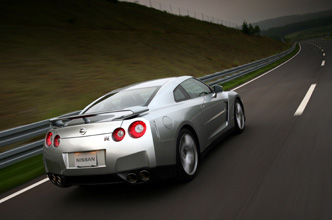
The owner's manual clearly states that noise and jerkiness are present until the oil in each component warms up. A Toyota would likely not be forgiven for this level of wildness. The fact that this level of performance was approved at the executive level is surely thanks to the long-standing tradition of the Skyline GT-R.
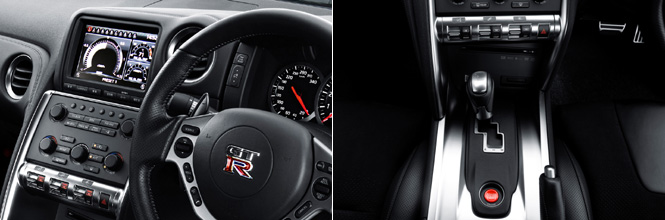
Even though the speedometer is marked up to 340 km/h, like other domestic cars, the GT-R's speed limiter engages at 180 km/h. However, upon reaching a circuit or test course in Japan and making a simple input inside the car, this electronic restriction can be removed. This is the 'Circuit Mode,' which utilizes the car's position-locating function.
When driven at full throttle on an appropriate handling course, the GT-R unleashes its potential. That said, with my skill level, I mostly felt like the car was controlling itself.
The control of the suspension and drivetrain sometimes feels almost robotic. While the Porsche 911 Turbo doesn't offer this level of artificial assistance, it's also part of the GT-R's character. The shift speed, damper stiffness, and traction control intervention can be significantly altered with a single switch, and the ability to enjoy these changes is reminiscent of a video game, which is fascinating.
The Culmination of Automotive Devotion
Indeed, the GT-R on a winding road is as fast as its video game counterpart. It offers a speed that feels almost surreal, like experiencing Gran Turismo from PlayStation in the real world.
Moreover, it doesn't demand an extreme level of driver skill, though it certainly helps. Some might argue, 'Is it right to make someone climb Mt. Fuji in high heels?!' But to deny this is to miss the point – it's precisely the kind of technology that Japanese cars have pioneered and pursued.
I believe the GT-R is the culmination of the Japanese people's devotion to cars. It is a superbly Japanese, ultra-high-performance vehicle that dedicates everything to 'driving,' a performance that defies translation.
Vehicle Overview | NISSAN GT-R
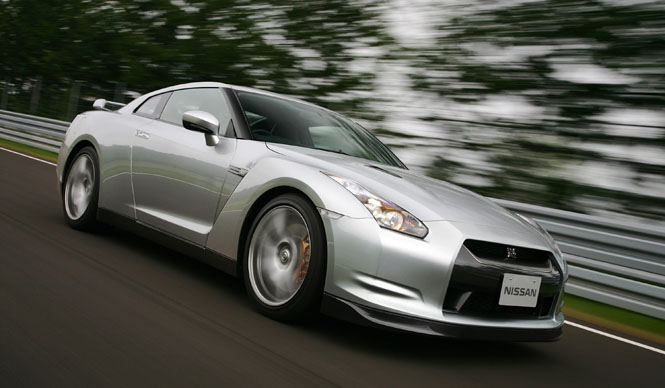
Since the debut of the 'Skyline GT-R' in 1969, the 'GT-R' has reigned as NISSAN's flagship high-performance car, directly descended from racing machines. After periods of dormancy and revival, the current, third-generation model was released in the autumn of 2007. To coincide with its first full-scale overseas sales, the 'Skyline' name was dropped, and it became the 'NISSAN GT-R.'
Its specifications can rightly be called the ultimate in Japanese high-performance cars.
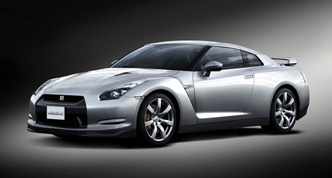
The engine is a 3.8-liter V6 twin-turbo, boasting the highest power and torque among domestic cars at 480 ps and 60.0 kgm. The transmission is a 6-speed manual with two pedals and no clutch, offering various modes, and the electronically controlled dampers can also have their characteristics selected according to the situation. The drivetrain is a sophisticated 'independent transaxle 4WD' system designed to optimize front-rear weight distribution.
While it is a supercar capable of reaching 100 km/h from a standstill in 3.6 seconds, true to its 'multi-performance supercar' tagline, it is tuned to be enjoyable for everyone and is by no means difficult to handle.
Its design, which looks like it leaped out of an anime, is in a way very Japanese. The cockpit, with its 340 km/h speedometer, red push-button engine starter, and various control switches, feels like being in a video game world. In fact, the display design was handled by Polyphony Digital, the creators of the Gran Turismo series.
It is primarily offered in a single grade, with the base model priced at 7.77 million yen. For comparison, the Porsche 911 Turbo, with the same horsepower, costs 19.21 million yen.
http://www2.nissan.co.jp/GT-R/R35/0710/